
- Make the crispy shell batter
Whisk the rice flour, mung bean flour, sugar, and oil together in a bowl until combined, then gradually add the water while whisking to form a thin, smooth batter with no lumps. The batter should be thin enough to spread easily but thick enough to hold together when pressed into a shell shape in the pan.
- Whip the meringue topping
In a separate bowl, whip the egg yolks with the sugar for the topping until the mixture turns pale and slightly thickened, resembling a loose custard. This whipped yolk mixture is what forms the signature fluffy, slightly sweet meringue-like layer that sits on top of each finished shell.
- Prepare the coconut filling
Toss the sweetened shredded coconut in a dry pan over low heat for a minute or two just to lightly toast it and bring out its aroma, then set it aside. If making a savory version alongside the sweet one, prepare the dried shrimp topping separately by toasting it briefly until fragrant.
- Heat the pan and shape the shells
Heat a flat non-stick pan or traditional khanom buang pan over medium heat and lightly grease it with oil. Using the back of a spoon or ladle, spread a thin circle of batter in a swirling motion to form a delicate, crepe-like round, working quickly since the batter sets fast on contact with the hot surface.
- Cook until crisp
Let the shell cook undisturbed for two to three minutes until the edges lift naturally and turn golden and crisp, which signals it has fully set and released from the pan. Avoid flipping the shell, since khanom buang is designed to be topped and folded while still in the pan.
- Add the toppings
While the shell is still in the pan, spread a thin layer of the whipped yolk topping over the surface and let it set slightly from the residual heat for about thirty seconds. Sprinkle the toasted coconut, or the savory dried shrimp mixture, evenly across the topping.
- Fold and serve
Carefully fold the shell in half using a spatula, pressing gently to seal it into a crisp half-moon shape. Transfer to a serving plate and garnish with fresh coriander leaves if using the savory topping. Serve immediately while the shell is still warm and at its crispiest.
- Calories:165 kcal8%
- Protein:3 g6%
- Carbohydrates:24 g8%
- Sugar:14 g28%
- Energy:690 kJ8%
- Salt:0.15 g7%
- Fat:6 g8%
What Is Khanom Buang?
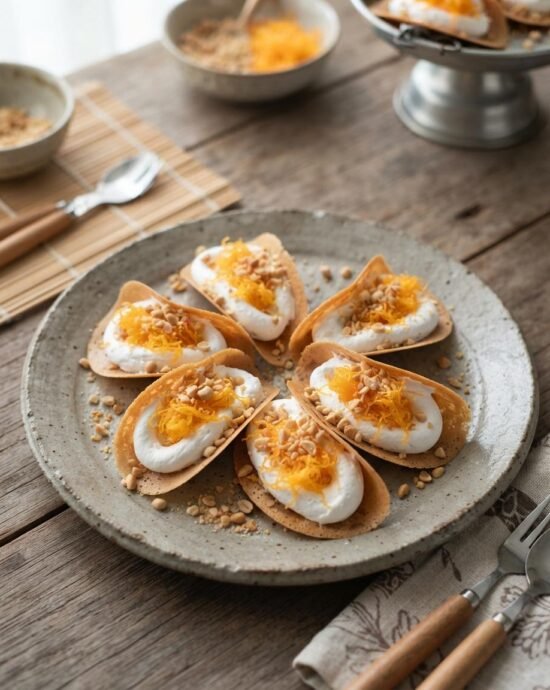
Khanom Buang is a beloved Thai street food consisting of thin, crispy shells made from rice and mung bean flour, folded around a fluffy whipped egg topping and finished with either sweet shredded coconut or a savory sprinkle of dried shrimp. Often compared to a delicate taco or a Thai take on a French crêpe, it’s sold from street carts across Thailand, where vendors cook the shells to order on flat griddles right in front of customers.
The dish has roots stretching back to the royal Thai kitchens of the Ayutthaya period, where elaborate desserts were refined for court presentation before eventually making their way into everyday street food culture. What distinguishes Khanom Buang from other crispy shell desserts is its contrast of textures within a single bite: the shell shatters delicately, the whipped topping stays airy and slightly custardy, and the coconut adds a chewy sweetness that ties it together.
Vendors traditionally offer both a sweet version, topped with toasted coconut and sometimes a drizzle of syrup, and a savory version featuring dried shrimp, shallots, and fresh coriander. Many stalls sell both side by side, letting customers mix and match a small assortment. The shells are always made in small batches and served immediately, since their signature crispness fades quickly once they sit.
Making Khanom Buang at home takes some practice to get the shell thin and even, but the payoff is a genuinely nostalgic taste of Thai street food culture. The process rewards patience and a steady hand, and once mastered, it becomes an impressive, unusual dessert to share with guests who haven’t encountered it before.
Ingredient Notes
- Rice flour: Rice flour is the backbone of the crispy shell, giving it a light, delicate crunch. Use a fine-milled rice flour rather than a coarse one for the smoothest, most even batter.
- Mung bean flour: A small amount of mung bean flour adds structure and a subtle nuttiness to the shell. It’s typically sold in Asian grocery stores and shouldn’t be substituted with more rice flour alone.
- Egg yolks: The whipped egg yolks form the signature fluffy, custard-like topping. Use fresh, room-temperature yolks, since they whip up lighter and more evenly than cold ones straight from the fridge.
- Sweetened shredded coconut: Lightly toasting the coconut before using it deepens its flavor and adds a bit of textural crunch against the soft topping and crisp shell.
Ingredient Suggestions
1. Toasted sesame seeds: A sprinkle over the sweet version adds a subtle nutty crunch alongside the coconut.
2. Thin strips of fresh shallot: For the savory version, a few extra crisp shallot strips add sharpness that cuts through the richness.
3. Fresh Thai chili, minced: A small pinch added to the savory topping introduces a gentle heat that plays well against the dried shrimp.
4. Golden threads (foi thong): This traditional Thai egg-yolk garnish adds an elegant, delicate sweetness to the topping.
5. A drizzle of condensed milk: For an extra-indulgent sweet version, a light drizzle adds richness and glossy sheen.
Helpful Tips & Pro Tips
- Make sure your pan is fully preheated before spreading the batter. A pan that isn’t hot enough causes the shell to stick and tear instead of releasing cleanly once crisp.
- Spread the batter as thinly and evenly as possible in a swirling motion. A shell that’s too thick won’t crisp up properly and will taste doughy in the center.
- Whip the egg yolk topping just until it turns pale and slightly thickened; overwhipping can cause it to become too runny to hold its shape on the shell.
- If your shells are turning out soft rather than crisp, the pan likely isn’t hot enough, or the batter was spread too thickly; both issues trap moisture that prevents proper crisping.
- Cook and fill the shells in small batches, serving each one immediately. Khanom Buang loses its signature crunch quickly once topped and left to sit.
How to Serve and Store
Khanom Buang is best enjoyed fresh off the pan, ideally within minutes of folding, while the shell is still warm and audibly crisp. It doesn’t store or reheat particularly well as a finished dish, since the shell softens quickly once combined with the moist topping. If you need to prepare components ahead, store the unfilled shells in an airtight container at room temperature for up to a few hours, and keep the coconut and egg yolk toppings refrigerated separately, assembling only just before serving. This dish is not recommended for freezing or extended storage.
Substitutions
- Egg yolk topping → Coconut cream whipped with a touch of cornstarch — This eggless alternative mimics the light, spreadable texture of the traditional topping. (Vegan)
- Dried shrimp → Finely diced shiitake mushroom, sautéed — A savory, umami-rich substitute for those avoiding shellfish or seafood. (Vegan)
- Mung bean flour → Additional rice flour — In a pinch, using slightly more rice flour in its place still yields a workable, though marginally less structured, shell. (Budget-Friendly)
- Rice flour → A certified gluten-free all-purpose blend — This ensures the shell remains gluten-free if your rice flour brand processes other grains nearby. (Gluten-Free)
- Granulated sugar → Coconut sugar — Coconut sugar offers a similar sweetness with a slightly deeper, caramel-like undertone.
Suggested Recipes
1. Tub Tim Grob: Offer this warm, crispy street food dessert alongside the chilled, icy rubies for a contrast of temperatures.
2. Khao Niew Ma Muang: Both showcase the coconut flavors central to Thai desserts, making them a natural pairing for a dessert sampler.
3. Moo Ping: Round out a Thai street food spread by pairing these crispy pancakes with smoky grilled pork skewers.
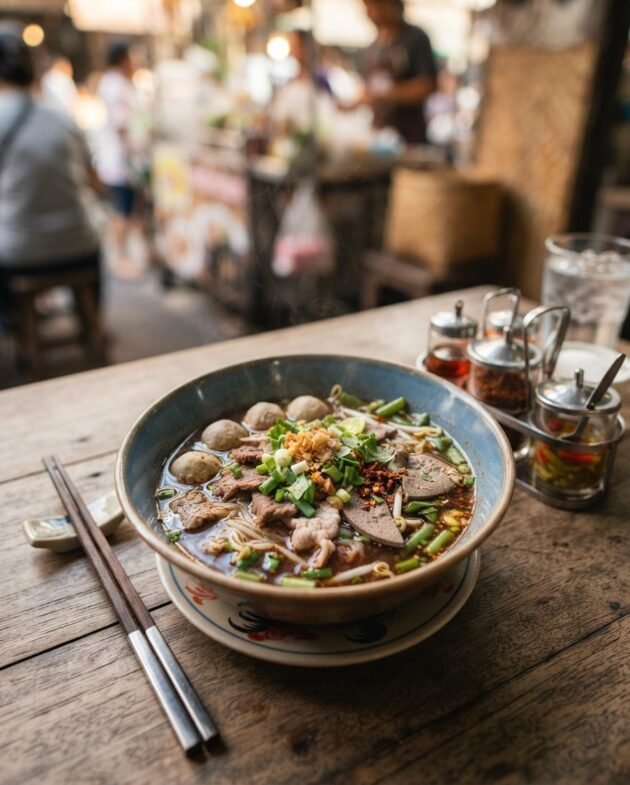
4. Boat Noodles: For an authentic street food experience, follow a bowl of boat noodles with these classic crispy pancakes.

Jeff Smith
"Cooking is the intersection of history, science, and emotion."
For me, the kitchen has always been a laboratory of culture. With a background deeply rooted in digital strategy and precision, I approach the culinary arts with the same rigor I apply to the digital landscape—analyzing flavors, perfecting techniques, and documenting the nuance that makes Filipino cuisine truly world-class.
Findme Recipe was born from a desire to bridge the gap between traditional heritage and the modern home cook. Whether it is mastering the perfect balance of acidity in a classic Adobo or simplifying complex regional dishes for everyday kitchens, my mission is to preserve our culinary identity through accessible, data-backed, and delicious content.
I am not just building a database; I am cultivating a community where every Filipino kitchen feels empowered, every ingredient is celebrated, and every family heirloom recipe finds a place to thrive.
Join me as we translate the soul of our islands into recipes for the next generation.