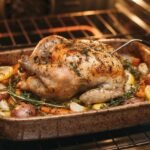
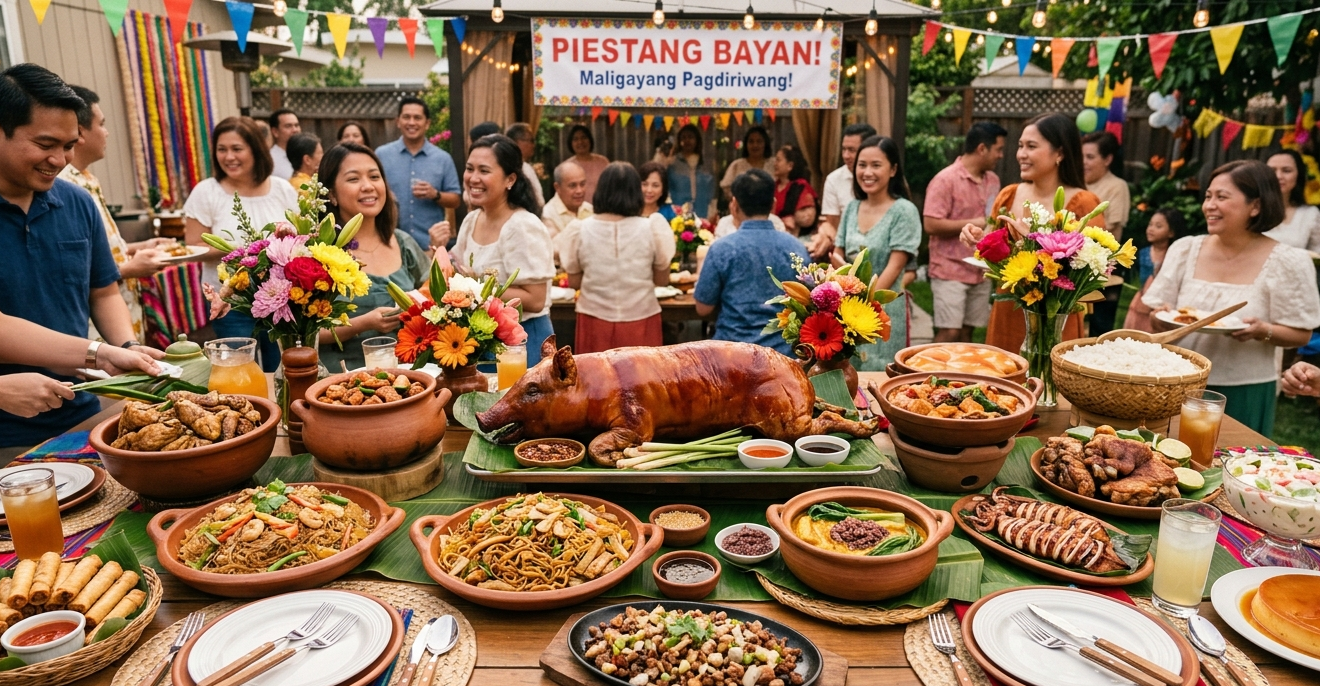
A Filipino fiesta is not a dinner party — it is a declaration of generosity, abundance, and community. The table is never just long enough. The food is never just enough. There is always more rice, always one more dish arriving from the kitchen, always someone’s lola appearing with a tray of kakanin that was not on the plan but is now the most celebrated thing at the party.
This guide gives you the complete framework: the menu, the quantities, the prep timeline, the table layout, and the key decisions that separate a chaotic fiesta from an effortless one.
Step 1 — The Five Fiesta Pillars
| Category | Purpose | Examples |
| The Centerpiece Pork | Main event — the dish people remember | Lechon kawali, crispy pata, whole pig |
| The Main Stew | Slow-cooked, sauce-heavy anchor | Kare-kare, caldereta, mechado, adobo |
| The Noodle Dish | Symbolizes long life — always present | Pancit palabok, pancit canton |
| The Seafood | Lightens the table, provides variety | Inihaw na bangus, kinilaw, fried shrimp |
| Vegetables & Lighter | Balance to pork and stew richness | Pinakbet, ensalada, atchara |
| Rice | The foundation — not optional | Steamed white rice, java rice |
| Desserts & Kakanin | The finale and table centerpiece | Leche flan, biko, halo-halo |
Step 2 — Quantities for 20 People
| Dish | Quantity for 20 | Notes |
| Rice | 10 cups raw (~4 kg cooked) | Always cook more — 200g cooked per person minimum |
| Lechon kawali | 3–4 kg pork belly (2 slabs) | Expect 20–25% weight loss after frying |
| Kare-kare | 2 kg oxtail + 1 kg tripe | 150–200g per person |
| Pork adobo | 2 kg pork belly or shoulder | Secondary/backup dish |
| Pancit palabok | 500g bihon noodles | Generously serves 20 with toppings |
| Inihaw na bangus | 4 whole bangus (600–800g each) | One fish serves ~5 people |
| Leche flan | 5 llanera molds | Each serves 4–5 people |
| Biko | 1 full 9×13 tray | Cuts into 24+ squares |
Step 3 — The 3-Day Prep Timeline
3 Days Before
- Make leche flan (refrigerates 3 days perfectly — unmold day before serving)
- Make atchara (needs 2–3 days of pickling for best flavor)
- Make biko and refrigerate covered (improves with time)
2 Days Before
- Make kare-kare (reheats better than it serves fresh — peanut broth deepens overnight)
- Make pork adobo (always better on day two)
- Make garlic brown sauce for palabok (refrigerates well for 3 days)
- Marinate bangus with garlic, vinegar, and tomatoes in the fridge
1 Day Before
- Boil and dry pork belly for lechon kawali (overnight refrigerator dry is mandatory for crackling)
- Prep all palabok toppings: boil shrimp, hard-boil eggs, prepare chicharon and tinapa flakes
- Unmold leche flan onto serving plates
- Prepare all garnishes: fried garlic, sliced green onions, calamansi halves
Day Of (3–4 Hours Before Guests Arrive)
- Cook the rice (two rice cookers for 20 people)
- Deep-fry lechon kawali (2 hours before serving — not too early or crackling softens)
- Reheat kare-kare and adobo gently with a splash of water
- Cook pancit palabok (1–2 hours ahead — noodles absorb sauce nicely)
- Grill bangus (30–45 minutes before guests arrive)
- Cook pinakbet (20 minutes before serving — vegetables best freshly cooked)
Step 4 — Table Layout
- Rice at both ends of the table — guests should reach rice from either side without stretching.
- Centerpiece dish in the center — lechon kawali takes the visual and physical center.
- Stews flanking the centerpiece — kare-kare and adobo on either side.
- Lighter dishes toward the outer edges — noodles, seafood, vegetables.
- Condiments adjacent to their dishes — bagoong next to kare-kare, spiced vinegar near lechon.
- Desserts on a separate table — revealed after the main meal, not present throughout.
Step 5 — Essentials You Cannot Forget
- Calamansi in small bowls at every end of the table.
- Bagoong alamang in a proper condiment bowl with a small spoon.
- Extra plates for dessert — guests should be able to take a fresh plate without reaching past others.
- Ice and cold drinks — San Miguel, softdrinks, and buko juice. Set up separately from the food table.
- Extra napkins and banana leaves for kakanin presentation.
Mistakes to Avoid
- The most common mistake. Cook more than you think. Cold leftover rice becomes tomorrow’s sinangag. Underestimating rice.
- Filipino stews and rice must be served hot. Use chafing dishes or reheat in batches. Serving everything at room temperature.
- Crackling softens within 30–45 minutes. Time the fry for 1 hour before the main meal, not 3. Frying lechon kawali too early.
- Have at least one vegetable-forward dish — pinakbet, kare-kare vegetables, ensaladang talong. No vegetarian option.
Fiesta Checklist
- Centerpiece pork dish (lechon kawali or crispy pata)
- Main stew (kare-kare, caldereta, or mechado)
- Secondary dish (adobo)
- Noodle dish (palabok or canton)
- Seafood (inihaw na bangus or fried fish)
- Vegetable dish (pinakbet or sautéed greens)
- Rice — enough plus reserve in the rice cooker
- Desserts (leche flan + kakanin + fresh fruit)
- Condiments (bagoong, calamansi, spiced vinegar, toyomansi)
- Drinks + chafing dishes + extra plates
Frequently Asked Questions

Jeff Smith
"Cooking is the intersection of history, science, and emotion."
For me, the kitchen has always been a laboratory of culture. With a background deeply rooted in digital strategy and precision, I approach the culinary arts with the same rigor I apply to the digital landscape—analyzing flavors, perfecting techniques, and documenting the nuance that makes Filipino cuisine truly world-class.
Findme Recipe was born from a desire to bridge the gap between traditional heritage and the modern home cook. Whether it is mastering the perfect balance of acidity in a classic Adobo or simplifying complex regional dishes for everyday kitchens, my mission is to preserve our culinary identity through accessible, data-backed, and delicious content.
I am not just building a database; I am cultivating a community where every Filipino kitchen feels empowered, every ingredient is celebrated, and every family heirloom recipe finds a place to thrive.
Join me as we translate the soul of our islands into recipes for the next generation.