
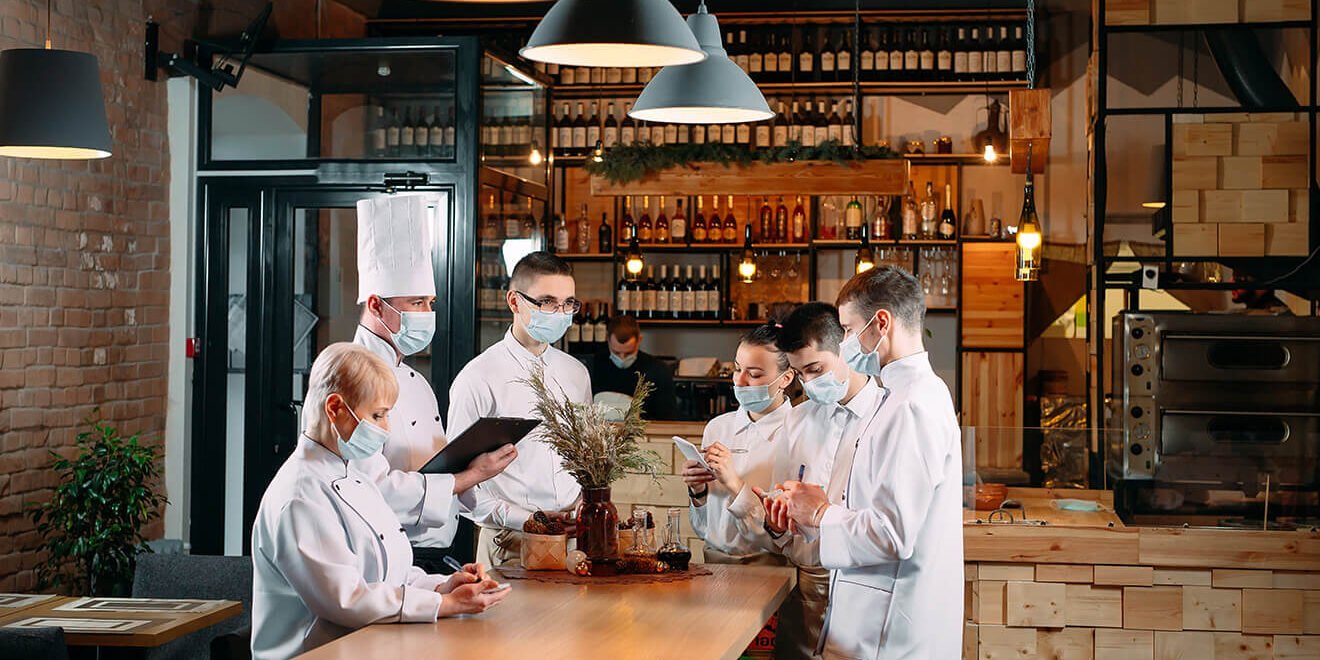
Walk into a professional kitchen thirty minutes before service, and you won’t hear much talking. What you’ll hear is a rhythm – knives on boards, the hiss of a pan hitting high heat, someone calling out a temperature check without even looking up. It looks chaotic to an outsider. It isn’t. Behind that noise is one of the tightest collaborative systems in any industry, and it’s the reason a plate can leave the kitchen looking exactly the same at 7pm as it did at 9pm, table after table, night after night.
Chefs collaborate the way a relay team runs a race. Nobody carries the baton the whole way, and nobody succeeds by running faster alone.
The Brigade System Still Runs the Show
Most professional kitchens still lean on a version of the brigade de cuisine, the station-based system codified by Auguste Escoffier over a century ago. There’s a reason it hasn’t been replaced: it turns a big, chaotic job into small, ownable pieces. A saucier handles sauces and pan work. A garde manger builds cold plates and salads. A pastry chef owns dessert from mise en place to plating. Each cook becomes genuinely excellent at one narrow slice of the menu instead of mediocre at all of it.
The executive chef isn’t cooking most of the food you eat. Their real job is orchestration – building the menu, setting the standard for every station, and making sure fifteen different hands produce food that tastes like it came from one mind. That’s the collaboration most people never see: not chefs cooking side by side, but chefs agreeing, in advance, on exactly what ‘right’ looks like.
Communication Happens in Code
Step into a busy line and you’ll notice cooks aren’t having conversations – they’re calling and confirming. ‘Two mid, one well, fire the risotto.’ ‘Behind!’ ‘Corner!’ This shorthand exists because full sentences cost time nobody has during a rush, and because ambiguity is dangerous around open flame and sharp steel. Every phrase has one meaning, and everyone on the line has drilled it until it’s reflex.
That precision extends to timing. A table’s ticket might need a seared scallop, a braised short rib, and a souffle to land on the pass within seconds of each other, despite needing completely different cook times. That only works because the stations talk constantly in a shared language, adjusting heat and pace in real time based on what the person three feet away just called out.
Trust Is Built Long Before Service
The collaboration that shows up on the plate is really the output of hours nobody sees. Prep lists get written the night before. Chefs taste each other’s sauces during family meal and give blunt, fast feedback. New recipes get run through by the whole team days before they ever reach a guest, specifically so any weak point gets caught in the kitchen, not on the table.
This is where a lot of home cooks miss the bigger lesson. Restaurant-level consistency isn’t really about talent – it’s about rehearsal. The same dish, made the same way, with the same checks, until the outcome stops being a matter of luck.
This is the part that surprises people most: the actual cooking during service is often the easiest part. The hard collaborative work happened hours earlier, during prep, when nobody’s watching.
Feedback Loops Keep the Standard Honest
Good kitchens have a built-in feedback loop that never really turns off. A sous chef tastes a sauce and sends it back with one word: ‘flat.’ A line cook plates a dish slightly off-center and the chef quietly resets it, no lecture needed. Over months, this constant low-grade correction is what keeps a menu tasting like itself instead of drifting.
This works because ego gets checked at the door – at least the good kitchens manage it. Criticism is about the dish, not the cook, and everyone on the line has been on the receiving end of it. The best collaborators are the ones who can hear ‘this needs more acid’ without hearing ‘you failed,’ fix it, and move on to the next ticket.
Collaboration Across Different Cultures and Styles
Walk through a handful of kitchens from different culinary traditions, and the specific rituals shift, but the underlying logic barely changes. A dim sum kitchen relies on rapid-fire coordination between steamer stations. An Italian trattoria might run on a much smaller, tighter-knit team where one or two cooks handle nearly the whole menu, communicating through decades of shared shorthand rather than shouted tickets. Sushi kitchens build their entire structure around apprenticeship, where junior cooks spend years mastering rice before they’re ever trusted with fish, a slower version of the same collaborative training that Western brigades compress into months.
What stays constant across all of them is the underlying agreement: everyone on that team has bought into the same standard, and everyone understands that their individual work only matters in the context of the whole plate. That’s really the throughline. Different cuisines, different hierarchies, same core idea.
What Home Cooks Can Borrow From This
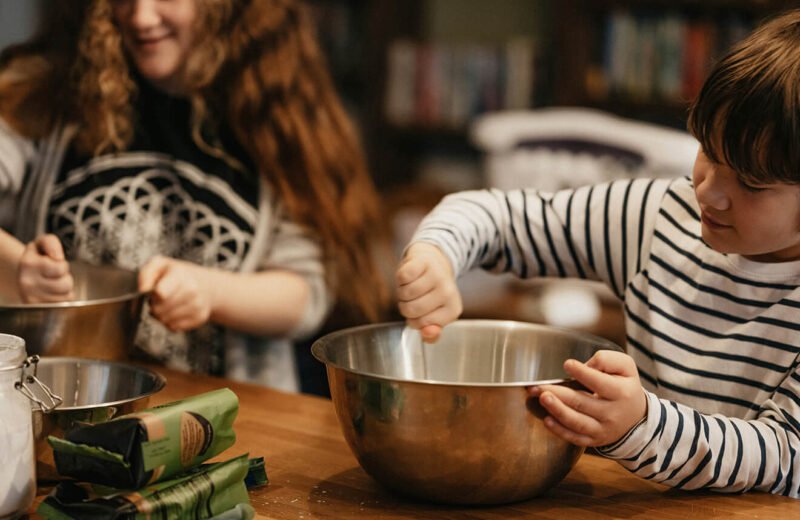
You don’t need a fifteen-person brigade to use this thinking at home. If you’re cooking a big meal with family or friends, assign real ownership – one person on protein, one on sides, one on dessert – instead of everyone hovering over the same pan. Agree ahead of time on timing: what needs to come off the heat first, what can rest, what has to be served immediately.
And build in a taste check before anything hits the table. Professional kitchens never plate blind, and there’s no reason a home cook should either. A thirty-second taste from someone other than the cook catches the kind of small miss – under-seasoned, over-acidic, needs more salt – that’s nearly impossible to notice in your own dish after standing over it for an hour.
Pro Tips for Kitchen-Style Collaboration
- Assign one ‘expediter.’ Even at home, having one person call out what’s ready and what’s next prevents dishes from going cold while others finish.
- Taste before you plate, every time. Get a second opinion – your palate adjusts to your own cooking faster than you’d think.
- Prep the night before when you can. Chopped vegetables, made sauces, and pre-measured spices turn a stressful cook into a calm one.
- Use short, specific callouts. ‘Two minutes on the rice’ beats ‘it’s almost done’ – precision saves scrambling.
Frequently Asked Questions

Jeff Smith
"Cooking is the intersection of history, science, and emotion."
For me, the kitchen has always been a laboratory of culture. With a background deeply rooted in digital strategy and precision, I approach the culinary arts with the same rigor I apply to the digital landscape—analyzing flavors, perfecting techniques, and documenting the nuance that makes Filipino cuisine truly world-class.
Findme Recipe was born from a desire to bridge the gap between traditional heritage and the modern home cook. Whether it is mastering the perfect balance of acidity in a classic Adobo or simplifying complex regional dishes for everyday kitchens, my mission is to preserve our culinary identity through accessible, data-backed, and delicious content.
I am not just building a database; I am cultivating a community where every Filipino kitchen feels empowered, every ingredient is celebrated, and every family heirloom recipe finds a place to thrive.
Join me as we translate the soul of our islands into recipes for the next generation.





















































4 Comments
I loved reading this! The tips were incredibly practical and easy to follow. My kitchen routine just got a major upgrade! I’ve already started incorporating these suggestions into my daily cooking, and it’s made such a difference. Cooking used to feel like a chore, but now it’s something I genuinely enjoy. Thanks for making it so accessible and fun!
Very informative and well-written! The ingredient spotlights were my favorite part — I learned so much about things I already had in my pantry. It’s amazing how little changes in how you use ingredients can make such a big difference in flavor. This blog made me excited to use my kitchen staples creatively.
Great insights! I especially appreciated the detailed breakdown of each step. It made complex recipes feel so much more approachable. Sometimes, the thought of cooking a complicated meal can be intimidating, but this blog explained everything so clearly. I feel much more confident in trying out new techniques and dishes. Truly helpful content!
This post was super inspiring. The ideas and suggestions gave me the motivation to try new dishes I usually avoid. Thank you! I’ve been in a bit of a cooking rut, but this blog gave me the push I needed to experiment with new flavors. Now, I look forward to cooking and exploring different cuisines every week.