
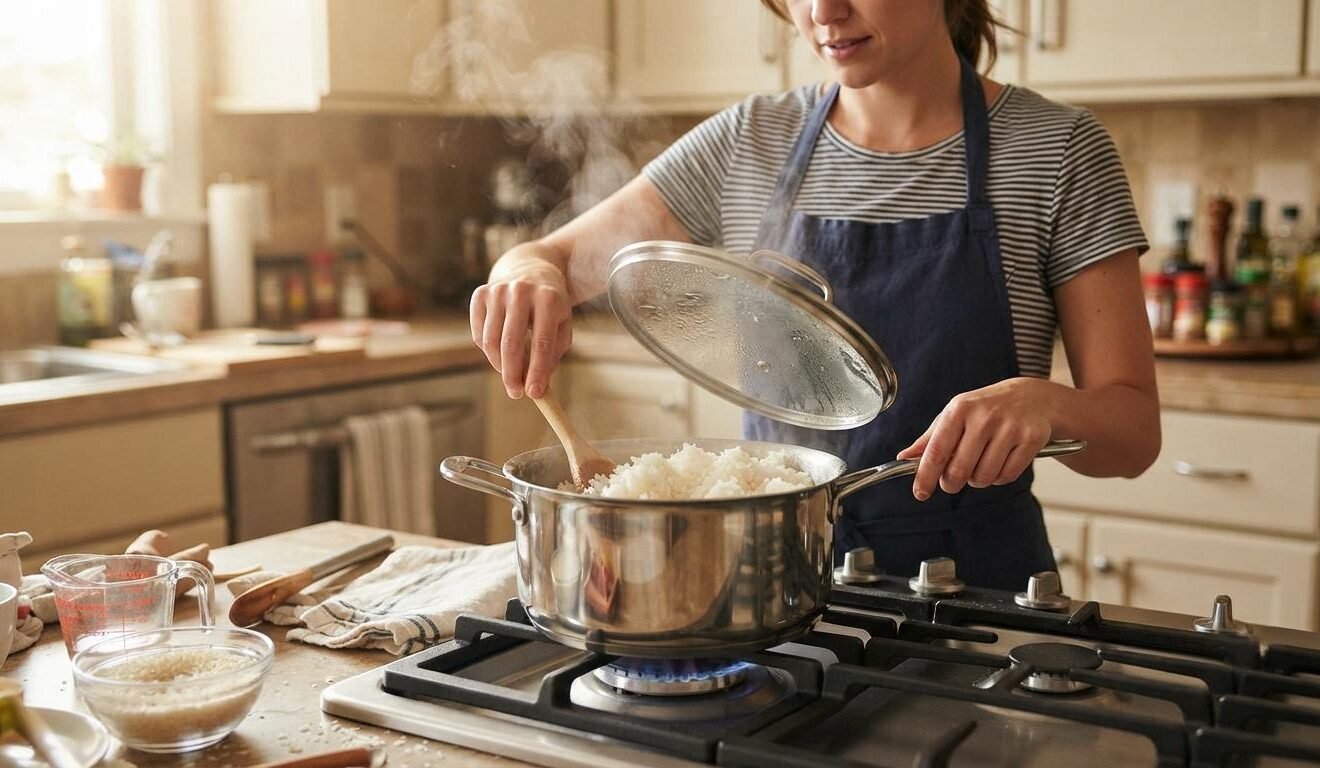
Rice seems like it should be one of the simplest things to cook, and then somehow it ends up either gummy, burnt on the bottom, or crunchy in the middle more often than anyone would like to admit. The truth is that cooking rice well on the stovetop comes down to a few specific details that most recipes gloss over — rinsing, the right water ratio, and resisting the urge to lift the lid every two minutes to check on it.
Once you understand how to cook rice properly using these fundamentals, you won’t need a rice cooker or a bag of instant rice ever again. It’s a skill worth actually learning rather than working around, since good rice shows up in so many meals as the quiet foundation everything else sits on top of. Here’s the full process, from rinsing to the resting period that makes the biggest difference of all.
Rinse the Rice Before Cooking
Place your rice in a fine-mesh strainer and rinse it under cold water, swirling it around with your fingers until the water runs mostly clear instead of cloudy. That cloudiness is surface starch, and cooking rice without rinsing it off traps that starch in the pot, resulting in gummy, clumped-together grains instead of light, separate ones.
This step takes under a minute but makes a bigger difference than almost anything else in the process. Skip it only if you’re specifically making a dish like risotto or rice pudding, where that extra starch is exactly what creates the creamy texture you’re after. For every other use, that quick rinse under the tap is the cheapest insurance you have against a gummy pot of rice.
Use the Right Water-to-Rice Ratio
For standard long-grain white rice, use a 2-to-1 ratio — two cups of water for every one cup of rice. Basmati rice does well with a slightly lower ratio, closer to 1.5 to 1, since the grains are longer and cook a bit differently. Brown rice needs more water and a longer cook time, typically around 2.5 cups of water per cup of rice.
Measure both the rice and water carefully rather than eyeballing it, especially the first few times you’re cooking a variety you’re not used to. Once you’ve made a specific type of rice a few times, you’ll start to know instinctively when the ratio looks right in the pot.
Bring It to a Boil, Then Drop to a Simmer
Combine the rinsed rice, water, and a pinch of salt in a pot and bring it to a boil uncovered over medium-high heat. Once it’s boiling, immediately reduce the heat to low, cover the pot with a tight-fitting lid, and let it simmer without lifting the lid for the entire cook time.
White rice usually takes 15 to 18 minutes at a low simmer, while brown rice takes closer to 40 to 45 minutes due to its tougher bran layer. Lifting the lid to check on it lets steam escape, which throws off the timing and can leave you with unevenly cooked rice.
Let It Rest Off the Heat Before Fluffing
Once the timer goes off, turn off the heat but keep the lid on and let the pot sit undisturbed for 10 minutes. This resting period allows the remaining steam trapped inside to finish evening out moisture throughout the pot, especially near the bottom where it cooks fastest and can otherwise end up slightly stickier.
This is the step people skip most often because they’re hungry and the rice looks done already. Skipping it is honestly the most common reason stovetop rice turns out uneven — ten extra minutes of patience makes a genuinely noticeable difference.
Fluff With a Fork, Not a Spoon
After resting, run a fork gently through the rice, lifting and separating the grains rather than stirring them around in circles. A spoon tends to mash and compress the rice, which breaks the grains and makes the whole pot gummier than it needs to be.
If you’re not serving it right away, keep the lid slightly ajar rather than fully sealed, which prevents condensation from dripping back down and making the top layer soggy. Rice reheats well the next day too, especially with a splash of water added before microwaving to restore some of the moisture it loses in the fridge.
Adjusting for Different Rice Varieties
Not every variety of rice follows the same rules laid out here. Jasmine rice cooks a bit faster than long-grain white rice and needs slightly less water, while wild rice behaves more like a grain than a rice, often requiring closer to 45 minutes and extra liquid to fully soften.
If a bag of rice comes with cooking instructions on the packaging, it’s usually worth following those specific ratios over a generic formula, since milling process and grain length both affect how much water a given variety actually absorbs during cooking. When trying a new variety for the first time, start with the package instructions and adjust slightly in future batches based on how it actually turns out in your specific pot.
Common Rice-Cooking Mistakes to Avoid
Using a pot that’s too wide for the amount of rice you’re cooking causes uneven heat distribution and dries out the edges faster than the center. Stick to a pot sized appropriately for your batch, and use a lid that actually fits tightly rather than one that lets steam escape around the edges.
Adding salt too early or in the wrong amount is another common miss — a pinch added before cooking seasons the rice from the inside as it absorbs water, while salting only at the end just sits on the surface. Neither ruins the dish, but seasoning early gives noticeably more even flavor throughout every bite. A small pat of butter or splash of oil added to the water can also help keep grains from clumping together, though it’s optional and mostly a matter of preference.
Frequently Asked Questions

Jeff Smith
"Cooking is the intersection of history, science, and emotion."
For me, the kitchen has always been a laboratory of culture. With a background deeply rooted in digital strategy and precision, I approach the culinary arts with the same rigor I apply to the digital landscape—analyzing flavors, perfecting techniques, and documenting the nuance that makes Filipino cuisine truly world-class.
Findme Recipe was born from a desire to bridge the gap between traditional heritage and the modern home cook. Whether it is mastering the perfect balance of acidity in a classic Adobo or simplifying complex regional dishes for everyday kitchens, my mission is to preserve our culinary identity through accessible, data-backed, and delicious content.
I am not just building a database; I am cultivating a community where every Filipino kitchen feels empowered, every ingredient is celebrated, and every family heirloom recipe finds a place to thrive.
Join me as we translate the soul of our islands into recipes for the next generation.