Lumpia is one of the most versatile, beloved, and misunderstood dishes in Filipino cuisine. Say “lumpia” to a Filipino and you might get a faraway look — someone is already mentally tasting their lola’s crispy Shanghai, or remembering the crepe-wrapped sariwa at a town fiesta. Say it to someone outside the Philippines and you’ll often get lumpia confused with Chinese spring rolls, Vietnamese fresh rolls, or Indonesian lumpia Semarang. They share ancestry, but Filipino lumpia is its own magnificent thing entirely.
At its core, lumpia is a Filipino stuffed roll — either fried to golden, crackling perfection or served fresh in a soft wrapper — filled with combinations of meat, vegetables, seafood, and aromatics that vary by region, occasion, and family tradition. The word itself is borrowed from the Hokkien lun-pia, reflecting centuries of Chinese-Filipino culinary exchange that shaped so much of what we consider Filipino food today.
This guide covers everything: the three essential varieties every home cook should know (Shanghai, sariwa, and ubod), how wrappers and fillings differ across types, how to wrap and fry properly, and — critically — every dipping sauce that makes lumpia complete.
What Is Lumpia?
Lumpia is the Filipino term for a category of stuffed rolls with roots in Chinese spring roll tradition, adapted and transformed over centuries into something distinctly and irreversibly Filipino. The dish arrived in the Philippines through Hokkien Chinese traders and immigrants, most significantly in the 16th to 18th centuries, and was quickly adopted, localized, and diversified by Filipino cooks across the archipelago.
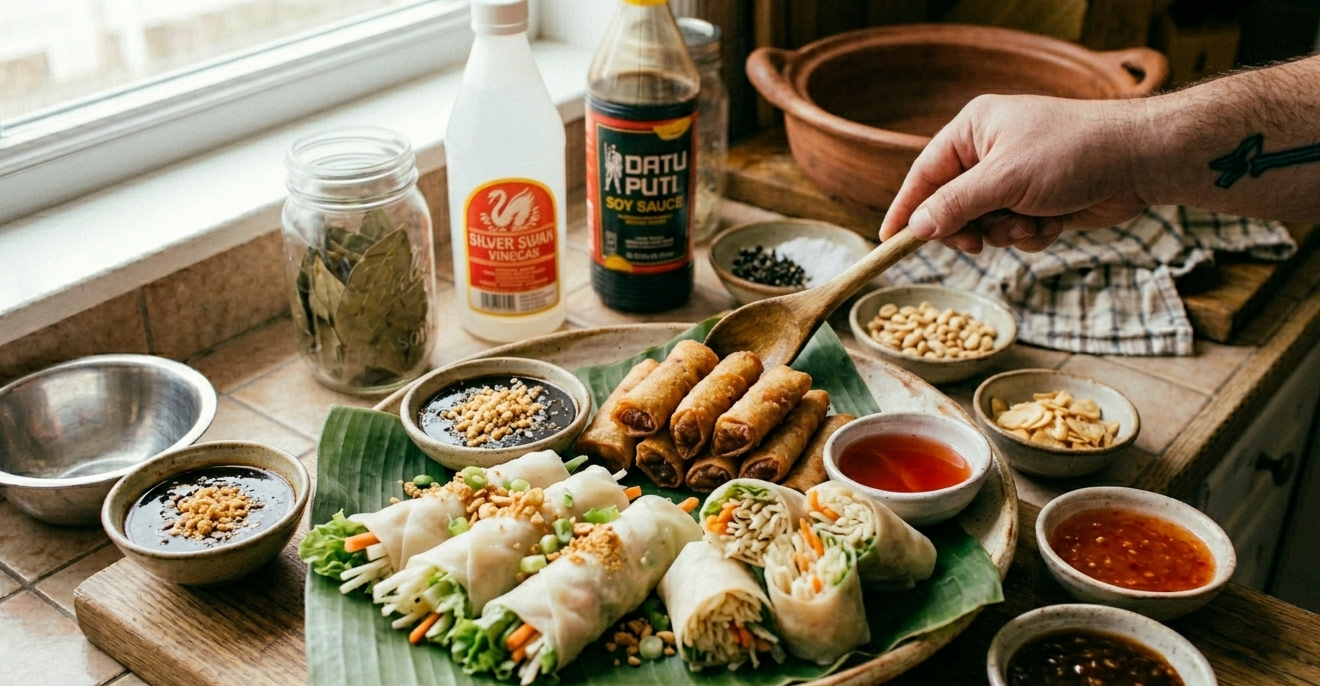
What separates Filipino lumpia from its Chinese and Southeast Asian cousins is the sheer range of fillings and the two-track approach to serving: fried lumpia (lumpiang prito), where the roll is sealed in a thin wheat wrapper and deep-fried until crackling, and fresh lumpia (lumpiang sariwa), where a soft, pale crepe-like wrapper holds a warm vegetable filling and is served at room temperature topped with sauce and crushed peanuts.
Lumpia is not a single recipe — it is a format. The same structural logic (wrapper + filling + sauce) produces everything from the finger-food crunch of lumpiang Shanghai to the elegant, sauce-draped presentation of lumpiang ubod. Understanding lumpia means understanding its three foundational types, their wrappers, and the dipping sauces that complete each one.
The Three Essential Types of Lumpia
1. Lumpiang Shanghai
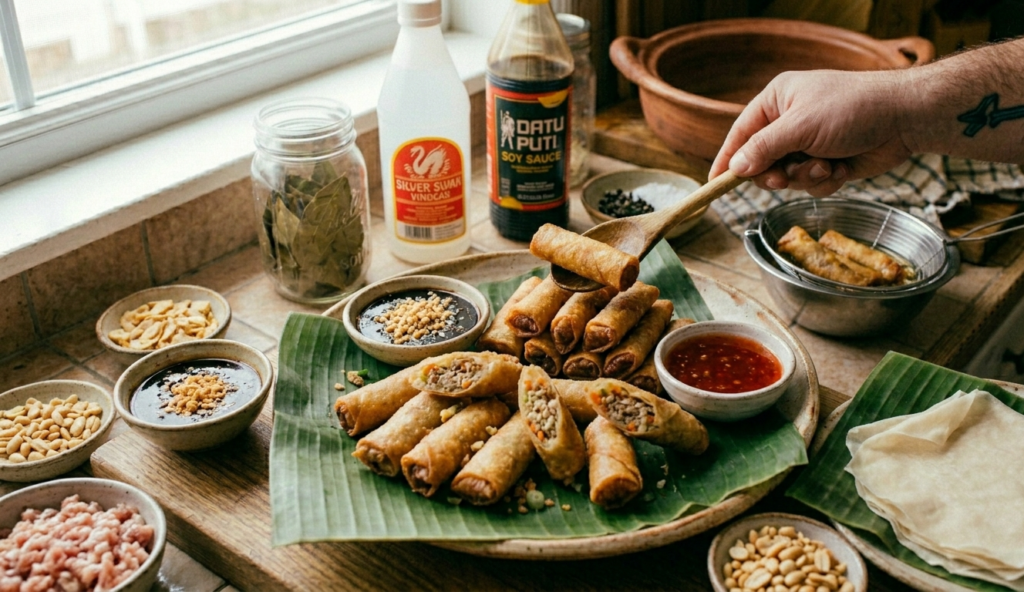
Lumpiang Shanghai is the most universally recognized Filipino lumpia — and almost certainly the one you have encountered at every Filipino party, potluck, and fiesta table. Despite the name, it has no authentic connection to Shanghai; the name likely reflects its Chinese-Filipino origins and the historical association of Hokkien-influenced dishes with Chinese cities in Filipino culinary vocabulary.
What it is: Thin, pencil-width fried rolls filled with a savory mixture of ground pork (sometimes mixed with shrimp), garlic, onion, carrots, green onions, and seasonings. Rolled tightly in a thin wheat lumpia wrapper and deep-fried until deeply golden and shatteringly crisp.
The wrapper: Thin, dry lumpia wrapper (the type sold frozen in Filipino and Asian grocery stores, stacked in squares). This wrapper becomes translucent and crackly when fried — not puffy or blistered like egg roll wrappers.
The filling: Ground pork is the classic base. Finely minced shrimp adds subtle sweetness. Carrots, water chestnuts, and green onions are the standard vegetables. Seasoned with soy sauce, fish sauce, salt, and white pepper.
The technique: Roll tightly — loose rolls burst open during frying. Seal the edge with a thin paste of flour and water. Fry in oil at 170–175°C (340–350°F) until golden. Drain on a rack, never paper towels. Serve immediately.
The dipping sauce: Sweet chili sauce is the modern standard. Toyomansi (soy sauce + calamansi) is the traditional pairing.
2. Lumpiang Sariwa (Fresh Lumpia)
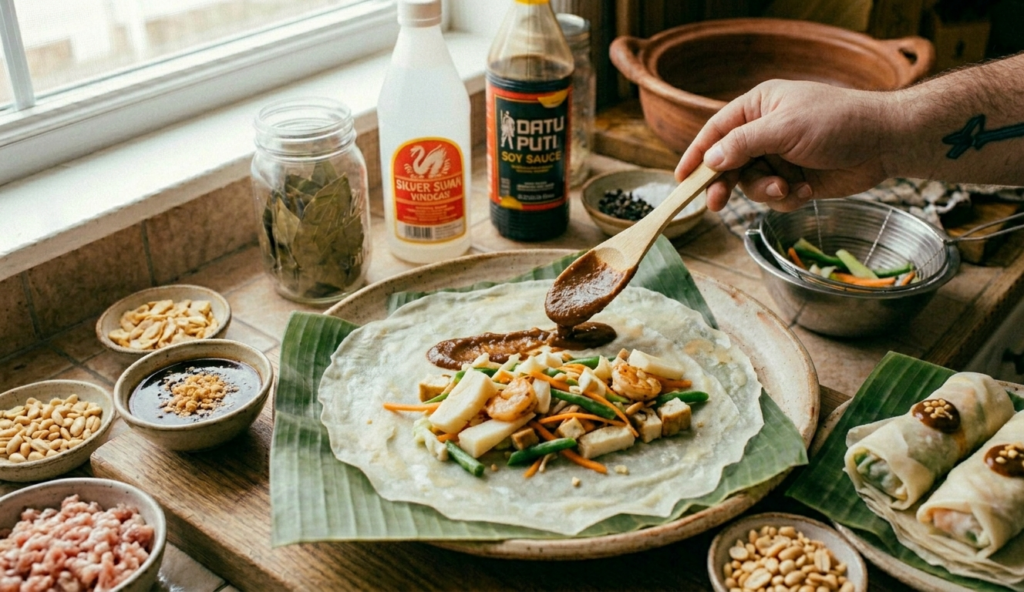
Where Shanghai is all about crunch and fire, lumpiang sariwa is its graceful, unhurried counterpart. Sariwa means “fresh” in Filipino, and this version is never fried — it is assembled with a warm cooked filling, wrapped in a soft, pale crepe-like wrapper, and served at room temperature topped with a rich brown garlic sauce and crushed roasted peanuts.
What it is: A fresh, un-fried lumpia built around a sautéed vegetable filling, wrapped in a thin egg-based crepe, and dressed generously with a sweet-savory sauce. Most commonly served at fiestas and special occasions.
The wrapper: A freshly made crepe — thin batter of flour, egg, water, and a little oil cooked in a non-stick pan. The crepe should be pale, pliable, and about 20–22 cm (8 inches) in diameter.
The filling: A warm sauté of ubod (heart of palm), cabbage, carrots, green beans, tofu, and pork or shrimp. The vegetables are cooked until tender but still with bite.
The sauce: A glossy, thick brown sauce made from garlic, soy sauce, brown sugar, and cornstarch — sweet, savory, deeply garlicky. Spooned over the top of the assembled roll, topped with crushed roasted peanuts.
Assembly order: Lay wrapper flat → add a lettuce leaf (prevents sogginess) → spoon filling → roll → top with sauce → finish with peanuts.
3. Lumpiang Ubod (Heart of Palm Lumpia)
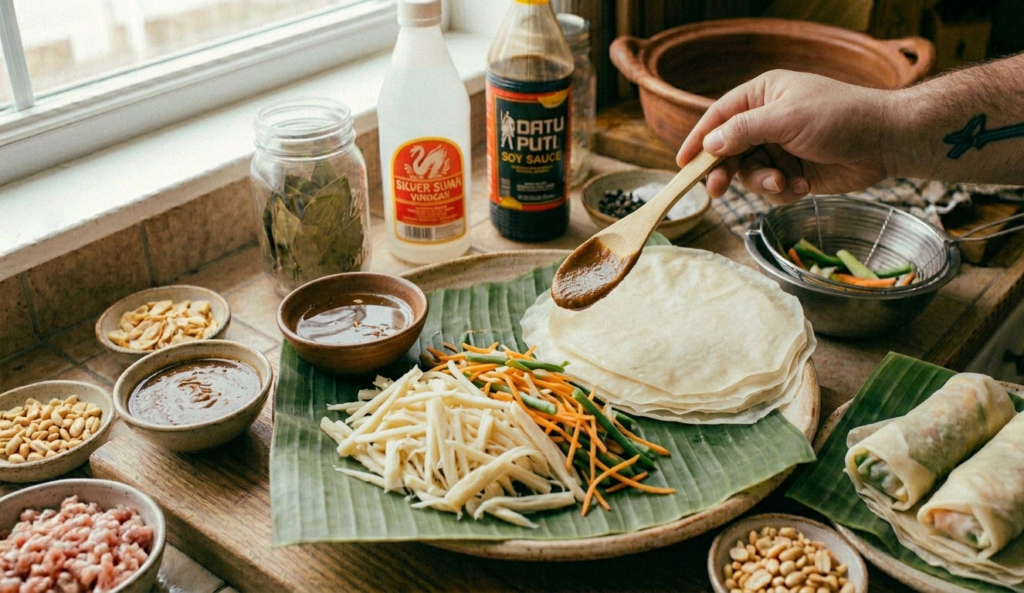
Lumpiang ubod is a regional specialty — most strongly associated with Batangas province — and arguably the most refined variety of Filipino lumpia. Ubod refers to the tender, ivory-white heart of a coconut palm tree: a soft, mildly sweet vegetable with a texture somewhere between water chestnut and cooked artichoke heart.
What it is: Lumpia filled primarily with ubod (heart of palm), sometimes combined with pork, shrimp, or other vegetables, served either fresh (in a crepe wrapper with garlic sauce) or occasionally fried.
The star ingredient: Fresh ubod has a clean, slightly sweet, faintly coconutty flavor and a satisfying firm-yet-tender bite. Outside the Philippines, canned heart of palm is an acceptable substitute, though slightly softer and less sweet.
How it differs from sariwa: Lumpiang ubod centers the ubod as the hero ingredient. The filling is often simpler — just ubod with pork and shrimp — which lets the palm heart’s subtle flavor shine.
Batangas-style note: In Batangas, lumpiang ubod is sometimes wrapped in a thicker, slightly chewier crepe and served with a tangier, less sweet garlic sauce. Some families add patis (fish sauce) directly into the sauce for deeper umami.
Lumpia Wrappers: A Comparison
Understanding wrappers is the key to understanding lumpia. Using the wrong wrapper for the wrong type is one of the most common mistakes home cooks make.
| Wrapper Type | Used For | Texture When Served | Where to Find |
| Thin dry lumpia wrapper (frozen) | Shanghai, fried lumpia | Shatteringly crisp, translucent | Filipino/Asian grocery, frozen section |
| Fresh crepe wrapper (homemade or refrigerated) | Sariwa, ubod | Soft, pliable, pale | Make at home or refrigerated section |
| Egg roll wrapper (thicker) | Not traditional | Puffier, less crackling | Mainstream grocery stores |
| Rice paper wrapper | Not lumpia | Chewy, translucent | Asian grocery stores |
For Shanghai: Always use the thin dry frozen wrapper. Never substitute egg roll wrappers — the result is a puffier, doughier roll that lacks the signature crackle.
For sariwa and ubod: Make the crepe fresh for best results. A thin batter (1 egg, ½ cup flour, ¾ cup water, pinch of salt) cooked in a lightly greased non-stick pan over medium-low heat, about 90 seconds per side, produces exactly the right wrapper.
The Complete Lumpia Dipping Sauce Guide
The sauce is not an afterthought — it is half the dish. Here are all the key dipping sauces for Filipino lumpia, when to use each, and how to make them.
1. Sweet Chili Sauce (Fried Lumpia’s Best Friend)
The most popular modern pairing for lumpiang Shanghai. A bright, slightly sticky sauce with just enough heat to cut through the richness of the fried wrapper and pork filling.
Store-bought: Mae Ploy Thai sweet chili sauce is the gold standard in Filipino households. Jufran banana sauce mixed with a little chili is a Filipino-specific alternative.
Homemade: Combine ½ cup white vinegar, ½ cup sugar, 3 cloves minced garlic, 1–2 tsp red chili flakes, and 1 tbsp cornstarch dissolved in 2 tbsp water. Simmer until thick and glossy. Finish with a squeeze of calamansi.
2. Toyomansi (Soy Sauce + Calamansi)
The traditional, no-fuss dipping sauce for fried lumpia — and arguably the most authentically Filipino. The acidity of calamansi cuts through fried fat while the soy sauce adds savory depth.
Ratio: 3 parts soy sauce : 1 part calamansi juice (or lemon juice as a substitute). Add a few sliced siling labuyo (bird’s eye chili) for heat. Serve in a small bowl.
Pro tip: Use calamansi, not lemon — the flavor is more floral and less astringent, which makes a noticeable difference.
3. Garlic Brown Sauce (Sariwa & Ubod’s Essential Sauce)
This thick, sweet-savory sauce is mandatory for lumpiang sariwa and ubod. It is spooned over the top of the assembled roll, soaking into the crepe wrapper.
Full recipe: 3 tbsp cooking oil, 1 whole head garlic (minced), 3 cups water or broth, ¼ cup soy sauce, ½ cup brown sugar, 3 tbsp cornstarch dissolved in ¼ cup cold water, salt and pepper to taste.
Method: Fry garlic in oil until golden and fragrant. Add water/broth, soy sauce, and sugar. Bring to a gentle boil. Whisk in cornstarch slurry and stir until thick and glossy. Season. The sauce should coat the back of a spoon and flow slowly.
Finish: Spoon generously over the rolled lumpia. Top with crushed roasted peanuts and raw minced garlic for the classic presentation.
4. Spiced Vinegar (Sukang Maasim with Garlic & Chili)
A sharp, clean dipping sauce that provides pure acidic contrast to fried lumpia — popular as an alternative to sweet chili for those who prefer savory over sweet.
Recipe: White cane vinegar or coconut vinegar, 4–6 cloves crushed garlic, 2–3 whole bird’s eye chili (siling labuyo), ½ tsp salt. Combine and let stand for at least 30 minutes before serving to allow the garlic and chili to infuse.
5. Liver Sauce (Old-School Celebration Lumpia)
Less common today but deeply traditional — a thick sauce made with mashed pork or chicken liver, vinegar, sugar, and garlic. Earthy, rich, and intensely savory.
Shortcut: Use a can of liver spread (Reno brand is the classic) thinned with vinegar and water, sweetened with sugar, and sautéed with garlic until thick. Extraordinary alongside crispy Shanghai.
How to Wrap Lumpia Like a Pro
Proper wrapping technique is the difference between lumpia that holds together through frying and lumpia that bursts, unravels, or becomes greasy. Follow this method for lumpiang Shanghai:
- Work on a clean, dry surface. Any moisture softens the wrapper and causes tearing.
- Lay the wrapper in a diamond orientation (point facing you). Place 2 tablespoons of filling in a log shape across the lower third of the wrapper, about 2 cm from the edge closest to you.
- Roll tightly from the bottom. Fold the bottom edge over the filling and roll once, pressing firmly to remove any air pockets. Air pockets expand during frying and can burst the roll.
- Fold in the sides like an envelope, pressing firmly.
- Continue rolling to the top edge. Seal the final edge with a thin paste of flour mixed with water (1 tsp flour + 2 tsp water). Press firmly and hold for a few seconds.
- Place seam-side down on a tray lined with parchment. Do not stack.
- Fry immediately or freeze. Wrapped lumpia left at room temperature for too long gets soggy. Freeze in a single layer on a tray first, then transfer to a bag — fry from frozen at 170°C.
How to Store Lumpia
Uncooked lumpiang Shanghai: Freeze on a parchment-lined tray in a single layer for 2 hours, then transfer to a zip-lock bag. Freezes well for up to 3 months. Fry directly from frozen — do not thaw first, as thawing makes the wrapper soggy.
Cooked lumpiang Shanghai: Best eaten immediately. Leftovers can be re-crisped in an air fryer at 190°C for 4–5 minutes. Do not microwave — this steams the wrapper and destroys the crunch.
Lumpiang sariwa and ubod: Assemble fresh and serve within 2 hours. Store filling and wrappers separately if making ahead.
Garlic brown sauce: Refrigerates well for up to 5 days in an airtight container. Reheat gently with a splash of water, stirring until smooth.
Frequently Asked Questions

Jeff Smith
"Cooking is the intersection of history, science, and emotion."
For me, the kitchen has always been a laboratory of culture. With a background deeply rooted in digital strategy and precision, I approach the culinary arts with the same rigor I apply to the digital landscape—analyzing flavors, perfecting techniques, and documenting the nuance that makes Filipino cuisine truly world-class.
Findme Recipe was born from a desire to bridge the gap between traditional heritage and the modern home cook. Whether it is mastering the perfect balance of acidity in a classic Adobo or simplifying complex regional dishes for everyday kitchens, my mission is to preserve our culinary identity through accessible, data-backed, and delicious content.
I am not just building a database; I am cultivating a community where every Filipino kitchen feels empowered, every ingredient is celebrated, and every family heirloom recipe finds a place to thrive.
Join me as we translate the soul of our islands into recipes for the next generation.