
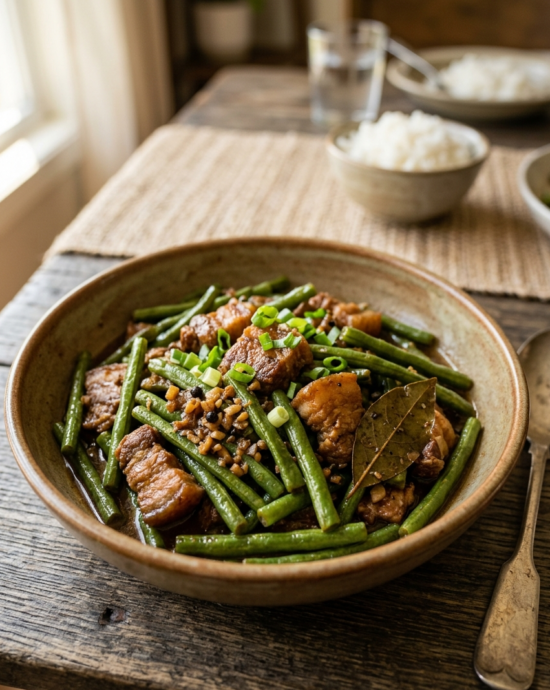

- Aromatic Base Searing

To begin this culinary journey, place a heavy-bottomed pan or traditional wok over medium-high heat and drizzle in the vegetable oil. Once the oil begins to shimmer, toss in the sliced pork belly strips. Sauté the meat until the fat renders out and the edges turn a beautiful golden brown. Next, add the smashed garlic and sliced onions into the rendered fat. Stir constantly to prevent burning while the kitchen fills with a sweet, pungent aroma. This foundational step is crucial because the caramelized pork fat serves as the primary flavor carrier for the entire dish. Continue stirring until the onions soften into a translucent state and the garlic bits become toasted, fragrant, and deeply bronze before moving forward.
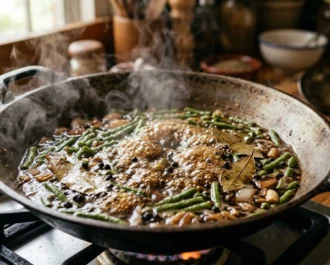
- The Braising Liquid Infusion
Once your aromatics are perfectly toasted, it is time to introduce the soul of the dish. Pour the soy sauce, cane vinegar, and water directly into the sizzling pan. Add the dried bay leaves and whole black peppercorns to provide that signature earthy depth. It is vital during this stage that you do not stir the mixture immediately after adding the vinegar. Allow the liquid to reach a steady, rolling boil for at least two minutes. This specific technique allows the harsh, raw acidity of the vinegar to cook off, leaving behind a mellow, tangy brightness that defines authentic Filipino adobo. The sugars in the soy sauce will begin to concentrate, creating a rich, dark umami base for the vegetables.
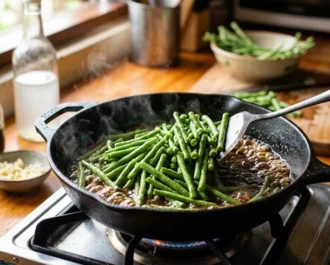
- Vegetable Integration and Texture Control
Now, carefully add the cut yardlong beans into the bubbling savory liquid. Toss the beans thoroughly using a spatula to ensure every single green strand is evenly coated with the dark, aromatic sauce. If you prefer a hint of sweetness to balance the salty profile, sprinkle in the brown sugar at this exact moment. Reduce your heat to medium, cover the pan with a tight-fitting lid, and let the beans simmer gently. You want the sitaw to absorb the soy-vinegar infusion while maintaining its structural integrity. Avoid overcooking the beans into a mushy state; the goal is to achieve a tender yet snappy texture. Check the pan occasionally to ensure the liquid hasn't evaporated too quickly during this process.
- The Final Reduction Technique
Remove the lid after about five minutes of simmering to inspect the consistency of your sauce. At this point, the yardlong beans should be vibrant green and slightly softened. Continue to cook the dish uncovered, allowing the liquid to reduce further. This concentration process intensifies the flavors, transforming the thin broth into a glossy, syrupy glaze that clings beautifully to the pork and vegetables. Taste the sauce carefully; it should be a bold harmony of salt, acid, and pepper. If the sauce is too salty, add a splash of water; if too sour, a pinch more sugar. This reduction phase is where the dish truly comes alive, darkening in color and gaining a professional, mouth-watering sheen before serving.
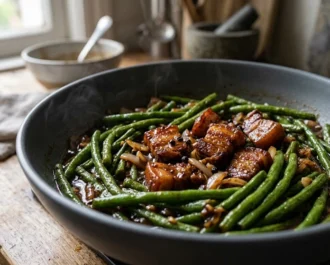
- Plating and Culinary Presentation
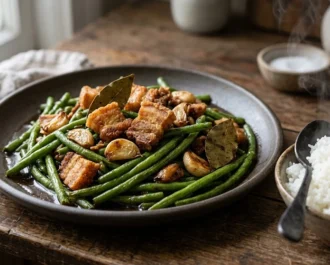
For the final presentation, transfer the Adobong Sitaw onto a wide, shallow serving platter to showcase the contrast between the dark sauce and the bright green beans. Ensure that the crispy pork belly pieces and softened garlic cloves are distributed evenly across the top for visual appeal. Pour the remaining reduced glaze over the vegetables to keep them moist and flavorful. This dish is traditionally served alongside a generous mound of steaming white jasmine rice, which acts as the perfect neutral canvas for the potent, savory sauce. The aromatic bay leaves can remain as a garnish, signaling the traditional roots of the recipe. Serve immediately while the steam carries the scent of garlic and vinegar to your waiting, hungry guests.

- Calories:180 kcal9%
- Energy:753 kj9%
- Protein:8 g16%
- Carbohydrates:14 g5%
- Sugar:4 g4%
- Salt:0.9 g15%
- Fat:10 g13%
Table of Contents
What Is Adobong Sitaw?
Adobong sitaw is a Filipino vegetable dish made from yard-long beans cooked in the classic adobo method — braised in a tangy mixture of vinegar, soy sauce, garlic, bay leaves, and black pepper. It is one of the most popular and economical vegetable preparations in everyday Filipino home cooking, beloved for its simplicity, bold flavor, and the way it transforms an humble ingredient into something deeply satisfying. The word adobo comes from the Spanish adobar, meaning to marinate or pickle, though the Filipino cooking method predates Spanish colonization and was likely used as a natural food preservation technique long before the term was adopted. What makes adobong sitaw distinct from other adobo preparations is the addition of sitaw — the Filipino name for the Chinese long bean or yard-long bean — a legume that can grow up to three feet in length and is a staple in Southeast Asian and Filipino cuisines. When cooked in adobo sauce, sitaw absorbs the tangy, savory flavors exceptionally well while retaining a satisfying texture that holds up beautifully without becoming mushy. The dish is typically cooked with pork, which provides richness and depth, though a fully vegan version using only beans and vegetables is equally delicious and widely enjoyed. Adobong sitaw is a prime example of the Filipino gift for elevating simple, inexpensive ingredients into dishes that feel complete, nourishing, and deeply comforting. It is a reliable go-to recipe for busy weeknights and can be made from start to finish in under thirty minutes, making it a cornerstone of practical Filipino home cooking.
Ingredient Notes
- Sitaw (Yard-Long Beans): Choose beans that are slender, firm, and deep green with no yellowing or limpness. Fresh sitaw should snap cleanly when bent. Avoid overly thick or mature beans, which tend to be tougher and less sweet.
- White Cane Vinegar: Filipino sukang maasim or white cane vinegar produces the most authentic flavor. It is milder and slightly sweeter than distilled white vinegar. Never substitute with balsamic or red wine vinegar, which will change the flavor profile dramatically.
- Soy Sauce: Use a quality Filipino soy sauce such as Silver Swan or Datu Puti for the most authentic taste. These have a slightly richer, less sharp profile compared to Japanese soy sauce varieties and complement the vinegar perfectly.
Ingredient Suggestions
- Hard-boiled eggs — halve them and add during the last five minutes of cooking to absorb the adobo sauce for a protein-rich addition
- Tofu — pan-fry cubed firm tofu until golden and add alongside or instead of pork for a vegetarian variation
- Chili flakes or bird’s eye chili — for those who enjoy a spicy kick balanced against the tanginess of the vinegar
- A small amount of sugar — a teaspoon balances the acidity and creates a more rounded, slightly sweet adobo flavor
Helpful Tips & Pro Tips
- Do not stir the vinegar during the initial boil. This is the single most important rule of adobo cooking. Stirring while the vinegar is still raw causes it to taste sharp and acidic. Let it boil undisturbed for at least two minutes before mixing.
- Cut sitaw uniformly for even cooking. Two-inch pieces ensure every bean cooks at the same rate and can be easily picked up and eaten with a spoon alongside rice. Unevenly cut pieces result in some being overcooked while others remain underdone.
- Why is my adobong sitaw not flavorful enough? This is often caused by insufficient browning of the pork or using too much water, which dilutes the sauce. Ensure the pork is well-browned before adding the adobo liquid, and reduce the sauce fully before serving.
- Resting overnight deepens the flavor. Like all adobo dishes, adobong sitaw tastes better the next day after the beans have had time to absorb the braising liquid. Reheat gently to preserve the texture of the beans.
How to Serve and Store
Serve adobong sitaw as a main dish over steamed white rice or as a side alongside fried fish or grilled pork. It pairs beautifully with plain congee for a simple yet satisfying meal. Store leftovers in an airtight container in the refrigerator for up to 3 days. The flavor improves significantly after resting overnight. Reheat in a small pan over low heat; add a teaspoon of water if the sauce has dried out. Not recommended for freezing as the beans lose their texture upon thawing.
Substitutions
- Sitaw → Green beans (Baguio beans/French beans) — shorter cooking time; use if sitaw is unavailable
- Pork belly → Chicken wings or thighs — equally delicious and a lighter option
- Pork belly → Skip entirely (vegan) — the dish is still flavorful using just the beans and aromatics
- Soy sauce → Coconut aminos — a gluten-free, slightly sweeter soy-free alternative
- White vinegar → Apple cider vinegar — adds a mild fruity note while maintaining the tangy adobo profile
Suggested Recipes
- Adobong Kangkong — water spinach cooked in the same adobo method; an equally popular and budget-friendly Filipino vegetable dish
- Pinakbet — a close cousin that also features string beans alongside other vegetables in a shrimp paste-flavored stew
- Adobong Manok — classic chicken adobo, the quintessential version of this beloved Filipino cooking technique
- Ginisang Sitaw — stir-fried long beans with garlic and shrimp for a quicker and lighter alternative preparation.