
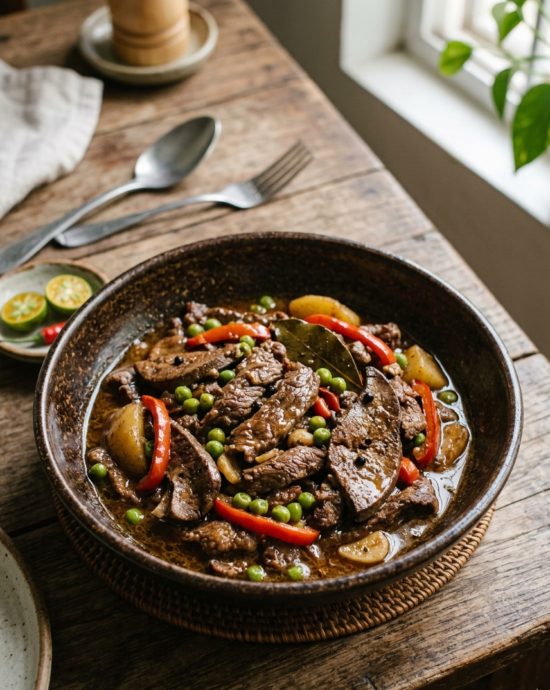

- The Marinade Mastery Phase

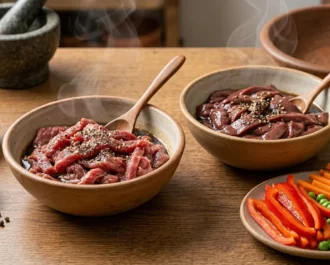
To begin this authentic Ilocano journey, you must first prepare the meat for maximum flavor absorption and structural integrity. Place your thinly sliced beef and liver into two separate bowls to prevent the liver's metallic profile from overpowering the delicate beef. To each bowl, distribute half of the soy sauce and a generous pinch of cracked black pepper. Allow these proteins to rest at room temperature for at least twenty minutes. This crucial period ensures that the salt penetrates the muscle fibers while the enzymes slightly tenderize the beef. While waiting, ensure your vegetables are sliced into uniform strips that match the size of the meat, creating a visually professional and harmonious plate that cooks evenly once it finally hits the hot pan.
- The Initial Searing Process
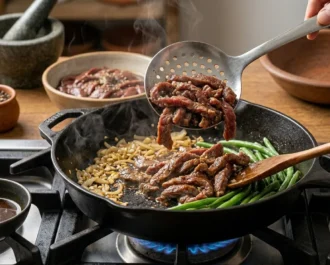
Heat a heavy-bottomed pan or a traditional wok over medium-high heat and pour in the cooking oil. Once the oil begins to shimmer, add the minced garlic and onions. Sauté these aromatics until the garlic turns a golden hue and the onions become translucent and sweet. Carefully add the marinated beef strips, discarding any excess liquid for now to ensure a proper sear rather than a steam. Cook the beef until the edges turn brown and crispy, releasing a rich aroma. This Maillard reaction is essential for building the foundational savory base of your Igado. Keep the heat consistent and stir frequently to prevent the garlic from burning, which would introduce an unwanted bitterness to your finished savory Filipino masterpiece.
- The Liver Integration Step
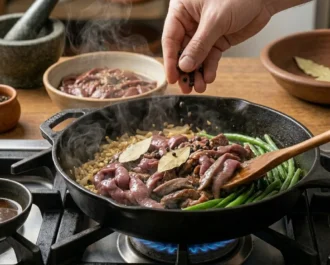
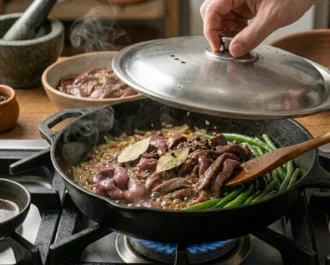
Once the beef has reached a beautiful browned state, it is time to introduce the sliced liver into the pan. Liver is a delicate ingredient that requires precise timing to avoid a grainy or rubbery texture. Add the liver strips and stir-fry them quickly with the beef and aromatics. Cook until the liver changes color but remains tender on the inside. At this stage, add the dried bay leaves and whole peppercorns to infuse the oil with their earthy and spicy notes. The scent of the bay leaves will begin to mingle with the savory meat, signaling the transition from simple frying to a complex braise. Ensure every piece of meat is well-coated in the flavored oil before moving forward.
- The Slow Simmering Technique
Now, pour in the remaining soy sauce marinade and the vinegar. It is vital that you do not stir the mixture immediately after adding the vinegar; allow it to boil undisturbed for two minutes to cook off the harsh acidic bite. Once the liquid is bubbling steadily, lower the heat to a gentle simmer. Cover the pan and let the meat cook for about fifteen to twenty minutes. This slow simmering process allows the connective tissues in the beef to soften while the sauce reduces into a thick, flavorful glaze. If the mixture looks too dry, you may add a small splash of water or beef broth to maintain the desired saucy consistency that Igado is famous for.
- The Final Vegetable Flourish
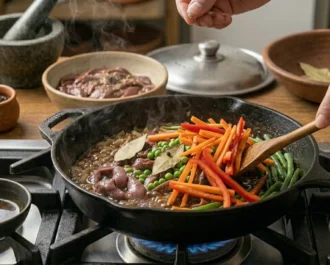
To complete the dish, toss in the julienned carrots and red bell pepper strips. These vegetables provide a necessary crunch and a vibrant pop of color against the deep brown of the meat. Add the green peas and stir everything together gently. Continue to cook for another three to five minutes until the carrots are tender-crisp. Taste the sauce and adjust with salt or additional pepper if needed. The final result should be a harmonious balance of salty, sour, and savory, with the vegetables providing a fresh contrast. Remove the bay leaves before serving. Your Beef Igado is now ready to be plated alongside a mound of warm, fluffy white rice for a truly authentic Filipino dining experience.
- Calories:380 kcal19%
- Energy:1,590 kj19%
- Protein:28 g56%
- Carbohydrates:12 g4%
- Sugar:3 g3%
- Salt:1.1 g18%
- Fat:24 g31%
Table of Contents
What Is Beef Igado?
Beef Igado is a legendary culinary gem hailing from the Ilocos region of the northern Philippines, a soy-vinegar braised dish that is bold, hearty, and unapologetically flavorful. While traditionally prepared using pork tenderloin and various offal — specifically liver, kidney, and heart — this beef adaptation offers a richer, more robust flavor profile that appeals to modern palates while preserving the dish’s Ilocano soul. The name “Igado” is widely believed to be derived from the Spanish word higado, which literally translates to liver, a linguistic connection that serves as a historical blueprint highlighting the deep influence of Spanish colonial cuisine on Filipino cooking techniques. Historically, this dish was a centerpiece of celebratory town fiestas and intimate family gatherings across Ilocos Norte and Ilocos Sur, symbolizing the Ilocano spirit of resourcefulness, frugality, and their mastery of nose-to-tail dining traditions.
The flavor profile of Beef Igado is a masterclass in balance: a savory-sour base fueled by the classic Filipino pairing of soy sauce and cane vinegar, elevated by the earthy, metallic richness of beef liver, and brightened by the colorful medley of carrots, bell peppers, and peas that distinguish it from its more famous cousin Adobo. Beef sirloin tip or tenderloin sliced into thin strips is the traditional cut of choice for the beef version because it cooks quickly while remaining tender, allowing the meat to absorb the tangy-savory braising liquid without becoming tough or stringy. Regional variations within Ilocos itself are subtle but proudly defended — some Vigan households add green olives and raisins for a touch of Spanish-style sweetness, others lean heavier on the offal for a more traditional gamy depth, and certain Pangasinan recipes finish the dish with a splash of patis (fish sauce) for added umami.
The dish is also closely related to other Filipino soy-vinegar braised dishes like Adobo and Bistek Tagalog, sharing DNA with the broader family of Spanish-influenced guisados that form the backbone of Filipino cuisine — but distinguished by its colorful vegetable medley and its signature offal-forward identity. Beef Igado is typically served as a celebratory main course at Ilocano fiestas, Christmas Noche Buena, and Sunday family lunches, where its thick, glossy reduced sauce becomes the perfect partner for hot steamed rice. Its bold flavor and make-ahead-friendly nature have helped it travel well beyond Ilocos, now appearing on menus across Manila and in Filipino-Ilocano diaspora kitchens worldwide. To eat Beef Igado is to taste the soul of Ilocano heritage — a complex savory experience that tells a story of cultural fusion, making it an essential addition to any culinary repertoire or dinner table.
Ingredient Notes
- Beef Sirloin Tip or Tenderloin: The best cut for Beef Igado is sirloin tip or tenderloin because of its tender grain and lean profile, which slices easily into the thin strips characteristic of the dish. Look for beef with bright red color, fine marbling, and firm flesh — avoid cuts that appear brown, dry, or have an off-putting smell. Slice against the grain for maximum tenderness.
- Beef Liver: This is the ingredient that gives Igado its signature earthy depth and metallic richness, honoring the dish’s name and Ilocano nose-to-tail tradition. Choose fresh liver that is glossy, deep burgundy in color, and free of any sour smell — soak briefly in milk or vinegar water before cooking to remove excess gaminess.
- Soy Sauce: Filipino soy sauce (toyo) has a slightly thinner consistency and saltier profile compared to Japanese soy sauce. Use regular Filipino soy sauce such as Silver Swan or Datu Puti for the most authentic Ilocano flavor; avoid sweet soy sauces which will throw off the balance of the dish.
- Sukang Iloko or Cane Vinegar: Authentic Ilocano sugarcane vinegar (sukang Iloko) is the soul of Igado, offering a mellow, complex tang that distinguishes the dish from Manila-style adobo. If unavailable, regular Filipino cane vinegar (sukang maasim) works as a substitute; avoid using distilled white vinegar, which is too harsh for this dish.
- Bell Peppers (Red and Green): Bell peppers add sweetness, vibrant color, and a fresh vegetal crunch that brightens the heaviness of the braised meat. Use both red and green for visual appeal and a fuller flavor profile; add them in the last 5 minutes of cooking to preserve their texture and bite.
- Carrots and Green Peas: The classic Igado vegetable trio is rounded out with carrots and peas, which add natural sweetness, color, and textural contrast. Use fresh carrots cut into thin matchsticks, and frozen green peas added near the end of cooking to retain their bright green color.
Ingredient Suggestions
- Green Olives: A handful of pitted green olives adds a salty, briny note that nods to the dish’s Spanish heritage — a beloved upgrade in Vigan-style Igado.
- Raisins: A small scattering of raisins added near the end of cooking adds gentle sweetness and a Spanish-influenced richness that balances the vinegar’s tang.
- Beef Kidney and Heart: For a fully traditional Ilocano Igado, add cleaned and sliced beef kidney and heart alongside the liver — the holy trinity of offal that defines the original dish.
- Hard-Boiled Quail Eggs: Whole quail eggs added in the last 10 minutes absorb the rich braising liquid and add a celebratory fiesta touch beloved by Filipino home cooks.
- Pickle Relish: A spoonful of sweet pickle relish adds tang and complexity, a quiet hack used by some Ilocano cooks to round out the sourness.
- Patis (Fish Sauce): A splash of patis in the final minutes of cooking deepens the umami profile, a Pangasinan-style finishing touch worth trying at least once.
Helpful Tips & Pro Tips
- Always Sear the Beef First: Skipping the searing step is the most common reason Beef Igado ends up tasting flat and watery. Proper searing creates the Maillard reaction, which generates hundreds of complex flavor compounds that no amount of additional seasoning can replicate. Sear in small batches over high heat for 30 to 60 seconds per side, then set aside before building the braising liquid.
- Cook the Liver Last: The liver should be added in the last 5 to 10 minutes of cooking, not at the start. Overcooked liver turns chalky, grainy, and bitter, ruining the dish entirely. Add it just long enough to lose its raw color while remaining tender — this is the single most important technique for an authentic Igado.
- Why Is My Igado Sour or Harsh? If your Igado tastes too sour or has a harsh vinegar edge, you simply didn’t simmer the vinegar long enough before adding the other liquids. Always pour in the vinegar and let it boil uncovered for 2 to 3 minutes without stirring to mellow its acidity. This technique is the secret to a balanced, well-rounded Ilocano-style sauce.
- Slice the Beef Thinly Against the Grain: For the silkiest texture, slice the beef into thin strips no thicker than a quarter inch, cutting across the muscle fibers rather than parallel to them. Briefly freezing the beef for 20 to 30 minutes before slicing makes this dramatically easier and produces uniform pieces that cook evenly.
- Rest Before Serving: Always allow the finished dish to rest off the heat for 5 to 10 minutes before plating. Resting allows the sauce to thicken to its proper consistency and the flavors to meld, producing more cohesive bites with every spoonful over rice.
How to Serve and Store
Beef Igado is best served hot directly from the pan alongside generous portions of steamed white rice, which soaks up the thick, glossy soy-vinegar sauce beautifully. For a more festive Ilocano-style presentation, transfer to a wide ceramic dish and garnish with extra strips of red bell pepper and a scattering of fresh green peas on top. The dish pairs wonderfully with a side of pickled vegetables (atsara) to cut through the richness, a serving of crispy bagnet or chicharon for textural contrast, and an ice-cold bottle of beer or a glass of basi (Ilocano sugarcane wine) for the adults at the table.
Leftover Beef Igado keeps exceptionally well. Store in an airtight container in the refrigerator for up to 3 to 4 days — the flavors deepen and improve significantly overnight, making it an excellent make-ahead dish for fiestas and family gatherings. For longer storage, freeze in portioned containers for up to 2 months, though note that the liver’s texture changes slightly upon freezing. Thaw overnight in the refrigerator before reheating. Reheat gently on the stovetop over low heat with a splash of water or beef broth to loosen the sauce, or microwave covered on medium power until heated through. Avoid aggressive reboiling, which can toughen the beef strips and overcook the liver.
Substitutions
- Beef Sirloin → Pork Tenderloin (Traditional Version): The original Ilocano Igado uses pork tenderloin with pork liver, kidney, and heart — substitute one-for-one for the most heritage-accurate version of the dish.
- Beef Liver → Chicken Liver (Milder Alternative): Chicken liver offers a milder, more delicate flavor for those who find beef liver too intense, while still preserving the dish’s signature offal character.
- Sukang Iloko → Apple Cider Vinegar (Pantry Alternative): Apple cider vinegar has a mild fruity acidity that closely mimics the softness of sukang Iloko without the harsh sharpness of distilled white vinegar.
- Soy Sauce → Coconut Aminos (Gluten-Free): Coconut aminos provides a similar salty-umami profile with a slightly sweeter note and is completely gluten-free, making it ideal for those with gluten sensitivities.
- Beef → Chicken Thighs (Budget-Friendly): Boneless chicken thighs sliced into strips offer a leaner, more affordable alternative that absorbs the braising liquid beautifully — a popular modern adaptation in Filipino-American households.
- Bell Peppers → Snow Peas or Snap Peas: For a different vegetable profile, swap bell peppers for crisp snow peas or sugar snap peas, which add a fresh, slightly sweet crunch.
- Beef and Liver → King Oyster Mushrooms (Vegan): For a plant-based version, use sliced king oyster mushrooms in place of beef and a smaller amount of finely chopped portobello in place of liver; both deliver a satisfying meaty texture and umami depth.
Suggested Recipes
- Pork Igado: The original Ilocano version of Igado made with pork tenderloin and traditional offal (liver, kidney, heart), the heritage dish from which this beef adaptation is derived.
- Adobong Baboy: The quintessential Filipino pork dish braised in soy sauce, vinegar, and garlic, sharing Igado’s salty-tangy character but without the offal and vegetable medley.
- Bistek Tagalog: A Filipino soy-citrus braised beef dish made with thinly sliced beef and topped with onion rings, sharing Igado’s thin-slice technique and soy-forward profile.
- Dinardaraan: Another iconic Ilocano dish — a savory pork blood stew often paired with Igado at Ilocos fiestas, showcasing the regional mastery of bold, offal-forward cooking.