
- Step 1: Brown the Beef and Chorizo
In a large stockpot, heat 2 tablespoons of cooking oil over medium-high heat. Season the beef shanks or brisket pieces generously with salt and pepper. Sear the beef in batches until golden-brown on all sides, removing to a plate as each batch finishes. In the same pot, add the sliced chorizo de Bilbao and cook for 3–4 minutes until it renders its bright orange-red oil and becomes slightly crisped on the edges. Do not discard this colored oil — it is extraordinarily flavorful and will become a key component of the pochero's base. Sauté the diced onion in the chorizo-flavored oil until softened and translucent, about 4 minutes. Add the minced garlic and cook for one more minute. The combination of browned beef fond and chorizo oil creates one of the most irresistible braising bases in all of Filipino cooking.
- Step 2: Build the Tomato Broth
Add the diced fresh tomatoes to the softened onion and garlic, crushing them lightly with a wooden spoon as they cook — this releases their juices and begins building the tomato base. Cook for 5–7 minutes until the tomatoes soften and break down into a rough sauce. Add the tomato sauce and stir to combine. Pour in the beef broth, add the bay leaves and fish sauce, and stir everything together. Return the seared beef and any accumulated juices to the pot, ensuring the beef is mostly submerged. Bring to a boil over high heat, then reduce to a gentle simmer. Cover partially and cook for 1.5 hours, skimming occasionally. The chorizo will continue to release its fat and paprika into the broth, gradually turning it a beautiful deep orange-red color that is characteristic of authentic Filipino pochero.
- Step 3: Add Root Vegetables and Chickpeas
After 1.5 hours, when the beef is approaching tenderness, add the quartered potatoes, sweet potato cubes, and cooked chickpeas (garbanzos). Stir gently to incorporate. The potatoes and sweet potatoes will absorb the tomato-chorizo broth as they cook, becoming deeply flavored. The chickpeas are a signature pochero ingredient — their nutty, creamy character provides an important textural and flavor contrast. Cover and continue simmering for 15–20 minutes until the potatoes are tender when pierced with a fork. Taste the broth and adjust seasoning at this stage — add more fish sauce for depth, salt for overall seasoning, and pepper for spice. The broth should be rich, tomato-forward, and deeply flavored from the long-simmered beef and chorizo, with a slight sweetness from the root vegetables.
- Step 4: Add Banana and Green Vegetables
Add the halved saba bananas (sweet plantains) — this is one of pochero's most distinctive and beloved elements. The bananas provide a sweet, starchy counterpoint to the savory, tomato-rich broth, a combination that puzzles newcomers but captivates anyone raised on Filipino cooking. Simmer for 8–10 minutes until the bananas are cooked through but still holding their shape. Add the pechay or bok choy in the final 3–4 minutes of cooking, covering briefly to allow the steam to wilt the greens. Taste the pochero one final time — the broth should now be a complex harmony of beef, chorizo, tomato, chickpea, and the subtle sweetness of the saba banana, with fresh greens providing a clean herbal note. Remove bay leaves before serving.
- Step 5: Serve in the Traditional Style
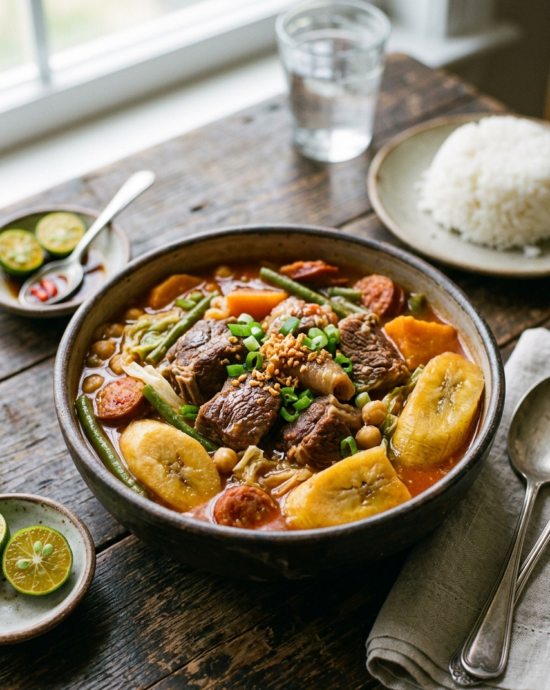
Pochero is traditionally served in a large, deep bowl that showcases its generous collection of components — beef, chorizo, banana, chickpeas, potato, sweet potato, and pechay all sharing the same rich, deep-orange tomato broth. Ladle generously, ensuring every bowl contains a representative mix of all the components. Garnish with freshly chopped parsley or green onions. Serve with steamed white rice and crusty bread for soaking up the exceptional broth. In some Filipino households, particularly those with Spanish heritage, pochero is served with a side of eggplant sauce (salsa de berenjena) — roasted and mashed eggplant seasoned with garlic and vinegar — which provides a smoky, tangy counterpoint to the rich, meaty main dish. This final accompaniment elevates pochero from wonderful to extraordinary.
- Calories:350 kcal18%
- Protein:28 g56%
- Carbohydrates:26 g9%
- Sugar:9 g10%
- Fat:15 g19%
Table of Contents
What Is Beef Pochero?
Beef Pochero is a Spanish colonial Filipino stew that beautifully illustrates the deep cultural exchange between Filipino cooking traditions and the nearly four centuries of Spanish colonial influence. Taking its name from the Spanish puchero — a traditional Spanish-Andalusian one-pot stew — the Filipino version has been thoroughly localized, incorporating indigenous ingredients like saba banana and pechay alongside the Spanish-origin elements of chorizo and chickpeas.
The result is a dish that is neither Spanish nor purely Filipino but something uniquely and wonderfully its own — a living culinary artifact of the colonial period that has been lovingly maintained and adapted by Filipino families for generations. The most distinctive element of Filipino pochero is the inclusion of saba bananas, which seem counterintuitive in a savory beef stew but provide a natural sweetness and starchy body that has won over generations of Filipino eaters.
Chorizo de Bilbao is another essential element, providing the characteristic paprika-red oil that colors the broth and the slightly smoky, cured meat flavor that distinguishes pochero from other tomato-based Filipino beef dishes. The chickpeas (garbanzos) are a direct Spanish inheritance, providing creaminess and protein that makes pochero one of the most nutritionally complete one-pot meals in the Filipino repertoire.
Today, pochero is most commonly prepared for Sunday family lunches and special occasions, its generous mix of components making it ideal for feeding large groups. It is a dish of abundance and generosity — the Filipino penchant for filling tables with as much food as possible finding perfect expression in pochero’s exuberant medley of meats, vegetables, and accompaniments.
Ingredient Notes
- Chorizo de Bilbao: This Spanish-style pork chorizo is the flavor backbone of pochero. Its paprika-orange oil perfumes the entire broth. Use the authentic canned or vacuum-packed variety for the best flavor. Do not substitute with Mexican-style chorizo.
- Saba Banana (Sweet Plantain): Saba is the cooking banana of the Philippines — firm, starchy, and mildly sweet. Unlike dessert bananas, saba holds its shape when cooked and provides the characteristic sweet counterpoint that makes pochero distinctive.
- Chickpeas (Garbanzos): Use cooked canned chickpeas for convenience or dried chickpeas soaked overnight and simmered separately. The chickpeas should be tender but not mushy when added to the stew.
- Beef Shank: Bone-in shank provides the richest broth with marrow and collagen. Brisket is a convenient boneless alternative with excellent flavor from its fat content.
Ingredient Suggestions
- Cabbage Wedges: Added with the pechay for additional vegetable variety and sweetness.
- Hard-Boiled Eggs: A traditional pochero addition; add whole peeled eggs in the last 10 minutes to heat through.
- Extra Chorizo de Bilbao: Doubling the chorizo quantity significantly enriches the broth’s color and flavor.
- Corn on the Cob: Sections of corn added with the potatoes make pochero even more generous and festive.
Helpful Tips & Pro Tips
- Why Is My Pochero Broth Thin? Pochero broth naturally thickens as the starch from potatoes and sweet potatoes dissolves into it during cooking. If still thin, mash one potato piece into the broth or add a tablespoon of tomato paste for additional body.
- Add Banana Last: Always add the saba banana after the potatoes have cooked, as banana overcooks quickly and becomes mushy. Eight to ten minutes in the simmering broth is sufficient.
- Chorizo Oil is Flavor Gold: When browning the chorizo, the orange oil it releases must not be discarded or drained. This paprika-colored oil carries the characteristic pochero flavor and color — build the entire dish in it.
- Rest Before Serving: Allow pochero to sit off the heat for 10 minutes before serving. The flavors integrate significantly during this resting period and the broth deepens in color.
How to Serve and Store
Pochero stores well for up to 3 days in an airtight container in the refrigerator. Store the banana separately if possible, as it continues to cook and become mushy in the hot broth. Add freshly cooked banana when reheating. The broth and beef improve overnight. Reheat over medium-low heat, adding water or broth if the stew has thickened too much. Freeze without banana, potato, and leafy vegetables for up to 2 months. Add these ingredients freshly when reheating from frozen for best texture.
Substitutions
- Chorizo de Bilbao → Smoked longanisa or Spanish paprika sausage — provides similar smokiness and color.
- Saba Banana → Unripe plantain — the closest widely available substitute; cook slightly longer.
- Chickpeas → White beans or kidney beans — different texture but maintain the creamy legume element.
- Beef Shank → Beef brisket or beef ribs — both braise beautifully in the tomato-chorizo broth.
- Fish Sauce → Soy sauce plus a pinch of salt — provides similar depth for those avoiding fermented fish.
Suggested Recipes
- Beef Caldereta: A Spanish-origin Filipino beef stew featuring liver spread and olives rather than chorizo and banana.
- Beef Bulalo: A pure beef bone broth soup showing the Filipino talent for extracting maximum flavor from beef.
- Chicken Pochero: The poultry version of the same dish — lighter but equally beloved in Filipino households.
Frequently Asked Questions

Jeff Smith
"Cooking is the intersection of history, science, and emotion."
For me, the kitchen has always been a laboratory of culture. With a background deeply rooted in digital strategy and precision, I approach the culinary arts with the same rigor I apply to the digital landscape—analyzing flavors, perfecting techniques, and documenting the nuance that makes Filipino cuisine truly world-class.
Findme Recipe was born from a desire to bridge the gap between traditional heritage and the modern home cook. Whether it is mastering the perfect balance of acidity in a classic Adobo or simplifying complex regional dishes for everyday kitchens, my mission is to preserve our culinary identity through accessible, data-backed, and delicious content.
I am not just building a database; I am cultivating a community where every Filipino kitchen feels empowered, every ingredient is celebrated, and every family heirloom recipe finds a place to thrive.
Join me as we translate the soul of our islands into recipes for the next generation.