
- Slice the Beef Correctly

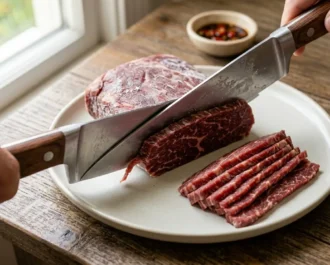
The quality of beef tapa depends enormously on how the beef is sliced. Using a sharp knife, slice the beef sirloin or tenderloin against the grain into thin strips approximately 3–4 mm thick. Slicing against the grain shortens the muscle fibers, resulting in tender, easy-to-chew tapa. Slicing with the grain produces stringy, tough strips that resist chewing even when properly marinated and cooked. For easier slicing, partially freeze the beef for 20–30 minutes before cutting — the slight firmness makes it much easier to achieve consistent, paper-thin slices. The thinness of the slices is important for two reasons: thin slices absorb the marinade more thoroughly and cook quickly enough during frying to caramelize without drying out. Take time with this step as it directly determines the final eating quality.
- Prepare the Sweet-Savory Marinade
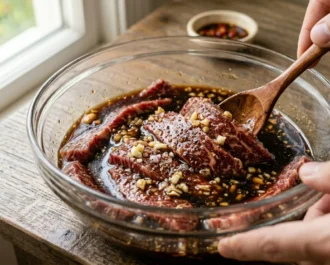
In a bowl or ziplock bag, combine the soy sauce, brown sugar, calamansi juice, minced garlic, ground black pepper, and salt. Stir or shake until the sugar fully dissolves — undissolved sugar will not penetrate the meat evenly and can cause uneven caramelization during frying. Add the optional MSG if using; it significantly enhances the savory umami note that makes commercial tapa so addictive and is used by most professional tapa makers. Add the sliced beef and toss thoroughly to coat every strip in the marinade. Transfer to an airtight container or seal the ziplock bag, pressing out excess air to maximize contact between the marinade and every surface of the beef. Refrigerate for a minimum of 8 hours, or ideally overnight. The longer marinating time allows the sugar, soy, and calamansi to fully permeate the beef, producing the characteristic deep flavor of well-made Filipino tapa.
- Air-Dry Before Frying (Optional but Recommended)
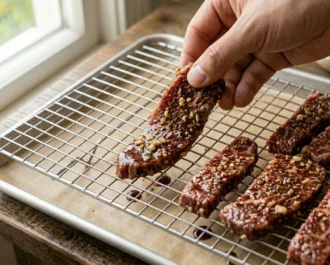
For tapa with the best caramelization and chew, remove the marinated beef from the refrigerator and lay the strips on a wire rack set over a baking sheet. Allow to air-dry at room temperature for 30–45 minutes. This drying step removes excess surface moisture from the marinade, which would otherwise cause the beef to steam rather than fry properly. Alternatively, pat each strip dry with paper towels just before frying. Traditional tapa was sun-dried for preservation — the air-drying step is a nod to this historical practice and genuinely improves the final texture. When properly dried, the tapa strips will develop a beautiful caramelized, slightly charred exterior during frying while remaining juicy inside. Skipping this step results in tapa that is softer and less caramelized than the commercial versions most Filipinos are familiar with.
- Pan-Fry to Caramelized Perfection
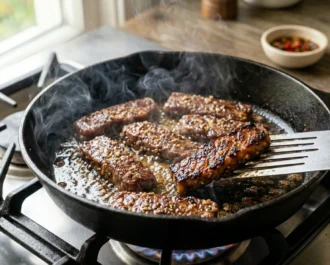
Heat a thin layer of cooking oil in a heavy skillet or cast iron pan over medium-high heat. When the oil is hot and shimmering, add the beef strips in a single layer — do not overcrowd. The sugar in the marinade will caramelize rapidly; watch carefully to prevent burning. Fry each batch for 2–3 minutes per side until golden-brown with slightly charred edges. The caramelized sugar creates a sweet, sticky crust that is the defining texture of excellent tapa. Tilt the pan occasionally to ensure even oil distribution. The strips should be cooked through but not dried out — the sugary marinade keeps them moist even at high heat. Remove each batch as it finishes and keep warm. Between batches, wipe out any overly dark fond from the pan to prevent bitterness in subsequent batches. The kitchen will smell intoxicatingly of caramelized garlic and sweet soy.
- Assemble the Classic Tapsilog
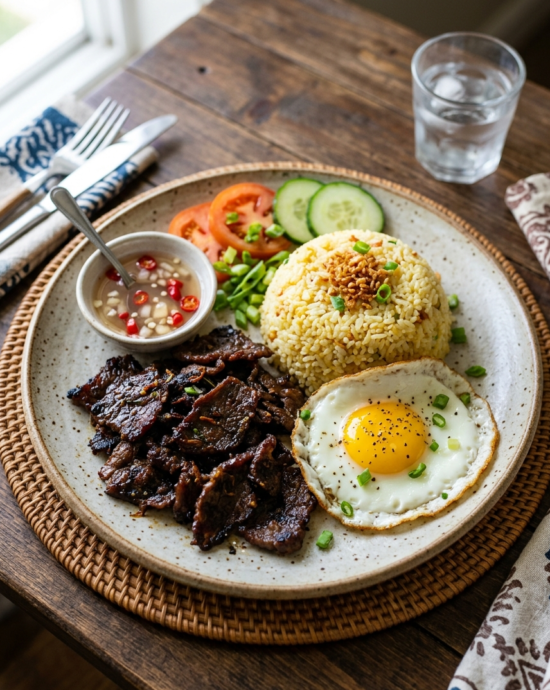
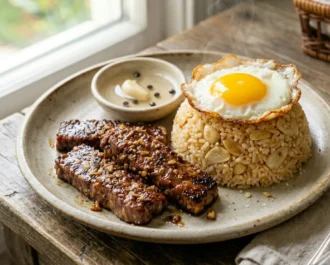
Beef tapa is almost never served alone in the Philippines — it is the star of tapsilog, one of the country's most iconic meals, particularly for breakfast. Arrange the caramelized tapa strips on one side of a plate. Place a mound of garlic fried rice (sinangag — left-over rice fried with plenty of minced garlic and salt) beside it. Add one or two fried eggs — the traditional preparation is sunny-side up with crispy edges. Serve with white cane vinegar spiked with garlic and black peppercorns for dipping, or with atchara (pickled green papaya) for a refreshing, acidic contrast to the sweet, salty beef. The combination of sweet caramelized beef, garlicky rice, rich egg yolk, and sharp vinegar is one of the great all-day eating experiences in Filipino cuisine. Tapsilog is equally perfect at 6 AM and midnight.
- Calories:360 kcal18%
- Protein:34 g68%
- Sugar:10 g10%
- Fat:18 g23%
- Salt:1.9 g32%
- Energy:1506 kj18%
Table of Contents
What Is Beef Tapa?
Beef Tapa is one of the most iconic and universally beloved dishes in the Philippines — a sweet-savory cured beef preparation that has become synonymous with Filipino breakfast culture and the tapsilog tradition that shapes how millions of Filipinos begin their day. Simple in concept but deeply satisfying in execution, tapa is a testament to the Filipino genius for coaxing extraordinary flavor from modest ingredients through proper curing and caramelization.
The word tapa comes from the Spanish and refers to cured or dried meat — a preservation technique that was essential before the age of refrigeration. Traditional tapa was made by rubbing thin slices of beef with salt, sugar, and garlic before drying under the sun, creating a preserved meat that could last for days without refrigeration. Modern tapa skips the drying process in favor of marinating, but the essential flavor profile of sweet-salty-garlicky cured beef remains unchanged.
The tapsilog phenomenon — the portmanteau of tapa, sinangag (garlic fried rice), and itlog (egg) — transformed beef tapa from a simple preserved meat into the centerpiece of an entire eating culture. Tapsilog restaurants, known as tapsihan, operate twenty-four hours a day in Filipino cities, serving the combination to workers, students, late-night revelers, and early-morning commuters with equal enthusiasm at any hour.
Every Filipino family has their own tapa recipe — some prefer a drier, chewier style, others favor a saucier, more caramelized version. Regional variations abound, with Visayan tapa tending toward sweeter profiles and Ilocano versions leaning drier and saltier. Whatever the variation, beef tapa remains one of the defining flavors of Filipino daily life.
Ingredient Notes
- Beef Sirloin or Tenderloin: These cuts slice easily against the grain and remain tender even when quickly fried. Request your butcher slice them thinly (3–4mm) if you prefer, or freeze briefly for easier home slicing.
- Brown Sugar: Brown sugar caramelizes beautifully during frying, creating the characteristic charred-sweet crust. The molasses content of brown sugar also adds depth beyond plain white sugar’s pure sweetness.
- Calamansi Juice: This Filipino citrus adds a bright, slightly floral acidity that balances the sweetness of the marinade and the saltiness of the soy sauce. Lemon or lime juice is an accessible substitute.
- Minced Garlic: Garlic is fundamental to tapa’s flavor. Fresh minced garlic is far superior to garlic powder. Use generously — 6 cloves for 500g of beef is the minimum for pronounced garlic flavor.
Ingredient Suggestions
- Sesame Oil (1/2 tsp): A small amount in the marinade adds a subtle toasted sesame note that complements the soy beautifully.
- Grated Ginger (1 tsp): Adds warmth and complexity to the marinade, particularly in Ilocano-style tapa.
- Five-Spice Powder (pinch): A small amount creates a Chinoy-style tapa with a more complex aromatic profile.
- Chili Flakes: For those who prefer their tapsilog with a kick — add to individual portions rather than the entire batch.
Helpful Tips & Pro Tips
- Why Is My Tapa Tough?: Tough tapa results from slicing with the grain, under-marinating, or over-cooking. Always slice against the grain, marinate overnight, and cook quickly over medium-high heat rather than slow-cooking at low heat.
- The Marinade Sugar Is Non-Negotiable: The caramelization of sugar during frying creates tapa’s characteristic exterior texture and sweet-salty flavor. Do not reduce the sugar — it is not just for sweetness but for the physical transformation of the crust during cooking.
- Make in Large Batches: Tapa marinating only requires time and refrigerator space. Make 2–3 kg at once, portion into meal-sized bags, and freeze. Pull out a bag the night before to thaw in the refrigerator for instant tapsilog any morning.
- Use Cast Iron for Best Caramelization: A heavy cast iron pan retains heat better than non-stick and produces the deepest caramelization on the tapa crust. If using non-stick, the results will be softer and less caramelized.
How to Serve and Store
Marinated raw beef tapa can be refrigerated for up to 3 days or frozen for up to 2 months — making it ideal for batch preparation. Cooked tapa is best consumed immediately. Leftover cooked tapa can be stored in the refrigerator for up to 2 days; reheat in a dry pan over medium-high heat for 1–2 minutes to restore some caramelization. Avoid microwave reheating as it makes the beef rubbery and removes all caramelized texture. For meal prep, marinate in bulk, portion into individual meal bags, and freeze for convenient weekday breakfasts.
Substitutions
- Beef Sirloin → Chicken breast (thin-sliced) — produces chicken tapa, equally popular; reduce marinating time to 4 hours.
- Soy Sauce → Coconut aminos — gluten-free option with slightly sweeter profile; excellent in tapa.
- Calamansi Juice → Fresh lemon or lime juice — provides similar acidity; lime has the closest flavor profile.
- Brown Sugar → Coconut sugar — adds a more complex, caramel-like sweetness; a premium natural substitute.
- MSG → Nutritional yeast (1/2 tsp) — provides umami depth without MSG for those avoiding the ingredient.
Suggested Recipes
- Bistek Tagalog: A close relative using the same soy-citrus flavor profile with thinly sliced beef and onion rings.
- Beef Salpicao: Another quick-cook Filipino beef dish celebrating quality cuts with a garlic-forward sauce.
- Beef Pares: The slow-braised counterpart to tapa — same sweet-soy flavor family but entirely different cooking approach.