
- Aromatic Base Sautéing

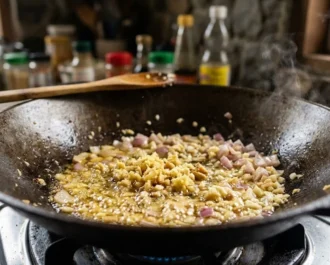
Heat a large wok or deep pan over medium heat and add the cooking oil. Begin by sautéing the minced ginger until it becomes fragrant and slightly golden, which is vital for neutralizing any heavy scent from the pork and shrimp paste. Add the diced red onions and minced garlic, stirring constantly to prevent burning while releasing their natural sugars and essential oils. This aromatic foundation creates a complex flavor profile that will eventually be balanced by the creamy coconut milk. Ensure the heat is consistent so the aromatics soften completely without charring. This initial step sets the stage for a deeply savory and aromatic dish, building layers of flavor that are characteristic of traditional Bicolano cooking techniques used throughout the region.
- Browning the Pork Strips
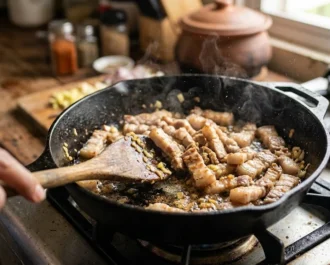
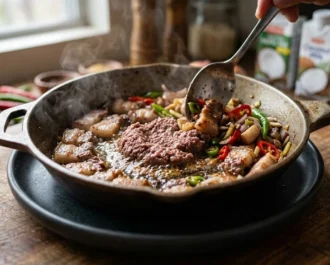
Incorporate the sliced pork belly strips into the pan with the sautéed aromatics. Increase the heat slightly to brown the meat, allowing the natural fats to render out and mix with the ginger and garlic. Stir the pork frequently to ensure every piece is evenly seared, which helps lock in the moisture for a succulent final texture. Continue this process for about ten minutes until the pork loses its raw pink color and takes on a light tan hue. Browning the meat at this stage adds a necessary depth of "umami" that complements the rich coconut cream added later. The rendered fat also serves as a vehicle for the shrimp paste, which will be introduced in the very next cooking phase.
- Developing the Savory Depth
Add the shrimp paste (bagoong alamang) to the center of the pan, allowing it to fry slightly in the rendered pork fat before mixing it with the meat. This frying process is essential for mellowing the pungent scent of the fermented shrimp and intensifying its savory, salty flavor. Stir everything together until the pork is thoroughly coated in the dark, rich paste. The interaction between the salty bagoong and the fatty pork creates the signature base that Bicol Express is famous for. Be careful not to add extra salt at this point, as the shrimp paste provides significant salinity to the dish. This stage ensures that the core savory elements are perfectly integrated before the creamy liquids are finally introduced.
- Creamy Coconut Reduction
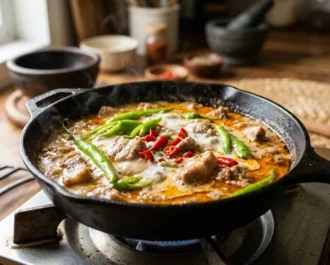
Pour the two cups of coconut milk and the minced Thai bird's eye chilies into the pan. Bring the mixture to a gentle boil, then immediately reduce the heat to a simmer. Allow the pork to braise in the coconut milk for about twenty minutes, or until the liquid has reduced by half and the meat is tender. The coconut milk provides a subtle sweetness that begins to balance the saltiness of the shrimp paste and the heat of the small chilies. Covering the pan during this process helps retain the moisture and ensures the heat is distributed evenly. This slow reduction is where the sauce begins to thicken, transforming into a rich, velvety coating that clings beautifully to each piece of pork.
- The Final Spicy Finish
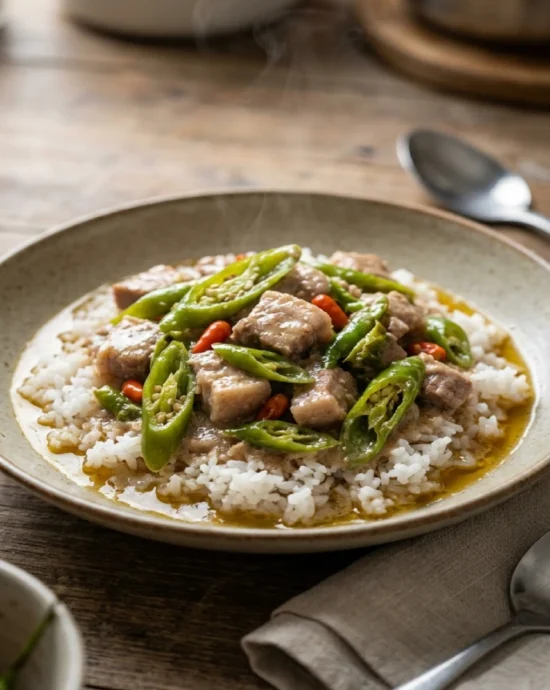
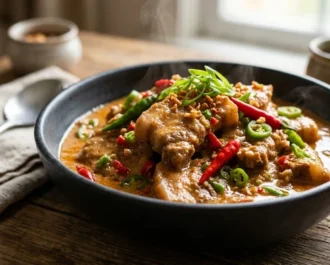
Add the sliced long green chilies and the thick coconut cream (kakang gata) to the pan. This second addition of coconut provides a luxurious, fatty finish that is the hallmark of a high-quality Bicol Express. Continue to simmer uncovered, stirring occasionally, until the sauce thickens significantly and begins to render oil (naglana). The green chilies should soften but still retain their vibrant color and mild heat. This final reduction concentrates all the flavors—salty, spicy, and creamy—into a harmonious masterpiece. Serve the dish hot over a generous bed of steamed white rice, which acts as the perfect neutral canvas for the intense, spicy, and coconut-rich sauce that defines this beloved regional Filipino delicacy.
- Calories:610 kcal31%
- Protein:22 g44%
- Carbohydrates:10 g3%
- Sugar:4 g8%
- Salt:1,320 mg57%
- Fat:56 g72%
Bicol Express is a fiery, coconut-rich stew that serves as the culinary ambassador for the Bicol region of the Philippines. Interestingly, while the dish is deeply rooted in the Bicolano tradition of using chilies and coconut milk (gata), its modern name was inspired by a train service running from Manila to Legazpi. Legend has it that the dish was formally named in the 1970s by Cely Kalaw in her Manila restaurant, though the cooking technique itself is centuries old. It reflects the lush, volcanic landscape of Bicol, where coconut trees are abundant and spicy food is a way of life. Unlike many other Filipino dishes that lean towards sour or sweet profiles, Bicol Express is unapologetically bold, creamy, and heat-forward, making it a favorite for spice lovers.
The flavor profile is a sophisticated dance of opposites. The initial hit of heat from the siling labuyo is immediately cushioned by the velvety, cooling richness of the coconut cream. Beneath these layers lies the deep, fermented umami of the shrimp paste, which provides the essential saltiness to ground the dish. It is a “must-try” because it encapsulates the “gata” culture of the Philippines, demonstrating how simple ingredients can be transformed into a luxurious, complex meal. The texture is equally dynamic, featuring tender pork and the slight crunch of green chilies. Whether you prefer a mild kick or a mouth-numbing experience, Bicol Express is a soul-warming comfort food that perfectly illustrates the regional diversity and bold creativity of the Filipino kitchen.