
- Aromatic Base Sautéing

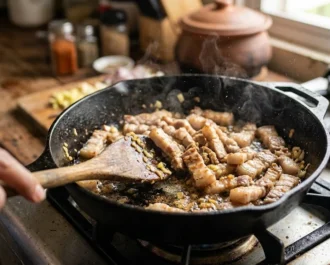
Heat a large wok or deep pan over medium heat and add the cooking oil. Begin by sautéing the minced ginger until it becomes fragrant and slightly golden, which is vital for neutralizing any heavy scent from the pork and shrimp paste. Add the diced red onions and minced garlic, stirring constantly to prevent burning while releasing their natural sugars and essential oils. This aromatic foundation creates a complex flavor profile that will eventually be balanced by the creamy coconut milk. Ensure the heat is consistent so the aromatics soften completely without charring. This initial step sets the stage for a deeply savory and aromatic dish, building layers of flavor that are characteristic of traditional Bicolano cooking techniques used throughout the region.
- Browning the Pork Strips
Incorporate the sliced pork belly strips into the pan with the sautéed aromatics. Increase the heat slightly to brown the meat, allowing the natural fats to render out and mix with the ginger and garlic. Stir the pork frequently to ensure every piece is evenly seared, which helps lock in the moisture for a succulent final texture. Continue this process for about ten minutes until the pork loses its raw pink color and takes on a light tan hue. Browning the meat at this stage adds a necessary depth of "umami" that complements the rich coconut cream added later. The rendered fat also serves as a vehicle for the shrimp paste, which will be introduced in the very next cooking phase.
- Developing the Savory Depth
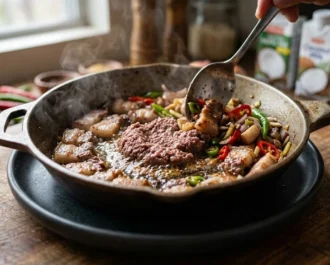
Add the shrimp paste (bagoong alamang) to the center of the pan, allowing it to fry slightly in the rendered pork fat before mixing it with the meat. This frying process is essential for mellowing the pungent scent of the fermented shrimp and intensifying its savory, salty flavor. Stir everything together until the pork is thoroughly coated in the dark, rich paste. The interaction between the salty bagoong and the fatty pork creates the signature base that Bicol Express is famous for. Be careful not to add extra salt at this point, as the shrimp paste provides significant salinity to the dish. This stage ensures that the core savory elements are perfectly integrated before the creamy liquids are finally introduced.
- Creamy Coconut Reduction
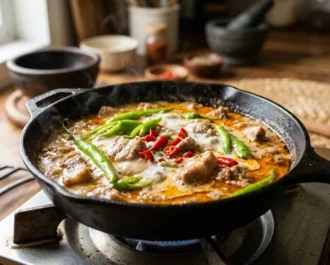
Pour the two cups of coconut milk and the minced Thai bird's eye chilies into the pan. Bring the mixture to a gentle boil, then immediately reduce the heat to a simmer. Allow the pork to braise in the coconut milk for about twenty minutes, or until the liquid has reduced by half and the meat is tender. The coconut milk provides a subtle sweetness that begins to balance the saltiness of the shrimp paste and the heat of the small chilies. Covering the pan during this process helps retain the moisture and ensures the heat is distributed evenly. This slow reduction is where the sauce begins to thicken, transforming into a rich, velvety coating that clings beautifully to each piece of pork.
- The Final Spicy Finish
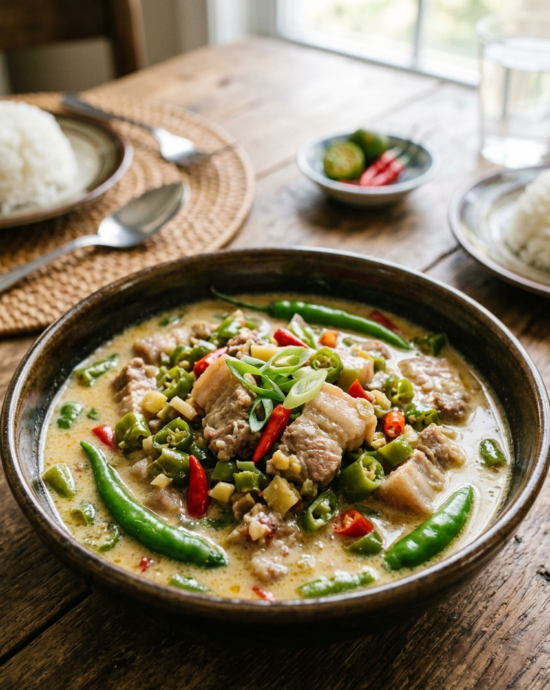
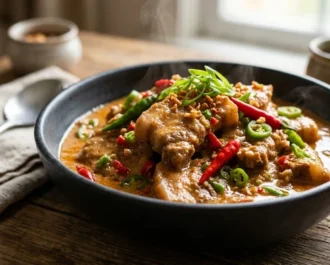
Add the sliced long green chilies and the thick coconut cream (kakang gata) to the pan. This second addition of coconut provides a luxurious, fatty finish that is the hallmark of a high-quality Bicol Express. Continue to simmer uncovered, stirring occasionally, until the sauce thickens significantly and begins to render oil (naglana). The green chilies should soften but still retain their vibrant color and mild heat. This final reduction concentrates all the flavors—salty, spicy, and creamy—into a harmonious masterpiece. Serve the dish hot over a generous bed of steamed white rice, which acts as the perfect neutral canvas for the intense, spicy, and coconut-rich sauce that defines this beloved regional Filipino delicacy.

- Calories:610 kcal31%
- Protein:22 g44%
- Carbohydrates:10 g3%
- Sugar:4 g8%
- Salt:1,320 mg57%
- Fat:56 g72%
Table of Contents
What Is Bicol Express?
Bicol Express is a fiery Filipino pork stew from the Bicol region of the Philippines, made by simmering cubed pork belly in coconut milk and coconut cream with generous quantities of both siling haba (long green chili) and siling labuyo (bird’s eye chili), seasoned with bagoong alamang (fermented shrimp paste) for a dish that is simultaneously spicy, rich, creamy, and deeply savory. It is widely considered one of the most iconic and beloved regional dishes in all of Philippine cuisine.
The dish was popularized and given its now-famous name in Manila by Cely Kalaw, who opened a canteen called Laing sa Mabini in Malate, Manila, in 1974. She named the dish after the Bicol Express train that connected Manila to the Bicol region, as a tribute to the fiery cooking traditions of her homeland. Though the dish’s roots are firmly in Bicolano cuisine — where coconut milk and chilies are staple ingredients in nearly every savory preparation — the Manila canteen brought it to national attention.
The Bicol region is renowned throughout the Philippines for its liberal use of chilies and coconut milk in everyday cooking, a culinary identity shaped by the region’s abundant coconut plantations and the local palate’s genuine love of heat. Bicol Express exemplifies this philosophy perfectly — it is unapologetically spicy, creamy, and bold, with no attempt to temper its fiery character for squeamish palates.
For anyone exploring Filipino regional cuisine, Bicol Express is an essential dish that reveals the depth and diversity of Philippine cooking beyond the milder flavors of Manila’s mainstream food culture, offering a full-sensory experience of Bicolano culinary heritage in every bite.
Ingredient Notes
- Pork Belly: Pork belly is the traditional and most flavorful cut for Bicol Express because its fat content melts into the coconut milk sauce during the long simmer, creating an extraordinarily rich, silky finish. Choose the best pork belly for Bicol Express by selecting a slab with a balanced fat-to-meat ratio — not too lean, which produces a dry result, and not purely fatty, which overwhelms the dish.
- Coconut Milk and Coconut Cream: Using both coconut milk and coconut cream in sequence is the key to a properly layered sauce in Bicol Express — the thinner milk is used for the initial long simmer while the richer cream is added at the end for body and glossiness. For the most authentic, fresh flavor, use freshly pressed coconut milk if available; canned full-fat coconut milk is an acceptable and convenient substitute.
- Bagoong Alamang: Bagoong alamang (fermented shrimp paste) is the secret ingredient that elevates Bicol Express from a simple coconut-chili stew to a deeply complex, umami-rich dish. Choose a good-quality bagoong alamang — look for varieties with a clean, briny smell rather than an overpoweringly sour or chemical aroma.
- Siling Haba and Siling Labuyo: The combination of both chili varieties is what makes Bicol Express’s heat profile unique — siling haba provides mild, grassy heat and body to the sauce, while siling labuyo delivers the sharp, intense, fruity heat spike that makes the dish thrillingly spicy. Adjust the ratio of labuyo to your personal heat tolerance.
Ingredient Suggestions
- Shrimp — Adding large, peeled shrimp in the final three minutes of cooking creates a luxurious surf-and-turf variation of Bicol Express that showcases the bagoong’s seafood affinity.
- String Beans (Sitaw) — Adding cut string beans alongside the pork extends the dish’s volume, adds textural variety, and absorbs the spicy coconut sauce beautifully.
- Gata Powder — Using one packet of gata (coconut milk) powder dissolved in water works as a shelf-stable coconut milk substitute in a pinch.
- Pechay or Kangkong — Leafy greens stirred in at the very end wilt quickly in the hot sauce, adding nutritional value and a refreshing green note to the richness.
- Turmeric — A small amount of fresh or powdered turmeric adds a warm golden hue to the coconut sauce and a subtle earthy note without altering the dish’s fundamental character.
Helpful Tips & Pro Tips
- The key to a properly separated, deeply flavored coconut sauce is patience during reduction. Cook on medium heat without a lid and resist the urge to rush — the coconut fat will visibly pool around the solids when the sauce is correctly reduced and ready.
- Why is my Bicol Express too watery? The coconut milk was not reduced sufficiently before adding the coconut cream. Return the pan to medium heat and continue simmering uncovered, stirring regularly, until the sauce thickens to a creamy, coating consistency.
- Always taste for salt after adding bagoong, as the fermented shrimp paste contributes significant saltiness that varies between brands; adding additional salt before tasting the bagoong-seasoned dish is a common mistake that results in an oversalted final dish.
- For a smokier depth of flavor, char the garlic and onion briefly in a dry pan before mincing and sautéing — this introduces a subtle smoky complexity common in traditional Bicolano home kitchens.
How to Serve and Store
Bicol Express is served hot in a bowl or on a plate alongside generous portions of steamed white rice, which is absolutely essential for managing the dish’s intense heat. It is traditionally served as part of a larger Filipino meal spread and pairs beautifully with mild vegetable sides like pinakbet or sautéed kangkong with garlic. Store leftover Bicol Express in an airtight container in the refrigerator for up to 3 days — the flavors deepen significantly overnight and many cooks consider the day-after version even better than freshly made. For freezing, store in freezer-safe containers for up to 2 months. Reheat gently on the stovetop over low heat, stirring frequently; add a splash of coconut milk if the sauce has thickened too much during storage.
Substitutions
- Pork Belly → Chicken Thighs — A lighter, lower-fat option that pairs just as well with the spicy coconut sauce; reduce cooking time to 20 minutes for tender results.
- Pork Belly → Tofu and Mushrooms — A vegan alternative that absorbs the spicy coconut sauce beautifully; use pressed extra-firm tofu and shiitake mushrooms.
- Bagoong Alamang → Fish Sauce — A widely available liquid substitute that provides similar saltiness and umami depth without the textural component of fermented shrimp paste.
- Siling Labuyo → Thai Bird’s Eye Chili — Virtually identical in heat level and appearance, Thai bird’s eye chili is a widely available gluten-free substitute.
- Coconut Milk → Lite Coconut Milk — A lower-calorie option for health-conscious cooks; expect a thinner sauce that will require slightly longer reduction time.
Suggested Recipes
- Laing — Another iconic Bicolano dish, Laing is made with dried taro leaves simmered in coconut milk and chilies, sharing Bicol Express’s signature coconut-and-chili flavor DNA.
- Ginataang Manok — Chicken simmered in coconut milk with chilies and ginger showcases how versatile Bicolano coconut cooking technique is across different proteins.
- Kare-Kare — For fans of rich, creamy Filipino stews, Kare-Kare’s peanut-based sauce is the mild, nut-forward counterpart to Bicol Express’s fiery coconut profile.
- Pork Igado — A tangy Ilocano braised pork dish that offers the same satisfying pork-centric richness as Bicol Express but through an entirely different regional culinary lens.