

- Step 1: Marinate the Chicken
Begin by combining the chicken pieces with soy sauce, crushed garlic, black peppercorns, and bay leaves in a large bowl or zip-lock bag. Toss everything thoroughly to ensure each piece is evenly coated with the marinade. The soy sauce not only seasons the chicken but also helps tenderize the meat over time. For the best flavor penetration, allow the chicken to marinate for at least 30 minutes at room temperature. If time permits, marinate overnight in the refrigerator for a noticeably deeper, more complex adobo flavor. Remove the chicken from the marinade before cooking, but always reserve the liquid — you will need it in the next step for building the braising base of this dish.
- Step 2: Sear the Chicken
Heat cooking oil in a wide, heavy-bottomed pan or Dutch oven over medium-high heat. Once the oil is shimmering and hot, carefully add the chicken pieces skin-side down in a single layer. Avoid crowding the pan — work in batches if necessary to ensure proper contact with the surface. Sear the chicken for about 3 to 4 minutes per side until a deep golden-brown crust develops. This step is crucial: browning the chicken through the Maillard reaction creates a rich, nutty layer of flavor that gives adobo its signature complexity. The crispy skin also adds a satisfying textural contrast to the eventual tender, braised interior. Once seared, transfer the chicken to a clean plate and set aside before moving on.
- Step 3: Build the Braising Liquid
Using the same pan with all the browned bits still intact, pour in the reserved marinade along with the vinegar and water. Stir gently to loosen the caramelized fond from the bottom of the pan — this is where a tremendous amount of flavor lives. Bring the liquid to a gentle boil over medium heat. As it starts to bubble, you will notice the sharp, acidic aroma of vinegar fill the kitchen — this is completely normal and will mellow significantly during cooking. Add a small pinch of brown sugar if you prefer a slightly rounded, less sharp finish. At this stage, resist the urge to stir too much; let the vinegar cook undisturbed for the first two minutes to allow the acid to mellow naturally.
- Step 4: Braise Until Tender
Return the seared chicken pieces back into the pan, nestling them snugly into the braising liquid. Make sure the liquid reaches at least halfway up the sides of the chicken. Reduce the heat to low, cover the pan loosely with a lid, and allow the chicken to braise for 25 to 30 minutes, turning the pieces once at the halfway mark. The slow, gentle cook at low heat is what transforms the chicken into fork-tender perfection, drawing the garlic and vinegar flavors deep into the meat. You will know the chicken is ready when it pulls easily from the bone with minimal resistance. Check the liquid level periodically and add small splashes of water if it reduces too quickly before the chicken is fully cooked through.
- Step 5: Reduce the Sauce
Once the chicken is cooked through, remove the lid and increase the heat to medium-high. Allow the braising liquid to reduce and concentrate into a glossy, deeply flavored sauce. This reduction stage typically takes an additional 8 to 10 minutes. Stir occasionally and spoon the sauce over the chicken pieces to keep them lacquered and moist throughout the process. As the sauce thickens, you will notice it turning a deep mahogany brown with a beautifully intense aroma. The natural starches from the garlic help bind the sauce slightly as it reduces. If you prefer an even drier, more caramelized finish — a style popular in many Filipino households — continue reducing until the sauce nearly disappears and the chicken begins to fry in its own rendered fat.
- Step 6: Rest and Serve
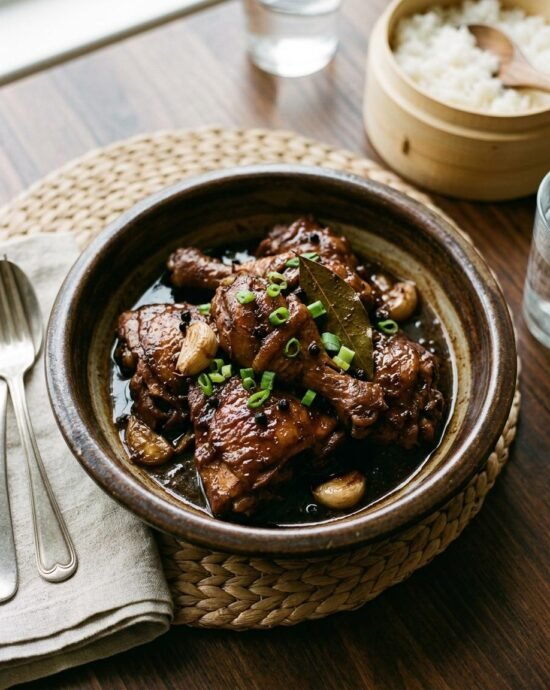
Remove the pan from the heat and allow the chicken adobo to rest uncovered for 5 minutes before serving. This resting period allows the juices to redistribute evenly back into the meat, resulting in a juicier, more flavorful bite. Discard the bay leaves before plating. Arrange the chicken pieces on a wide serving plate and generously spoon the thickened sauce over the top. Garnish with a few raw garlic slices or chopped spring onions for a pop of freshness and color if desired. Chicken adobo is best served immediately alongside a generous mound of freshly steamed white rice, which acts as the perfect vehicle for soaking up every last drop of the rich, tangy braising sauce.
- Calories:340 kcal17%
- Energy:1,423 kj17%
- Protein:28 g56%
- Carbohydrates:6 g2%
- Sugar:1 g1%
- Salt:1.3 g22%
- Fat:22 g28%
- Energy:1,423 kj17%
Table of Contents
What Is Chicken Adobo?
Chicken adobo is a Filipino braised chicken dish slow-cooked in a savory mixture of vinegar, soy sauce, garlic, and black peppercorns — widely regarded as the unofficial national dish of the Philippines. Its origins trace back to pre-colonial Filipino cooking, where vinegar was used as a natural preservative long before refrigeration existed. When Spanish colonizers arrived in the 16th century, they recognized the technique’s similarity to their own escabeche and called it “adobo” — derived from the Spanish word adobar, meaning “to marinate.” The name stuck, but the dish itself remains distinctly Filipino in identity, flavor, and spirit.
What sets chicken adobo apart from any other braised chicken dish in the world is its extraordinary balance of acidity, saltiness, and warmth. The vinegar cuts through the richness of the chicken fat while the soy sauce deepens the savory foundation. The garlic — used in generous, almost indulgent quantities — mellows during cooking into something sweet and nutty, perfuming every bite. Black peppercorns add a gentle, fragrant heat that builds slowly on the palate without overwhelming the dish.
Every Filipino family guards their own adobo recipe like a prized heirloom. Some use coconut milk for a richer, creamier finish. Others swear by a completely dry, pan-fried version with no sauce at all. Regional variations span the entire archipelago — Batangas favors turmeric-stained yellow adobo, while Cavite omits soy sauce entirely for a paler, purer vinegar version. Despite these differences, the soul of the dish remains unchanged: it is home, comfort, and Filipino identity in a single pot.
For anyone seeking an authentic gateway into Filipino cuisine, chicken adobo is the undisputed starting point — bold, approachable, and deeply satisfying.
Ingredient Notes
- Chicken (Bone-In, Skin-On): Bone-in pieces are non-negotiable for authentic adobo — the bones release collagen during braising, enriching the sauce with natural body and depth. Look for free-range or native manok chicken for the most flavorful result; the meat is firmer and more intensely flavored than commercially raised varieties.
- White Cane Vinegar: Filipino sugarcane vinegar (suka ng tubo) is the traditional choice and delivers a clean, mild acidity that is less sharp than distilled white vinegar. Look for locally produced brands like Datu Puti or Marca Piña — both widely available and authentically Filipino.
- Soy sauce: Use a Filipino-style soy sauce such as Silver Swan or Marca Piña for the most authentic flavor profile. These brands tend to be slightly less salty and more rounded than Chinese or Japanese soy sauces, making them ideal for adobo’s balance.
- Garlic: Use an entire head — not just a few cloves. Crushed (not minced) garlic releases its oils more gradually during cooking, giving the sauce a sweeter, more mellow garlic flavor rather than a sharp, raw bite.
- Black Peppercorns: Always use whole peppercorns rather than ground pepper. Whole peppercorns infuse the dish with fragrant, floral heat without turning the sauce bitter or murky.
Ingredient Suggestions
- Coconut milk — Stir in ½ cup during the last 10 minutes for a creamier, richer adobo sa gata variation.
- Dried chilies (siling labuyo) — Add 1–2 whole dried chilies while braising for a subtle, building heat.
- Potatoes — Quartered potatoes added during the braise absorb the sauce beautifully and make the dish more filling.
- Hard-boiled eggs — Add peeled hard-boiled eggs in the final 10 minutes to soak them in the adobo sauce — a beloved variation across many Filipino regions.
- Banana blossom (puso ng saging) — A popular meat extender and vegetarian addition that mimics the texture of pulled chicken.
Helpful Tips & Pro Tips
- Don’t stir the vinegar immediately after adding it. Allow the vinegar to come to a boil undisturbed for at least 2 minutes before stirring. This dissipates the harshest volatile acids and mellows the sharpness significantly — a technique passed down through generations of Filipino cooks.
- Marinating overnight is a game-changer. A 30-minute marinade is the minimum, but leaving the chicken in the soy-garlic mixture overnight in the refrigerator produces a noticeably more deeply flavored result. The salt in the soy sauce also brines the meat, resulting in noticeably juicier chicken.
- Why is my adobo sauce too thin? If your sauce isn’t thickening, it’s likely because the heat is too low. Remove the lid entirely and increase to medium-high heat for the final 8–10 minutes. The liquid should visibly bubble and reduce into a glossy, coating consistency.
- Let it sit overnight before reheating. Adobo is a dish that genuinely improves with time. Leftovers reheated the next day taste dramatically richer and more complex as the flavors continue to meld together in the refrigerator.
- For extra-crispy skin, after reducing the sauce, remove the chicken pieces and pan-fry them separately in a lightly oiled pan over high heat for 2–3 minutes per side. Serve the reduced sauce on the side or drizzled on top.
How to Serve and Store
Serve chicken adobo over a generous mound of steaming white rice — the rice is essential for absorbing the bold, tangy sauce. Pair it with a simple side of atchara (pickled green papaya) to cut through the richness, or a bowl of sinigang soup for a complete Filipino feast. For a more casual presentation, serve family-style straight from the pan with rice on the side.
Store leftover chicken adobo in an airtight container in the refrigerator for up to 4 days — the flavor actually deepens and improves after the first day. For longer storage, freeze in a sealed container for up to 2 months. To reheat, warm gently on the stovetop over low heat, adding a small splash of water if the sauce has thickened too much during storage. Avoid microwaving skin-on pieces, as it softens the skin and reduces texture quality.
Substitutions
- White cane vinegar → Apple cider vinegar — Offers a similarly mild, slightly fruity acidity that works beautifully without overpowering the dish.
- Soy sauce → Coconut aminos — A gluten-free, lower-sodium alternative with a slightly sweeter flavor profile; ideal for those with soy allergies.
- Chicken → Firm tofu or jackfruit — A plant-based swap that absorbs the braising liquid well; press tofu firmly before using to ensure proper browning.
- Whole peppercorns → ½ tsp cracked black pepper — A pantry-friendly substitute when whole peppercorns are unavailable; add with the garlic.
- Cooking oil → Coconut oil — Adds a faint, tropical richness to the sear that complements the garlic and vinegar beautifully.
- Brown sugar → Honey — A budget-friendly, natural sweetener to balance acidity; use sparingly, about ½ tsp.
Suggested Recipes
- Chicken Adobo sa Gata — The natural next step from classic adobo, enriched with coconut milk for a creamier, more indulgent sauce.
- Pork Adobo — Uses the same technique but with pork belly, yielding a richer, more fatty, and deeply caramelized version of the dish.
- Adobong Kangkong — A quick vegetable adobo using water spinach; perfect as a side dish alongside the classic chicken version.
- Chicken Inasal — Another iconic Filipino chicken dish, this time grilled and marinated in calamansi and annatto for a smoky, tangy counterpart.
Frequently Asked Questions

Jeff Smith
"Cooking is the intersection of history, science, and emotion."
For me, the kitchen has always been a laboratory of culture. With a background deeply rooted in digital strategy and precision, I approach the culinary arts with the same rigor I apply to the digital landscape—analyzing flavors, perfecting techniques, and documenting the nuance that makes Filipino cuisine truly world-class.
Findme Recipe was born from a desire to bridge the gap between traditional heritage and the modern home cook. Whether it is mastering the perfect balance of acidity in a classic Adobo or simplifying complex regional dishes for everyday kitchens, my mission is to preserve our culinary identity through accessible, data-backed, and delicious content.
I am not just building a database; I am cultivating a community where every Filipino kitchen feels empowered, every ingredient is celebrated, and every family heirloom recipe finds a place to thrive.
Join me as we translate the soul of our islands into recipes for the next generation.