

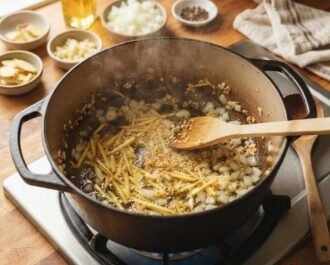
- The Ginger-Aromatic Sauté

Heat the cooking oil in a large, deep pot over medium flame. Add the ginger strips first, sautéing them until they become fragrant and slightly golden. Ginger is the essential heart of Arroz Caldo, providing the warming, peppery heat that defines the dish. Follow with the garlic and onions, cooking until the garlic is toasted and the onions are translucent. This aromatic base is vital for infusing the rice and chicken with deep flavor. The smell of frying ginger and garlic is the universal signal in a Filipino home that comfort is on the way. Taking the time to properly brown these aromatics ensures that every spoonful of the final porridge will be rich and incredibly fragrant.
- Searing the Chicken
Add the chicken pieces to the pot and season with the fish sauce. Sauté the chicken for about five to seven minutes, allowing the meat to sear and absorb the flavors of the ginger and garlic. Bone-in chicken is highly recommended as the marrow contributes significantly to the richness of the broth. The fish sauce provides the necessary umami foundation that grounds the dish. As the chicken browns, its natural fats will render and mix with the aromatics, creating a savory essence. This "sangkutsa" stage is a fundamental Filipino technique that ensures the meat is flavorful all the way to the bone, rather than being just a bland component of the rice porridge.
- Toasting the Rice
Add the rice to the pot and stir well to coat every grain with the flavored oil and chicken juices. Toast the rice for two to three minutes; this step prevents the grains from becoming too mushy and helps them absorb the flavors of the aromatics more effectively. If you are using safflower (kasubha), add it now to give the rice a beautiful, traditional yellow tint. The rice should begin to look slightly translucent around the edges. This careful preparation of the grains is the secret to a professional-grade Arroz Caldo, ensuring a texture that is thick and creamy yet still retains the distinct essence of the rice, providing a much more satisfying mouthfeel for the diner.
- The Slow Simmering Process
Pour in the chicken broth or water. Bring the mixture to a rolling boil, then immediately lower the heat to a simmer. Cover the pot and cook for about thirty to forty minutes, stirring occasionally to prevent the rice from sticking to the bottom. As the rice grains expand and burst, they will release their starches, naturally thickening the liquid into a silky, porridge-like consistency. If the mixture becomes too thick, you can add more broth to reach your desired texture. This slow-simmering process is where the magic happens, as the chicken becomes incredibly tender and the broth turns into a rich, ginger-infused elixir that is both nourishing and deeply flavorful for the soul.
- The Final Seasoning and Garnish
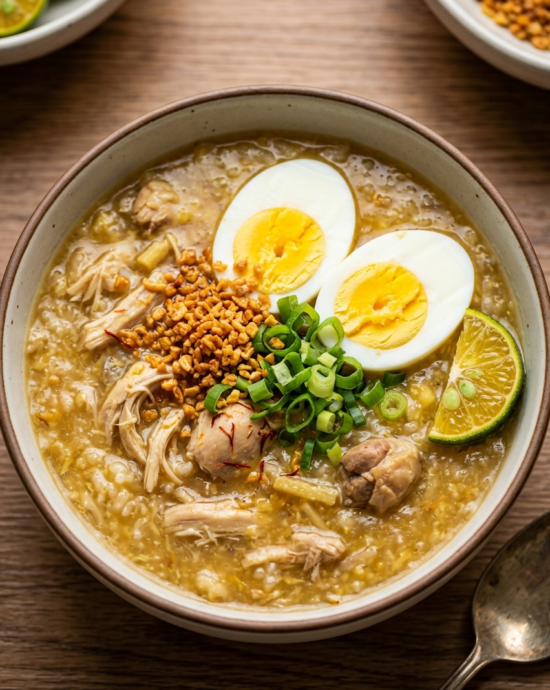
Once the rice is cooked and the chicken is tender, taste the Arroz Caldo and adjust the seasoning with salt or more fish sauce if needed. Turn off the heat and prepare the essential toppings that make this dish a complete experience. Ladle the hot porridge into bowls and top generously with toasted garlic, chopped scallions, and a sliced hard-boiled egg. The toasted garlic adds a crunchy, nutty contrast to the smooth rice, while the scallions provide a fresh, sharp bite. Serve with a slice of calamansi on the side to be squeezed in just before eating. The bright acidity of the calamansi perfectly cuts through the richness of the ginger-infused broth for a perfect balance.




- Calories:310 kcal15%
- Protein:24 g48%
- Carbohydrates:32 g11%
- Sugar:1 g2%
- Salt:880 mg38%
- Fat:10 g13%
Table of Contents
What Is Chicken Arroz Caldo?
Chicken arroz caldo is a Filipino rice porridge made by slow-simmering chicken, ginger, garlic, and rice together until the grains dissolve into a thick, nourishing, deeply savory congee-style broth — one of the most comforting and universally beloved dishes in Filipino cuisine. Its name blends Spanish (arroz, meaning “rice”) and Spanish-derived (caldo, meaning “broth”), reflecting the significant Spanish culinary influence on the Philippines, though the dish’s true roots trace back to Chinese congee traditions that arrived with early Chinese traders and settlers, known as the Sangley, centuries before Spanish colonization began.
Over generations, Filipino cooks transformed congee into something distinctly their own. The addition of ginger — generous, warming, and unmistakable — is the single most defining characteristic that separates arroz caldo from any Chinese or Japanese congee equivalent. Ginger in arroz caldo is not a background note; it is a central, dominant flavor that perfumes the entire bowl. Garlic, sautéed in oil until deep gold and crunchy, is showered over the finished porridge as a textural garnish. A squeeze of calamansi — the small, intensely fragrant Filipino citrus — brightens every spoonful with a sharp acid lift that keeps the richness from becoming overwhelming.
Arroz caldo holds a special place in Filipino culture as the ultimate comfort food for the sick, the tired, and the cold. It is the dish Filipino mothers reach for when a child has a fever, the one that appears at early-morning gatherings and Holy Week pilgrimages, and the street food of choice served from late-night lugawan stalls lit by single bulbs in the dark. No other Filipino dish so completely embodies the concept of malasakit — the deeply Filipino value of genuine care and concern for others.
Ingredient Notes
- Ginger: Fresh ginger is non-negotiable in arroz caldo — do not substitute with ground ginger. Julienned ginger releases its heat and aromatic oils gradually during cooking, producing a warming rather than sharp spiciness. Look for firm, unwrinkled ginger with smooth, tight skin as an indicator of freshness and potency.
- Rice: Traditional arroz caldo uses glutinous rice (malagkit), which breaks down more readily and produces a creamier, stickier porridge. Regular jasmine rice also works and produces a slightly looser, cleaner-flavored result. Do not use parboiled or converted rice — it will not break down properly during cooking.
- Fish Sauce (Patis): The primary seasoning vehicle in arroz caldo, fish sauce adds deep umami and saltiness. Use quality Filipino patis — Rufina is the gold standard. Season gradually and taste as you go; different brands vary significantly in saltiness.
- Chicken Broth: Homemade chicken broth is ideal, contributing a rich, collagen-heavy base that makes the finished porridge even silkier. If using store-bought, choose low-sodium to retain control over the final salt level of the dish.
- Calamansi: This small Filipino citrus is the essential finishing squeeze that transforms a good bowl of arroz caldo into a great one. Its flavor is unique — more intensely aromatic and floral than lemon, with the tartness of lime. If unavailable, a combination of lime and a drop of orange juice approximates it reasonably.
Ingredient Suggestions
- Safflower (kasubha) — Add a pinch to the simmering porridge for a beautiful golden-yellow color and a faintly floral, slightly earthy flavor note.
- Tokwa (firm fried tofu) — Cubed and fried golden, it adds a delicious crispy-chewy textural counterpoint to the creamy porridge.
- Century egg (salted duck egg) — A traditional Chinese-Filipino topping that adds deeply savory, creamy richness to each spoonful; slice and place alongside the hard-boiled egg.
- Crispy tinapa flakes (smoked fish) — Crumbled over the finished bowl, smoked fish adds a dramatic, intensely savory smokiness that elevates the dish.
- Sesame oil — A tiny drizzle just before serving adds a nutty, aromatic finish that bridges the Filipino and Chinese culinary influences beautifully.
Helpful Tips & Pro Tips
- Stir the pot regularly and never walk away. Rice porridge is prone to scorching and clumping on the bottom. Stir every 5 minutes from the moment the rice goes in — this distributes the heat evenly, prevents the starch from settling, and contributes to a smoother, creamier final consistency.
- Add liquid gradually for texture control. Different rice varieties absorb liquid at different rates. Start with the base amount of broth and add more in small increments as needed. This gives you full control over the final thickness rather than ending up with porridge that is either too watery or too stiff.
- Why does my arroz caldo taste bland? Arroz caldo is notoriously under-seasoned when fish sauce and salt are added too conservatively. Be generous — rice absorbs seasoning aggressively during cooking and dulls salty flavors significantly. Season the porridge more boldly than feels comfortable, then allow a squeeze of calamansi to balance at the table.
- The ginger should be generous. Many home cooks use too little ginger in arroz caldo, producing a flat, undistinctive result. Use at least a thumb-sized piece — more if you enjoy prominent ginger flavor. The warmth and spice of ginger is the soul of the dish.
- Make the fried garlic topping fresh. Pre-made fried garlic from a jar lacks the depth and crunch of freshly fried. The 5-minute effort to make it from scratch makes an enormous, immediately noticeable difference in the finished bowl.
How to Serve and Store
Serve arroz caldo immediately while piping hot, topped with fried garlic, spring onions, a hard-boiled egg, and a calamansi half. Offer fish sauce on the side for personal seasoning. Arroz caldo is most commonly served as a breakfast or late-night snack, though it is equally perfect as a light lunch or as nourishment for anyone under the weather.
Store leftover arroz caldo in an airtight container in the refrigerator for up to 2 days. Note that the porridge will continue to absorb liquid and thicken considerably in the refrigerator — when reheating on the stovetop, add a generous amount of water or broth and stir over medium heat until it returns to its original creamy consistency. Do not freeze cooked arroz caldo, as the rice becomes gummy and unpleasant upon thawing. For best results, make fresh and consume immediately.
Substitutions
- Glutinous rice → Jasmine rice — Produces a slightly looser porridge with a cleaner flavor; works well and is more widely available.
- Chicken → Beef tripe (goto) — The classic variation known as goto, using slow-braised tripe for a heartier, more intense flavor; increase cooking time significantly.
- Fish sauce → Soy sauce — A workable swap for those who dislike fish sauce; reduces the depth of umami slightly but still produces a flavorful result.
- Calamansi → Lime juice — The closest widely available substitute; adds tartness without the unique floral aroma of calamansi.
- Hard-boiled egg → Salted duck egg (itlog na maalat) — A richer, more intensely flavored topping for a more luxurious bowl.
- Chicken broth → Water with chicken bouillon — A budget-friendly substitute; use half the amount of bouillon recommended on the package to avoid over-salting.
Suggested Recipes
- Goto — The beef tripe version of arroz caldo; richer, more intensely flavored, and beloved as a late-night street food classic.
- Lugaw — A simpler, plainer rice porridge without meat, typically served with egg and condiments as a bare-bones, soothing comfort food.
- Chicken Tinola — Another ginger-forward Filipino chicken dish, this one a clear broth soup with green papaya and moringa leaves.
- Champorado — The Filipino chocolate rice porridge; another beloved congee-style comfort food that represents a completely different flavor profile.
Frequently Asked Questions

Jeff Smith
"Cooking is the intersection of history, science, and emotion."
For me, the kitchen has always been a laboratory of culture. With a background deeply rooted in digital strategy and precision, I approach the culinary arts with the same rigor I apply to the digital landscape—analyzing flavors, perfecting techniques, and documenting the nuance that makes Filipino cuisine truly world-class.
Findme Recipe was born from a desire to bridge the gap between traditional heritage and the modern home cook. Whether it is mastering the perfect balance of acidity in a classic Adobo or simplifying complex regional dishes for everyday kitchens, my mission is to preserve our culinary identity through accessible, data-backed, and delicious content.
I am not just building a database; I am cultivating a community where every Filipino kitchen feels empowered, every ingredient is celebrated, and every family heirloom recipe finds a place to thrive.
Join me as we translate the soul of our islands into recipes for the next generation.