
- The Master Stock Braise

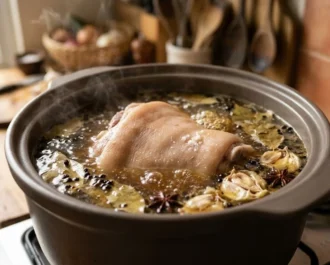
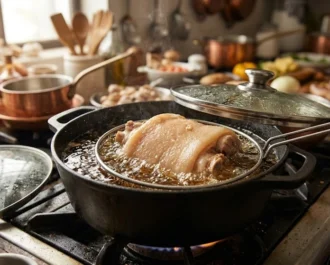
To begin this celebratory Filipino centerpiece, place the whole pork leg into a large stockpot. Submerge the meat completely in two liters of water, ensuring the entire trotter is covered. Add the sea salt, black peppercorns, dried bay leaves, smashed garlic, and star anise. Bring the liquid to a rolling boil over high heat, then immediately reduce to a gentle simmer. Cover the pot and allow the pork to braise for at least two hours. This slow-cooking phase is vital; it breaks down the tough collagen in the leg, ensuring the meat becomes incredibly tender while absorbing the deep, aromatic flavors of the spices. Once the meat is soft but not falling off the bone, carefully remove the leg from the flavorful broth.
- Strategic Cooling and Drying
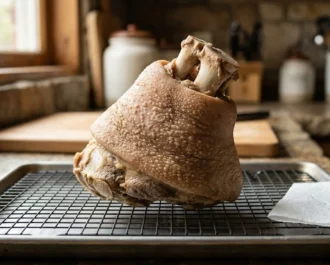
Achieving the perfect crackling requires extreme discipline regarding moisture control. Place the boiled pork leg on a wire rack and pat the skin thoroughly dry with paper towels. For a professional-grade finish, let the meat air-dry in the refrigerator for a minimum of five hours, though overnight is highly recommended. This chilling process tightens the skin and allows the fat to solidify, which is essential for the blistering effect during frying. If you are in a rush, you can use a hairdryer on a cool setting to speed up the surface evaporation. A bone-dry skin surface is your primary defense against dangerous oil splattering and the secret to achieving that coveted, uniform golden-brown color that makes the dish visually stunning.
- Mechanical Skin Preparation
Once the pork leg is cold and the skin feels like parchment, use a sharp fork or a specialized meat pricker to create hundreds of tiny punctures across the entire surface of the rind. Be careful to only pierce the skin and the fat layer, avoiding the deep muscle tissue to prevent juices from escaping. These micro-perforations act as vents, allowing the steam to escape and the hot oil to enter, which causes the skin to puff up into a light, crispy texture rather than staying hard and leathery. After pricking, rub an additional teaspoon of fine salt into the skin. The salt acts as a desiccant, drawing out any microscopic droplets of moisture that could compromise the final crunch of your masterpiece.
- The First Stage Frying
In a very deep, heavy-duty pot or a professional deep fryer, heat the neutral cooking oil to a steady 350°F. Carefully lower the prepared pork leg into the hot oil using long-handled tongs or a frying basket. Use a heavy lid or a splash shield immediately, as the remaining moisture in the bone can cause significant popping. Fry the leg for approximately fifteen to twenty minutes, rotating it occasionally to ensure even browning on all sides. During this initial fry, the fat renders out and the skin begins to take on a pale, golden hue. You are looking for a consistent base cook that heats the meat thoroughly to the bone while preparing the exterior for its final high-heat transformation.
- The High-Heat Blistering
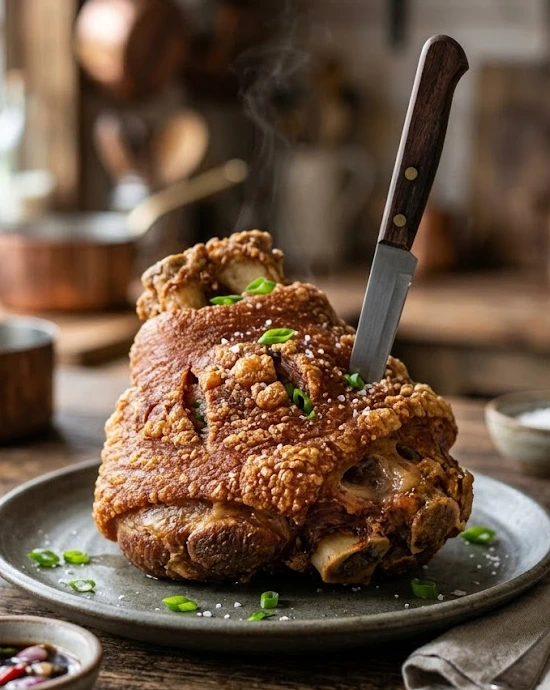
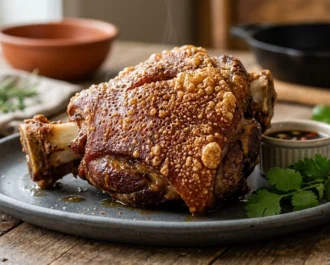
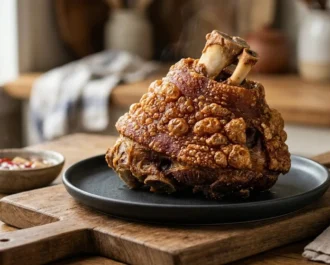
For the final spectacular finish, remove the pork leg from the oil and increase the burner heat until the oil temperature reaches a scorching 400°F. Submerge the leg back into the oil for a brief but intense two to three minutes. This sudden thermal shock causes the skin to expand rapidly, creating the signature blistered and bubbly appearance that defines a perfect Crispy Pata. The skin should now be mahogany in color and shatteringly crisp to the touch. Carefully lift the leg from the oil and let it rest on a rack for ten minutes before carving. This resting period allows the internal juices to stabilize, ensuring every slice is a harmonious blend of crunchy exterior and succulent, melt-in-your-mouth interior meat.
- Calories:620 kcal31%
- Energy:2,594 kj31%
- Protein:38 g76%
- Carbohydrates:10 g4%
- Sugar:2 g2%
- Salt:1.6 g27%
- Fat:46 g59%
Table of Contents
What Is Crispy Pata?
Crispy Pata is a beloved Filipino deep-fried pork dish made from a whole pork hock or knuckle that is first boiled until fork-tender with aromatics, then dried and deep-fried twice to achieve a shattering, golden-brown crackling exterior surrounding collagen-rich, juicy, fall-off-the-bone meat. It is widely considered one of the ultimate Filipino party and celebration dishes, appearing prominently at birthdays, fiestas, family reunions, and any gathering where communal indulgence is the order of the day.
The dish is believed to have originated in Filipino Chinese restaurants and carinderia culture during the mid-20th century, building on the pork-frying traditions brought by Chinese immigrants to the Philippines. The term ‘pata’ is the Filipino word for leg or hoof, specifically referring to the pork knuckle cut. Crispy Pata became a staple of Filipino restaurant menus throughout the 1960s and 1970s and has since cemented its status as an undisputed Filipino culinary icon.
The appeal of Crispy Pata lies in its extraordinary textural contrast — the crackling pork skin shatters at the touch, giving way to layers of melting fat and then deeply flavorful, gelatinous, tender meat that has absorbed the aromatic boiling broth. The mandatory dipping sauce of soy sauce, vinegar, garlic, and chili provides a sharp, acidic counterpoint that cuts through the richness and refreshes the palate between bites.
For food lovers seeking an authentic, show-stopping Filipino dining experience, Crispy Pata represents the pinnacle of pork cookery in Philippine culinary tradition — a dish that demands skill, patience, and respect but rewards with an unforgettable eating experience that is impossible to replicate by any other cooking method.
Ingredient Notes
- Whole Pork Pata: The whole pork hock is non-negotiable for authentic Crispy Pata — its unique combination of skin, fat, connective tissue, and bone-attached meat produces the characteristic textural contrast no other cut can replicate. Choose the best pork pata for Crispy Pata by selecting a piece with thick, intact skin, minimal bruising, and a clean, fresh pork smell.
- Salt and Peppercorn Rub: A generous salt rub applied while the pork is still warm from boiling is essential — the salt draws out surface moisture through osmosis, creating the dry exterior necessary for crackling formation during frying. Use coarse salt for maximum moisture-drawing effectiveness.
- Soy Sauce and Sugar in Boil: Adding soy sauce and a touch of sugar to the boiling liquid seasons the meat from within and contributes to the deep mahogany color of the finished crackling through the caramelization of sugars in the skin during high-heat frying.
Ingredient Suggestions
- Star Anise — Adding two star anise pods to the boiling liquid introduces a subtle anise-sweet complexity that makes the meat’s flavor more intriguing and multi-dimensional.
- Sprite or 7-Up — Some cooks add a can of clear soda to the boiling liquid; the carbonation and sugar tenderize the meat and contribute to deeper browning and crackling color.
- Lemon or Calamansi in Dipping Sauce — A squeeze of fresh calamansi in the dipping sauce adds bright citrus acidity that perfectly balances the rich fat of the fried pata.
- Atchara (Pickled Papaya) — Serving cold, tangy pickled green papaya alongside Crispy Pata is a traditional and refreshing palate cleanser that offsets the richness beautifully.
Helpful Tips & Pro Tips
- Perforating the skin with a skewer before drying is the single most effective technique upgrade for better crackling — more perforations mean more moisture escape routes during frying, resulting in more uniformly puffed, blistered skin across the entire surface.
- Why is my Crispy Pata skin rubbery and not crispy? The skin was not dry enough before frying, or the second fry temperature was too low. Overnight refrigerator drying and an oil temperature of 190–200°C are both non-negotiable for truly crispy results.
- Never cover the pot during frying — a lid traps steam, which is the direct enemy of crackling formation. Keep the pot fully open with a splatter screen for safety.
- For the crispiest possible skin, raise the pata slightly out of the oil toward the end of the second fry using a metal hook or tongs, allowing direct intense heat to hit the upper skin portions that have been submerged throughout cooking.
- Allow the fully fried pata to rest on a wire rack — never on paper towels — as paper towels trap steam beneath the skin and immediately soften the crackling you worked hours to achieve.
How to Serve and Store
Serve Crispy Pata immediately after the resting period by displaying it whole on a large platter before chopping tableside for dramatic effect, accompanied by the classic soy-vinegar-garlic-chili dipping sauce and steamed white rice. Atchara (pickled green papaya) is a traditional and refreshing accompaniment that cuts through the richness. Leftover Crispy Pata should be stored in an airtight container in the refrigerator for up to 3 days; the crackling will soften during storage. Reheat in an air fryer at 200°C for 8–10 minutes or in a conventional oven at 220°C for 12–15 minutes to restore crackling crispiness. Frozen Crispy Pata (without crackling) stores well for up to 1 month; fry from frozen at low temperature first to heat through, then high temperature to re-crisp.
Substitutions
- Pork Pata → Pork Belly Block — A more widely available cut that undergoes the same boil-dry-double-fry process, producing excellent crackling with a flatter, easier-to-serve presentation.
- Soy Sauce in Dip → Coconut Aminos — A soy-free, gluten-free dipping sauce base with similar salty, umami depth suitable for those with soy allergies.
- White Vinegar → Calamansi Juice — Replacing vinegar in the dipping sauce with fresh calamansi juice creates a brighter, more citrusy dip that many Filipinos prefer.
- Cooking Oil → Lard or Coconut Oil — Using animal fat or coconut oil for frying adds subtle flavor nuance and provides a higher smoke point for the extreme temperatures required.
Suggested Recipes
- Bagnet — The Ilocano double-fried pork belly dish shares Crispy Pata’s double-frying philosophy and love of dramatic crackling, making it a natural next exploration for crackling enthusiasts.
- Lechon Kawali — A simpler, everyday version of Filipino crispy fried pork using pork belly rather than the whole knuckle, perfect for weeknight Crispy Pata cravings.
- Kare-Kare — Pork pata is the traditional protein in this rich peanut-sauce stew; leftover boiled pata from a failed crackling attempt can be repurposed beautifully in Kare-Kare.
- Patatim — A Chinese-Filipino braised pork hock dish using the same cut in a sweet soy braising sauce, offering a completely different but equally satisfying pata experience.