

- Make the marinade
In a large bowl, whisk together the gochujang, gochugaru, soy sauce, brown sugar, minced garlic, grated ginger, and sesame oil until smooth and well combined. This spicy, slightly sweet marinade forms the backbone of dakgalbi's bold flavor, so taste it before adding the chicken and adjust the balance of heat and sweetness to your liking. A well-balanced marinade should taste assertively spicy and savory on its own, since it will mellow somewhat once mixed with the other ingredients during cooking.
- Marinate the chicken
Add the cubed chicken thighs to the marinade and toss thoroughly until every piece is well coated. Cover the bowl and refrigerate for at least 30 minutes, though marinating for up to 4 hours will produce a deeper, more developed flavor throughout the meat. Chicken thighs are traditional for dakgalbi because their higher fat content keeps them juicy even after the vigorous high-heat stir-frying the dish requires, unlike leaner chicken breast, which can dry out more easily.
- Prep the vegetables
While the chicken marinates, chop the cabbage into bite-sized pieces, slice the sweet potato thinly so it cooks through in the same time as the chicken, and slice the onion. If using refrigerated rice cakes, soak them briefly in warm water to soften. Having all the vegetables prepped and within reach before you start cooking is important, since dakgalbi is traditionally cooked quickly over high heat and there is little time to chop once the pan is hot.
- Stir-fry the chicken
Heat the vegetable oil in a large, wide skillet or griddle pan over medium-high heat. Add the marinated chicken in a single layer and cook for 5 to 6 minutes, stirring occasionally, until it is mostly cooked through and beginning to caramelize slightly at the edges. The high sugar content in the marinade means the chicken can catch and burn quickly, so keep a close eye and stir as needed to prevent sticking.
- Add the vegetables
Push the chicken to one side of the pan and add the sweet potato slices, cooking for 3 to 4 minutes until they begin to soften. Add the cabbage, onion, and rice cakes, then stir everything together so the vegetables and rice cakes absorb the spicy sauce coating the chicken. Continue cooking for another 6 to 8 minutes, stirring frequently, until the cabbage wilts, the sweet potato is tender, and the rice cakes turn soft and chewy.
- Finish and serve
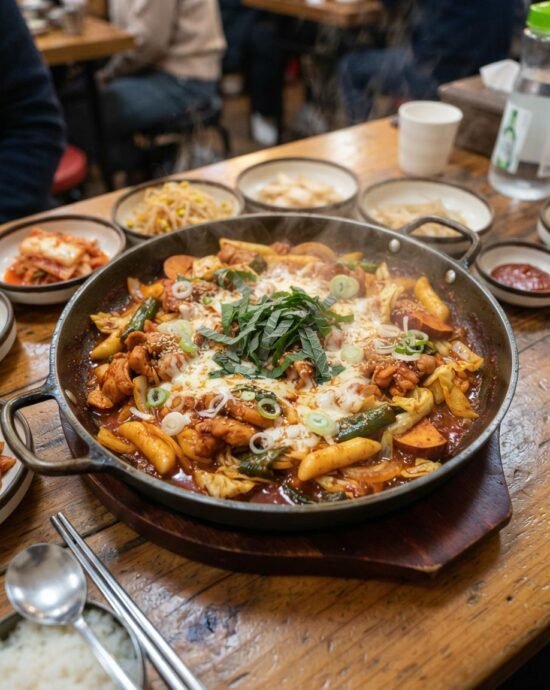
Once everything is fully cooked and well coated in the spicy sauce, stir in most of the chopped green onions and sliced perilla leaves, reserving a small amount for garnish. Taste and adjust the seasoning with a splash more soy sauce or gochujang if needed. Serve dakgalbi directly from the pan, family-style, garnished with the remaining green onion and perilla, alongside lettuce leaves for wrapping and steamed rice on the side.
- Calories:460 kcal23%
- Protein:32 g64%
- Carbohydrates:38 g14%
- Sugar:12 g13%
- Energy:1925 kJ23%
- Salt:2.2 g37%
- Fat:19 g27%
What is Dakgalbi?
Dakgalbi is a fiery, sweet-and-spicy Korean stir-fried chicken dish traditionally cooked with cabbage, sweet potato, and chewy rice cakes in a bold gochujang-based sauce, often prepared tableside on a large communal griddle. The dish originated in Chuncheon, a city in Korea’s Gangwon province, where it was created in the 1960s as an affordable alternative to pork dishes during a period when pork was scarce, using chicken instead alongside a generous amount of chili paste to stretch the meal further and add bold flavor. The name combines dak, meaning chicken, with galbi, typically referring to ribs, though dakgalbi itself contains no bones, borrowing the name mainly to evoke the smoky, communal grilling tradition associated with Korean barbecue. What sets dakgalbi apart is its emphasis on bulk and shared cooking, with the chicken, vegetables, and rice cakes all cooked together in one large pan, allowing the flavors to meld as everything is stirred and eaten directly from the center of the table. Many restaurants finish the meal by adding rice and seaweed to the remaining sauce at the end, frying it into a crispy, flavorful rice dish that uses every last bit of the spicy leftover sauce. Dakgalbi’s combination of tender chicken thigh, sweet caramelized vegetables, and chewy rice cakes coated in a fiery, slightly sweet glaze has made it one of Korea’s most popular communal dining dishes, especially beloved among younger diners for its bold flavor and social, interactive format.
Ingredient Notes
- Chicken thighs: Boneless, skin-on or skinless thighs are traditional for dakgalbi because their fat content keeps the meat juicy through the high-heat stir-frying process; chicken breast tends to dry out.
- Gochujang: This fermented chili paste provides both heat and a subtle sweetness that defines the dish’s signature glaze; use a good quality brand for the best depth of flavor.
- Rice cakes: Cylindrical Korean tteok add a chewy, satisfying texture that soaks up the spicy sauce; soak refrigerated or frozen rice cakes in warm water before cooking to soften them.
- Sweet potato: Korean sweet potato has a firmer, slightly less sweet texture than typical orange sweet potatoes and holds its shape well during the vigorous stir-frying process.
- Perilla leaves: These aromatic leaves add a distinctive herbal note that cuts through the richness of the spicy sauce; substitute fresh basil if unavailable.
Ingredient Suggestions
- Mozzarella cheese: A popular modern addition, melted over the finished dish for a creamy, indulgent contrast to the spice.
- Instant ramyeon noodles: Adding noodles at the end soaks up the remaining sauce and turns leftovers into a heartier meal.
- Fried rice finish: Many restaurants add rice, sesame oil, and seaweed to the leftover sauce and fry it into a crispy finishing dish.
- Extra gochugaru: For those who prefer more heat, an additional sprinkle intensifies both color and spice.
- Sliced carrots: Adds extra color and a subtle sweetness that balances the dish’s heat.
Helpful Tips & Pro Tips
- If your dakgalbi tastes too sweet or one-dimensional, balance it with a touch more soy sauce or a squeeze of fresh ginger to sharpen the overall flavor.
- Cut the sweet potato thinly so it cooks through in the same amount of time as the chicken and vegetables, since thick slices can remain undercooked.
- Use a wide, shallow pan rather than a deep pot, since dakgalbi is meant to be stir-fried with plenty of surface contact for caramelization.
- Watch the pan closely once the sugar-heavy marinade is cooking, as it can scorch quickly on high heat; stir frequently to prevent burning.
- Save the leftover sauce at the bottom of the pan and fry rice directly in it at the end of the meal, a traditional way to use every last bit of flavor.
How to Serve and Store
Serve dakgalbi directly from the pan at the table, family-style, with lettuce or perilla leaves for wrapping and a bowl of steamed rice on the side to balance the spice. Leftovers keep well in an airtight container in the refrigerator for up to 3 days and reheat nicely in a skillet over medium heat, which helps restore some of the caramelized texture lost during storage. Dakgalbi also freezes reasonably well for up to 2 months, though the rice cakes and sweet potato may soften slightly upon thawing; reheat gently on the stovetop rather than in the microwave for the best texture. Add a splash of water when reheating if the sauce has thickened too much in storage.
Substitutions
- Chicken thighs → Firm tofu and extra vegetables — A satisfying plant-based version that still absorbs the bold spicy marinade well. (Vegan)
- Soy sauce → Tamari — Preserves the dish’s salty depth while keeping it free of gluten. (Gluten-Free)
- Chicken thighs → Chicken drumsticks, deboned — A more economical option that still provides good flavor and moisture. (Budget-Friendly)
- Korean rice cakes → Thick udon noodles — A widely available substitute that still soaks up the spicy sauce, though with a different texture.
- Sweet potato → Regular potato or butternut squash — A reasonable stand-in when Korean sweet potato is not available.
Suggested Recipes
- Tteokbokki: Shares dakgalbi’s gochujang-based sauce and chewy rice cake component.
- Bulgogi: Another marinated Korean meat dish, offering a milder, sweeter alternative to dakgalbi’s spice.
- Japchae: A stir-fried noodle side dish that balances dakgalbi’s heat when served together.
- Kimchi Jjigae: A spicy stew that pairs well alongside dakgalbi for a bold, fiery Korean meal.

Jeff Smith
"Cooking is the intersection of history, science, and emotion."
For me, the kitchen has always been a laboratory of culture. With a background deeply rooted in digital strategy and precision, I approach the culinary arts with the same rigor I apply to the digital landscape—analyzing flavors, perfecting techniques, and documenting the nuance that makes Filipino cuisine truly world-class.
Findme Recipe was born from a desire to bridge the gap between traditional heritage and the modern home cook. Whether it is mastering the perfect balance of acidity in a classic Adobo or simplifying complex regional dishes for everyday kitchens, my mission is to preserve our culinary identity through accessible, data-backed, and delicious content.
I am not just building a database; I am cultivating a community where every Filipino kitchen feels empowered, every ingredient is celebrated, and every family heirloom recipe finds a place to thrive.
Join me as we translate the soul of our islands into recipes for the next generation.