

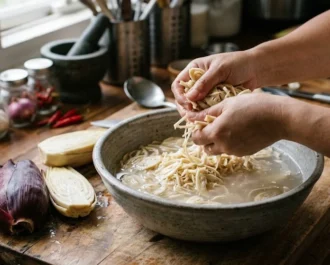
- Prepping the Banana Blossom

To begin, peel away the dark purple outer layers of the banana heart until you reach the pale, cream-colored core. Slice this tender heart into very thin cross-sections immediately to prevent oxidation. Place the sliced pieces into a large bowl filled with cold water and two tablespoons of salt. Use your hands to squeeze the blossoms vigorously within the brine. This essential process draws out the bitter sap and prevents the fibers from turning black. Let them soak for twenty minutes before rinsing thoroughly under cold running water. Ensure you squeeze all excess liquid out until the blossoms feel relatively dry and ready for the pan. This step is the secret to a clean, mild flavor profile.
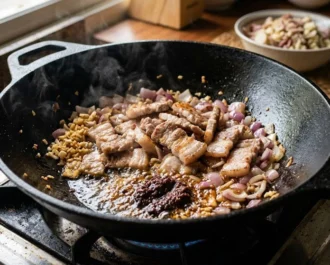
- Searing the Savory Aromatics
Place a heavy-bottomed pan or a traditional wok over medium-high heat and add two tablespoons of cooking oil. Once the oil begins to shimmer, toss in the minced garlic and sauté until it turns a light golden brown. Add the chopped onions and cook them until they become translucent and fragrant. Introduce the sliced pork belly into the pan, searing the meat until the fat renders and the edges become slightly crispy. This foundation of fat provides the deep, umami base necessary for a truly authentic Filipino stir-fry. Stir in the shrimp paste at this stage, allowing the pungent aroma to mellow as it toasts against the hot surface of the pan for approximately one minute.
- Integrating the Heart Fibers
Add the prepared banana blossoms into the pan, tossing them thoroughly to coat every fiber with the rendered pork fat and aromatics. Pour in the fish sauce to season the mixture, ensuring a balanced distribution of saltiness throughout the dish. Sauté the blossoms for about five minutes until they begin to soften slightly under the heat. It is vital to keep the ingredients moving to prevent sticking, as the natural starches in the heart can be quite tacky. The blossoms will slowly absorb the savory juices from the meat and shrimp paste, darkening slightly in color while maintaining their structural integrity. This phase bridges the gap between the raw vegetable crunch and the final, tender, succulent texture.
- Simmering in Rich Coconut
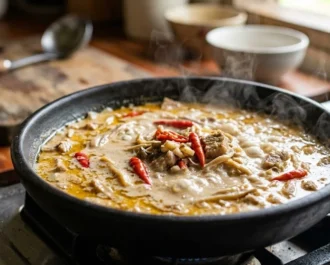
Pour the thick coconut milk over the sautéed mixture, ensuring the liquid covers most of the solid ingredients. Drop in the bird’s eye chilis to infuse a subtle, creeping heat into the cream. Lower the temperature to a gentle simmer and cover the pan. Allow the coconut milk to reduce slowly, which thickens the sauce and intensifies the flavor profile. The fats from the coconut will eventually begin to separate, creating a glossy sheen known as "nagmamantika." This slow reduction is where the magic happens, turning a simple vegetable stir-fry into a rich, decadent stew. Ensure the heat remains low to prevent the coconut milk from curdling, maintaining a smooth and velvety consistency throughout.
- The Final Flavor Finish
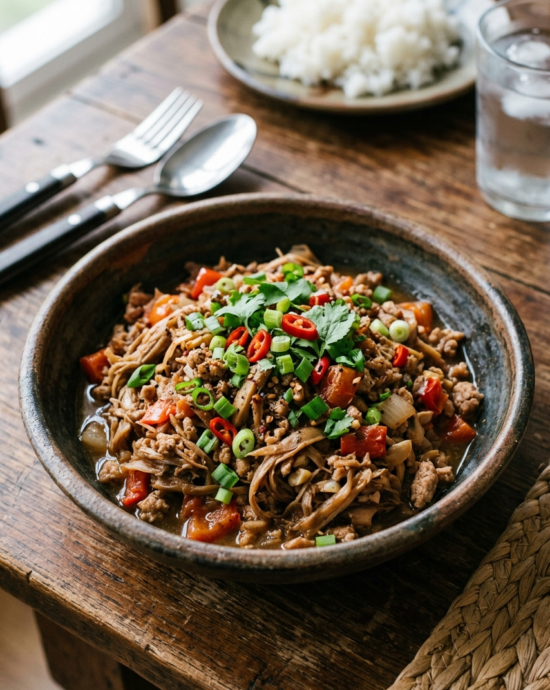
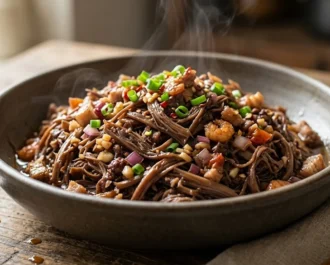
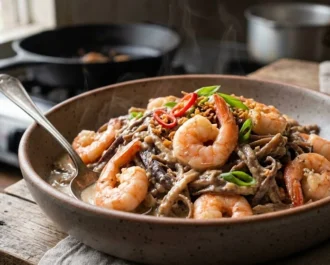
Add the fresh shrimp during the last three minutes of cooking to ensure they remain tender and snappy rather than rubbery. Taste the sauce carefully; if you desire more salt, add a tiny splash of fish sauce, or a pinch of black pepper for extra depth. The liquid should be thick enough to coat the back of a spoon, clinging beautifully to the banana blossom strips. Once the shrimp have turned a bright, opaque pink and the sauce has reached your preferred thickness, remove the pan from the heat. Transfer the dish to a warm serving bowl. The result is a complex harmony of creamy, salty, and slightly spicy notes that perfectly complements a bowl of steamed white rice.
- Calories:160 kcal8%
- Energy:669 kj8%
- Protein:6 g12%
- Carbohydrates:18 g7%
- Sugar:5 g6%
- Salt:0.8 g13%
- Fat:7 g9%
Table of Contents
What Is Puso ng Saging?
Puso ng saging is a traditional Filipino dish made from the tender heart or blossom of the banana plant, cooked in a rich and creamy coconut milk sauce with pork and aromatic seasonings. Known in English as banana blossom or banana heart, this deep purple, cone-shaped flower bud grows at the end of a banana cluster and has been a beloved ingredient in Filipino home cooking for generations. The dish is especially popular in the Visayas and Mindanao regions of the Philippines, where banana plants grow abundantly and coconut milk is a kitchen staple. Puso ng saging is treasured for its meaty, slightly astringent texture that soaks up flavors beautifully during cooking, making it both satisfying and deeply flavorful. The blossom is composed of layers of petals that, once peeled back, reveal pale yellowish inner florets that are edible and tender when cooked. Beyond its remarkable taste, puso ng saging is highly regarded for its nutritional profile — it is rich in dietary fiber, potassium, vitamins B6 and C, and various antioxidants. It is also notably low in calories, making it a smart choice for health-conscious home cooks. In recent years, banana blossom has gained international attention as a popular plant-based meat substitute due to its texture resembling pulled pork or chicken when cooked, though in the Philippines its most cherished preparation remains the traditional gata version with pork. This dish embodies the Filipino philosophy of using every part of a plant resourcefully, creating something nourishing, affordable, and genuinely delicious from an ingredient many kitchens overlook.
Ingredient Notes
- Banana Blossom (Puso ng Saging): Choose a fresh, firm blossom with deep purple outer petals and minimal browning. Freshness is key — the inner layers should be pale and tightly packed. Soaking in acidulated water prevents discoloration and removes bitterness.
- Coconut Milk: Full-fat coconut milk produces the richest, creamiest sauce. Shake the can well before opening. Freshly pressed coconut milk from a wet market is ideal if available and gives a noticeably more authentic flavor.
- Fish Sauce (Patis): Use a quality Filipino patis such as Rufina or Lorins for best results. It provides the savory backbone of the dish. Start with less and adjust upward — it is easier to add more than to correct an over-salted dish.
Ingredient Suggestions
- Shrimp paste (bagoong alamang) — adds a deeply funky umami layer typical of Bicolano-style cooking
- Bird’s eye chili (siling labuyo) — swap for a spicier, more intense heat profile
- Ginger (luya) — a thin slice added with the garlic brightens and adds warmth to the coconut base
- Malunggay leaves — stir in at the end for added nutrition and a fresh, slightly earthy note
Helpful Tips & Pro Tips
- Always soak banana blossom in vinegar water immediately after slicing. Banana blossom oxidizes and turns dark brown quickly. The acidulated water keeps the color pale and removes the natural astringency that can make the dish taste bitter if left untreated.
- Squeeze the blossom thoroughly before cooking. Excess moisture will cause the dish to steam rather than sauté, preventing proper flavor development. Press firmly in a colander or wrap in a clean towel and wring out as much liquid as possible.
- Do not let the coconut milk boil vigorously. A rolling boil causes coconut milk to separate and become grainy. Keep the simmer low and gentle, stirring occasionally to maintain a smooth, creamy sauce throughout the cooking process.
- Why is my puso ng saging bitter? Bitterness is almost always caused by insufficient soaking or using the outermost petals, which are too tough and astringent to eat. Discard at least three or four outer layers and soak the tender interior slices for a minimum of ten minutes.
How to Serve and Store
Serve puso ng saging hot over freshly steamed white rice as a main dish. It also pairs well alongside grilled fish, fried tilapia, or simple green vegetable sides like pinakbet. Leftovers can be stored in an airtight container in the refrigerator for up to 3 days. Reheat gently in a saucepan over low heat, adding a splash of water or coconut milk to loosen the sauce if it has thickened too much. Avoid freezing as the texture of the banana blossom can become mushy upon thawing.
Substitutions
- Pork belly → Chicken thighs — a lighter option that cooks faster and absorbs coconut milk flavors equally well
- Pork belly → Firm tofu (vegan) — press and cube the tofu, pan-fry briefly before adding for a fully plant-based version
- Fish sauce → Soy sauce (gluten-free tamari) — suitable for those avoiding fish-based products while maintaining savory depth
- Coconut milk → Evaporated milk — a budget-friendly substitute that produces a milder, less tropical-tasting sauce
- Fresh banana blossom → Canned banana blossom in brine — rinse well and drain thoroughly before using; widely available in Asian grocery stores
Suggested Recipes
- Ginataang Kalabasa — another Filipino coconut milk classic featuring squash and string beans with a similar creamy base
- Kare-Kare — a peanut-based Filipino stew that also celebrates banana blossom as one of its key vegetables
- Pinakbet — a Ilocano mixed vegetable dish that showcases the Filipino talent for cooking humble produce into something extraordinary
- Laing — dried taro leaves in coconut milk, another beloved gata-based dish with rich, complex flavors