
- Step 1. Slice the Zucchini
Trim the ends off the zucchini and slice it into rounds about a quarter-inch thick, aiming for even, consistent slices so they cook uniformly. Arrange the slices in a single layer on a clean kitchen towel or paper towel and sprinkle both sides lightly with half of the salt. Let the zucchini sit for 10 minutes, which draws out excess moisture and helps prevent a soggy pancake once fried.
- Step 2. Pat the Zucchini Dry
After resting, pat each zucchini slice thoroughly dry with paper towels, pressing gently to absorb the moisture drawn out by the salt. This step is essential for achieving a crispy, golden exterior once fried, since excess moisture on the surface will cause the batter to slide off or the pancake to steam rather than crisp up properly in the hot oil.
- Step 3. Prepare the Batter Station
Set up two shallow dishes: one with the flour and remaining salt, and another with the beaten egg whisked together with the water. This simple two-step coating, flour followed by egg wash, is what gives hobak jeon its light, delicate crust. Have both dishes ready near the stove along with a plate for the coated zucchini before you begin heating the oil.
- Step 4. Coat the Zucchini
Dredge each zucchini slice first in the seasoned flour, shaking off any excess, then dip it into the egg mixture, letting any extra egg drip back into the bowl. Work through all the zucchini slices this way, placing the coated pieces on a plate in a single layer so they do not stick together before frying.
- Step 5. Fry Until Golden
Heat the vegetable oil in a large nonstick skillet over medium heat until shimmering. Add the coated zucchini slices in a single layer, working in batches if necessary to avoid overcrowding the pan. Fry for 2 to 3 minutes per side, until each pancake turns a deep golden brown and the egg coating is fully set and crisp at the edges.
- Step 6. Make the Dipping Sauce and Serve
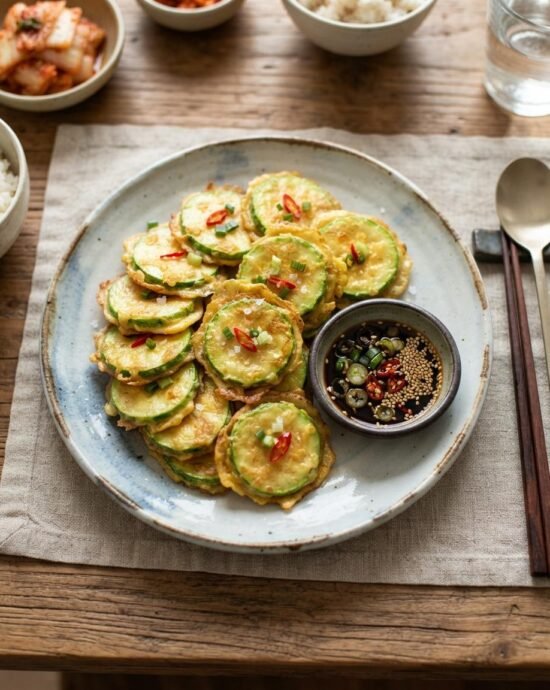
While the zucchini fries, whisk together the soy sauce, rice vinegar, gochugaru, green onion, and toasted sesame seeds in a small bowl to make a simple dipping sauce. Transfer the finished hobak jeon to a plate lined with paper towels to absorb any excess oil, then arrange on a serving platter. Serve warm with the dipping sauce alongside for drizzling or dipping.
- Calories:210 kcal11%
- Protein:6 g12%
- Carbohydrates:22 g8%
- Sugar:3 g3%
- Energy:879 kJ11%
- Salt:1.6 g27%
- Fat:11 g16%
What is Hobak Jeon?
Hobak jeon is a simple yet beloved Korean pan-fried dish featuring rounds of zucchini lightly coated in flour and egg, then fried until golden and crisp on the outside while remaining tender and slightly sweet within. Belonging to the broader category of Korean jeon, a family of savory pancake-style dishes that also includes variations made with fish, meat, and other vegetables, hobak jeon stands out for its simplicity and vibrant, mild flavor that showcases the delicate sweetness of Korean zucchini. The dish holds a particularly significant place in Korean culinary tradition as a common offering during jesa, ancestral memorial rites, and other important holidays such as Seollal and Chuseok, where various types of jeon are prepared in large batches and arranged carefully on ceremonial tables alongside other traditional foods. Beyond its ceremonial role, hobak jeon is also an extremely popular everyday banchan and anju dish, appearing frequently at both home dinner tables and casual restaurants as a comforting, easy-to-make side. The technique behind hobak jeon, salting the zucchini briefly before cooking to draw out excess moisture, is a small but crucial step that ensures the final pancake achieves a properly crisp exterior rather than turning soggy from trapped water. Served alongside a simple soy-vinegar dipping sauce, hobak jeon offers a satisfying textural contrast between its crisp, golden crust and tender interior, making it an approachable entry point into Korean jeon dishes for cooks of any skill level.
Ingredient Notes
- Korean Zucchini: This slightly sweeter, more tender variety is traditional for hobak jeon; regular zucchini works well as a substitute if Korean zucchini is unavailable.
- All-Purpose Flour: A light dusting of flour helps the egg coating adhere to the zucchini and creates the pancake’s signature thin, crisp crust.
- Large Egg: Beaten egg forms the outer coating that crisps up in the hot oil; make sure it is well whisked for even, smooth coverage.
- Gochugaru: A small amount added to the dipping sauce provides gentle heat and a pop of color without overwhelming the dish’s mild flavor.
- Rice Vinegar: Adds brightness to the dipping sauce that balances the richness of the fried zucchini.
Ingredient Suggestions
- Shredded carrot: A few strands mixed into the egg coating add color and a subtle crunch to each pancake.
- Minced garlic: A small amount whisked into the egg wash adds a savory depth to the mild zucchini flavor.
- Sliced red chili: A few thin slices pressed onto the zucchini before frying add color and a gentle kick of heat.
- Extra sesame oil: A light drizzle over the finished pancakes adds a final layer of nutty aroma.
- Shrimp or crab meat: A small piece pressed onto each zucchini slice before coating turns the dish into a heartier seafood jeon.
Helpful Tips & Pro Tips
- If your pancakes turn out soggy rather than crisp, the zucchini likely was not salted and patted dry thoroughly enough before coating; this step is essential.
- Slice the zucchini evenly so every piece cooks at the same rate, since uneven thickness leads to some pieces overcooking while others remain underdone.
- Do not overcrowd the pan while frying, as this lowers the oil temperature and results in pale, greasy pancakes rather than crisp, golden ones.
- Keep the heat at a steady medium throughout cooking; too high and the egg coating burns before the zucchini cooks through, too low and the pancakes turn greasy.
- Serve hobak jeon immediately after frying for the crispiest texture, since the coating softens as the pancakes sit and cool.
How to Serve and Store
Serve hobak jeon warm, freshly fried, with the soy-vinegar dipping sauce on the side, as part of a larger Korean meal or as a light appetizer on its own. Leftovers keep in an airtight container in the refrigerator for up to 2 days, though the crisp coating softens significantly once chilled. Reheat in a dry skillet over medium heat for a couple of minutes per side to help restore some crispness, rather than using a microwave, which will leave the coating soft and slightly rubbery. Hobak jeon is not well suited to freezing, as the delicate egg coating and zucchini both suffer in texture once thawed.
Substitutions
- Egg → A flour and water batter with a pinch of turmeric for color — Keeps the dish plant-based while still achieving a light, golden coating. (Vegan)
- All-Purpose Flour → Rice flour or a gluten-free flour blend — Provides a similar light coating while keeping the dish free of gluten. (Gluten-Free)
- Korean Zucchini → Regular zucchini or yellow squash — A widely available and often more affordable substitute that works just as well. (Budget-Friendly)
- Soy Sauce → Tamari — A gluten-free alternative for the dipping sauce that preserves the same salty depth.
- Vegetable Oil → Any neutral high-heat oil — Canola or grapeseed oil work equally well for achieving a crisp, golden fry.
Suggested Recipes
- Kimbap: A portable rice roll that pairs well alongside hobak jeon for a light, varied Korean meal.
- Bibimbap: A rice bowl that benefits from a crispy side of hobak jeon for textural contrast.
- Gyeran Jjim: A steamed egg dish that makes a soft, comforting counterpart to hobak jeon’s crispy texture.
- Japchae: A stir-fried noodle side dish that rounds out a banchan spread alongside hobak jeon.

Jeff Smith
"Cooking is the intersection of history, science, and emotion."
For me, the kitchen has always been a laboratory of culture. With a background deeply rooted in digital strategy and precision, I approach the culinary arts with the same rigor I apply to the digital landscape—analyzing flavors, perfecting techniques, and documenting the nuance that makes Filipino cuisine truly world-class.
Findme Recipe was born from a desire to bridge the gap between traditional heritage and the modern home cook. Whether it is mastering the perfect balance of acidity in a classic Adobo or simplifying complex regional dishes for everyday kitchens, my mission is to preserve our culinary identity through accessible, data-backed, and delicious content.
I am not just building a database; I am cultivating a community where every Filipino kitchen feels empowered, every ingredient is celebrated, and every family heirloom recipe finds a place to thrive.
Join me as we translate the soul of our islands into recipes for the next generation.