

- Marinate the beef
In a small bowl, combine the sliced beef with 1 tablespoon soy sauce, 1 tablespoon sugar, 1 tablespoon sesame oil, and 1 clove minced garlic. Toss well and let it marinate for at least 15 minutes at room temperature while you prepare the other ingredients. This short marination infuses the beef with the same sweet-savory flavor found throughout the rest of the dish, ensuring every component tastes cohesive once everything is combined at the end rather than the beef standing out as bland.
- Cook the noodles
Bring a large pot of water to a boil and cook the sweet potato starch noodles according to the package instructions, typically 6 to 8 minutes, until translucent and chewy but no longer stiff in the center. Drain well and rinse briefly under cold water to stop the cooking process. Using kitchen scissors, cut the noodles into shorter, more manageable lengths, since dangmyeon noodles are very long and can be difficult to portion and eat otherwise. Toss the drained noodles with 1 tablespoon each of soy sauce and sesame oil to prevent sticking while you prepare everything else.
- Saute the vegetables separately
Heat a small amount of vegetable oil in a large skillet over medium-high heat and cook the carrot for 2 minutes until just tender, then transfer to a plate. Repeat with the onion and bell pepper, cooking 2 to 3 minutes each, and the mushrooms, cooking 3 minutes with a pinch of garlic and salt. Blanch the spinach briefly in boiling water, shock in cold water, squeeze dry, and season with a touch of sesame oil and salt. Keeping the vegetables separate preserves their individual textures and prevents the pan from becoming overcrowded and steaming.
- Cook the beef
In the same skillet, cook the marinated beef over medium-high heat for 3 to 4 minutes, stirring occasionally, until fully browned and any liquid has evaporated. Remove from the heat and set aside with the cooked vegetables. Wipe the pan if needed between batches so residual sugar from the marinade does not burn and turn bitter, which can happen if the pan gets too hot for too long without being cleaned between components.
- Combine everything
In a large mixing bowl or the now-empty skillet, combine the noodles, beef, and all the cooked vegetables. Add the remaining soy sauce, sugar, sesame oil, and minced garlic, along with the black pepper, and toss everything together thoroughly using tongs or clean hands, making sure the sauce coats every strand of noodle evenly. Taste and adjust the seasoning, adding more soy sauce for saltiness or sugar for sweetness as needed.
- Finish and serve
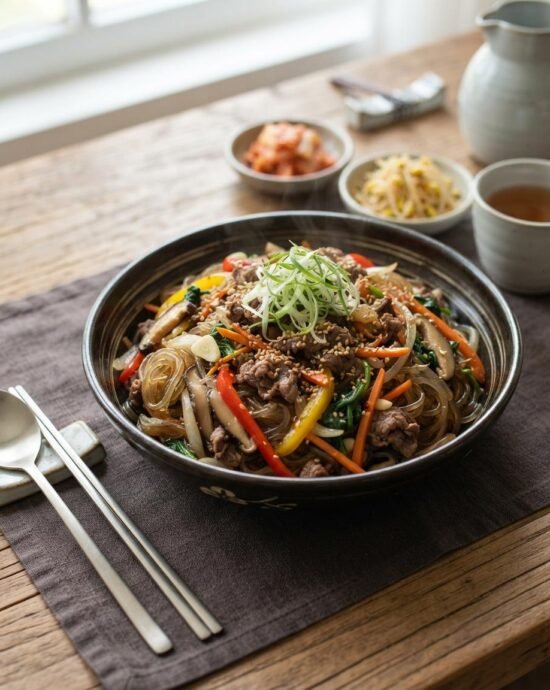
Transfer the finished japchae to a large serving platter and sprinkle generously with toasted sesame seeds. Japchae can be served warm immediately after cooking or at room temperature, making it a flexible dish for gatherings and potlucks. Garnish with a few extra strands of julienned vegetables on top for visual appeal, and consider a light drizzle of additional sesame oil just before serving for extra aroma.
- Calories:310 kcal16%
- Protein:12 g24%
- Carbohydrates:42 g15%
- Sugar:9 g10%
- Energy:1297 kJ16%
- Salt:1.7 g28%
- Fat:11 g16%
What is Japchae?
Japchae is a classic Korean dish of chewy sweet potato starch noodles stir-fried with an array of colorful vegetables and thin slices of marinated beef, all brought together in a savory-sweet sesame and soy sauce. The name translates roughly to mixed vegetables, reflecting the dish’s origins as a vegetable-forward preparation before glass noodles were incorporated sometime later, eventually becoming the dish’s defining ingredient. Japchae dates back to the early seventeenth century, when it was first served as a royal court dish without any noodles at all; sweet potato starch noodles were added to the recipe in the early twentieth century once dangmyeon production became widespread, transforming japchae into the noodle-centric dish recognized today. What distinguishes great japchae is the careful, separate preparation of each component, since every vegetable is sauteed individually to preserve its specific texture and color before everything is combined at the end. This technique results in a dish where carrots stay crisp, spinach stays tender, and mushrooms stay earthy, all bound together by noodles that are simultaneously chewy and slightly springy. Japchae is a fixture at Korean celebrations, holidays, and potlucks, valued both for its festive, colorful presentation and its ability to be served warm or at room temperature, making it practical for large gatherings. Its balance of sweet, savory, and umami flavors alongside its satisfying variety of textures has made japchae one of the most enduringly popular dishes in Korean cuisine.
Ingredient Notes
- Sweet potato starch noodles: Also called dangmyeon, these translucent noodles become chewy and slightly springy once cooked; look for a package labeled one hundred percent sweet potato starch for the most authentic texture.
- Beef sirloin: A tender, quick-cooking cut works best since the beef is only briefly stir-fried; slice it thinly against the grain for the most tender bite.
- Shiitake mushrooms: Fresh or dried and rehydrated shiitake mushrooms add a distinctive umami depth; dried mushrooms often have an even more concentrated flavor once soaked.
- Sesame oil: Toasted sesame oil is essential to japchae’s signature aroma; use it both in the noodle seasoning and the final toss for maximum fragrance.
- Spinach: Fresh, tender spinach blanched briefly retains its vivid green color and adds a soft contrast to the chewy noodles and crisp vegetables.
Ingredient Suggestions
- Toasted sesame seeds: A generous sprinkle on top adds a final layer of nutty crunch and visual polish.
- Julienned yellow bell pepper: Adds an extra pop of color alongside the traditional red pepper and carrot.
- Wood ear mushrooms: A traditional addition in some regional versions that adds a distinctive chewy texture.
- Fried egg strips (jidan): Thin strips of fried egg are a classic garnish that adds richness and color contrast.
- A touch of gochugaru: For those who want a hint of heat, a small pinch of Korean chili flakes can be tossed in at the end.
Helpful Tips & Pro Tips
- If your japchae turns out mushy, the noodles were likely overcooked; pull them from the boiling water as soon as they turn translucent and remain slightly chewy.
- Cut the cooked noodles with scissors before combining everything, since uncut dangmyeon noodles are extremely long and difficult to portion neatly.
- Cook each vegetable separately rather than all together to preserve distinct colors and textures, which is essential to japchae’s signature presentation.
- Toss the noodles with a bit of sesame oil right after draining to prevent them from sticking together in a clump before you are ready to combine everything.
- Japchae tastes even better after resting for 20 to 30 minutes, which allows the sauce to fully absorb into the noodles.
- Serve at room temperature for gatherings, since japchae holds up well without refrigeration for a few hours and remains delicious even after cooling.
How to Serve and Store
Serve japchae warm as a side dish alongside grilled meats like bulgogi or galbi, or at room temperature as part of a larger spread of banchan for a gathering or potluck. Store leftovers in an airtight container in the refrigerator for up to 4 days; the noodles will firm up slightly when chilled but soften again once brought back to room temperature or gently reheated. Reheat in a skillet over medium-low heat with a small splash of water or sesame oil to loosen the noodles, or microwave in short intervals, stirring between each. Japchae does not freeze particularly well, as the noodles can become gummy and lose their signature chewy texture once thawed.
Substitutions
- Beef → Extra-firm tofu or shiitake mushrooms — A satisfying plant-based protein that still absorbs the sweet-savory marinade well. (Vegan)
- Soy sauce → Tamari or coconut aminos — Maintains the dish’s salty depth while keeping it free of gluten. (Gluten-Free)
- Beef sirloin → Ground beef or pork — A more economical protein option that still delivers savory flavor. (Budget-Friendly)
- Sweet potato starch noodles → Rice vermicelli — A more widely available noodle substitute, though with a slightly different chewy texture.
- Fresh shiitake mushrooms → Button or cremini mushrooms — A budget-friendly swap that still adds an earthy component to the dish.
Suggested Recipes
- Bulgogi: Shares japchae’s sweet soy-sesame flavor profile and makes a natural pairing on a Korean dinner table.
- Bibimbap: Another dish built on the technique of separately seasoning vegetables before combining them.
- Galbi: Grilled short ribs that pair beautifully with japchae as part of a larger festive spread.
- Doenjang Jjigae: A savory stew that balances japchae’s sweetness with earthy, fermented depth.

Jeff Smith
"Cooking is the intersection of history, science, and emotion."
For me, the kitchen has always been a laboratory of culture. With a background deeply rooted in digital strategy and precision, I approach the culinary arts with the same rigor I apply to the digital landscape—analyzing flavors, perfecting techniques, and documenting the nuance that makes Filipino cuisine truly world-class.
Findme Recipe was born from a desire to bridge the gap between traditional heritage and the modern home cook. Whether it is mastering the perfect balance of acidity in a classic Adobo or simplifying complex regional dishes for everyday kitchens, my mission is to preserve our culinary identity through accessible, data-backed, and delicious content.
I am not just building a database; I am cultivating a community where every Filipino kitchen feels empowered, every ingredient is celebrated, and every family heirloom recipe finds a place to thrive.
Join me as we translate the soul of our islands into recipes for the next generation.