
- Step 1. Soak the Oxtail
Place the oxtail segments in a large bowl or pot of cold water and soak for at least 1 hour, changing the water once or twice, to draw out excess blood. This step is essential for achieving a clean, milky-white broth rather than a muddy, off-tasting one, and is a foundational technique in Korean bone soup preparation. Drain the oxtail well once soaking is complete.
- Step 2. Blanch the Oxtail
Bring a large pot of water to a boil and add the soaked oxtail, boiling for 10 minutes to remove remaining impurities from the surface of the bones and meat. Drain the oxtail in a colander and rinse thoroughly under warm running water, scrubbing away any remaining scum or residue clinging to the bones. This step significantly improves the clarity and cleanliness of the final broth.
- Step 3. Begin the Long Simmer
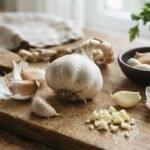
Transfer the blanched oxtail to a large, clean pot and cover with 12 cups of fresh water. Add the halved onion, garlic cloves, and black peppercorns, then bring to a boil over high heat before reducing to a low, steady simmer. Cover partially and cook for 3 hours, skimming any foam or fat that rises to the surface periodically, which helps the broth develop its signature rich, milky-white color over time.
- Step 4. Strain and Reduce
After 3 hours, remove the oxtail pieces and set them aside, then strain the broth through a fine mesh sieve to remove the onion, garlic, and peppercorns, discarding the solids. Return the strained broth to the pot along with the oxtail and add the daikon radish chunks. Continue simmering uncovered for another 30 to 45 minutes, until the broth has reduced and thickened slightly and the radish is fully tender.
- Step 5. Season the Broth
Stir the salt into the broth, tasting and adjusting until the flavor is well-balanced and savory, keeping in mind that traditional kkori gomtang is seasoned relatively simply so diners can adjust further at the table. If the broth tastes too thin, continue simmering uncovered for a bit longer to concentrate the flavor further. The finished broth should be rich, milky, and deeply savory from the hours of slow simmering.
- Step 6. Assemble and Serve
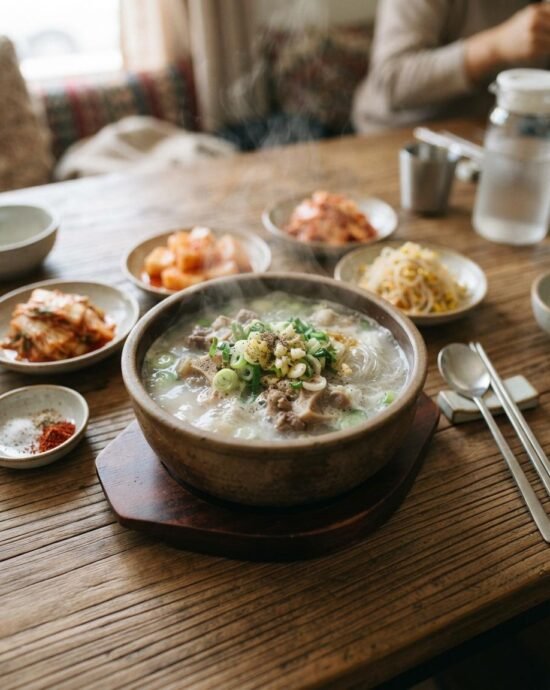
Divide the cooked rice among four deep bowls and ladle the hot broth and oxtail generously over the top. Garnish with chopped green onions and a sprinkle of ground black pepper. Serve immediately with small side dishes of salt, extra black pepper, and kimchi at the table, allowing each diner to season their bowl exactly to their preference, a traditional practice for gomtang-style soups.
- Calories:480 kcal24%
- Protein:34 g68%
- Carbohydrates:38 g14%
- Sugar:2 g2%
- Energy:2008 kJ24%
- Salt:1.5 g25%
- Fat:20 g29%
What is Kkori Gomtang?
Kkori gomtang is a traditional Korean soup made by simmering oxtail for many hours until the broth turns rich, milky-white, and deeply savory, typically served simply over rice with minimal seasoning added at the table by each diner. The name combines kkori, meaning tail, with gomtang, a general term for milky bone broths achieved through extended simmering, placing this dish within a broader family of Korean soups that includes seolleongtang, made from ox bones, and galbitang, made from short ribs. What sets kkori gomtang apart is its exclusive use of oxtail, a cut prized for its generous marbling and gelatinous connective tissue, both of which slowly render into the broth over hours of gentle simmering, resulting in a soup with remarkable body and richness despite containing very few actual ingredients. Historically regarded as a restorative, nourishing dish, kkori gomtang has long been associated with recovery from illness or physical exhaustion, believed in traditional Korean food culture to replenish strength and warm the body from within. The soup’s minimalist seasoning philosophy is central to its identity, with salt, pepper, and chopped green onion typically left at the table rather than added during cooking, allowing each diner to season their bowl to their exact preference. This practice reflects a broader tradition within Korean bone soup culture, where the purity and depth of the broth itself, built entirely through technique and time rather than heavy seasoning, is the primary measure of the dish’s quality and the cook’s skill.
Ingredient Notes
- Oxtail: Look for meaty, evenly cut oxtail segments with good marbling, since the connective tissue and marrow are what give the broth its signature rich, milky body.
- Daikon Radish: This mild, slightly sweet radish becomes tender and absorbs the rich broth beautifully during the extended simmer; Korean radish can be substituted if available.
- Onion: Simmered whole and later removed, the onion adds a subtle sweetness to the broth without overpowering the oxtail’s natural richness.
- Black Peppercorns: Whole peppercorns simmered in the broth add a gentle, background warmth without the sharpness of ground pepper.
- Cooked White Rice: Short or medium-grain rice is traditional, served directly in the bowl beneath the hot broth so it soaks up flavor as you eat.
Ingredient Suggestions
- Glass noodles: A handful of cooked dangmyeon noodles added to the bowl turns the soup into a heartier, more filling meal.
- Sliced garlic: Extra raw garlic slices on the side provide a sharp, pungent contrast for those who enjoy bold flavor.
- Kimchi: A classic side dish that provides tangy, spicy contrast to the broth’s rich, milky simplicity.
- Chopped chives: A fresh, slightly sharper alternative or addition to green onion as a garnish.
- Extra ground black pepper: For those who enjoy a peppery kick, an extra sprinkle enhances the broth’s warmth.
Helpful Tips & Pro Tips
- If your broth turns out thin or clear rather than rich and milky, it likely was not simmered long enough; a proper kkori gomtang typically needs at least 3 hours of steady simmering.
- Soaking and blanching the oxtail thoroughly before the long simmer is essential for a clean-tasting, impurity-free broth.
- Skim the broth periodically throughout the simmering process to remove excess fat and foam, which results in a clearer, more refined final soup.
- Season lightly during cooking and let diners add salt and pepper at the table, which is the traditional approach for gomtang-style soups.
- The broth can be simmered even longer than the recipe states for an even richer result; many Korean restaurants simmer oxtail broth for 8 hours or more.
How to Serve and Store
Serve kkori gomtang hot, ladled over rice in deep bowls, with small side dishes of salt, black pepper, and kimchi at the table so each diner can season to their own taste. Leftover broth keeps well in an airtight container in the refrigerator for up to 5 days and often develops an even richer flavor after resting; it will gel slightly when chilled due to the natural collagen, which is normal and simply needs gentle reheating. Kkori gomtang broth freezes exceptionally well for up to 4 months, making it a great make-ahead option; store the meat separately from the broth for the best texture upon reheating. Reheat gently on the stovetop until fully hot before serving.
Substitutions
- Oxtail → Hearty root vegetables in mushroom broth — A plant-based approximation that offers warmth and body, though it will not replicate the same richness. (Vegan)
- Salt Seasoning → Tamari on the side — A gluten-free way to add extra savory depth at the table for those who want it. (Gluten-Free)
- Oxtail → Beef shank or short ribs — A more widely available and often more affordable cut that still produces a flavorful, rich broth. (Budget-Friendly)
- Daikon Radish → Korean radish or turnip — A close substitute that holds up similarly well to the long simmering process.
- White Rice → Brown rice — A heartier, higher-fiber alternative for those who prefer it, though it will change the traditional texture slightly.
Suggested Recipes
- Yukgaejang: A spicier beef soup that offers bold contrast to kkori gomtang’s mild, milky simplicity.
- Galbijjim: A braised short rib dish that showcases a different preparation of a similarly rich, collagen-heavy cut.
- Gamjatang: A spicy pork bone soup that shares kkori gomtang’s long-simmered, bone-based broth technique.
- Bossam: A boiled pork dish that pairs well on a larger Korean meal spread alongside a comforting bowl of gomtang.

Jeff Smith
"Cooking is the intersection of history, science, and emotion."
For me, the kitchen has always been a laboratory of culture. With a background deeply rooted in digital strategy and precision, I approach the culinary arts with the same rigor I apply to the digital landscape—analyzing flavors, perfecting techniques, and documenting the nuance that makes Filipino cuisine truly world-class.
Findme Recipe was born from a desire to bridge the gap between traditional heritage and the modern home cook. Whether it is mastering the perfect balance of acidity in a classic Adobo or simplifying complex regional dishes for everyday kitchens, my mission is to preserve our culinary identity through accessible, data-backed, and delicious content.
I am not just building a database; I am cultivating a community where every Filipino kitchen feels empowered, every ingredient is celebrated, and every family heirloom recipe finds a place to thrive.
Join me as we translate the soul of our islands into recipes for the next generation.