

- Step 1. Toast the rice powder
Place the uncooked jasmine rice in a dry skillet over medium-low heat and toast, stirring constantly, until the grains turn deep golden brown and release a nutty, smoky aroma, about 5 to 6 minutes. Watch closely near the end since rice can burn quickly once it starts browning. Remove from heat and let it cool slightly before grinding it into a coarse powder using a mortar and pestle or spice grinder. This toasted rice powder, called khao khua, is the defining textural and flavor element of authentic larb, so don't skip it or substitute pre-ground versions if avoidable.
- Step 2. Cook the pork
Heat the water or pork stock in a wide skillet or saucepan over medium heat until it begins to simmer. Add the ground pork, breaking it apart with a spatula into small, even crumbles as it cooks. Stir frequently to prevent clumping and ensure even cooking throughout. Cook for about 6 to 8 minutes, until the pork is fully cooked through and no pink remains, but avoid over-browning, since traditional larb keeps the meat tender rather than crisped or caramelized like a stir-fry.
- Step 3. Remove from heat and season
Take the skillet off the heat once the pork is cooked, since adding fresh seasonings to a hot pan dulls their brightness. Stir in the fish sauce and lime juice immediately, mixing thoroughly so the liquid coats every piece of pork. Add the roasted chili powder and dried chili flakes next, adjusting the amount based on your desired spice level. This off-heat seasoning step is essential for preserving the punchy, fresh acidity that defines larb's flavor profile.
- Step 4. Fold in the aromatics
Add the thinly sliced shallots and green onions to the warm pork mixture, folding gently to combine without crushing the delicate slices. The residual heat from the pork will slightly soften the shallots while keeping their sharp bite intact, which is central to larb's textural contrast. Taste at this stage and adjust the balance of salty, sour, and spicy with additional fish sauce, lime juice, or chili as needed before moving on to the fresh herbs.
- Step 5. Add herbs and rice powder
Gently fold in the fresh mint and cilantro leaves along with the toasted rice powder, mixing just until everything is evenly distributed. Be careful not to overmix, as the herbs can bruise and lose their vibrant color and fragrance. The rice powder should cling lightly to the pork, adding a subtle crunch and nutty undertone that ties the dish together. This final fold should happen just before serving to keep the herbs as fresh and fragrant as possible.
- Step 6. Plate and serve
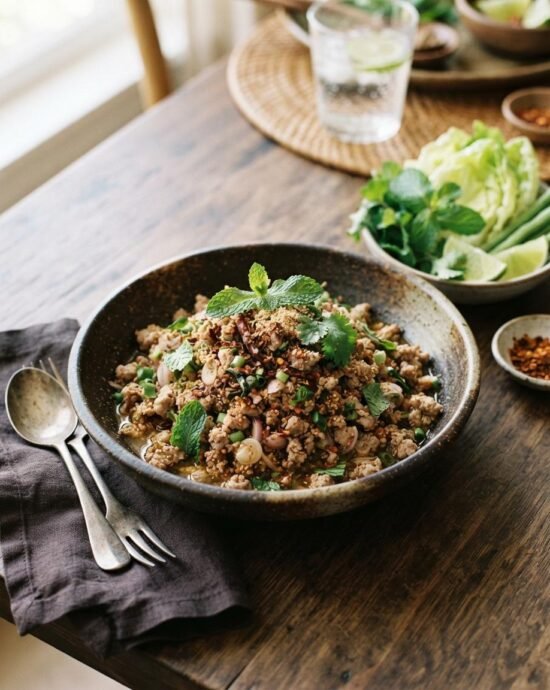
Transfer the larb to a serving plate and arrange crisp lettuce leaves, sliced cucumber, and long beans around the edges. Serve immediately while the dish is still warm, allowing guests to scoop the larb into lettuce cups or eat it alongside sticky rice. The contrast of warm, spicy pork against cool, crunchy vegetables is part of what makes larb such a refreshing yet bold dish, best enjoyed freshly made rather than reheated.
- Calories:285 kcal14%
- Protein:22 g44%
- Carbohydrates:8 g3%
- Sugar:1 g1%
- Energy:1,192 kj14%
- Salt:2.1 g35%
- Fat:18 g26%
Table of Contents
What Is Larb Moo?
Larb Moo is a vibrant, herb-packed minced pork salad from Thailand’s Isan region, where bold, sour, spicy flavors define everyday cooking. The dish combines warm, just-cooked pork with a generous squeeze of lime juice, fiery chili powder, and a fistful of fresh mint and cilantro, creating a flavor profile that’s simultaneously savory, tangy, and aromatic. What sets larb apart from other Thai salads is khao khua, toasted and ground rice powder, which adds a subtle nuttiness and gentle crunch found in no other regional dish. Larb traces its roots to Laos and northeastern Thailand, where it’s considered a celebratory food often served at festivals, family gatherings, and as a staple alongside sticky rice rather than jasmine rice. While pork is the most common protein, larb can be made with chicken, beef, duck, or even mushrooms for a vegetarian take, but the seasoning principles remain consistent across versions: a careful balance of fish sauce, lime, and chili that hits every taste receptor at once. The dish is traditionally eaten with hands, using sticky rice to scoop up the meat, or wrapped in lettuce leaves for a lighter, fresher bite. Unlike many Thai dishes that rely on long simmering or complex curry pastes, larb comes together quickly, making it an accessible weeknight option once you understand the key technique of toasting rice powder. Its bright, punchy character has made it increasingly popular outside Thailand as diners discover the addictive interplay of heat, acid, and herbaceous freshness that defines authentic Isan cuisine.
Ingredient Notes
- Ground pork: Choose ground pork with a moderate fat content, around 20 percent, since lean pork can turn dry and tough during cooking. Freshly ground pork from a butcher offers better texture than pre-packaged versions.
- Toasted rice powder (khao khua): This is the soul of authentic larb and should always be made fresh from raw jasmine rice rather than store-bought rice flour, which lacks the toasted, nutty depth.
- Roasted chili powder (prik pon): Made from dried, toasted Thai chilies ground into a coarse powder, this ingredient delivers smoky heat distinct from fresh chili. Look for it in Thai grocery stores or make it at home.
- Fish sauce: A premium, well-fermented fish sauce rounds out larb’s saltiness without harsh bitterness. Check the label for a short ingredient list dominated by anchovy and salt.
- Fresh mint and cilantro: These herbs should be added at the very end and used generously, since they provide the cooling, fragrant counterpoint to the dish’s heat and acidity.
Ingredient Suggestions
- Sticky rice: Serving larb with steamed sticky rice is the traditional pairing and helps balance the dish’s intense, punchy flavors.
- Crispy fried shallots: A sprinkle on top adds extra crunch and a deeper savory note that complements the toasted rice powder.
- Pork liver: Some regional versions include finely chopped cooked pork liver for added richness and authenticity.
- Extra lime wedges: Serving lime wedges on the side lets each diner adjust the acidity to their personal preference at the table.
- Thai chili paste: A small dollop stirred in adds smoky depth for those who want even more complex heat.
Helpful Tips & Pro Tips
- Always toast and grind your own rice powder rather than buying pre-made versions, since fresh toasting delivers a far more aromatic, nutty flavor that store-bought powder can’t replicate.
- Season the pork while it’s still warm but off the heat, since cold meat won’t absorb the fish sauce and lime juice as effectively, resulting in uneven flavor.
- Why is my larb watery? Excess liquid from the pork wasn’t drained or reduced enough; cook the meat a bit longer before seasoning to evaporate extra moisture.
- Don’t overcook the pork into crispy, caramelized crumbles. Authentic larb keeps the meat soft and just-cooked, which lets it absorb the dressing more thoroughly.
- Taste before adding all the herbs, since you can always add more lime, fish sauce, or chili, but it’s harder to balance an over-seasoned dish after the herbs go in.
How to Serve and Store
Serve Larb Moo warm or at room temperature on a platter surrounded by crisp lettuce cups, cucumber slices, and sticky rice for scooping. It works beautifully as part of a larger Thai spread alongside grilled meats or a coconut soup for contrast. Leftovers keep in an airtight container in the refrigerator for up to 2 days, though the fresh herbs will wilt and lose vibrancy over time. Reheat gently in a skillet over low heat, then stir in a touch of fresh lime juice and herbs to revive the flavor before serving again.
Substitutions
- Ground pork → Crumbled extra-firm tofu or mushrooms — creates a satisfying plant-based version that still absorbs the bold dressing well. (Vegan)
- Fish sauce → Soy sauce mixed with a splash of seaweed broth — mimics the salty umami depth without fish products. (Vegan)
- Roasted chili powder → Crushed red pepper flakes, lightly toasted — offers a gluten-free heat source when prik pon isn’t available. (Gluten-Free)
- Ground pork → Ground chicken — is a more budget-friendly protein that still works well with the same seasoning ratios. (Budget-Friendly)
- Fresh mint → Thai basil — provides a similar aromatic lift when mint isn’t on hand.
- Jasmine rice for toasting → Sticky rice grains — produces a slightly chewier toasted powder with a comparable nutty flavor.
Suggested Recipes
- Yam Nua: Another bold Thai salad built on lime and chili, this time featuring grilled beef instead of minced pork.
- Khao Man Gai: A milder, comforting chicken dish that balances out a meal alongside larb’s intense, spicy character.
- Pad Woon Sen: A lighter glass noodle stir-fry that pairs well as a side dish to round out a larb-centered meal.
- Tom Kha Gai: A creamy coconut soup that offers a soothing contrast to larb’s sharp, punchy flavor profile.
Frequently Asked Questions

Jeff Smith
"Cooking is the intersection of history, science, and emotion."
For me, the kitchen has always been a laboratory of culture. With a background deeply rooted in digital strategy and precision, I approach the culinary arts with the same rigor I apply to the digital landscape—analyzing flavors, perfecting techniques, and documenting the nuance that makes Filipino cuisine truly world-class.
Findme Recipe was born from a desire to bridge the gap between traditional heritage and the modern home cook. Whether it is mastering the perfect balance of acidity in a classic Adobo or simplifying complex regional dishes for everyday kitchens, my mission is to preserve our culinary identity through accessible, data-backed, and delicious content.
I am not just building a database; I am cultivating a community where every Filipino kitchen feels empowered, every ingredient is celebrated, and every family heirloom recipe finds a place to thrive.
Join me as we translate the soul of our islands into recipes for the next generation.