
- Prepare and Season the Beef

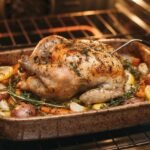
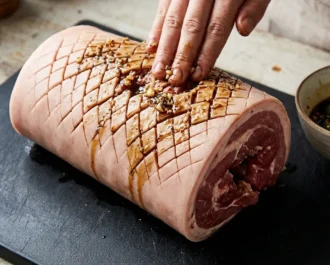
For the home version using a beef belly roll, score the skin side in a crosshatch pattern using a sharp knife, cutting through the skin but not into the meat. This scoring allows the basting sauce to penetrate and the skin to render and crisp evenly during roasting. Prepare the seasoning marinade by combining soy sauce, calamansi juice, fish sauce, crushed garlic, brown sugar, salt, and black pepper. Rub this marinade generously into every surface of the beef, pressing it into the score marks and any cavities. For the full beef, this seasoning process involves stuffing the body cavity with lemongrass, bay leaves, quartered onions, and garlic, creating an aromatic interior that perfumes the meat from within as it roasts. Allow the seasoned beef to rest at room temperature for at least 1 hour before roasting, or refrigerate overnight and bring to room temperature 2 hours before cooking.
- Prepare the Spit or Roasting Setup
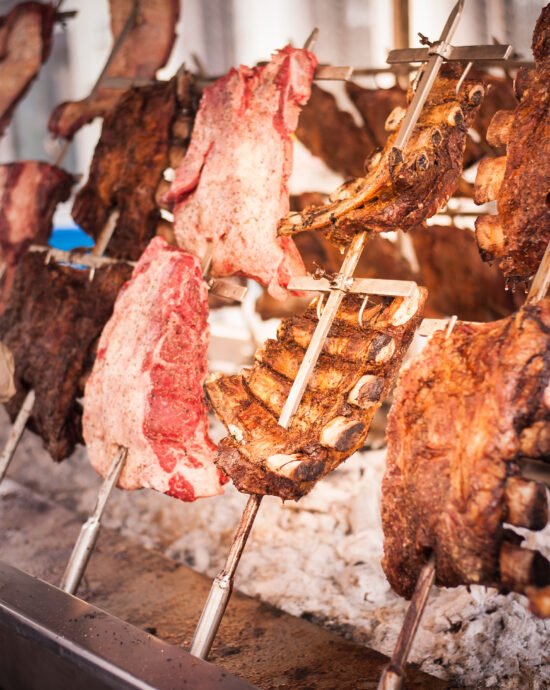
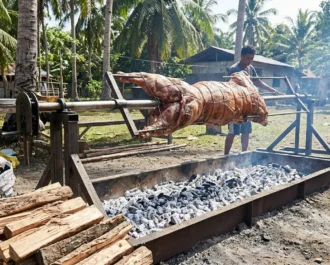
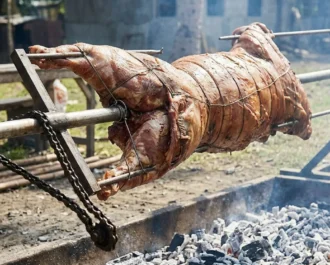
Traditional litson baka is cooked on an outdoor steel spit rotated by hand or motor over an open charcoal or wood fire — a process that requires preparation and equipment beyond most home kitchens. For home cooking, the beef belly roll can be oven-roasted on a rack at 160°C (325°F) for the home adaptation that closely approximates the genuine experience. Line a large roasting pan with foil for easy cleanup. Place a roasting rack inside and position the beef skin-side up. For the spit version, ensure the meat is balanced on the spit and secured tightly with wire to prevent spinning or slipping. Prepare the charcoal or wood fire well in advance — the coals should be completely white and glowing before the beef is placed over them, providing even, steady radiant heat rather than flames that would scorch the exterior before the interior is cooked.
- Begin the Long, Slow Roasting
Place the beef on the spit or in the oven and begin cooking at a relatively low temperature to allow the heat to penetrate the thick muscle before the exterior overcooks. For oven roasting, start at 160°C (325°F). For spit roasting, position the meat at a height where the exterior is cooking steadily rather than sizzling aggressively. The patience required for litson baka cannot be overstated — rushing a whole beef over too-high heat produces a charred exterior and raw center. The internal temperature of the thickest part of the beef should reach 70–75°C (158–167°F) for properly cooked beef. A probe thermometer inserted into the thickest muscle group (not near bone) is essential for monitoring doneness. For a 3 kg beef belly roll, expect 3–4 hours of oven roasting. A whole beef on a spit requires 6–8 hours.
- Baste Frequently for Golden Color
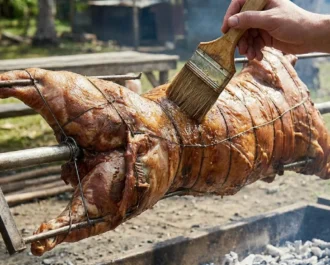
Basting is what transforms litson baka from simply roasted beef into the golden, glistening, crackling-skinned masterpiece that is the pride of Filipino fiestas. Every 30–45 minutes throughout the cooking process, brush the entire surface of the beef generously with a mixture of cooking oil or lard combined with the residual marinade. The fat basting keeps the meat moist during the long roasting and gradually builds a golden lacquered crust. In the final hour of cooking, increase the oven temperature to 220°C (425°F) or move the spit closer to the coals to drive rapid caramelization of the skin. During this final high-heat stage, baste every 15 minutes. The skin should bubble, crackle, and turn deep golden-brown. The crackling skin of litson baka — crispy, salty, and intensely flavorful — is one of the most coveted elements of the entire dish.
- Rest, Carve, and Serve in the Filipino Tradition
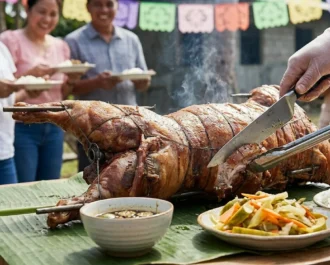
When the beef reaches proper internal temperature and the skin is deeply golden and crackling, remove from heat. Allow the beef to rest for a full 20–30 minutes before carving — this resting period allows the juices to redistribute throughout the meat, ensuring every slice is moist and flavorful. For a whole beef, the spectacle of carving at the table or serving station is itself part of the litson baka experience — the sizzling, crackling skin and the steam rising from freshly carved slices are theatrical and celebratory. Serve immediately with garlic soy dipping sauce, atchara (pickled papaya), steamed white rice, and fresh tomato salad. In Filipino fiesta tradition, litson baka is accompanied by endless rice, multiple side dishes, and shared with as many people as possible — the dish is inseparable from community, celebration, and the Filipino spirit of generosity.
- Calories:480 kcal24%
- Protein:52 g104%
- Carbohydrates:6 g2%
- Sugar:2 g2%
- Fat:28 g36%
- Salt:1.2 g20%
- Energy:2009 kJ24%
Table of Contents
What Is Litson Baka?
Litson Baka is whole roasted beef — the bovine counterpart to the beloved lechon baboy (roast pig) — and one of the most dramatic, celebratory dishes in the entire Filipino culinary canon. Where lechon baboy is the festive centerpiece of everyday Filipino celebrations, litson baka occupies an even more elevated tier — reserved for the grandest fiestas, the largest family gatherings, the most important town celebrations, and corporate events where the scale of hospitality demands something truly spectacular.
The term litson (or lechon) derives from the Spanish leche, referring to milk-fed animals traditionally used for roasting. In the Filipino context, it has come to refer broadly to any whole roasted animal cooked on a spit over open fire. Litson baka follows the same fundamental technique as lechon baboy but adapted for the size, texture, and fat distribution of cattle.
The technique is ancient and simple in principle but demanding in execution: a whole dressed beef is seasoned inside and out, skewered on a spit, and slowly rotated over glowing coals for hours until the skin turns golden and crackling and the meat beneath is cooked through and juicy. The smell of spit-roasting beef perfuming an entire barangay is one of the quintessential sensory experiences of Philippine fiesta culture.
For most Filipinos, litson baka is not everyday food — it is event food, celebration food, food that marks an occasion as truly significant. The labor, time, and community effort required to prepare a whole beef creates the dish with communal bonds. Preparing litson baka is as much about the social act of cooking together as it is about the extraordinary eating experience that follows.
Ingredient Notes
- Beef Belly for Home Version: For home cooks without spit equipment, beef belly roll provides the closest experience — thick fat cap that crisps like crackling, with rich marbled meat beneath. Ask your butcher to prepare it with the skin on and scored.
- Lemongrass for Stuffing: Bruised lemongrass stuffed into the beef cavity perfumes the meat from within as it roasts, creating the distinctive aromatic character of authentic litson baka. Use generously — 6 full stalks for a whole beef.
- Lard or Coconut Oil for Basting: Traditional litson baka is basted with lard, which produces the most intensely flavored, deepest golden crackling skin. Cooking oil is a convenient substitute but lard is superior for crackling development.
- Calamansi in Marinade: The acidity of calamansi juice in the marinade helps tenderize the exterior muscle and provides a subtle citrus note that lifts the richness of the roasted beef.
Ingredient Suggestions
- Dried Oregano in Stuffing: A handful added to the cavity aromatics gives an herbal note reminiscent of whole-roasted Italian beef.
- Annatto-Lard Baste: Adding annatto seeds steeped in the lard basting mixture produces a beautiful copper-red color on the skin.
- Rock Salt Crust (Skin Only): Rubbing coarse rock salt generously on the skin side 24 hours before roasting draws out moisture and produces maximum crackling.
- Filipino-Style Liver Sauce: A traditional litson dipping sauce made with the beef liver, vinegar, and spices is a natural accompaniment.
Helpful Tips & Pro Tips
- Low and Slow Is the Only Way: Rushing litson baka over high heat from the start produces charred skin and raw interior. Always begin at low heat for the first two-thirds of cooking time before blasting with high heat for the final crackling stage.
- Probe Thermometer Is Essential: A whole beef is too large to test doneness by sight or touch. Invest in a reliable meat thermometer and aim for 70–75°C internal temperature in the thickest part away from any bones.
- Rest Is Non-Negotiable: A 20–30 minute resting period after removing from heat allows muscle fibers to relax and redistribute juices. Carving immediately produces significant juice loss and drier meat.
- Score the Skin Deeply: For home belly roll version, ensure the scoring cuts go completely through the skin and fat layer. Insufficient scoring prevents fat rendering and results in soft rather than crackling skin.
How to Serve and Store
Cooked litson baka is best consumed on the day it is prepared while the skin is still crackling and the meat is at its juiciest. Leftovers can be stored in an airtight container in the refrigerator for up to 3 days. Reheat in an oven at 200°C (400°F) for 10–15 minutes to restore some crispness to the skin. Leftover litson baka can be repurposed for paksiw na litson (stewed leftover roast in liver sauce and vinegar), which is equally delicious. Freeze sliced beef without the skin for up to 2 months. The skin does not survive freezing well.
Substitutions
- Whole Beef → Beef belly roll (3 kg) — the most practical home substitute providing similar skin-to-meat ratio and flavor.
- Lard Basting → Coconut oil — provides good results with a subtle coconut note; achieves excellent golden skin.
- Calamansi Juice → Lemon juice — the best widely available substitute for the citrus marinade element.
- Fish Sauce → Salt — simplest substitution; adjust quantity carefully to avoid over-salting.
- Spit Roasting → Oven roasting on a rack — produces excellent results for home cooking; increase temperature for final crackling.
Suggested Recipes
- Beef Balbacua: Uses the skin-on collagen-rich portions of beef in a slow-braised format — a different but complementary preparation.
- Beef Pochero: A rich festive beef stew that often appears alongside litson baka at Filipino celebration meals.
- Beef Kare-Kare: Another showpiece Filipino beef dish reserved for celebrations — contrasting litson baka’s roasted boldness with nutty, creamy depth.