
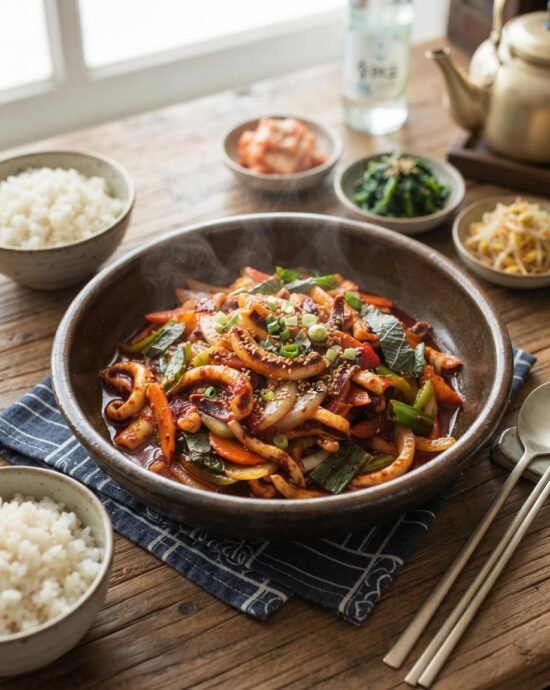

- Step 1. Prepare the Squid
If starting with whole squid, clean thoroughly by removing the head, innards, and thin outer membrane, then rinse well under cold water. Score the inside of the squid bodies in a shallow crosshatch pattern, which helps the squid curl attractively and cook evenly once stir-fried. Slice the squid bodies into bite-sized rings or pieces and pat dry with paper towels to remove excess moisture before cooking.
- Step 2. Make the Sauce
In a small bowl, whisk together the gochujang, gochugaru, soy sauce, brown sugar, minced garlic, and grated ginger until smooth. This fiery, savory-sweet sauce is the backbone of ojingeo bokkeum's bold flavor, so taste it before proceeding and adjust the heat or sweetness slightly to your preference. Set the sauce aside within reach of the stove, since this dish comes together very quickly once cooking begins.
- Step 3. Cook the Vegetables
Heat the vegetable oil in a large skillet or wok over high heat until shimmering. Add the sliced onion and carrot, stir-frying for 2 minutes until just beginning to soften. Add the chopped cabbage and continue stir-frying for another 2 minutes, until the cabbage starts to wilt slightly but still retains some crunch. Keeping the heat high throughout is essential for the quick, high-heat cooking style traditional to this dish.
- Step 4. Add the Squid
Push the vegetables to one side of the pan and add the squid to the empty space, letting it sear undisturbed for about 1 minute before stirring. Squid cooks very quickly and can turn rubbery if overcooked, so watch closely; it should turn opaque and begin to curl within just a couple of minutes. Stir-fry the squid and vegetables together for another 1 to 2 minutes.
- Step 5. Add the Sauce
Pour the prepared sauce over the squid and vegetables, tossing quickly and constantly to coat everything evenly in the thick, spicy glaze. Continue stir-frying over high heat for 2 to 3 minutes, until the sauce clings glossy and thick to every piece and the squid is just cooked through. Avoid overcooking at this stage, as squid becomes tough and chewy if left on the heat too long.
- Step 6. Finish and Serve
Remove the pan from the heat and stir in the sesame oil along with most of the chopped green onions, reserving a small amount for garnish. Transfer the ojingeo bokkeum to a serving platter, garnish with the remaining green onions and toasted sesame seeds, and serve immediately while hot, alongside a bowl of steamed rice to balance the dish's spicy kick.
- Calories:290 kcal15%
- Protein:24 g48%
- Carbohydrates:22 g8%
- Sugar:10 g11%
- Energy:1213 kJ15%
- Salt:1.8 g30%
- Fat:9 g13%
What is Ojingeo Bokkeum?
Ojingeo bokkeum is a fiery, quick-cooking Korean stir-fry featuring tender squid and crisp vegetables tossed in a bold gochujang-based sauce that balances heat, sweetness, and umami in every bite. The name simply combines ojingeo, meaning squid, with bokkeum, referring to the stir-frying technique, and the dish stands as one of Korea’s most beloved seafood preparations, commonly found on home dinner tables as well as at casual restaurants specializing in spicy stir-fried dishes served alongside drinks. What defines great ojingeo bokkeum is speed, since squid transforms from tender to rubbery within moments of overcooking, making the dish a true test of high-heat, quick-hands stir-frying technique rather than a slow, patient braise. The characteristic crosshatch scoring cut into the squid before cooking is both functional and decorative, helping the squid curl attractively into small rolls as it hits the hot pan while also allowing the spicy sauce to cling more effectively to its surface. Crisp vegetables like cabbage, carrot, and onion are traditionally stir-fried alongside the squid, adding textural contrast and helping to balance the dish’s considerable heat with natural sweetness. Ojingeo bokkeum holds a particular place in Korean anju culture, the tradition of pairing bold, flavorful dishes with alcohol, frequently ordered at pojangmacha street food tents and casual eateries as a spicy, satisfying dish to accompany soju or beer. Its quick preparation time, vibrant color, and intensely savory-spicy flavor have made ojingeo bokkeum a enduring favorite for both home cooks and restaurant kitchens alike.
Ingredient Notes
- Squid: Choose squid that is firm, glossy, and mild-smelling; pre-cleaned squid tubes save significant prep time if fresh whole squid is not available.
- Gochujang: This fermented chili paste provides the sauce’s heat and body; use a good quality brand for the most balanced, complex flavor.
- Gochugaru: Korean chili flakes deepen the sauce’s red color and add a fruity heat that complements the gochujang’s sweetness.
- Cabbage: Choose fresh, crisp cabbage that holds its texture well under high heat, adding satisfying crunch against the tender squid.
- Carrot: Julienned carrot adds color and a subtle sweetness that balances the sauce’s spicy kick.
Ingredient Suggestions
- Rice cakes: Adding sliced Korean rice cakes turns the dish into a heartier meal, similar to a squid-based tteokbokki.
- Perilla leaves: A few torn leaves stirred in at the end add a distinctive herbal aroma that pairs beautifully with the spicy sauce.
- Extra vegetables: Bell peppers or zucchini add more color and bulk to the stir-fry without overpowering the squid.
- Instant noodles: Tossing cooked ramyeon noodles into the finished dish creates a filling, one-pan meal.
- Extra gochugaru: For those who love intense heat, an additional spoonful boosts the dish’s spiciness further.
Helpful Tips & Pro Tips
- If your squid turns out rubbery, it was likely overcooked; squid needs only a couple of minutes over high heat and toughens quickly if left on the stove too long.
- Score the squid in a crosshatch pattern before cooking, which helps it curl attractively and allows the sauce to cling more effectively.
- Keep the heat high throughout cooking, since ojingeo bokkeum is a quick stir-fry meant to be cooked fast rather than simmered slowly.
- Pat the squid dry before adding it to the hot pan, since excess moisture can cause it to steam rather than sear.
- Prepare all your ingredients and the sauce before you start cooking, since this dish moves quickly once the squid hits the pan.
How to Serve and Store
Serve ojingeo bokkeum immediately while hot, straight from the pan, alongside a bowl of steamed rice to help balance its spicy, bold flavor. Leftovers keep in an airtight container in the refrigerator for up to 2 days, though the squid’s texture will firm up considerably once chilled and is best enjoyed within a day for optimal tenderness. Reheat gently in a hot skillet for just a minute or two, since extended reheating will make the squid tough and rubbery; avoid microwaving for too long for the same reason. Ojingeo bokkeum is not recommended for freezing, as the texture of both the squid and fresh vegetables suffers significantly once thawed.
Substitutions
- Squid → King oyster mushrooms, sliced — A plant-based option with a similarly satisfying chew that absorbs the spicy sauce well. (Vegan)
- Soy Sauce → Tamari — Keeps the sauce’s savory depth intact while making the dish gluten-free. (Gluten-Free)
- Fresh Squid → Frozen squid, thawed — A more affordable and convenient option that works just as well once properly thawed and dried. (Budget-Friendly)
- Squid → Shrimp or a mix of seafood — A reasonable swap for those who prefer a different type of seafood in the stir-fry.
- Gochujang → A blend of chili paste and miso — An improvised approximation when authentic gochujang is unavailable.
Suggested Recipes
- Tteokbokki: Another gochujang-based Korean dish that shares ojingeo bokkeum’s spicy, glossy sauce.
- Dakgalbi: A spicy stir-fried chicken dish with a similar bold, gochujang-forward flavor profile.
- Sundubu Jjigae: A spicy tofu stew that makes a comforting, brothy pairing alongside the fiery squid stir-fry.
- Japchae: A milder noodle dish that balances ojingeo bokkeum’s heat when served as part of a larger Korean meal.

Jeff Smith
"Cooking is the intersection of history, science, and emotion."
For me, the kitchen has always been a laboratory of culture. With a background deeply rooted in digital strategy and precision, I approach the culinary arts with the same rigor I apply to the digital landscape—analyzing flavors, perfecting techniques, and documenting the nuance that makes Filipino cuisine truly world-class.
Findme Recipe was born from a desire to bridge the gap between traditional heritage and the modern home cook. Whether it is mastering the perfect balance of acidity in a classic Adobo or simplifying complex regional dishes for everyday kitchens, my mission is to preserve our culinary identity through accessible, data-backed, and delicious content.
I am not just building a database; I am cultivating a community where every Filipino kitchen feels empowered, every ingredient is celebrated, and every family heirloom recipe finds a place to thrive.
Join me as we translate the soul of our islands into recipes for the next generation.