
- Step 1: Marinate the Pork

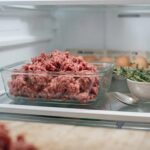
Combine the pork belly cubes in a large bowl with the soy sauce, crushed garlic, whole black peppercorns, and bay leaves. Toss everything together thoroughly so every surface of every piece of pork is generously coated with the marinade. The soy sauce immediately begins seasoning the pork's surface and draws the garlic and peppercorn aromatics into contact with the meat. For the best flavor penetration, allow the pork to marinate for a minimum of 30 minutes at room temperature. An overnight marinade in the refrigerator produces dramatically more deeply flavored results — the salt in the soy sauce brines the pork during the extended marination, resulting in noticeably more flavorful, more tender, juicier cubes throughout the entire cooking process. Remove the pork from the marinade and reserve all the liquid.
- Step 2: Sear the Pork
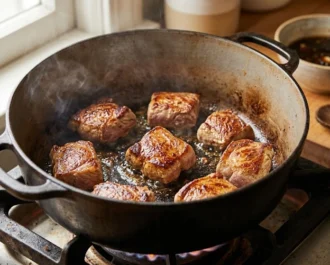
In a large, wide, heavy-bottomed pan or Dutch oven, heat the cooking oil over medium-high heat until shimmering. Remove the pork pieces from the marinade — reserving all the marinade liquid — and sear them in a single layer, working in batches to avoid crowding. Cook undisturbed for 3 to 4 minutes per side until each piece develops a rich, deep golden-brown crust on all surfaces. The browning of the pork belly through the Maillard reaction creates roasted, nutty, caramelized flavors that add essential complexity to the finished adobo sauce. The natural fat of the pork belly renders during searing, basting the meat from its own fat. The skin-on pork belly cubes should develop a particularly appealing, slightly crisped skin edge during this searing stage. Transfer seared pork to a plate.
- Step 3: Build the Braising Liquid
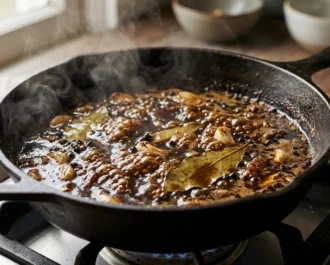
Pour the reserved marinade — soy sauce, garlic, peppercorns, and bay leaves — directly into the same pan used for searing, deglazing it over medium heat. Add the vinegar and water and stir gently to incorporate everything, loosening any caramelized bits from the bottom of the pan into the liquid. Bring to a boil over medium-high heat, then allow the vinegar to cook undisturbed for 2 full minutes without stirring — this critical technique dissipates the harshest volatile acids in the vinegar, mellowing its raw sharpness into a rounded, integrated acidity that will define the adobo's flavor without overpowering it. Add the optional brown sugar and stir to dissolve. Return the seared pork belly pieces to the pan, nestling them into the braising liquid so each piece is partially submerged in the sauce.
- Step 4: Braise Until Tender
Reduce the heat to low, cover the pan loosely, and allow the pork belly to braise in the adobo sauce for 30 to 35 minutes, turning the pieces once at the halfway mark. Pork belly contains significantly more collagen than chicken — the long, gentle braise is what converts this collagen into gelatin, producing the characteristic silky, richly coated sauce and meltingly tender meat that distinguishes a properly made pork adobo from a rushed one. The fat from the pork belly also renders slowly during the braise, enriching the sauce with its flavor. The pork is ready to proceed to the next step when it yields easily when pressed with a fork and the skin is completely tender rather than chewy and resistant. Check the liquid level periodically and add small splashes of water if it reduces too quickly.
- Step 5: Reduce to a Glaze
Remove the lid and increase the heat to medium-high. Allow the braising liquid to reduce rapidly, uncovered, stirring occasionally to prevent sticking. As the liquid reduces from a thin, vinegary broth to a thick, glossy, deeply mahogany-colored sauce, the flavors concentrate dramatically — the sharpness mellows completely into a rounded, intensely savory and faintly tangy glaze of extraordinary depth and complexity. Continue reducing for 8 to 12 minutes until the sauce is thick enough to coat the back of a spoon and clings to every surface of the pork. Spoon the thickening sauce continuously over the pork pieces as it reduces, lacquering each cube with the beautiful, glossy glaze. For an even drier, more caramelized style, continue until the sauce almost completely evaporates and the pork begins to fry in its own rendered fat.
- Step 6: Rest and Serve
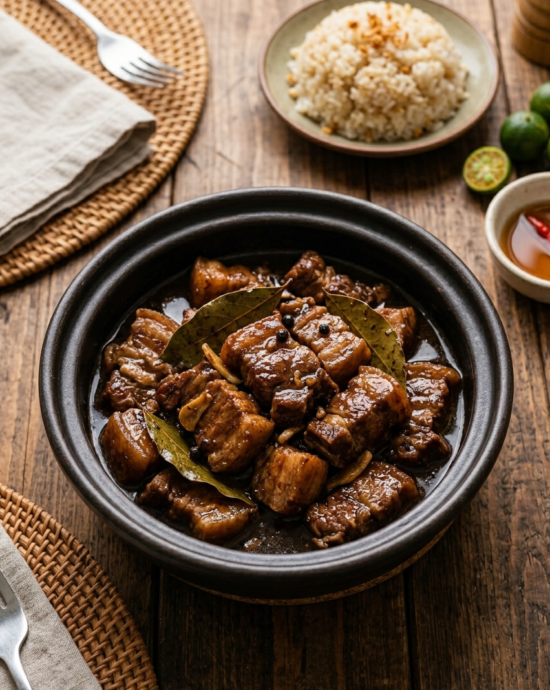
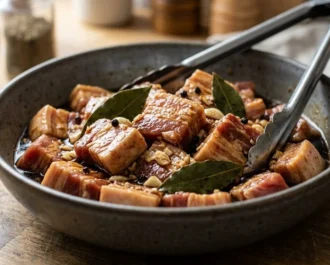
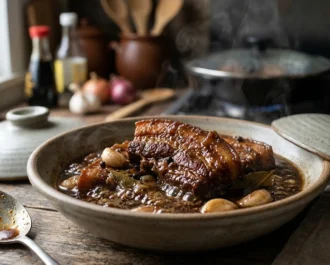
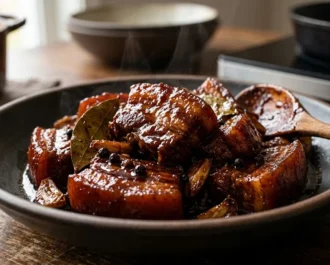
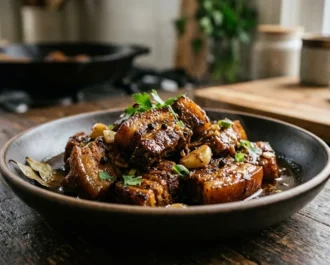
Remove the pan from heat and allow the pork adobo to rest uncovered for 5 minutes before plating. This brief resting period allows the sauce to set slightly around the pork pieces and the residual heat to redistribute the juices evenly through the meat. Remove and discard the bay leaves before serving. Arrange the pork belly pieces on a warm serving platter, skin-side up to showcase the glistening, lacquered exterior, and spoon every last drop of the thickened adobo sauce generously over the top. The finished pork adobo should be a deep, rich mahogany color, glistening with the reduced sauce, with the skin edges lightly crisped and the fat layer meltingly tender. Serve immediately with abundant steaming white rice — the sauce-soaked rice is as essential to the experience as the pork itself.
- Calories:420 kcal21%
- Energy:1,757 kJ21%
- Protein:28 g56%
- Carbohydrates:6 g2%
- Sugar:1 g1%
- Fat:30 g38%
- Salt:1.4 g23%
Table of Contents
What Is Pork Adobo?
Pork adobo is a Filipino braised pork dish slow-cooked in vinegar, soy sauce, garlic, and black peppercorns until the pork is fall-apart tender and coated in a deeply reduced, glossy, mahogany sauce — the pork expression of the Philippines’ most celebrated and most enduring culinary preparation. While chicken adobo receives perhaps more international attention, pork adobo — made with the rich, fatty magnificence of pork belly — is widely considered by Filipino cooks and food lovers to be the more indulgent, more deeply satisfying, and ultimately more rewarding version of the dish. Pork belly’s extraordinary fat content transforms the adobo sauce during the long braise, rendering into the liquid and creating a richness and depth of body that chicken adobo simply cannot replicate.
The technique of cooking meat in vinegar existed in the Philippines long before Spanish colonization — a natural preservation method developed in a tropical climate where meat would spoil quickly without refrigeration. When Spanish colonizers arrived in the 16th century, they recognized the technique’s similarity to their own escabeche preparations and called it adobo, from the Spanish verb adobar, meaning “to marinate or season.” The name stuck, but the preparation remained distinctly Filipino — built on the sharp, clean acidity of native cane vinegar rather than European wine vinegar, and enriched with the deep umami saltiness of soy sauce, which arrived through trade with China.
Pork adobo made with liempo — the prized pork belly cut that Filipinos have elevated to near-sacred status — represents the dish at its most generous, most indulgent, and most deeply representative of Filipino home cooking at its best. Every Filipino family has their version, protected like a prized heirloom, and every version is definitive.
Ingredient Notes
- Pork Belly (Liempo): Skin-on pork belly is the ideal cut for pork adobo — the fat layer renders during the long braise, enriching the sauce while the skin transitions from tough to meltingly tender. Look for pork belly with an even ratio of meat to fat, approximately 2 to 3 cm thick, with bright white fat and pale pink flesh. Avoid overly lean pork belly, which lacks the fat necessary to create the characteristic richness of the dish.
- White Cane Vinegar: Filipino sugarcane vinegar (sukang tubo or sukang iloco) is the authentic choice for pork adobo — its mild, clean acidity with a slight sweetness is perfectly calibrated for the dish. Datu Puti or Marca Piña are the most widely used and trusted brands. Never use aggressively acidic distilled white vinegar, which produces an unpleasantly sharp, harsh adobo sauce.
- Soy Sauce: Filipino soy sauce — Silver Swan or Datu Puti — is slightly less salty and more rounded in flavor than Chinese or Japanese varieties, making it the ideal seasoning for an adobo that is savory rather than overwhelmingly salty. Use the correct Filipino brand rather than substituting for the most authentic result.
- Garlic: Use an entire head — crushed, not minced — for the most authentic pork adobo. Crushed garlic releases its oils more slowly and completely into the braising liquid than minced, producing a deeper, more rounded garlic flavor throughout the sauce rather than a sharp, concentrated hit.
- Black Peppercorns: Always whole, always added with the marinade and left in throughout cooking. Whole peppercorns infuse the adobo with a warm, fragrant, floral heat that ground pepper cannot replicate — the peppercorns continue releasing their flavor gradually throughout the entire braise and reduction, building a gentle, sustained warmth.
Ingredient Suggestions
- Coconut milk — Half a cup stirred in after the braise creates a richer, creamier adobo sa gata variation that softens the vinegar’s acidity and adds a luscious silkiness to the sauce.
- Hard-boiled eggs — Added in the final 10 minutes of simmering, the eggs absorb the adobo sauce and take on a beautiful mahogany color and deep, savory flavor — a beloved variation across many Filipino households.
- Potatoes — Quartered and added during the braise, potatoes absorb the vinegar-soy sauce beautifully and become deeply flavored, making the dish more substantial.
- Dried chili — One or two dried bird’s eye chilies added with the aromatics introduce a subtle, building heat that cuts through the pork belly’s richness without dominating the dish.
- Mushrooms (shiitake or oyster) — Added during the braise, mushrooms absorb the adobo sauce and add an earthy, meaty depth that enriches the dish significantly.
Helpful Tips & Pro Tips
- Marinate overnight whenever possible. Thirty minutes produces good results, but overnight marinating produces exceptional ones. The extended contact of soy sauce with the pork belly not only deepens the seasoning but also brines the meat, producing noticeably more flavorful and more tender cubes throughout after cooking.
- Allow the vinegar to boil undisturbed. The 2-minute undisturbed boil after adding the vinegar is non-negotiable for a properly mellow, balanced adobo sauce. Vinegar stirred immediately after adding retains its sharpest volatile acids, producing a sauce that tastes aggressively sour rather than beautifully rounded. This is the most important single technique in Filipino paksiw and adobo cooking.
- Why is my pork adobo dry? Dry pork adobo is almost always caused by overcooking the pork belly beyond full tenderness before reducing the sauce, or reducing the sauce so aggressively that it burns rather than glazes. Pull the pork off heat the moment it yields easily to fork pressure and begin reducing the sauce with attentive stirring rather than leaving it unattended.
- Pork belly adobo improves dramatically with rest. Like chicken adobo, pork belly adobo genuinely improves overnight — the sauce penetrates more deeply, the flavors integrate and round out, and the texture of the pork becomes even more yielding and tender. Make it a day ahead whenever possible and simply reheat gently before serving.
- For a drier, crispier style — continue the final reduction until the sauce evaporates almost entirely and the pork belly pieces begin to fry in their own rendered fat, developing slightly caramelized, crisped edges. This adobo sa dilaw or dry adobo style is a beloved regional variation that showcases a completely different but equally compelling textural result.
How to Serve and Store
Serve pork adobo over abundant steaming white rice, spooning every drop of the thickened, mahogany-colored sauce over both the pork and the rice. The sauce-soaked rice beneath the glistening pork belly is as central to the experience as the pork itself. For a complete meal, pair with a side of steamed vegetables or a simple green salad to balance the dish’s extraordinary richness.
Pork adobo improves over time — store it in an airtight container in the refrigerator for up to 5 days. The vinegar acts as a natural preservative, extending shelf life beyond most cooked pork dishes. Reheat gently on the stovetop over low heat, adding a small splash of water if the sauce has thickened excessively. Pork adobo freezes exceptionally well for up to 3 months; thaw overnight in the refrigerator before reheating.
Substitutions
- Pork belly → Pork shoulder (kasim) — A leaner, slightly firmer cut that still produces excellent adobo; increase braising time by 10 minutes for comparable tenderness.
- White cane vinegar → Apple cider vinegar — A mild, slightly fruity substitute with comparable acidity; the most accessible authentic-tasting substitute outside the Philippines.
- Soy sauce → Coconut aminos — A gluten-free alternative with a slightly sweeter, less salty character; a genuine 1:1 substitute.
- Cooking oil → Lard — The traditional frying medium for pork adobo searing that adds authentic, deep pork flavor to the browned exterior.
- Pork belly → Jackfruit (young, unripe) — A vegan adaptation; young jackfruit absorbs the adobo sauce strikingly well and develops a pulled, meaty texture.
- Brown sugar → Honey — A natural sweetener to balance vinegar acidity; use sparingly — only ½ teaspoon — as honey is sweeter than brown sugar.
Suggested Recipes
- Chicken Adobo — The poultry counterpart to pork adobo; comparing both versions reveals the fascinating differences in how fat content shapes the same fundamental preparation.
- Lechon Kawali — Another great pork belly Filipino preparation that celebrates the same cut in its crispiest, most indulgent form.
- Pork Adobo sa Gata — The coconut milk variation that transforms the vinegar-soy adobo base into something richer, creamier, and equally extraordinary.
- Binagoongang Baboy — Another iconic Filipino pork belly dish, this time braised with shrimp paste (bagoong) for a deeply funky, savory flavor profile that complements pork adobo on any Filipino feast spread.
Frequently Asked Questions

Jeff Smith
"Cooking is the intersection of history, science, and emotion."
For me, the kitchen has always been a laboratory of culture. With a background deeply rooted in digital strategy and precision, I approach the culinary arts with the same rigor I apply to the digital landscape—analyzing flavors, perfecting techniques, and documenting the nuance that makes Filipino cuisine truly world-class.
Findme Recipe was born from a desire to bridge the gap between traditional heritage and the modern home cook. Whether it is mastering the perfect balance of acidity in a classic Adobo or simplifying complex regional dishes for everyday kitchens, my mission is to preserve our culinary identity through accessible, data-backed, and delicious content.
I am not just building a database; I am cultivating a community where every Filipino kitchen feels empowered, every ingredient is celebrated, and every family heirloom recipe finds a place to thrive.
Join me as we translate the soul of our islands into recipes for the next generation.