
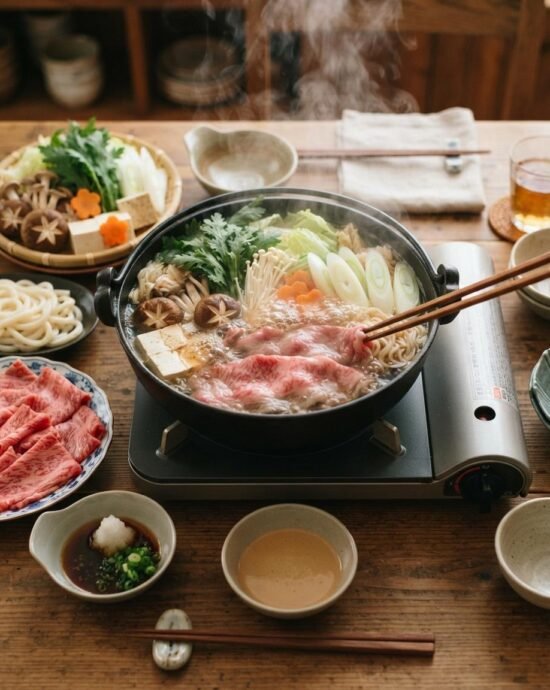

- Step 1. Make the Kombu Broth
Wipe the kombu gently with a damp cloth to remove any surface debris, being careful not to wipe away the white mineral coating, which contributes significant flavor. Place the kombu in a large pot with the water and let it soak for 30 minutes. Slowly bring the water to just below a boil over medium heat, then remove the kombu right before it boils, since prolonged boiling can make the broth slightly bitter.
- Step 2. Prepare the Ingredients
While the broth heats, arrange the thinly sliced beef on a large platter in a single layer for easy access at the table. Chop the napa cabbage into large pieces, trim the enoki and shiitake mushrooms, cube the tofu, slice the green onions and carrot, and arrange everything on separate platters or in sections of one large platter for a beautiful, organized presentation.
- Step 3. Cook the Noodles
Bring a separate pot of water to a boil and cook the udon noodles according to the package instructions, typically 8 to 10 minutes for dried or 2 minutes for fresh, until tender. Drain and rinse briefly under cold water to stop the cooking process, then set aside; these will be added to the pot near the end of the meal to soak up the flavorful broth.
- Step 4. Set Up the Hot Pot
Transfer the kombu broth to a tabletop hot pot burner or portable induction cooktop set in the center of the dining table, keeping it at a gentle simmer throughout the meal. Arrange the platters of raw beef, vegetables, tofu, and dipping sauces around the pot, creating an interactive dining setup where guests cook their own ingredients to their liking.
- Step 5. Cook the Ingredients
Using chopsticks or a small strainer, each diner swishes a slice of beef through the simmering broth for just a few seconds, until it turns from pink to a light gray-brown, which is where the dish gets its onomatopoeic name, shabu-shabu, mimicking the swishing sound. Vegetables and tofu can be added directly to the pot and left to simmer for a few minutes until tender.
- Step 6. Finish with Noodles and Serve
Dip each cooked piece of beef or vegetable into ponzu sauce or sesame dipping sauce before eating, alongside bowls of steamed rice. Near the end of the meal, add the cooked udon noodles directly to the remaining broth, letting them warm through and absorb all the rich flavors that have accumulated from the beef and vegetables, then divide among bowls and serve as a final course.
- Calories:460 kcal23%
- Protein:34 g68%
- Carbohydrates:46 g17%
- Sugar:5 g6%
- Energy:1925 kJ23%
- Salt:2.2 g37%
- Fat:14 g20%
What is Shabu-Shabu?
Shabu-shabu is a Japanese hot pot dish in which paper-thin slices of beef and an assortment of fresh vegetables are quickly swished through a simmering pot of light kombu broth at the table, then dipped in citrusy ponzu or nutty sesame sauce before eating. The dish takes its playful, onomatopoeic name directly from the swish-swish sound made as the thin beef slices are moved back and forth through the hot broth, cooking in a matter of seconds due to their thinness. Unlike richer, more heavily seasoned hot pot styles found elsewhere in Asia, shabu-shabu's broth is intentionally kept simple and delicate, built from little more than kombu seaweed steeped in water, allowing the natural flavors of the high-quality beef and fresh vegetables to remain the clear focus of the meal rather than being masked by a heavily spiced broth. This restrained approach reflects broader Japanese culinary values that prioritize showcasing the quality of individual ingredients over complex layering of flavors. Shabu-shabu is inherently a social, interactive dining experience, traditionally enjoyed around a shared pot at the center of the table, where each diner cooks their own portions to their preferred doneness, making it a popular choice for gatherings with family and friends. Toward the end of the meal, the broth, now deeply infused with the flavors of the beef and vegetables that have simmered in it, is used to cook noodles or rice porridge, ensuring that not a drop of its accumulated flavor goes to waste. Beloved for its interactive format and clean, comforting flavors, shabu-shabu remains a cherished centerpiece of Japanese hot pot dining.
Ingredient Notes
- Thinly Sliced Beef: Look for beef sliced paper-thin, specifically labeled for shabu-shabu or sukiyaki, at a Japanese or Asian grocery store, since the thinness is essential for quick cooking.
- Kombu: This dried kelp forms the base of the delicate broth; avoid boiling it vigorously, which can release a slightly bitter, overly seaweed-forward flavor.
- Ponzu Sauce: This citrus-based soy sauce adds bright, tangy flavor that cuts through the richness of the beef; look for it bottled in the Asian foods aisle.
- Sesame Dipping Sauce (Goma Dare): A creamy, nutty sauce that offers a rich contrast to the lighter ponzu; look for it pre-made or blend your own from tahini, soy sauce, and rice vinegar.
- Firm Tofu: Choose a firm variety that holds its shape well when simmered briefly in the hot broth without falling apart.
Ingredient Suggestions
- Thinly sliced pork: A popular alternative or addition to beef, offering a different but equally traditional shabu-shabu protein.
- Mochi: Adding rice cakes near the end of the meal creates a chewy, satisfying addition that soaks up the broth.
- Daikon radish, sliced thin: A mild, slightly sweet vegetable that becomes tender and absorbs the broth's delicate flavor.
- Extra citrus in the ponzu: A squeeze of fresh yuzu or lemon brightens the dipping sauce even further.
- Chrysanthemum greens (shungiku): A traditional shabu-shabu vegetable with a slightly bitter, aromatic flavor that balances the richness of the beef.
Helpful Tips & Pro Tips
- If your beef turns out tough rather than tender, it was likely cooked for too long; shabu-shabu beef needs only a few seconds of swishing in the hot broth.
- Do not boil the kombu vigorously when making the broth, since this can release a bitter flavor; bring it to just below a boil and remove before it fully boils.
- Cook heartier vegetables like carrots and mushrooms a bit longer than the delicate beef, since they take more time to become tender in the broth.
- Add noodles or rice to the broth only near the end of the meal, once it has had time to absorb the flavors of the beef and vegetables that came before.
- Keep the broth at a gentle simmer throughout the meal rather than a rolling boil, which helps control cooking times for the thin beef slices.
How to Serve and Store
Serve shabu-shabu as an interactive, shared meal at the table, with each diner cooking their own portions and dipping them in ponzu or sesame sauce, finishing with noodles or rice cooked in the flavorful broth. Leftover raw ingredients like sliced beef and vegetables should be stored separately in airtight containers in the refrigerator and used within 1 to 2 days for food safety and best quality. The broth itself keeps well in the refrigerator for up to 4 days and freezes well for up to 2 months, making it convenient to prepare a big batch ahead of time. Avoid storing already-cooked shabu-shabu ingredients mixed together, as the flavors and textures do not hold up as well upon reheating.
Substitutions
- Thinly Sliced Beef → Extra-firm tofu and mushrooms — A hearty plant-based version that still works well with the quick-cooking hot pot format. (Vegan)
- Ponzu Sauce → A mix of soy sauce, rice vinegar, and citrus juice using tamari — Keeps the dipping sauce gluten-free while preserving its bright, tangy flavor. (Gluten-Free)
- Ribeye Or Sirloin → Thinly sliced chuck or flank steak — A more affordable cut that still works well when sliced thin enough for quick cooking. (Budget-Friendly)
- Udon Noodles → Rice noodles or glass noodles — A gluten-free noodle alternative that still absorbs the broth nicely at the end of the meal.
- Sesame Dipping Sauce → Tahini thinned with a little water, soy sauce, and rice vinegar — A simple homemade substitute when goma dare is not available.
Suggested Recipes
- Sukiyaki: Another beloved Japanese hot pot dish, offering a sweeter, soy-based broth alternative to shabu-shabu's light kombu base.
- Udon & Soba: Noodle dishes that share shabu-shabu's use of a savory broth and make a great addition to the hot pot meal.
- Miso Soup: A comforting, simple soup that reflects the same clean, dashi-based flavor philosophy as shabu-shabu's broth.
- Tempura: Crispy fried vegetables and shrimp that offer a textural contrast to shabu-shabu's soft, simmered ingredients.

Jeff Smith
"Cooking is the intersection of history, science, and emotion."
For me, the kitchen has always been a laboratory of culture. With a background deeply rooted in digital strategy and precision, I approach the culinary arts with the same rigor I apply to the digital landscape—analyzing flavors, perfecting techniques, and documenting the nuance that makes Filipino cuisine truly world-class.
Findme Recipe was born from a desire to bridge the gap between traditional heritage and the modern home cook. Whether it is mastering the perfect balance of acidity in a classic Adobo or simplifying complex regional dishes for everyday kitchens, my mission is to preserve our culinary identity through accessible, data-backed, and delicious content.
I am not just building a database; I am cultivating a community where every Filipino kitchen feels empowered, every ingredient is celebrated, and every family heirloom recipe finds a place to thrive.
Join me as we translate the soul of our islands into recipes for the next generation.