
- Step 1: Season and Stuff the Tilapia
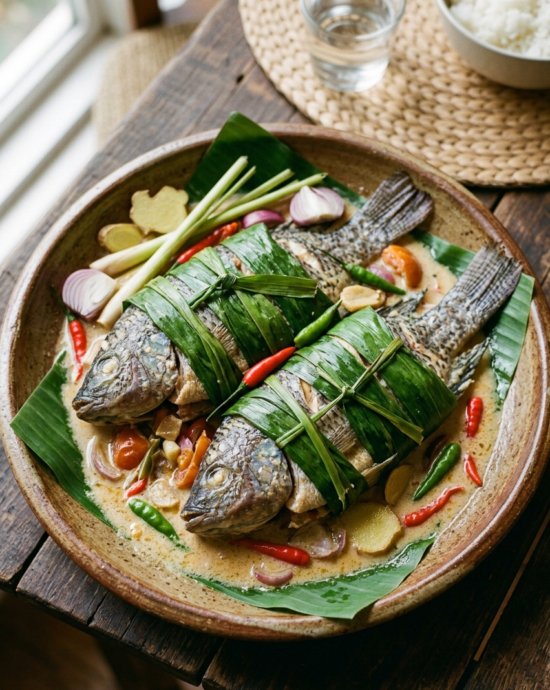
Begin with four fresh, medium-sized tilapia that have been properly scaled, gutted, and cleaned. Using a sharp knife, score both sides of each fish with two to three diagonal cuts deep enough to reach the bone — this ensures the seasoning and coconut milk penetrate the thick flesh during simmering. Season each fish generously inside the cavity and across the scored cuts with salt and ground black pepper. Stuff the belly cavity of each tilapia with a small amount of minced garlic, a few slices of ginger, one knotted stalk of lemongrass, and one to two slices of siling labuyo, adjusting chili quantity based on your preferred heat level. The aromatics stuffed inside the cavity perfume the fish from within as it cooks, creating an intensely fragrant interior that is the hallmark of well-prepared sinanglay. Press the cavity closed gently to hold the aromatics in place while you prepare the pechay wrapping.
- Step 2: Blanch the Pechay Leaves
Select the largest, most intact outer pechay leaves — you will need two to three leaves per fish to wrap it completely. Bring a shallow pot of lightly salted water to a rolling boil. Working in batches, submerge the pechay leaves for fifteen to twenty seconds only — just long enough for them to turn bright, vivid green and become pliable and flexible without losing structural integrity. Immediately transfer the blanched leaves to a bowl of ice-cold water to halt cooking and lock in the vibrant color. This blanching step is essential: raw pechay leaves are too stiff and brittle to wrap tightly around the fish without tearing, while over-blanched leaves become slimy and fall apart. After cooling, gently shake off excess water and lay the leaves flat on a clean work surface, smooth-side down, ready for wrapping the seasoned fish.
- Step 3: Wrap Each Fish in Pechay
Lay two to three blanched pechay leaves overlapping each other on a flat surface, creating a wide, continuous surface large enough to envelop the entire fish. Place the seasoned, stuffed tilapia in the center of the leaves. Fold the bottom leaf up over the fish, pressing firmly to contour the wrap around the body shape. Fold the sides in, then wrap the remaining leaf tightly over the top, ensuring the head and tail are either tucked in or left exposed depending on your preference. The wrap should be snug and secure — any gaps will allow the coconut milk to flood into the wrap during simmering, which dilutes the intensely aromatic interior. Secure the wrapped fish by tying kitchen twine around the bundle in two places, or use wooden toothpicks spaced every two centimeters to pin the leaves shut. Repeat for each fish.
- Step 4: Build the Coconut Milk Braising Base
Select a wide, heavy-bottomed pan or clay pot large enough to hold all four wrapped fish in a single layer. Over medium heat, sauté the sliced onion and remaining minced garlic in a small amount of oil until softened and translucent — about two minutes. Add the bagoong alamang and stir for thirty seconds, allowing the shrimp paste's savory, fermented depth to bloom into the aromatics. This bagoong base is the defining Bicolano touch that distinguishes sinanglay from other coconut-braised fish dishes, adding layers of umami and salinity that coconut milk alone cannot achieve. Pour in the coconut milk, stirring to combine with the aromatics. Add the remaining lemongrass knots, finger chilies, and any reserved ginger slices. Bring the coconut milk gently to a simmer over medium-low heat, stirring occasionally to prevent the milk from scorching on the bottom of the pan.
- Step 5: Simmer the Wrapped Fish
Carefully lower the pechay-wrapped tilapia into the simmering coconut milk, arranging them in a single layer so each bundle is fully submerged or at least half-submerged in the liquid. Cover the pan and allow the fish to simmer gently over medium-low heat for fifteen to eighteen minutes. Maintain a gentle simmer throughout — vigorous boiling will cause the coconut milk to separate into oil and whey, ruining the sauce's creamy consistency and potentially unwrapping the fish bundles from the turbulence. Check the fish for doneness at fifteen minutes by gently pressing the thickest part through the pechay wrap; the flesh should feel firm and flake easily. If the coconut milk reduces too quickly and the pan looks dry, add a small splash of water. Avoid lifting the bundles repeatedly, as excessive handling risks unwrapping them before they are ready.
- Step 6: Add Coconut Cream and Finish
Once the fish is cooked through, pour the coconut cream over the simmering bundles and gently stir it into the braising liquid. The coconut cream — the rich, fatty first press of grated coconut — enriches the sauce to a velvety, lightly thickened consistency and deepens the coconut flavor significantly. Allow the enriched sauce to simmer uncovered for three to five more minutes, gently shaking the pan occasionally to prevent sticking rather than stirring and risking the bundles unraveling. Taste the coconut sauce and adjust seasoning with salt and an additional small piece of bagoong if more savory depth is needed. The finished sauce should be creamy, gently spiced, fragrant with lemongrass and ginger, and balanced between the coconut's natural sweetness and the bagoong's savory saltiness. Serve each wrapped bundle whole in a deep bowl with generous ladles of the coconut sauce spooned over.
- Calories:310 kcal16%
- Protein:28 g56%
- Carbohydrates:8 g3%
- Sugar:3 g3%
- Fat:20 g26%
Table of Contents
What Is Sinanglay?
Sinanglay is a traditional Bicolano dish from the Bicol region of the Philippines consisting of whole fish — most commonly tilapia or bangus — stuffed with aromatics such as garlic, ginger, lemongrass, and chili, then wrapped tightly in leafy vegetables like pechay or kangkong before being simmered in rich, spiced coconut milk seasoned with bagoong alamang. It is one of the most celebrated and distinctive dishes in the Bicolano culinary canon, embodying the region’s two most iconic culinary signatures: the generous use of coconut milk and the liberal application of chili. The Bicol region, comprising the southeastern tip of Luzon and the surrounding islands, is renowned throughout the Philippines for its bold, coconut-rich, and spicy food culture — and sinanglay is a shining example of that identity. The technique of wrapping fish in leaves before cooking has deep roots in pre-colonial Filipino food culture, where banana leaves and other broad-leafed plants were used both as cooking vessels and as natural flavor enhancers. In sinanglay, the pechay wrap serves multiple culinary functions: it protects the delicate fish flesh from direct heat, infuses a gentle, green vegetable flavor into the fish as it steams within the wrap, and creates a beautiful, self-contained serving portion that is visually dramatic when presented at the table. The flavor profile is a masterful balance of creamy, savory, mildly spicy, and aromatic — the coconut milk providing sweetness and richness, the bagoong lending fermented depth, and the lemongrass and ginger contributing bright, warming fragrance. Sinanglay is a true celebration dish that rewards patience and care with extraordinary results.
Ingredient Notes
- Tilapia: Choose medium-sized, fresh whole tilapia with bright red gills, clear eyes, and firm flesh. The mild sweetness of tilapia is ideal for sinanglay as it complements rather than competes with the coconut and aromatics. Bangus (milkfish) is an equally authentic alternative used widely across Bicol.
- Pechay (Bok Choy): Select the largest outer leaves with no yellowing, spots, or wilting. Large, intact leaves are essential for a clean, secure wrap. Chinese pechay (the compact variety) works well; the larger Tagalog pechay offers more wrapping surface per leaf.
- Coconut Milk and Cream: Use freshly pressed coconut milk for the best sinanglay — the difference in flavor from canned is significant. If using canned, choose full-fat versions. Reserve the thicker cream (kakang gata) separately to stir in during the final minutes for maximum richness.
- Bagoong Alamang (Shrimp Paste): The signature Bicolano seasoning. Use a good-quality, freshly opened jar — the bagoong should smell pungent and savory, not rancid. It provides the fermented umami backbone that elevates sinanglay above a simple coconut fish dish.
- Lemongrass (Tanglad): Use fresh lemongrass stalks, bruised and knotted to release maximum aromatic oils. Fresh lemongrass imparts a citrusy, floral fragrance to the coconut milk that dried or powdered versions cannot replicate.
- Siling Labuyo (Bird’s Eye Chili): The heat level is entirely your choice. One to two chilies per fish produces a mild warmth; three or more per fish is authentically Bicolano in its boldness. Leave them whole for milder heat or slice for full intensity.
Ingredient Suggestions
- Kangkong (water spinach) leaves: A traditional alternative to pechay for wrapping — kangkong leaves blanch beautifully and impart a slightly earthier, more robust green flavor that many Bicolano cooks prefer for sinanglay.
- Grated fresh coconut inside the wrap: Pressing a tablespoon of freshly grated coconut against the fish before wrapping adds a sweet, nutty coconut dimension directly into the fish flesh that intensifies the overall coconut character of the finished dish.
- Pork belly strips (liempo): Tucking thin strips of pork belly alongside the fish inside the pechay wrap adds a rich, fatty savory element — a popular Bicolano variation that makes the dish more substantial for larger gatherings.
- Calamansi juice: Squeezing fresh calamansi over the opened bundles at the table just before eating cuts through the richness of the coconut sauce with a bright citrus note that refreshes the palate beautifully.
- Turmeric (luyang dilaw): Adding a small piece of fresh turmeric to the braising coconut milk introduces a subtle earthy warmth, golden color, and mild anti-inflammatory benefit that complements the lemongrass and ginger naturally.
Helpful Tips & Pro Tips
- Blanch pechay leaves just until pliable, nothing more. The twenty-second rule is firm — over-blanched leaves tear easily during wrapping and disintegrate into the coconut milk during simmering. If a leaf tears while wrapping, add an extra leaf as a patch layer over the break.
- Simmer, never boil. The most common mistake in sinanglay is cooking over too-high heat, which causes the coconut milk to separate into greasy pools and white solids. Maintain a gentle, barely bubbling simmer throughout — a covered pan over the lowest flame setting is ideal.
- Why is my sinanglay coconut sauce oily and separated? This happens when coconut milk is cooked at too high a temperature or stirred too vigorously. To rescue it, lower the heat immediately, add a small splash of fresh coconut milk, and gently swirl the pan rather than stirring until it recombines.
- Tie the bundles snugly but not too tightly. Kitchen twine tied too tight cuts into the soft pechay during simmering, tearing the wrap open and releasing the aromatics into the sauce prematurely. A secure but gentle tie — just enough to hold the bundle closed — is the correct tension.
- Add bagoong gradually and taste as you go. Bagoong brands vary significantly in saltiness. Add half the recommended amount during the aromatics step, taste the sauce at the halfway point of simmering, and add more as needed. The sauce should be savory and umami-rich, not overwhelmingly salty.
- Let the finished dish rest for five minutes before serving. This brief rest allows the coconut cream to thicken slightly as it cools marginally, resulting in a clingier, more luscious sauce that coats the opened bundle and rice more satisfyingly.
How to Serve and Store
Sinanglay is best served immediately after cooking while the coconut sauce is at its creamiest. Place each wrapped bundle in a deep individual bowl, ladle the spiced coconut sauce generously over and around it, and let diners unwrap their own bundle at the table for a theatrical, aromatic reveal. Serve with steamed white rice to absorb the rich coconut sauce. Leftover sinanglay stores well in an airtight container in the refrigerator for up to 2 days — the coconut sauce thickens significantly when chilled. Reheat gently on the stovetop over very low heat, adding a splash of water or fresh coconut milk to loosen the sauce and restore its creamy consistency. Do not reheat at high heat as this will cause the coconut sauce to separate. Sinanglay is not ideal for freezing, as the pechay wrap becomes waterlogged and the coconut sauce breaks upon thawing.
Substitutions
- Tilapia → Bangus (milkfish): The most traditional alternative — bangus has a richer, fattier flesh that pairs beautifully with the coconut braising liquid and holds together well during simmering.
- Bagoong alamang → Miso paste (vegan option): White or yellow miso provides a similar fermented, savory depth without the shellfish content — use one teaspoon as a starting point and adjust to taste.
- Pechay → Large spinach leaves or Swiss chard: Both blanch easily and are pliable enough to wrap fish securely; spinach imparts a milder flavor while Swiss chard adds a slightly earthy note.
- Coconut milk → Diluted coconut cream with water: Mix one part coconut cream with one part water for a close approximation when full coconut milk is unavailable, maintaining the correct fat content ratio.
- Siling labuyo → Serrano or Thai bird chili: Both deliver comparable heat and aromatic qualities; use the same quantity as a direct 1:1 swap in both the stuffing and the braising liquid.
- Lemongrass → Kaffir lime leaves (gluten-free, widely available): Two to three kaffir lime leaves added to the coconut milk provide a similarly citrusy, floral fragrance that complements the coconut and chili profile.
Suggested Recipes
- Laing (Taro Leaves in Coconut Milk): The definitive Bicolano dish that shares sinanglay’s coconut-chili-bagoong flavor signature — a natural next recipe for anyone who loves the Bicol coconut cooking tradition.
- Ginataang Isda (Fish in Coconut Milk): A simpler, unfussy version of coconut-braised fish without the wrapping technique — ideal for weeknights when the elaborate bundling is not practical.
- Bicol Express (Pork in Coconut Milk and Chili): The most internationally famous Bicolano dish, sharing the same spiced coconut milk base as sinanglay but applied to pork belly for a rich, fiery contrast.
- Inihaw na Tilapia (Grilled Tilapia): For the same tilapia in a completely different Bicolano preparation — whole fish grilled over charcoal with a garlic-soy basting sauce for satisfying smoky contrast.
Frequently Asked Questions

Jeff Smith
"Cooking is the intersection of history, science, and emotion."
For me, the kitchen has always been a laboratory of culture. With a background deeply rooted in digital strategy and precision, I approach the culinary arts with the same rigor I apply to the digital landscape—analyzing flavors, perfecting techniques, and documenting the nuance that makes Filipino cuisine truly world-class.
Findme Recipe was born from a desire to bridge the gap between traditional heritage and the modern home cook. Whether it is mastering the perfect balance of acidity in a classic Adobo or simplifying complex regional dishes for everyday kitchens, my mission is to preserve our culinary identity through accessible, data-backed, and delicious content.
I am not just building a database; I am cultivating a community where every Filipino kitchen feels empowered, every ingredient is celebrated, and every family heirloom recipe finds a place to thrive.
Join me as we translate the soul of our islands into recipes for the next generation.