
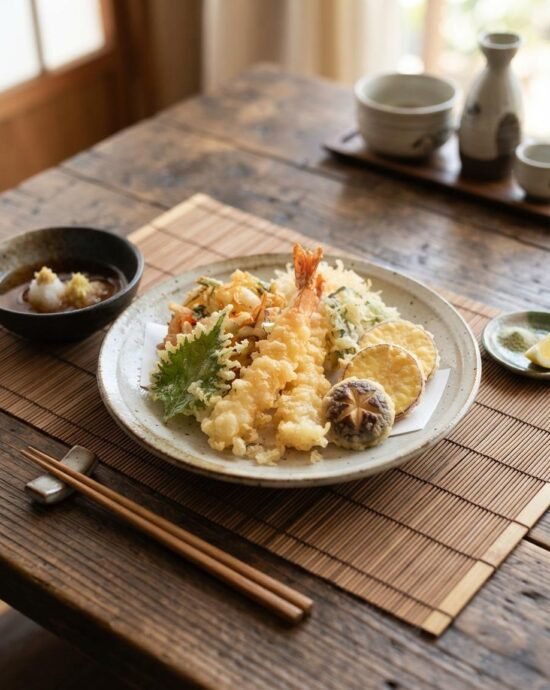

- Step 1. Prepare the Ingredients
Pat the shrimp completely dry with paper towels and make 2 to 3 shallow cuts along the underside of each to prevent curling during frying. Slice the sweet potato and zucchini into rounds about a quarter-inch thick, trim the green beans, and remove the stems from the shiitake mushrooms. Arrange everything on a large tray near the stove, since tempura batter must be used immediately once mixed.
- Step 2. Make the Dipping Sauce
In a small saucepan, combine the dashi stock, soy sauce, and mirin, and bring to a gentle simmer over medium heat for 3 to 4 minutes, just until the flavors meld together. Remove from the heat and set aside to cool slightly. Just before serving, stir in the grated daikon radish, which is a traditional addition that adds a light, peppery freshness to the dipping sauce.
- Step 3. Heat the Oil
Pour the vegetable oil into a large, heavy pot or deep skillet, filling it about 2 inches deep, and heat over medium heat until it reaches 340 to 355 degrees Fahrenheit on a kitchen thermometer. Maintaining a consistent oil temperature throughout frying is essential for tempura's signature light, crisp texture, so monitor it closely and adjust the heat as needed between batches.
- Step 4. Mix the Batter
Just before you are ready to fry, whisk the egg yolk into the ice-cold sparkling water in a large bowl. Sift the flour and cornstarch together, then add it to the egg mixture all at once, stirring only a few times with chopsticks or a fork until just barely combined; the batter should remain lumpy, with visible streaks of dry flour, since overmixing develops gluten and results in a heavier, less crisp coating.
- Step 5. Fry in Batches
Dip each piece of shrimp and vegetable into the batter, letting any excess drip off, then carefully lower it into the hot oil. Fry in small batches of 3 to 4 pieces at a time to avoid overcrowding and dropping the oil temperature. Fry for 2 to 3 minutes, until the batter turns pale golden and crisp, turning once if needed. Vegetables and shrimp cook at slightly different rates, so keep a close eye on each batch.
- Step 6. Drain and Serve
Transfer the fried tempura to a wire rack or a plate lined with paper towels to drain excess oil, which helps keep the coating crisp rather than soggy. Serve immediately while hot, alongside the warm dipping sauce with grated daikon stirred in, allowing each piece to be dipped just before eating for the best contrast between the crispy batter and savory sauce.
- Calories:380 kcal19%
- Protein:18 g36%
- Carbohydrates:36 g13%
- Sugar:5 g6%
- Energy:1590 kJ19%
- Salt:1.6 g27%
- Fat:17 g24%
What is Tempura?
Tempura is a celebrated Japanese dish of shrimp and vegetables coated in a light, delicate batter and deep-fried until crisp, golden, and remarkably airy, typically served with a warm dipping sauce made from dashi, soy sauce, and mirin. Though frying techniques were introduced to Japan by Portuguese traders in the sixteenth century, tempura evolved over the following centuries into a uniquely Japanese art form, distinguished from other fried foods around the world by its extraordinarily light, lace-like batter that shatters delicately with each bite rather than forming a thick, heavy crust. Achieving this signature texture depends heavily on technique, including using ice-cold water and minimal mixing to prevent gluten development, along with maintaining precise oil temperatures throughout the frying process. In Japan, tempura has ascended to the level of specialized culinary craft, with dedicated tempura-ya restaurants where skilled chefs fry each piece individually to order, serving it immediately to the diner so the batter is enjoyed at its absolute crispest. The dish showcases an impressive range of seasonal ingredients beyond shrimp, including a wide variety of vegetables like sweet potato, shiitake mushroom, and green beans, each selected for how well its natural moisture and texture pair with the frying process. Served either as a standalone dish with dipping sauce, over rice as tendon, or alongside noodles as tempura soba, this versatile dish remains one of Japan's most beloved and technically demanding culinary traditions.
Ingredient Notes
- Large Shrimp: Choose shrimp with the tails left on for easy handling; scoring the underside prevents them from curling into a tight ball during frying.
- Ice-Cold Sparkling Water: Using very cold, carbonated water is a key technique for achieving tempura's light, airy batter, since the cold temperature slows gluten formation and the bubbles add extra lightness.
- All-Purpose Flour: Low-protein flour produces the lightest batter; sifting it with cornstarch further reduces gluten development for a crisper finish.
- Dashi Stock: This savory Japanese soup stock, made from kombu and bonito flakes, forms the base of the dipping sauce; instant dashi powder is a convenient substitute.
- Shiitake Mushrooms: Their meaty texture and earthy flavor hold up beautifully to frying; choose mushrooms with firm, unblemished caps.
Ingredient Suggestions
- Kabocha squash slices: A traditional tempura vegetable that turns tender and slightly sweet once fried.
- Shiso leaves: These aromatic leaves fry up into a delicate, fragrant tempura piece, popular for their distinctive herbal flavor.
- Nori-wrapped shrimp: Wrapping shrimp in a small strip of nori before battering adds a briny, savory layer.
- Extra grated daikon: A generous addition to the dipping sauce enhances its light, peppery freshness.
- Matcha salt: A simple alternative to dipping sauce, offering a more minimalist way to season each crispy piece.
Helpful Tips & Pro Tips
- If your tempura turns out heavy or greasy rather than light and crisp, the batter was likely overmixed; stop stirring as soon as the dry flour is just barely incorporated.
- Keep your batter ice-cold throughout frying, even placing the bowl over a larger bowl of ice, since a warm batter loses its signature light texture.
- Do not overcrowd the frying pot, since adding too many pieces at once drops the oil temperature and results in soggy, pale tempura rather than crisp, golden pieces.
- Pat all ingredients completely dry before dipping them in batter, since excess moisture prevents the batter from adhering properly.
- Serve tempura immediately after frying, since the delicate batter begins to soften and lose its crispness within minutes of leaving the hot oil.
How to Serve and Store
Serve tempura immediately while hot and crisp, with the warm dipping sauce alongside for dipping, ideally plated simply so the batter's delicate texture remains the star of the dish. Tempura is best enjoyed fresh and does not store or reheat particularly well, since the batter quickly loses its signature crispness once it cools and sits; if you must save leftovers, keep them in an airtight container in the refrigerator for up to 1 day. Reheat in a hot oven or air fryer for a few minutes to help restore some crispness rather than using a microwave, which will leave the coating soft. Tempura batter itself should never be made ahead, as it loses its light texture the longer it sits before frying.
Substitutions
- Shrimp → Extra vegetables like bell peppers and asparagus — A fully plant-based version that still delivers on tempura's signature crispy texture. (Vegan)
- All-Purpose Flour → A gluten-free flour blend with added cornstarch — Provides a similar light, crisp batter while keeping the dish free of gluten. (Gluten-Free)
- Large Shrimp → Frozen shrimp, thawed — A more affordable and convenient option that works just as well once properly dried. (Budget-Friendly)
- Dashi Stock → Vegetable stock with a small piece of kombu simmered in — A reasonable substitute that still provides a savory base for the dipping sauce.
- Sparkling Water → Very cold still water — Works in a pinch, though the batter will be slightly less airy without the added carbonation.
Suggested Recipes
- Udon & Soba: Japanese noodle dishes that are traditionally served with tempura either on top or on the side.
- Sushi & Sashimi: A raw fish-based meal that pairs beautifully with crispy fried tempura for textural contrast.
- Miso Soup: A comforting, savory soup that is a classic starter alongside a tempura meal.
- Tonkatsu: Another beloved fried Japanese dish, offering a heartier, breaded alternative to tempura's light batter.

Jeff Smith
"Cooking is the intersection of history, science, and emotion."
For me, the kitchen has always been a laboratory of culture. With a background deeply rooted in digital strategy and precision, I approach the culinary arts with the same rigor I apply to the digital landscape—analyzing flavors, perfecting techniques, and documenting the nuance that makes Filipino cuisine truly world-class.
Findme Recipe was born from a desire to bridge the gap between traditional heritage and the modern home cook. Whether it is mastering the perfect balance of acidity in a classic Adobo or simplifying complex regional dishes for everyday kitchens, my mission is to preserve our culinary identity through accessible, data-backed, and delicious content.
I am not just building a database; I am cultivating a community where every Filipino kitchen feels empowered, every ingredient is celebrated, and every family heirloom recipe finds a place to thrive.
Join me as we translate the soul of our islands into recipes for the next generation.