
- Soak the rice cakes
If using refrigerated or frozen rice cakes, soak them in warm water for 10 to 15 minutes until softened; this step is essential because dried-out or frozen tteok will not become properly chewy and can remain hard even after simmering in sauce. Fresh, vacuum-packed rice cakes generally do not need soaking, but check the package for any clumped or hardened pieces and separate them gently. Drain the rice cakes well before adding them to the pot so excess water does not dilute the sauce.
- Make the anchovy stock
If starting from scratch, simmer a handful of dried anchovies and a piece of dried kelp in the water over medium heat for 10 minutes, then strain and discard the solids. This simple stock adds a subtle savory depth that plain water cannot replicate and is a traditional base for tteokbokki broth. If you are short on time, a store-bought Korean anchovy stock powder or even a light vegetable broth can be used as a reasonable substitute without significantly compromising the final dish.
- Build the sauce
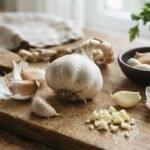
Pour the stock into a wide, shallow pan or pot and whisk in the gochujang, gochugaru, soy sauce, sugar, and minced garlic until fully dissolved and no lumps remain. Bring the mixture to a boil over medium-high heat, stirring occasionally. This sauce should taste slightly stronger than you want the final dish to be, since the rice cakes will absorb much of the seasoning as they simmer and soften, mellowing the overall intensity.
- Simmer the rice cakes
Add the softened rice cakes and sliced fish cakes to the boiling sauce, stirring gently to coat every piece. Reduce the heat to medium and simmer for 10 to 12 minutes, stirring occasionally to prevent sticking, until the rice cakes turn glossy, chewy, and tender, and the sauce has thickened into a sticky glaze that clings to each piece. If the sauce reduces too quickly and becomes too thick before the rice cakes are tender, add a splash more stock or water to loosen it.
- Finish and serve
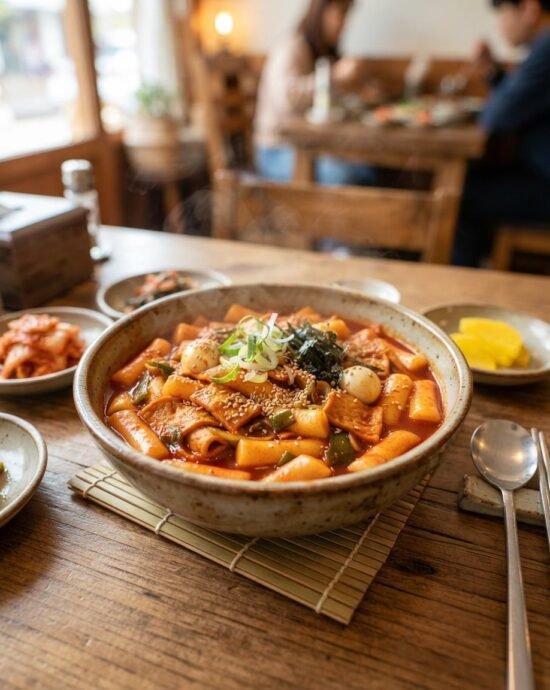
Once the sauce has thickened to a glossy, sticky consistency and the rice cakes are fully tender, stir in half of the chopped green onions and remove the pan from the heat. Transfer to a serving dish or leave in the cooking pan, then top with the halved hard-boiled eggs, remaining green onions, and a sprinkle of toasted sesame seeds. Serve tteokbokki immediately while hot, as the sauce thickens further and the rice cakes firm up as they cool.
- Calories:340 kcal17%
- Protein:10 g20%
- Carbohydrates:66 g24%
- Sugar:14 g16%
- Energy:1423 kJ17%
- Salt:2.1 g35%
- Fat:4 g6%
What is Tteokbokki?
Tteokbokki is a beloved Korean street food made from cylindrical rice cakes simmered in a spicy, slightly sweet sauce built around gochujang chili paste, typically studded with slices of fish cake and finished with a soft or hard-boiled egg. The dish’s name combines tteok, meaning rice cake, with bokki, referring to a stir-fried or braised preparation, though modern tteokbokki is more accurately simmered than fried. Its origins trace back to royal court cuisine, where an earlier, savory soy-based version called gungjung tteokbokki was served without any chili at all; the fiery red version familiar today did not emerge until gochujang became widely available in the mid-twentieth century, after which tteokbokki quickly became a staple of Korean street food culture. Sold from bustling pojangmacha food carts and specialty tteokbokki restaurants alike, the dish is cherished for its irresistible combination of chewy, springy rice cake texture and a sauce that balances heat, sweetness, and umami in equal measure. The soft chew of the rice cakes contrasts beautifully with the tender fish cakes and creamy egg, while the glossy red sauce clings to every bite. Tteokbokki has become a defining symbol of Korean youth and street food culture, frequently enjoyed as an after-school snack, late-night comfort food, or shared appetizer among friends, and countless regional and modern variations now include cheese, seafood, or instant noodles folded directly into the pot.
Ingredient Notes
- Korean rice cakes: Look for cylindrical tteok in the refrigerated or frozen section of a Korean grocery store; fresh rice cakes cook up chewier than older or overly dried ones, so check the package date.
- Gochujang: This fermented chili paste is the backbone of the sauce’s flavor; a good quality gochujang will taste complex and slightly sweet rather than just hot.
- Fish cakes: Korean fish cakes, or eomuk, add a light, chewy protein element; sheet-style fish cakes can be cut into strips or folded into triangles before adding to the pot.
- Gochugaru: Korean chili flakes deepen the red color and add a fruity, smoky heat that gochujang alone cannot fully provide.
- Anchovy stock: A simple homemade stock from dried anchovies and kelp adds a savory backbone that elevates the sauce well beyond what water alone can achieve.
Ingredient Suggestions
- Mozzarella cheese: A popular modern addition, melted over the top of the finished dish for a cheesy, indulgent twist.
- Ramyeon noodles: Adding instant noodles to the simmering sauce turns tteokbokki into a heartier rabokki-style meal.
- Sliced cabbage: Adds bulk and a subtle sweetness that balances the spice of the sauce.
- Boiled dumplings: Mandu simmered directly in the sauce soak up the spicy glaze and add extra heartiness.
- Extra gochujang: For those who love a bolder, spicier profile, an extra spoonful intensifies both color and heat.
Helpful Tips & Pro Tips
- If your rice cakes turn out hard rather than chewy, they likely were not soaked long enough beforehand; always soften refrigerated or frozen tteok in warm water before cooking.
- Stir the pot occasionally while simmering to prevent the rice cakes from sticking to the bottom of the pan, since the sticky sauce can scorch easily.
- Taste the sauce before adding the rice cakes and season it slightly stronger than desired, since the rice cakes will absorb and mellow much of the flavor as they cook.
- For a thicker, glossier sauce, let the tteokbokki simmer uncovered a few extra minutes at the end so excess liquid reduces down.
- Serve tteokbokki immediately, since the rice cakes continue to firm up as the dish cools, losing some of their signature chewy softness.
How to Serve and Store
Serve tteokbokki hot, straight from the pan, ideally with extra sesame seeds and green onion on top and a cold glass of water or barley tea on the side to balance the heat. Leftovers can be stored in an airtight container in the refrigerator for up to 2 days, though the rice cakes will firm up considerably as they cool and are best revived by reheating. To reheat, add a splash of water or stock to a pan and warm the tteokbokki gently over medium-low heat, stirring until the rice cakes soften again and the sauce loosens. Tteokbokki does not freeze well, as the texture of the rice cakes becomes gummy and uneven once thawed.
Substitutions
- Fish cakes → Sliced mushrooms or extra-firm tofu — A plant-based swap that still adds texture and soaks up the spicy sauce. (Vegan)
- Soy sauce → Tamari — Keeps the sauce gluten-free while preserving its salty depth. (Gluten-Free)
- Anchovy stock → Water with a pinch of salt — A simple, budget-friendly base when dried anchovies are not on hand. (Budget-Friendly)
- Rice cakes → Fresh mochi cut into cylinders — A close textural substitute when Korean tteok is unavailable.
- Gochujang → A blend of miso paste and chili flakes — An improvised approximation when gochujang cannot be sourced locally.
Suggested Recipes
- Japchae: A milder stir-fried noodle dish that balances tteokbokki’s spice when served as part of a larger spread.
- Kimchi Jjigae: Another gochujang and gochugaru-driven dish that shares tteokbokki’s bold, spicy profile.
- Dakgalbi: A spicy stir-fried chicken dish that uses a similar gochujang base and pairs naturally alongside tteokbokki.
- Sundubu Jjigae: A spicy tofu stew that complements tteokbokki’s texture with a warming, brothy contrast.

Jeff Smith
"Cooking is the intersection of history, science, and emotion."
For me, the kitchen has always been a laboratory of culture. With a background deeply rooted in digital strategy and precision, I approach the culinary arts with the same rigor I apply to the digital landscape—analyzing flavors, perfecting techniques, and documenting the nuance that makes Filipino cuisine truly world-class.
Findme Recipe was born from a desire to bridge the gap between traditional heritage and the modern home cook. Whether it is mastering the perfect balance of acidity in a classic Adobo or simplifying complex regional dishes for everyday kitchens, my mission is to preserve our culinary identity through accessible, data-backed, and delicious content.
I am not just building a database; I am cultivating a community where every Filipino kitchen feels empowered, every ingredient is celebrated, and every family heirloom recipe finds a place to thrive.
Join me as we translate the soul of our islands into recipes for the next generation.