
- Step 1. Make the Broth
In a large pot, combine the dashi stock, soy sauce, mirin, and sugar. Bring to a gentle simmer over medium heat, stirring to dissolve the sugar completely. Taste the broth and adjust the seasoning, keeping in mind that both udon and soba broths are traditionally savory and only lightly sweet, allowing the delicate flavor of the dashi to remain the star of the dish.
- Step 2. Prepare the Tofu Pouches
If using fried tofu pouches, simmer them briefly in a small amount of the broth mixed with a touch of extra soy sauce and sugar for 5 minutes, until they absorb some sweetness and flavor. This seasoned tofu pouch, called inari, is a classic udon topping that adds a chewy texture and slightly sweet contrast to the savory broth. Remove and set aside, slicing into strips if desired.
- Step 3. Cook the Noodles Separately
Bring two separate pots of water to a boil, one for the udon and one for the soba, since each noodle type has a different cooking time and benefits from being cooked in its own dedicated pot. Cook the udon according to package instructions, typically 8 to 10 minutes for dried or 2 minutes for fresh, and the soba for about 4 to 5 minutes, until tender but still slightly chewy.
- Step 4. Rinse the Noodles
Drain both the udon and soba noodles and rinse thoroughly under cold running water, rubbing the strands gently between your hands to remove excess surface starch. This step is especially important for soba noodles, which can turn gummy if not rinsed properly, and helps both noodle types maintain a pleasant, distinct chew once added to the hot broth.
- Step 5. Assemble the Bowls
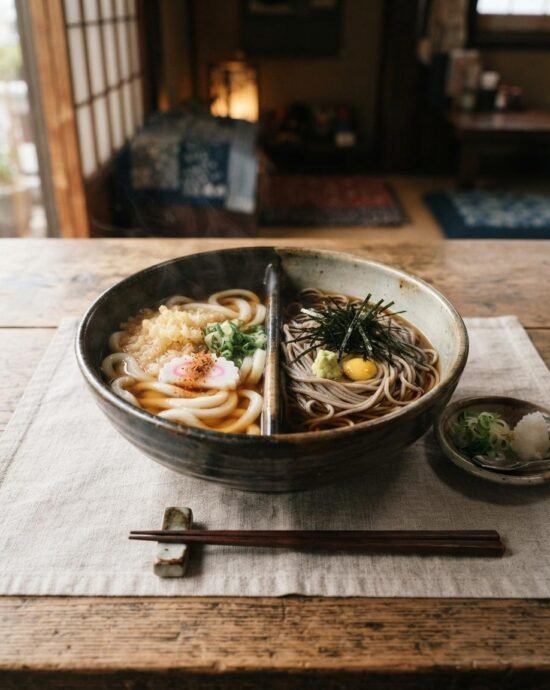
Divide the rinsed udon and soba noodles between four deep bowls, keeping them separate if serving both styles, or combining them into a single bowl if preferred. Ladle the hot broth generously over the noodles, making sure each bowl gets a good amount of liquid to keep the noodles warm and flavorful.
- Step 6. Add Toppings and Serve
Top each bowl with the prepared tofu pouches, sliced kamaboko fish cake, chopped green onions, and a sprinkle of tempura bits for added crunch. If desired, crack a raw or soft-boiled egg into each bowl just before serving, letting the residual heat gently cook it. Garnish with strips of nori and serve immediately while piping hot.
- Calories:420 kcal21%
- Protein:16 g32%
- Carbohydrates:72 g26%
- Sugar:8 g9%
- Energy:1757 kJ21%
- Salt:2.4 g40%
- Fat:8 g11%
What is Udon & Soba?
Udon and soba are two of Japan's most beloved noodle traditions, both commonly served in a warm, savory dashi-based broth, though they differ significantly in ingredients and texture: udon are thick, chewy wheat noodles with a smooth, satisfying bite, while soba are thinner noodles made from buckwheat flour, prized for their delicate, slightly nutty flavor and more delicate texture. Both noodle styles have long, distinct histories in Japanese cuisine, with soba historically favored in the Tokyo region and associated with quick, efficient meals for busy city dwellers, while udon has traditionally been more prominent in the Kansai region, particularly around Osaka, where its milder, more neutral wheat flavor pairs beautifully with delicately seasoned dashi broths. Despite their differences, both noodle types share a similar foundational broth, built from dashi stock, soy sauce, and mirin, seasoned to highlight rather than overpower the noodles themselves. Common toppings for both dishes include sliced kamaboko fish cake, seasoned fried tofu pouches known as inari, and a scattering of crunchy tempura bits, while a raw or soft-cooked egg cracked into the hot broth just before serving is a beloved addition found in countless variations across the country. Both udon and soba can also be served cold with a concentrated dipping sauce during the warmer months, showcasing the remarkable versatility of these noodle traditions across Japan's four distinct seasons, and both remain staples of everyday Japanese dining, from humble train station noodle stands to specialized noodle houses.
Ingredient Notes
- Fresh Or Dried Udon Noodles: Fresh udon offers the chewiest, most authentic texture, though dried udon is a convenient and widely available pantry staple.
- Dried Soba Noodles: Look for soba labeled with a high percentage of buckwheat flour for the most authentic nutty flavor and characteristic slightly grainy texture.
- Dashi Stock: This savory kombu and bonito-based stock forms the foundation of both noodle broths; instant dashi powder is a convenient shortcut for home cooks.
- Fried Tofu Pouches (Aburaage): These thin, fried tofu pouches, simmered briefly in a sweet soy liquid, add a chewy texture and slight sweetness that balances the savory broth.
- Kamaboko Fish Cake: This steamed fish cake, often pink and white, adds a mild, slightly sweet flavor and is a classic, visually distinctive noodle soup topping.
Ingredient Suggestions
- Tempura shrimp: Adding a piece of freshly fried shrimp tempura on top transforms the dish into a heartier tempura udon or soba.
- Grated ginger: A small amount stirred into the broth adds a warming, aromatic note, especially popular in colder months.
- Shichimi togarashi: This Japanese seven-spice blend adds a customizable kick of heat and citrus at the table.
- Wakame seaweed: A handful of rehydrated wakame adds a briny, mineral note and additional texture to the broth.
- Extra green onion: For those who love a sharper onion flavor, doubling the amount adds brightness to every bite.
Helpful Tips & Pro Tips
- If your noodles taste gummy rather than chewy, they likely were not rinsed thoroughly enough after boiling; rinse under cold water and rub gently to remove excess starch.
- Cook udon and soba in separate pots of water, since their differing cooking times and starch levels can affect each other if combined in the same pot.
- Taste your broth before serving and keep the seasoning relatively light, allowing the dashi's delicate umami flavor to remain the star of the dish.
- Add toppings just before serving so ingredients like tempura bits stay crunchy rather than becoming soggy from sitting in the hot broth too long.
- Serve udon and soba immediately after assembling, since the noodles continue to absorb the broth and can lose their signature chew if left sitting too long.
How to Serve and Store
Serve udon and soba immediately while hot, generously topped with your choice of tofu pouches, fish cake, green onion, and a soft egg, alongside chopsticks and a spoon for the broth. The broth keeps well on its own in an airtight container in the refrigerator for up to 4 days and freezes well for up to 2 months; however, cooked noodles are best made fresh each time, since they become mushy and lose their texture when stored in broth. If you have leftover cooked noodles, store them separately from the broth in the refrigerator for up to 2 days and reheat briefly in hot water before serving in freshly heated broth.
Substitutions
- Dashi Stock → Kombu-only vegetable dashi — A fully plant-based broth option that still provides savory depth without bonito flakes. (Vegan)
- Soy Sauce → Tamari — Keeps the broth's savory seasoning gluten-free; note that udon noodles themselves contain wheat, so soba made with 100 percent buckwheat is the better gluten-free noodle choice. (Gluten-Free)
- Kamaboko Fish Cake → Sliced hard-boiled egg or omit — A more budget-friendly or simple option when fish cake is unavailable. (Budget-Friendly)
- Fried Tofu Pouches → Extra soft tofu, cubed — A simpler substitute when pre-made aburaage pouches are not available.
- Fresh Udon → Dried udon noodles — A convenient, shelf-stable substitute that still delivers a satisfying chewy texture.
Suggested Recipes
- Ramen: Another beloved Japanese noodle soup, offering a richer, pork-based broth alternative to udon and soba's lighter dashi base.
- Tempura: Crispy fried shrimp and vegetables that are traditionally served on top of or alongside udon and soba.
- Miso Soup: A simple, comforting soup that shares udon and soba's use of dashi as a flavorful base.
- Yakitori: Grilled skewers that make a satisfying side dish alongside a warm bowl of noodle soup.

Jeff Smith
"Cooking is the intersection of history, science, and emotion."
For me, the kitchen has always been a laboratory of culture. With a background deeply rooted in digital strategy and precision, I approach the culinary arts with the same rigor I apply to the digital landscape—analyzing flavors, perfecting techniques, and documenting the nuance that makes Filipino cuisine truly world-class.
Findme Recipe was born from a desire to bridge the gap between traditional heritage and the modern home cook. Whether it is mastering the perfect balance of acidity in a classic Adobo or simplifying complex regional dishes for everyday kitchens, my mission is to preserve our culinary identity through accessible, data-backed, and delicious content.
I am not just building a database; I am cultivating a community where every Filipino kitchen feels empowered, every ingredient is celebrated, and every family heirloom recipe finds a place to thrive.
Join me as we translate the soul of our islands into recipes for the next generation.