

- Step 1. Soak the Skewers
Place the bamboo skewers in a shallow dish of water and let them soak for at least 20 minutes, which prevents them from burning or catching fire once placed over the hot grill. This simple step is easy to overlook but makes a significant difference in how safely and evenly the skewers cook.
- Step 2. Make the Tare Sauce
In a small saucepan, combine the soy sauce, mirin, sake, sugar, smashed garlic, and sliced ginger. Bring to a boil over medium heat, then reduce to a simmer and cook for 10 to 12 minutes, until the sauce reduces by about a third and thickens slightly into a glossy glaze. Strain out the garlic and ginger, then set the tare sauce aside to cool slightly.
- Step 3. Thread the Skewers
Thread the cubed chicken thighs onto the soaked bamboo skewers, alternating with pieces of green onion for a traditional negima-style presentation. Aim for 4 to 5 pieces of chicken per skewer, leaving a small amount of space between each piece so the heat can circulate evenly and cook the chicken through completely.
- Step 4. Preheat the Grill
Preheat a grill, grill pan, or broiler to medium-high heat. If using an outdoor grill, oil the grates lightly to prevent sticking. A hot, well-prepared cooking surface is essential for yakitori, since the chicken needs enough direct heat to develop a light char while cooking through in a relatively short amount of time.
- Step 5. Grill the Skewers
Place the skewers on the hot grill and cook for 3 to 4 minutes per side, turning once, until the chicken is mostly cooked through and has developed some light charring. During the last few minutes of cooking, brush the skewers generously with the prepared tare sauce, turning and basting a few times to build up layers of glaze.
- Step 6. Finish and Serve
Once the chicken reaches a safe internal temperature and the tare sauce has caramelized slightly onto the surface, remove the skewers from the grill. Brush with one final layer of sauce, then sprinkle with shichimi togarashi and toasted sesame seeds. Serve immediately while hot, ideally alongside cold beer or a simple bowl of rice.
- Calories:320 kcal16%
- Protein:28 g56%
- Carbohydrates:18 g7%
- Sugar:12 g13%
- Energy:1339 kJ16%
- Salt:2.1 g35%
- Fat:12 g17%
What is Yakitori?
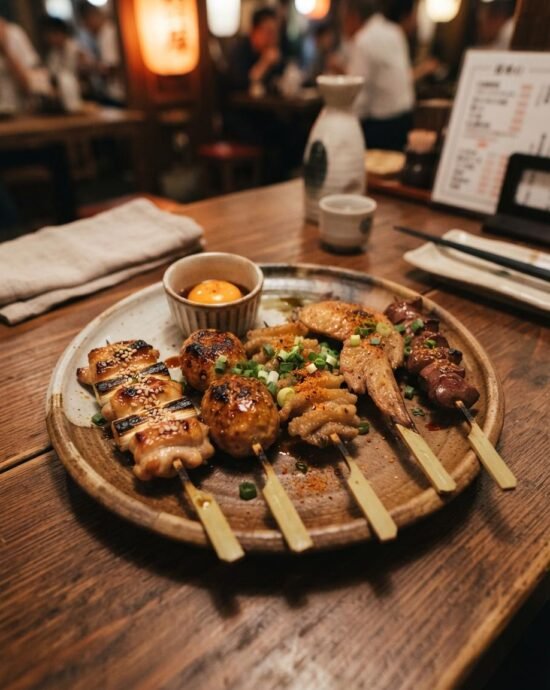
Yakitori refers to bite-sized pieces of chicken skewered on bamboo sticks and grilled over an open flame, traditionally brushed with a sweet, glossy soy-based glaze called tare or simply seasoned with salt to let the smoky, charred flavor of the chicken shine through on its own. The dish holds a beloved place in Japanese izakaya culture, the casual pubs and small eateries where yakitori is grilled fresh to order and enjoyed alongside beer, sake, or highballs, often late into the evening. What makes yakitori particularly notable within Japanese cuisine is its dedication to using nearly every part of the chicken, with specialized skewers featuring not only thigh and breast meat but also skin, cartilage, liver, and other cuts, each requiring different grilling techniques and timing to achieve its ideal texture, reflecting a broader Japanese culinary philosophy of minimizing waste while maximizing flavor. The tare sauce itself, built from soy sauce, mirin, sake, and sugar reduced into a thick, glossy glaze, is often reused and built upon over years at dedicated yakitori restaurants, with skewers repeatedly dipped into the same simmering pot of sauce, deepening its flavor complexity over time. Traditionally grilled over binchotan charcoal, a specific type of Japanese charcoal prized for its intense, clean-burning heat, yakitori achieves a distinctive smoky char that is difficult to replicate with other cooking methods. Loved for its combination of smoky, charred chicken and sweet-savory glaze, yakitori remains one of Japan's most iconic grilled foods and a defining feature of the country's vibrant after-work dining culture.
Ingredient Notes
- Boneless Chicken Thighs: Thigh meat is traditional for its higher fat content, which keeps the chicken juicy and flavorful even after quick, high-heat grilling; breast meat can dry out more easily.
- Mirin: This sweet rice wine is essential to the tare sauce's signature glossy sweetness and helps the glaze caramelize beautifully on the grill.
- Sake: Japanese rice wine adds depth and helps tenderize the chicken slightly while balancing the sauce's sweetness with a subtle acidity.
- Shichimi Togarashi: This Japanese seven-spice blend adds a customizable kick of heat and citrus aroma; sprinkle it on at the table so each diner can adjust to taste.
- Bamboo Skewers: Soaking these in water before grilling is essential to prevent them from burning or catching fire over direct heat.
Ingredient Suggestions
- Chicken skin: Skewered and grilled until extra crispy, chicken skin is a beloved traditional yakitori variety prized for its crunch.
- Shiitake mushrooms: Threaded onto skewers alongside or instead of chicken, mushrooms absorb the tare sauce beautifully.
- Quail eggs: Skewered whole and grilled briefly, quail eggs are a classic yakitori menu item enjoyed for their rich, custardy yolk.
- Extra tare sauce: Reserve some sauce separate from what touches raw chicken for extra dipping at the table.
- Shiso leaves: Wrapped around a piece of chicken before grilling, shiso adds a distinctive herbal aroma.
Helpful Tips & Pro Tips
- If your tare sauce turns out thin rather than glossy, it likely needs more reduction time; simmer it a bit longer until it visibly thickens and coats the back of a spoon.
- Soak bamboo skewers for at least 20 minutes before grilling to prevent them from burning or catching fire over direct heat.
- Cut the chicken into similarly sized pieces so everything cooks at the same rate and no pieces are over or undercooked.
- Brush the tare sauce onto the chicken only during the last few minutes of grilling, since the sugar content can burn if applied too early over high heat.
- Turn the skewers frequently once the sauce is applied, basting several times to build up a deep, glossy glaze without burning any one side.
How to Serve and Store
Serve yakitori hot off the grill, ideally alongside cold drinks and other izakaya-style small plates, with extra tare sauce or shichimi togarashi available at the table. Leftover cooked yakitori keeps in an airtight container in the refrigerator for up to 3 days; reheat in a skillet or toaster oven for a few minutes to help restore some of the original char, since microwaving can make the chicken slightly rubbery. Raw, skewered chicken can also be frozen for up to 2 months; thaw overnight in the refrigerator before grilling. The tare sauce itself keeps extremely well in the refrigerator for up to 2 weeks and can be reused for future batches.
Substitutions
- Chicken Thighs → Firm tofu or king oyster mushrooms, cubed — A satisfying plant-based option that still absorbs the sweet tare glaze well. (Vegan)
- Soy Sauce → Tamari — Preserves the tare sauce's savory depth while keeping the dish gluten-free. (Gluten-Free)
- Chicken Thighs → Chicken drumsticks, deboned — A more economical option that still provides good flavor and moisture. (Budget-Friendly)
- Sake → Dry sherry or additional mirin — A reasonable substitute for those who prefer to cook without sake.
- Mirin → A mix of rice vinegar and a touch of sugar — An improvised approximation when mirin is not available.
Suggested Recipes
- Gyoza: Pan-fried dumplings that make a classic izakaya pairing alongside grilled yakitori skewers.
- Okonomiyaki: A savory pancake that rounds out a casual Japanese street food or izakaya-style spread.
- Udon & Soba: Noodle dishes that make a filling addition to a meal centered around smaller yakitori skewers.
- Miso Soup: A light, warming soup that balances a meal featuring smoky, grilled yakitori.

Jeff Smith
"Cooking is the intersection of history, science, and emotion."
For me, the kitchen has always been a laboratory of culture. With a background deeply rooted in digital strategy and precision, I approach the culinary arts with the same rigor I apply to the digital landscape—analyzing flavors, perfecting techniques, and documenting the nuance that makes Filipino cuisine truly world-class.
Findme Recipe was born from a desire to bridge the gap between traditional heritage and the modern home cook. Whether it is mastering the perfect balance of acidity in a classic Adobo or simplifying complex regional dishes for everyday kitchens, my mission is to preserve our culinary identity through accessible, data-backed, and delicious content.
I am not just building a database; I am cultivating a community where every Filipino kitchen feels empowered, every ingredient is celebrated, and every family heirloom recipe finds a place to thrive.
Join me as we translate the soul of our islands into recipes for the next generation.