
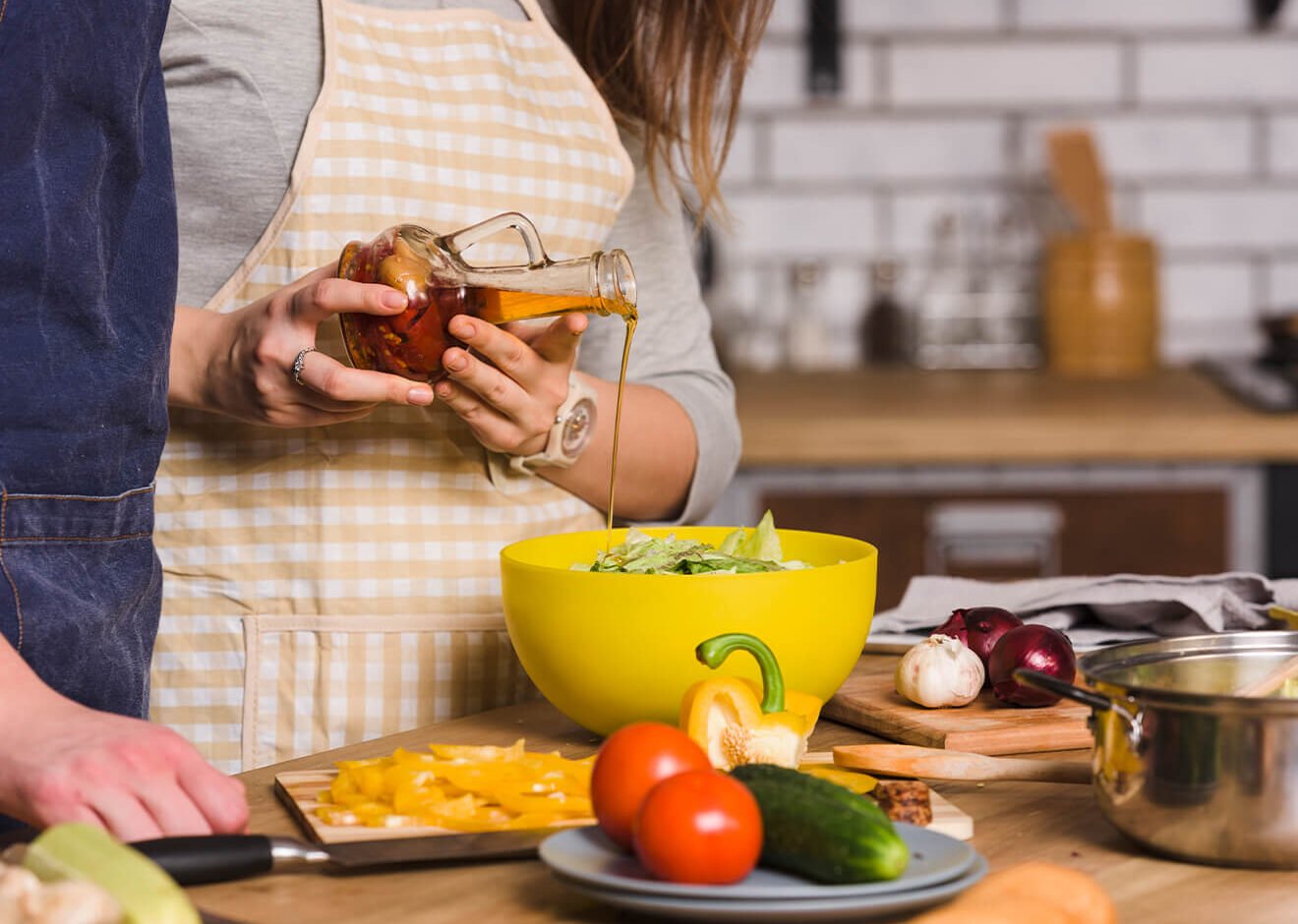
A salad is only as good as its dressing. Far too often, vibrant greens are weighed down by heavy, store-bought bottles that mask the natural flavors of the produce. Bringing the joy of cooking to your everyday kitchen means realizing that a world-class dressing requires only a few pantry staples and about sixty seconds of your time. When you balance fat, acid, and salt yourself, you transform a simple bowl of vegetables into a culinary event.
What is the Golden Ratio for a Perfect Vinaigrette?
The foundation of bringing the joy of cooking to your everyday kitchen is understanding the “3-to-1” rule. This is the classic ratio used by professional chefs to ensure a balanced mouthfeel.
- 3 Parts Oil: Use a high-quality fat like extra virgin olive oil, avocado oil, or even walnut oil for nuttiness.
- 1 Part Acid: This can be lemon juice, balsamic vinegar, apple cider vinegar, or champagne vinegar.
- The Emulsifier: A teaspoon of Dijon mustard or honey acts as a “bridge,” binding the oil and acid together so they don’t separate on the leaf.
How to Emulsify Like a Pro: The Science of Texture
Understanding why we mix ingredients in a certain way is a key step in bringing the joy of cooking to your everyday kitchen.
The Chemistry of Emulsion
Oil and vinegar are natural enemies; they want to stay separate. By adding an emulsifier (like mustard) and whisking vigorously, you break the oil into tiny droplets that stay suspended in the acid. This creates a creamy, uniform texture that coats leaves rather than sliding off them.
Pro-Move: Instead of whisking in a bowl, put all your ingredients into a small glass jar and shake it violently for 30 seconds. The agitation creates a tighter, more stable emulsion than a whisk ever could, and you have a built-in storage container for leftovers.
Sensory Details: A Multi-Dimensional Dressing
To excel at bringing the joy of cooking to your everyday kitchen, you must think about how the dressing interacts with your senses:
- Texture: Adding toasted sesame seeds or finely minced shallots provides a rhythmic “crunch” that contrasts with soft greens.
- Aroma: Rubbing the inside of your salad bowl with a halved garlic clove before adding the greens releases essential oils that provide a haunting, subtle fragrance without the bite of raw garlic.
- Visual: A pinch of turmeric or a handful of bruised herbs like dill or parsley can turn a pale dressing into a vibrant, emerald-green highlight for your table.
Storage and Safety: Keeping It Fresh
Since homemade dressings often contain fresh aromatics, treat them with professional care.
Temperature and Shelf Life
- Vinaigrettes: Standard oil-and-vinegar dressings can last in the fridge for up to two weeks.
- Dairy-Based: If you use yogurt, buttermilk, or sour cream, consume the dressing within 3 to 5 days.
- The Solidification Fact: High-quality olive oil will solidify in the fridge. This is normal! Simply take the dressing out 15 minutes before dinner or run the jar under warm water to return it to its liquid state.
Frequently Asked Questions

Jeff Smith
"Cooking is the intersection of history, science, and emotion."
For me, the kitchen has always been a laboratory of culture. With a background deeply rooted in digital strategy and precision, I approach the culinary arts with the same rigor I apply to the digital landscape—analyzing flavors, perfecting techniques, and documenting the nuance that makes Filipino cuisine truly world-class.
Findme Recipe was born from a desire to bridge the gap between traditional heritage and the modern home cook. Whether it is mastering the perfect balance of acidity in a classic Adobo or simplifying complex regional dishes for everyday kitchens, my mission is to preserve our culinary identity through accessible, data-backed, and delicious content.
I am not just building a database; I am cultivating a community where every Filipino kitchen feels empowered, every ingredient is celebrated, and every family heirloom recipe finds a place to thrive.
Join me as we translate the soul of our islands into recipes for the next generation.























































4 Comments
I loved reading this! The tips were incredibly practical and easy to follow. My kitchen routine just got a major upgrade! I’ve already started incorporating these suggestions into my daily cooking, and it’s made such a difference. Cooking used to feel like a chore, but now it’s something I genuinely enjoy. Thanks for making it so accessible and fun!
Very informative and well-written! The ingredient spotlights were my favorite part — I learned so much about things I already had in my pantry. It’s amazing how little changes in how you use ingredients can make such a big difference in flavor. This blog made me excited to use my kitchen staples creatively.
Great insights! I especially appreciated the detailed breakdown of each step. It made complex recipes feel so much more approachable. Sometimes, the thought of cooking a complicated meal can be intimidating, but this blog explained everything so clearly. I feel much more confident in trying out new techniques and dishes. Truly helpful content!
This post was super inspiring. The ideas and suggestions gave me the motivation to try new dishes I usually avoid. Thank you! I’ve been in a bit of a cooking rut, but this blog gave me the push I needed to experiment with new flavors. Now, I look forward to cooking and exploring different cuisines every week.