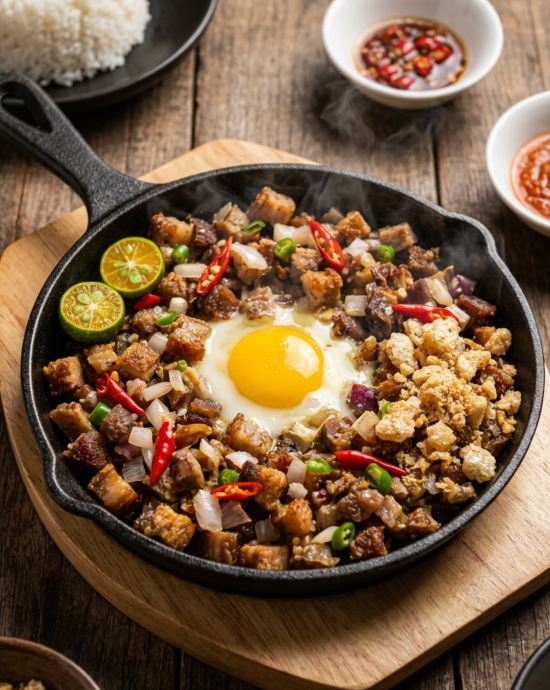

- Step 1: Boil and Tenderize the Pork

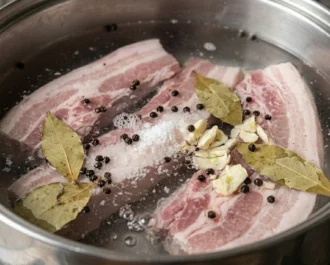
Place the pork face pieces — or pork belly if substituting — in a large pot and cover completely with cold water. Add the salt, whole black peppercorns, crushed garlic, and bay leaves. Bring to a full boil over high heat, then reduce to a steady simmer over medium heat. The initial boiling with aromatics serves two essential functions simultaneously: it tenderizes the tough cartilage and dense facial meat that define authentic sisig's characteristic chewy-tender texture, and it allows the aromatics to gently season the pork from the outside in during the long simmer. Cook the pork face pieces for 45 to 50 minutes until the meat is fully tender throughout and the ear cartilage is soft and yielding rather than hard and rubbery. Add the whole pork liver for only the last 15 minutes, removing it as soon as it is just cooked through.
- Step 2: Grill or Broil the Pork Pieces
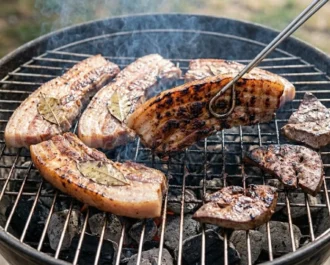
Drain the boiled pork and liver, discarding the cooking water. Allow the pieces to cool slightly until safe to handle. The grilling step is the single most flavor-critical technique in authentic sisig — it is what transforms boiled pork into something extraordinary. Grill the boiled pork pieces over hot charcoal or under an oven broiler set to maximum heat for 5 to 7 minutes per side until the exterior is deeply charred, smoky, and blistered. The liver should be grilled for only 3 minutes per side — just long enough to char the exterior without overcooking the interior to dryness. The grilling creates the characteristic smoky complexity and caramelized, slightly crunchy exterior that are non-negotiable elements of authentic sisig's distinctive flavor profile.
- Step 3: Chop the Grilled Pork
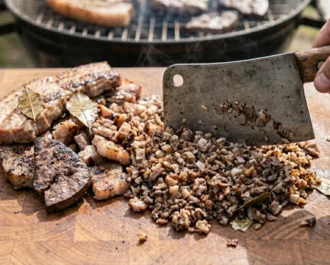
Allow the grilled pork and liver to cool for 5 minutes — just until they can be safely handled without burning the hands. Using a large, heavy cleaver or sharp chef's knife, chop the grilled pork face pieces into a fine, uniform mince on a large cutting board. Authentic sisig is finely chopped to a near-ground consistency — not large chunks — so that every forkful contains a balanced mixture of crispy exterior, tender interior, and the various textures of the facial meat components working together. Chop the grilled liver separately and add it to the pork mince, chopping them together for the final passes of the knife. The freshly chopped sisig should be steaming hot, fragrant with char and smoke, and mixed with the textural variety of ear cartilage, cheek meat, and liver throughout.
- Step 4: Season the Chopped Sisig
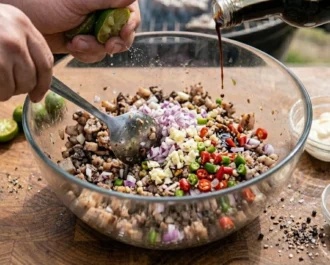
Transfer the freshly chopped sisig to a large bowl. Add the finely diced raw onion, minced garlic, chopped bird's eye chilies, calamansi juice, and soy sauce. Toss everything together vigorously so every piece of the chopped pork is coated in the seasoning. The calamansi juice is the transformative element of sisig seasoning — its sharp, floral acidity cuts through the richness of the fatty pork face and balances the savory depth of the soy sauce with clean, bright citrus. Add the mayonnaise if using and toss to incorporate — mayonnaise was not in the original Kapampangan sisig but has become standard in modern restaurant versions, adding a rich, creamy coating that mellows the acidity and fat simultaneously. Season generously with salt and black pepper, tasting and adjusting.
- Step 5: Sizzle on the Cast-Iron Plate
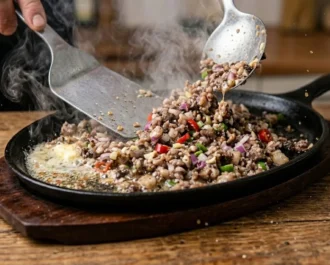
Heat a cast-iron sizzling plate (sizzling plato) or a heavy cast-iron skillet directly over high heat until it is smoking hot — the extreme heat of the cast iron is essential for achieving the signature sizzle and additional crisping that defines the modern sisig experience. Add the butter to the scorching hot plate and allow it to melt and foam instantly. Immediately add the seasoned sisig mixture, spreading it into an even layer. The combination of the smoking cast iron, butter, and hot pork fat creates an explosive, dramatic sizzle that is as much a part of the sisig experience as the food itself. Press the sisig gently against the hot surface with a spatula to maximize contact, allowing the bottom layer to crisp slightly against the iron for 2 minutes before serving.
- Step 6: Add Eggs and Serve at the Sizzle
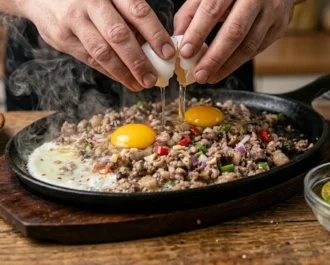
If using eggs, crack them directly onto the sizzling sisig on the hot plate immediately before serving. The residual heat of the cast iron cooks the egg whites just enough to set them while leaving the yolks soft and runny — diners break the egg yolk themselves at the table and mix it into the sizzling sisig, creating a rich, creamy coating that is the final textural element of the full sisig experience. Serve immediately while the plate is still sizzling audibly, with a small bowl of calamansi halves and extra soy sauce on the side. The combination of the sizzle sound, the smoky aroma rising from the plate, the sight of the egg slowly cooking on top, and the sharp citrus of freshly squeezed calamansi creates one of the most theatrically satisfying eating experiences in all of Filipino cuisine.
- Calories:520 kcal26%
- Energy:2,176 kJ26%
- Protein:30 g60%
- Carbohydrates:6 g2%
- Sugar:1 g1%
- Fat:40 g51%
- Salt:1.6 g27%
Table of Contents
What Is Pork Sisig?
Pork sisig is a Filipino sizzling dish of finely chopped grilled pork face, liver, and onions seasoned with calamansi juice, soy sauce, and bird’s eye chilies — served on a scorching cast-iron plate and considered one of the most iconic, most celebrated, and most internationally recognized dishes in the entire Philippine culinary canon. Originating in Pampanga, the province widely regarded as the culinary capital of the Philippines, sisig was created and popularized by Lucia Cunanan — known as Aling Lucing — in her roadside eatery in Angeles City during the 1970s. Though the dish existed in various forms in Kapampangan cooking before her, Cunanan’s version became so famous and so definitive that she is universally credited as sisig’s inventor and is honored as a national culinary hero.
The word sisig comes from an old Kapampangan term meaning “to snack on something sour” — a reference to the dish’s defining flavor element: the sharp, floral acidity of calamansi juice that cuts through the extraordinary richness of the fatty pork face and liver. The original Aling Lucing recipe used no mayonnaise, no egg — just grilled pork face, onions, chilies, and calamansi on a sizzling plate. The mayonnaise-topped, egg-crowned versions that dominate restaurant menus today are modern evolutions that reflect the dish’s journey from streetside snack to nationally celebrated restaurant staple.
Pork sisig represents Filipino cooking at its most bold, most resourceful, and most unapologetically indulgent. It transforms the least glamorous parts of the pig — ears, cheeks, snout — into something of extraordinary, addictive deliciousness. For international food lovers, sisig is frequently the first Filipino dish that produces genuine culinary revelation: a realization that Filipino food is capable of the same bold, complex, deeply satisfying flavors as any of the world’s great cuisines.
Ingredient Notes
- Pork Face (Maskara): The authentic sisig cut — combining cheeks, ears, and snout for maximum textural variety. The ears provide cartilaginous chew, the cheeks provide tender, fatty meat, and the snout contributes gelatinous richness. If pork face is unavailable, pork belly produces an acceptable substitute with a similar fat-to-meat ratio, though without the distinctive cartilaginous texture of the ear.
- Calamansi: The defining acid in sisig — its floral, intensely aromatic tartness cannot be accurately replicated by lemon or lime alone. Use fresh, hand-squeezed calamansi exclusively for the most authentic result. Bottled calamansi juice loses the volatile aromatics that make fresh calamansi so powerfully distinctive. Squeeze generously at both the seasoning stage and the table.
- Pork Liver: Added for its earthy richness and distinctive texture among the chopped pork. Boil briefly and grill quickly — liver overcooked at either stage becomes grainy and bitter. The liver should be just cooked through at the center after grilling; it continues cooking from residual heat during chopping and the sizzling plate stage.
- Bird’s Eye Chilies (Siling Labuyo): Finely chopped and used generously in the seasoning. The heat level of sisig is traditionally bold — the calamansi’s acidity is balanced by the chilies’ fierce heat and the fat’s richness. Start with 3 chilies for moderate heat; authentic Kapampangan sisig uses significantly more.
- Butter: Added to the scorching cast-iron plate immediately before the sisig, butter creates the dramatic foam-and-sizzle effect and contributes a rich, nutty caramelized coating to the bottom layer of the dish that elevates the overall flavor.
Ingredient Suggestions
- Chopped crispy pork crackling (chicharon) — Crumbled and stirred through the chopped sisig just before sizzling, chicharon adds explosive textural contrast and a deeply savory, porky richness.
- Canned corned beef — A popular budget-friendly sisig variation that produces an excellent corned beef sisig using the same seasoning and sizzle technique without requiring the elaborate pork face preparation.
- Ginger — A small amount of finely grated fresh ginger added to the seasoning mixture introduces a warming spice that pairs beautifully with the calamansi and cuts through the fat’s richness.
- Chopped green onions — Scattered generously over the finished sisig, spring onions add a fresh, herbaceous contrast to the deeply savory and fatty flavor profile.
- Cream cheese — A modern restaurant variation: a small spoonful placed on top of the sisig before the egg creates an indulgently rich, creamy variation beloved in contemporary Filipino dining.
Helpful Tips & Pro Tips
- The grill step is non-negotiable for authentic sisig. Boiling alone produces tender pork but not the smoky, charred complexity that defines sisig’s flavor. The grilling or broiling creates the Maillard reaction on the boiled pork’s surface, developing bitter-sweet caramelization and smoke that transform the dish entirely. Never skip this step.
- Use a cast-iron plate at maximum heat. The sizzle is not merely theatrical — the contact of fatty, seasoned pork with a screaming-hot cast-iron surface creates additional crisping and caramelization on the serving plate itself. Use the heaviest cast-iron plate available and heat it on the stovetop for at least 5 minutes before adding the butter and sisig.
- Why does my sisig taste flat? Flat-tasting sisig is almost always caused by insufficient calamansi juice and insufficient salt. Sisig requires significantly more seasoning than most Filipino dishes because the fatty pork belly or face acts as a flavor-muting medium. Be genuinely generous with both calamansi and soy sauce, tasting and adjusting until the flavors are bold and bracing.
- Chop finely and consistently. The characteristic texture of sisig — a satisfying mince where every forkful is complete — comes from fine, consistent chopping rather than rough large chunks. Take the time to chop the grilled pork to a near-ground consistency for the most authentic, most enjoyable result.
- Squeeze calamansi at the table, not just in the kitchen. The table-side calamansi squeeze is an essential part of the sisig ritual — the fresh juice squeezed onto the sizzling plate at the moment of eating adds a brightness and fragrance that pre-seasoning alone cannot deliver.
How to Serve and Store
Serve pork sisig directly on the sizzling cast-iron plate while audibly crackling, with a raw egg cracked on top if desired, a small bowl of calamansi halves, and extra soy sauce on the side. The entire presentation should arrive at the table still sizzling — this sonic and visual drama is a deliberate and essential part of the sisig experience. Serve with steamed white rice and cold beer — the traditional and perfect pairing.
Store leftover sisig in an airtight container in the refrigerator for up to 3 days. The chopped pork keeps well but loses its sizzle texture in the refrigerator. To reheat, spread on a hot cast-iron pan with a small amount of butter and press flat, frying over high heat for 3 to 4 minutes until the exterior re-crisps. Do not microwave — it produces steamed, soft sisig without the crust. Freeze cooked, unseasoned chopped pork for up to 2 months; season and sizzle fresh when ready to serve.
Substitutions
- Pork face → Pork belly — A widely available, significantly more accessible substitute that produces an excellent sisig without requiring specialty butcher sourcing.
- Pork liver → Chicken liver — A milder, more delicately flavored substitute; cook using the same brief boil-and-grill method but reduce grilling time to 2 minutes per side.
- Calamansi → Lime juice — The most accurate widely available substitute; use the same quantity; lacks calamansi’s unique floral aroma but provides the essential acidity.
- Soy sauce → Coconut aminos — A gluten-free substitute with comparable saltiness and a slightly sweeter profile.
- Pork belly → Firm tofu, pressed and grilled — A vegan adaptation; grill pressed tofu slabs until charred, chop finely, and season with the same calamansi-soy dressing.
- Mayonnaise → Vegan mayonnaise — A dairy-free and egg-free substitute that functions identically in the recipe.
Suggested Recipes
- Lechon Kawali — Shares sisig’s celebration of crispy, crackling pork fat in Filipino cooking; the leftovers from lechon kawali can be repurposed into an extraordinary sisig variation.
- Chicken Inasal — Another charcoal-grilled Filipino dish from a regional capital’s culinary tradition; pairs naturally with sisig for a complete Kapampangan-Visayan grill experience.
- Pork Adobo — The quintessential everyday Filipino pork dish that, like sisig, celebrates the extraordinary qualities of pork belly with a completely different technique.
- Crispy Pata — Another Kapampangan pork specialty using deep-fried pork knuckle; shares sisig’s celebration of the pig’s less conventional cuts transformed into something extraordinary.