
- Step 1: Prepare and Marinate the Bangus
Start with a whole, fresh bangus that has been cleaned, gutted, and as thoroughly deboned as possible — ask your fishmonger to debone it, or use tweezers at home to remove pin bones from the flesh. Rub the fish inside and out with salt and black pepper. In a bowl, combine two tablespoons of soy sauce and one tablespoon of calamansi juice to create a simple marinade. Brush this marinade over the entire surface of the fish, including inside the belly cavity. Allow the bangus to marinate for a minimum of 15 minutes at room temperature. This brief marination seasons the fish throughout and begins to break down the surface proteins slightly, which promotes better browning during the subsequent frying step and ensures that the fish is well-seasoned at every layer.
- Step 2: Fry the Bangus Until Crispy
Heat two tablespoons of cooking oil in a large, wide pan or wok over medium-high heat until the oil is visibly hot and beginning to shimmer. Pat the marinated bangus dry with paper towels — removing surface moisture is critical for achieving a crispy, non-sticking fry. Carefully slide the whole bangus into the hot oil, using a wide spatula to lower it gently away from you to avoid dangerous oil splatter. Fry the bangus for approximately five to seven minutes per side, pressing down lightly with the spatula to ensure full skin contact with the pan. The fish is done when both sides are deeply golden brown and the skin is visibly crispy and slightly blistered. Transfer to a paper-towel-lined plate to drain excess oil.
- Step 3: Flake the Fried Bangus
Allow the fried bangus to cool for five to ten minutes until comfortable to handle. Using two forks or your fingers, carefully flake all the flesh off the bones into medium-sized pieces, working systematically from the head end to the tail. As you flake, check carefully for any remaining pin bones and remove them — this is a critical step as bangus is notorious for its abundant fine bones, and any missed bones in the finished sisig would be a significant eating hazard. Crispy skin pieces can be broken into smaller bits and mixed into the flaked fish for added texture variety — the contrast between crispy skin shards and tender fish flesh is one of the signature textural pleasures of Bangus Sisig.
- Step 4: Prepare the Sisig Mixture
In a large mixing bowl, combine the flaked, de-boned bangus with the remaining two tablespoons of soy sauce, one tablespoon of calamansi juice, the finely minced onion, chopped siling haba, half of the siling labuyo, mayonnaise, and black pepper. Toss everything together gently but thoroughly, ensuring the flaked fish is evenly coated with the seasonings and every bite will have consistent flavor. Taste the mixture and adjust — add more calamansi for brightness, soy sauce for saltiness, or chili for heat based on your preference. The mixture at this stage should taste bold, tangy, slightly creamy from the mayonnaise, and pleasantly spicy. This sisig mixture can be refrigerated at this point if preparing ahead of time.
- Step 5: Heat the Sizzling Plate
For the authentic sizzling sisig experience, heat a cast iron sizzling plate or heavy cast iron pan directly over high heat on the stovetop for approximately three to five minutes until it is smoking hot. Add two tablespoons of butter directly onto the hot plate — it should sizzle and melt immediately and vigorously. Swirl the melted butter around the entire surface of the plate to coat it evenly and prevent sticking. The sizzling butter provides the irresistible sizzling sound and aroma when the sisig mixture is added, and it contributes a rich, nutty flavor dimension through the browning of the butter's milk solids on the intensely hot surface.
- Step 6: Cook the Sisig on the Plate
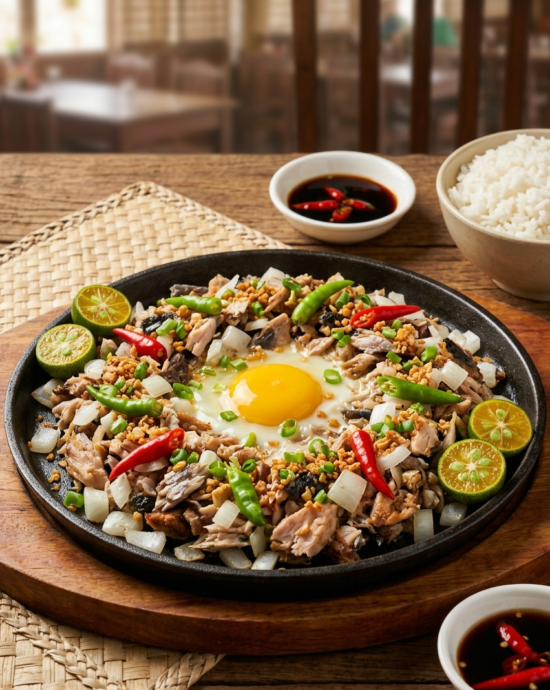
Quickly spread the prepared bangus sisig mixture evenly across the hot buttered sizzling plate using a spoon or spatula. Press it down slightly so maximum surface area is in contact with the hot plate. Allow the bottom layer to sit undisturbed for one to two minutes to develop a lightly crisped, browned crust on the underside while the top remains moist and creamy. If adding an egg, crack it directly into the center of the sizzling sisig now — the residual heat from the plate will gently cook it as it is brought to the table, creating the dramatic, live-cooking visual that is one of the most beloved tableside experiences in Filipino dining. Sprinkle the remaining siling labuyo over the top.
- Step 7: Serve Immediately and Mix at the Table
Carefully transfer the sizzling plate to a heat-proof wooden or thick board and bring it directly to the table while it is still sizzling and smoking dramatically. Squeeze a final fresh calamansi or lemon wedge over the top and garnish with additional fresh green onion. If an egg was added, mix it into the sisig at the table, folding the still-cooking egg through the fish mixture to create a rich, creamy final texture. Serve with steamed white rice on the side. Bangus Sisig is best eaten immediately while hot and sizzling — the contrast of the crispy-bottomed fish and the creamy-sauced top, all unified by the fragrant butter and calamansi, is at its absolute peak in the first few minutes after serving.
- Calories:320 kcal16%
- Protein:30 g60%
- Carbohydrates:5 g2%
- Sugar:1 g1%
- Fat:20 g26%
- Salt (Sodium):720 mg31%
- Energy:1338 kJ16%
Table of Contents
What Is Bangus Sisig?
Bangus Sisig is a Filipino dish made from flaked fried milkfish (bangus) seasoned with soy sauce, calamansi juice, onion, chili, and mayonnaise, then served sizzling on a cast iron plate — a seafood interpretation of the classic Kapampangan pork sisig adapted for one of the Philippines’ most beloved and culturally significant fish. It is celebrated as one of the finest examples of Filipino culinary creativity and regional recipe adaptation.
The original sisig is a Kapampangan dish from Pampanga province, traditionally made from chopped pig’s face, ears, and liver. As the dish spread nationally and internationally, Filipino cooks began adapting the sisig format — the sizzling plate, the calamansi-soy-onion-chili seasoning profile, and the optional egg — to dozens of other proteins, with bangus becoming one of the most successful and widely embraced variations.
Bangus, or milkfish, holds a uniquely special position in Philippine food culture. It is the country’s unofficial national fish, cultivated in fishponds across the Philippines for centuries and deeply embedded in everyday Filipino cooking. Bangus is prized for its rich, slightly sweet flesh and its versatility across cooking methods — it is equally delicious fried, grilled, stuffed, steamed, or braised. Its naturally fatty, flavorful flesh responds particularly well to the sisig treatment.
Bangus Sisig beautifully demonstrates how Filipino cooks innovate within their culinary traditions — taking an iconic preparation, respecting its essential character, and adapting it to showcase a beloved local ingredient in a new and exciting way that has since become iconic in its own right.
Ingredient Notes
- Bangus (Milkfish) Bangus is prized for its rich, naturally sweet, slightly fatty flesh that crisps beautifully when fried and flakes into moist, tender pieces ideal for sisig. Choose the best bangus for sisig by selecting a fish with bright, clear eyes, firm flesh that springs back when pressed, and a fresh, mild ocean smell without any sourness.
- Mayonnaise: Mayonnaise adds creaminess and a mild tanginess that binds the flaked fish and seasonings together into a cohesive sisig mixture. It also contributes richness that balances the calamansi’s bright acidity. Use full-fat mayonnaise for the best texture and flavor in Bangus Sisig.
- Calamansi: Fresh calamansi juice is the defining seasoning acid in Filipino sisig, providing a uniquely aromatic citrus brightness that neither lemon nor lime can fully replicate. The best calamansi for Bangus Sisig is freshly squeezed from ripe, deep-orange calamansi; bottled calamansi concentrate is an acceptable but less vibrant substitute.
Ingredient Suggestions
- Crispy Chicharon — Sprinkling crushed pork chicharon (pork crackling) over the finished sisig adds dramatic crunch and a porky richness that elevates the dish significantly.
- Liver Spread — A teaspoon of liver spread mixed into the sisig before cooking adds a subtle organ-meat richness and deeper umami dimension reminiscent of classic pork sisig.
- Grilled Bangus — Using bangus that has been grilled over charcoal rather than fried imparts a smoky depth to the sisig that many consider superior to the fried version.
- Pickled Vegetables — A small side of achara (pickled green papaya) alongside the sisig provides refreshing acidity that cuts through the richness.
Helpful Tips & Pro Tips
- Removing every last pin bone from the flaked bangus is non-negotiable for safety and enjoyment. Work slowly and methodically, running your fingers through the flaked fish in all directions to detect any remaining bones before proceeding.
- Why is my Bangus Sisig dry? The fish was overcooked during the frying stage or too much fish relative to the dressing was used. Increase the mayonnaise and calamansi juice ratio, or mix in a tablespoon of butter to rehydrate the mixture.
- For maximum sizzle and drama, heat the cast iron plate for at least five full minutes until smoking hot before adding butter — a plate that is not hot enough will not produce the signature sizzle and crust that defines excellent sisig.
How to Serve and Store
Bangus Sisig should be served immediately on the sizzling plate while steaming and crackling for the full theatrical dining experience. Accompany with steamed rice, cold beer, and extra calamansi wedges. Leftover Bangus Sisig mixture (before the sizzling plate step) can be stored in an airtight container in the refrigerator for up to 2 days; reheat in a pan over medium heat with a knob of butter until sizzling. Once cooked on the sizzling plate, leftovers should be consumed within 24 hours and reheated in a pan, not microwaved, to preserve the textural qualities.
Substitutions
- Bangus → Tilapia — A mild, widely available white fish with similar flaking characteristics; fry until crispy and proceed identically through the recipe.
- Mayonnaise → Sour Cream — Provides similar creaminess with a more pronounced tang that works beautifully in the calamansi-soy context of sisig seasoning.
- Calamansi → Lime — Fresh lime juice is the closest substitute for calamansi, providing a similar aromatic citrus acidity though with a slightly different flavor character.
- Siling Labuyo → Jalapeño — A milder chili substitute for those sensitive to heat while maintaining the herbal, fresh chili character essential to sisig’s flavor profile.
Suggested Recipes
- Sizzling Gambas — Another beloved sizzling Filipino seafood dish featuring shrimp in garlic butter and chili, sharing Bangus Sisig’s theatrical sizzling plate presentation.
- Tinolang Isda — A gentle, ginger-based fish soup that showcases bangus in a completely different, soothing culinary register after the bold intensity of sisig.
- Crispy Pata — For fans of the sizzling plate experience, Crispy Pata’s crackling pork is the ultimate Filipino sizzle-and-crunch main course.
Frequently Asked Questions

Jeff Smith
"Cooking is the intersection of history, science, and emotion."
For me, the kitchen has always been a laboratory of culture. With a background deeply rooted in digital strategy and precision, I approach the culinary arts with the same rigor I apply to the digital landscape—analyzing flavors, perfecting techniques, and documenting the nuance that makes Filipino cuisine truly world-class.
Findme Recipe was born from a desire to bridge the gap between traditional heritage and the modern home cook. Whether it is mastering the perfect balance of acidity in a classic Adobo or simplifying complex regional dishes for everyday kitchens, my mission is to preserve our culinary identity through accessible, data-backed, and delicious content.
I am not just building a database; I am cultivating a community where every Filipino kitchen feels empowered, every ingredient is celebrated, and every family heirloom recipe finds a place to thrive.
Join me as we translate the soul of our islands into recipes for the next generation.