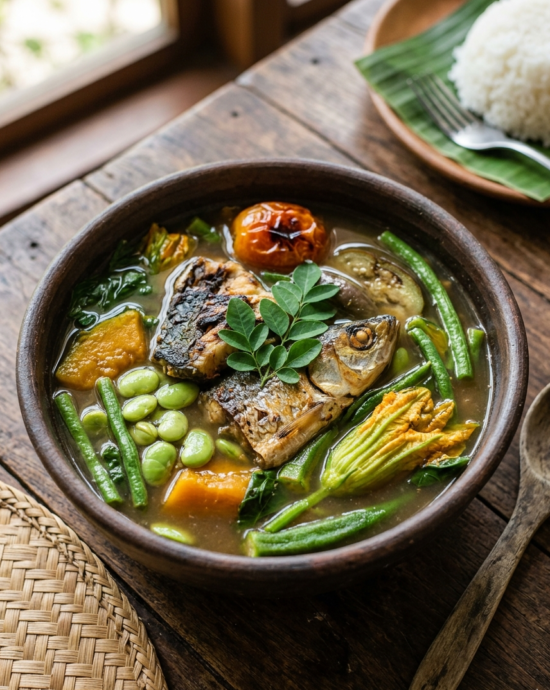

- Step 1: Prepare Bagoong Broth
Pour three cups of water into a medium-sized pot and bring to a boil over medium heat. Add the bagoong isda or patis and the quartered tomatoes and sliced shallots directly to the water. Stir gently to begin dissolving the fermented fish sauce into the liquid. Allow this aromatic broth to simmer together for five to seven minutes, during which time the tomatoes will begin to soften and release their natural sweetness and acidity into the broth. The bagoong isda lends a deep, funky, savory flavor that is the defining character of authentic Ilocano dinengdeng. This simple, pungent broth is the soul of the dish and what makes dinengdeng so distinctly different from any other Filipino vegetable soup preparation.
- Step 2: Add the Hard Vegetables
Add the cubed kalabasa (squash) and string beans to the simmering bagoong broth. These harder vegetables require the longest cooking time and should go in first to ensure they are fully tender by the time the more delicate ingredients are added. Stir gently and allow them to cook over medium heat for seven to eight minutes. The squash will absorb the savory, pungent broth and begin to break down along the edges, releasing its natural sweetness into the liquid. The beans will brighten in color and become tender while maintaining a pleasant bite. Periodically taste the broth as the vegetables cook and adjust with additional bagoong if needed for more depth and saltiness.
- Step 3: Add Softer Vegetables
Once the squash is fork-tender and the beans are cooked through, add the sliced eggplant and trimmed okra to the pot. Stir gently to submerge them in the broth. The eggplant will cook quickly, becoming silky and fully flavored within four to five minutes. The okra releases a natural thickening agent that gives the broth a pleasant, slightly viscous quality that is characteristic of dinengdeng. Continue to simmer over medium heat, stirring occasionally. Watch that the squash does not break down entirely — a few pieces becoming very soft and thickening the broth slightly is desirable, but you want most pieces to retain their cube shape for a visually appealing finished dish.
- Step 4: Add Ampalaya and Greens
Add the sliced ampalaya (bitter melon) to the pot and stir to combine. Bitter melon cooks quickly and needs only two to three minutes in the simmering broth to become tender while retaining its characteristic flavor. Add the paco fern or malunggay leaves last, gently pushing them below the surface of the liquid with a spoon. These delicate greens wilt and soften within one minute of being added to the hot broth. Paco fern has a pleasantly mild, slightly tannic flavor that complements the pungent bagoong beautifully. If using malunggay, the tiny leaflets will cook almost instantly and provide a fresh, slightly earthy note alongside their impressive nutritional contribution to the dish.
- Step 5: Add the Fried Fish
Gently lower pieces of the fried or grilled fish into the pot. In authentic Ilocano dinengdeng, the fish is traditionally fried or grilled separately before being added to the vegetable soup rather than being poached directly in the broth. This gives the fish a firmer, more flavorful exterior that contrasts beautifully with the tender vegetables. Allow the fish to heat through in the broth for about two minutes without stirring vigorously, which would break the fish apart. The crispy edges of the fried fish will soften slightly in the hot broth while the interior remains moist and flaky, infusing the surrounding liquid with additional savory fish flavor.
- Step 6: Serve Immediately
Taste the broth one final time before serving and adjust with additional bagoong isda, patis, or salt as needed. The finished dinengdeng should have a deeply savory, slightly pungent broth with a mild sweetness from the squash and a subtle bitter note from the ampalaya. All vegetables should be tender and cooked through while retaining their individual characters. Ladle the soup generously into deep bowls, ensuring each serving gets a variety of vegetables, some broth, and a piece of fish. Serve immediately alongside a large mound of steamed white rice. Dinengdeng is traditionally eaten at room temperature to slightly warm, which some Ilocanos prefer as it allows the flavors to fully present themselves without the distraction of excessive heat.
- Calories:110 kcal6%
- Protein:9 g18%
- Carbohydrates:13 g5%
- Sugar:3 g3%
- Fat:2 g3%
Table of Contents
What Is Dinengdeng?
Dinengdeng is a traditional Ilocano vegetable soup from the Ilocos region of Northern Luzon, Philippines, made by simmering an assortment of seasonal vegetables in a light broth flavored primarily with bagoong isda — a pungent fermented fish condiment that serves as both seasoning and flavor foundation. The dish is a cornerstone of Ilocano cuisine, a food tradition renowned throughout the Philippines for its simplicity, frugality, and deep respect for fresh, locally grown ingredients. The word dinengdeng is believed to derive from the Ilocano term meaning to cook in a flavorful broth, and the dish is deeply tied to the agricultural lifestyle of the Ilocos region, where fishing communities and highland farms have sustained families for centuries. What distinguishes dinengdeng from similar Filipino vegetable soups is its use of bagoong isda rather than bagoong alamang or patis as the primary seasoning, along with the Ilocano practice of adding fried or grilled fish directly to the soup, creating layers of texture between the tender vegetables and the firmer fish. Dinengdeng is also notable for its use of indigenous and hyperlocal vegetables such as paco fern, saluyot (jute leaves), and kamote tops that reflect the natural abundance of the Ilocos countryside. The dish is deeply nutritious, low in fat, and packed with fiber and micronutrients from its varied vegetable content. It embodies the Ilocano culinary philosophy of making the most of simple, honest ingredients through minimal intervention — letting the natural flavors of fresh produce and fermented condiments do all the work.
Ingredient Notes
- Bagoong Isda (Fermented Fish): This is the non-negotiable flavor of authentic dinengdeng. Look for a well-fermented, pungent product with a rich, complex aroma. Bugguong monamon (fermented anchovy) is the traditional Ilocano variety. Use patis as a milder substitute.
- Paco Fern: This edible fern with a mild, slightly tannic flavor is a traditional dinengdeng ingredient. Buy at wet markets. Fresh malunggay leaves, water spinach, or young sweet potato leaves are excellent substitutes if paco is unavailable.
- Fried Fish: Traditionally, Ilocanos use fried or grilled bangus (milkfish) or any local fish. The pre-cooked fish adds textural contrast and extra flavor. Pan-fry with minimal oil and a pinch of salt until golden before adding to the soup.
Ingredient Suggestions
- Saluyot (jute leaves) — a traditional Ilocano green that gives the broth a characteristic slightly mucilaginous quality
- Patola (ridge gourd) — adds mild sweetness and a spongy texture that soaks up the bagoong broth beautifully
- Kamote tops (sweet potato leaves) — widely available, nutritious, and have a pleasantly mild flavor that complements the pungent broth
- Grilled tilapia instead of fried — a slightly lighter option with a smoky flavor that adds another dimension to the soup
Helpful Tips & Pro Tips
- Add bagoong isda gradually and taste as you go. The saltiness and intensity of fermented fish sauce varies significantly between brands. Start with two tablespoons, simmer for a few minutes, taste the broth, and add more as needed to reach your preferred level of savory depth.
- Fry the fish first, always. This is essential to authentic Ilocano dinengdeng. Pre-fried fish maintains its texture in the soup and adds a complex, slightly crispy element that poached fish simply cannot replicate.
- Why does my dinengdeng taste too fishy? Overly fishy flavor usually results from using too much bagoong isda or a very pungent brand. Balance it by adding more water and a quartered tomato to mellow the intensity. A small pinch of sugar also rounds out the broth.
- Serve at room or warm temperature for the best flavor. Many Ilocanos enjoy dinengdeng slightly cooled after cooking, believing the flavors meld more harmoniously and the vegetables taste sweeter when not piping hot.
How to Serve and Store
Serve dinengdeng in deep bowls with generous amounts of broth alongside steamed white rice. The rice acts as the main starch that absorbs the flavorful broth. Store leftovers in an airtight container in the refrigerator for up to 2 days. Reheat gently over low heat without boiling, which preserves the texture of the vegetables. The fish tends to become softer upon reheating, which is acceptable. Avoid freezing as the vegetables become waterlogged and the fish turns mushy upon thawing.
Substitutions
- Bagoong isda → Fish sauce (patis) — a milder, less pungent alternative that still provides the necessary savory saltiness
- Fried bangus → Grilled tilapia or dried fish (daing) — equally traditional and widely used in Ilocos homes
- Paco fern → Malunggay or water spinach (kangkong) — both cook quickly and pair well with the pungent broth
- Ampalaya → Chayote — for those who prefer a milder, less bitter vegetable in their soup
- Fresh fish → Canned sardines in tomato sauce (budget-friendly) — adds richness and makes the dish even more economical
Suggested Recipes
- Pinakbet Ilocano — the other iconic Ilocano vegetable dish, a drier preparation using bagoong isda and a similar set of vegetables
- Bulanglang — a Kapampangan cousin made with rice washing water and bagoong alamang instead of bagoong isda
- Sinigang na Bangus — a tamarind-soured soup with milkfish that also celebrates bangus in a vegetable-rich broth
- Laswa — a Visayan mixed vegetable soup sharing the same minimalist philosophy as dinengdeng
Frequently Asked Questions

Jeff Smith
"Cooking is the intersection of history, science, and emotion."
For me, the kitchen has always been a laboratory of culture. With a background deeply rooted in digital strategy and precision, I approach the culinary arts with the same rigor I apply to the digital landscape—analyzing flavors, perfecting techniques, and documenting the nuance that makes Filipino cuisine truly world-class.
Findme Recipe was born from a desire to bridge the gap between traditional heritage and the modern home cook. Whether it is mastering the perfect balance of acidity in a classic Adobo or simplifying complex regional dishes for everyday kitchens, my mission is to preserve our culinary identity through accessible, data-backed, and delicious content.
I am not just building a database; I am cultivating a community where every Filipino kitchen feels empowered, every ingredient is celebrated, and every family heirloom recipe finds a place to thrive.
Join me as we translate the soul of our islands into recipes for the next generation.