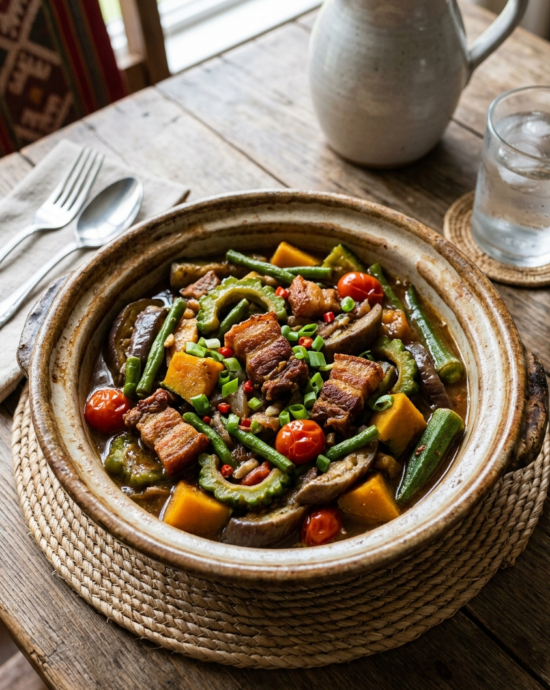

- Step 1: Prepare All Vegetables
Begin by preparing all the vegetables before turning on the heat — pinakbet's success depends on layering everything properly so each vegetable finishes at the right doneness simultaneously. Slice the bitter melon in half lengthwise, scoop out the seeds and white pith using a spoon, and slice into half-moon pieces about half an inch thick. Sprinkle lightly with salt and allow to sit for 10 minutes to draw out some of the bitterness, then rinse and pat dry. Cube the eggplant and squash into roughly equal 1-inch pieces so they cook evenly together. Trim the okra ends but leave whole. Cut the string beans into 2-inch lengths. Quarter the tomatoes. Having all vegetables uniformly prepared and ready ensures the stir-fry step goes smoothly without interruption.
- Step 2: Render the Pork Belly
Heat two tablespoons of cooking oil in a wide, heavy-bottomed pan or clay pot (palayok) over medium heat. Add the sliced pork belly and cook for 5–6 minutes, stirring occasionally, until the fat renders and the pork develops light golden-brown edges. Rendering the pork first is critical — the melted pork fat becomes the cooking medium that carries all the flavors of the bagoong, garlic, and tomatoes into the vegetables. Once the pork has browned lightly and released a good amount of fat, push it to the edges of the pan. Add the crushed garlic to the rendered fat in the center and stir for 30 seconds until fragrant. Add the sliced onion and cook for 2 minutes until soft and translucent. The kitchen should smell deeply aromatic at this stage.
- Step 3: Add Tomatoes and Bagoong
Add the quartered tomatoes to the pan and press gently with a spoon to begin releasing their juices. Cook for 3–4 minutes over medium heat, stirring occasionally, until the tomatoes begin to break down, soften, and become saucy. The tomato juices will deglaze any browned bits from the bottom of the pan and form a flavor-rich base liquid. Add the bagoong alamang and stir thoroughly to incorporate it into the tomato and pork mixture. The bagoong will immediately add a pungent, savory, fermented aroma that is the defining characteristic of authentic pinakbet. Cook the bagoong with the tomatoes for 2 minutes, allowing it to mellow and bloom slightly in the heat. Pour in the half cup of water and bring to a gentle simmer before adding the vegetables.
- Step 4: Layer the Dense Vegetables First
The key to properly cooked pinakbet is adding the vegetables in stages based on their density and cooking time — never dump everything in at once. Begin with the squash, which takes the longest to cook. Add the cubed kalabasa to the simmering bagoong and tomato base, cover, and cook for 4–5 minutes until it begins to soften but is not yet fully done. Next, add the string beans, eggplant, and okra. Stir gently to distribute the vegetables among the base ingredients. Cover again and cook for another 5–6 minutes. The steam trapped inside the pot cooks the denser vegetables without requiring additional water, keeping the flavors concentrated. Avoid stirring too vigorously at this stage — pinakbet vegetables should maintain their shape, not break apart.
- Step 5: Add the Bitter Melon Last
Once the string beans and eggplant are nearly tender and the squash is soft throughout, add the pre-salted and rinsed bitter melon. Stir gently to incorporate, cover, and cook for just 3–4 additional minutes. The bitter melon is added last specifically because it cooks quickly and its bitterness intensifies significantly with prolonged heat exposure. At 3–4 minutes of cooking, the ampalaya should be tender but still bright green with a pleasant, manageable bitterness. Cooking beyond this point risks making the dish overly bitter. Taste the dish and adjust seasoning carefully — the bagoong provides most of the salt, so additional seasoning should be minimal. Add a light pinch of black pepper for warmth and freshness.
- Step 6: Final Simmer and Plating
Once all vegetables are added and cooked to your desired doneness, remove the cover and allow the dish to simmer uncovered for one final minute, which gently concentrates the sauce and allows any excess liquid to reduce slightly. The finished pinakbet should have a small amount of thick, deeply flavored sauce at the bottom of the pan — not soupy, not completely dry. The vegetables should hold their shapes, show vibrant color, and glisten with the reduced bagoong and tomato sauce. Taste one final time and adjust with a small pinch of salt if needed. Transfer carefully to a serving dish or bring the clay pot directly to the table for a traditional presentation. Pinakbet is always served hot alongside steamed white rice.
- Calories:210 kcal11%
- Protein:10 g20%
- Carbohydrates:16 g6%
- Sugar:6 g7%
- Fat:13 g17%
Table of Contents
What Is Pinakbet?
Pinakbet is a traditional Filipino vegetable stew originating from the Ilocos Region of Northern Luzon, made with a colorful medley of native vegetables — typically bitter melon, eggplant, squash, okra, and string beans — seasoned with bagoong alamang or fermented shrimp paste, and often cooked with pork belly. The name comes from the Ilocano word ‘pinakebbet,’ meaning ‘shrunken’ or ‘shrunk,’ referring to the way the vegetables cook down and reduce in volume as they simmer in their own juices and the fermented paste’s salty liquid. Pinakbet is considered one of the quintessential dishes of Ilocano cuisine, a culinary tradition celebrated for its directness, use of native produce, and bold fermented flavors.
The dish reflects the agricultural heritage of Ilocos, a region whose farmers have cultivated the same native vegetables for generations. Bitter melon, eggplant, squash, okra, and string beans are all grown abundantly in the Ilocos plains, and pinakbet was historically the practical solution for cooking an abundant vegetable harvest into a single, satisfying, nourishing meal. The addition of bagoong, a ubiquitous fermented condiment throughout the Philippines, replaced the need for expensive seasoning and preserved the dish’s strong, savory character across seasons.
Outside the Ilocos Region, Tagalog-style pinakbet became popular using bagoong alamang — the shrimp paste variety — as the primary seasoning, while the original Ilocano recipe uses bagoong isda, a fermented fish paste that is more pungent and complex. Pinakbet has spread beyond the Philippines into the Filipino diaspora worldwide, where it is celebrated as a comforting, nutritious, deeply flavorful representation of Filipino home cooking. It is uniquely suited for vegetable-forward eating, and the combination of bitter, savory, sweet, and earthy flavors in a single dish makes it one of the most complex and satisfying vegetables dishes in Southeast Asian cuisine.
Ingredient Notes
- Bitter Melon (Ampalaya): The defining and most assertive flavoring vegetable in pinakbet. Choose ampalaya with deep ridges and a firm, vibrant green skin for the best flavor. Lightly salting sliced ampalaya before cooking draws out excess bitterness without eliminating it entirely — a small amount of bitterness is desirable and characteristic.
- Bagoong Alamang: The soul of the dish. Choose a guisado (pre-sautéed) bagoong for a milder, more approachable flavor, or use raw pink bagoong for a more intense, pungent result. Taste the bagoong before using to gauge its saltiness.
- Squash (Kalabasa): Filipino kabocha-type squash provides natural sweetness that counterbalances the bitterness of ampalaya. Choose squash with firm, dark-orange flesh for the best sweetness and color.
- Pork Belly: The fat from pork belly is the cooking medium. Select pork belly with a generous fat layer. Without sufficient fat rendering, the dish loses its characteristic richness and depth.
Ingredient Suggestions
- Fermented Fish Paste (Bagoong Isda): Swap the shrimp paste for fermented fish paste for the original Ilocano-style pinakbet, which offers a more complex, fishier umami depth than the Tagalog version.
- Chicharon (Pork Crackling): Top finished pinakbet with crushed chicharon for a crunchy texture contrast and additional pork flavor that transforms the dish into a more festive version.
- Bagnet (Ilocano Deep-Fried Pork): The ultimate upgrade — crispy Ilocano-style deep-fried pork added to the pinakbet moments before serving for dramatic crunch and richness.
- Sliced Tomatoes (Extra): Double the amount of tomatoes for a saucier, slightly more acidic pinakbet that balances the bagoong’s saltiness more aggressively.
Helpful Tips & Pro Tips
- Use a clay pot (palayok) if available. Cooking pinakbet in a traditional clay pot allows the heat to distribute more evenly and imparts a subtle earthy flavor that no modern pan can replicate. The clay also retains heat beautifully for serving directly at the table.
- Why is my pinakbet too bitter? Over-salting the ampalaya or cooking it too long are the most common causes. Pre-salt for no more than 10 minutes, rinse well, and add the bitter melon in the last 3–4 minutes of cooking to control bitterness.
- Do not add too much water. Pinakbet should not be soupy. The steam from the vegetables and the liquid released by the tomatoes provide sufficient cooking moisture. Too much added water dilutes the bagoong flavor and makes the dish taste bland.
- Season at the end, not the beginning. Bagoong is intensely salty, and its saltiness concentrates as the dish cooks down. Final seasoning adjustments after all vegetables are added will produce the most accurate, balanced flavor.
How to Serve and Store
Serve pinakbet hot from the pot alongside steaming white rice. The flavorful bagoong sauce at the bottom of the pot is particularly prized — spoon it generously over rice when serving. Pinakbet pairs well with grilled fish, fried danggit, and cold rice beer (inumin) in a traditional Ilocano spread. Store leftover pinakbet in an airtight container in the refrigerator for up to 4 days. Reheat over medium-low heat with a splash of water to loosen the sauce. The flavors deepen after a day in the refrigerator, making day-old pinakbet particularly delicious. Freezing is not recommended, as the vegetables will lose their texture upon thawing and become mushy.
Substitutions
- Pork Belly → Pork Shoulder or Chicken Thighs: Both work well if pork belly is unavailable. Chicken thighs can also be used for a lighter option — add extra oil to compensate for reduced fat.
- Bagoong Alamang → Miso Paste: For a fermented, umami-rich, vegan substitute, mix 2 tbsp white miso paste with 1 tbsp soy sauce and 1 tsp fish sauce equivalent for a similar salty, pungent seasoning depth.
- Bitter Melon → Zucchini: For those who find ampalaya too bitter, zucchini provides a mild, tender substitute with no bitterness while maintaining the correct visual appearance and texture in the stew.
- Kalabasa → Butternut Squash: Butternut squash is an excellent substitute with a similar sweetness, color, and texture to Filipino squash when kalabasa is unavailable in your market.
- Okra → Green Bell Pepper: For those who dislike okra’s mucilaginous texture, diced green bell pepper provides color and mild sweetness without any sliminess.
Suggested Recipes
- Laing: Another vegetable-forward Filipino dish enriched by fermented shrimp paste and coconut milk, showing a related flavor language from a different regional tradition.
- Ginisang Ampalaya: A simple stir-fried bitter melon with egg, highlighting the ampalaya in a lighter preparation for those who want to explore the vegetable further.
- Sinigang na Baboy: Tamarind-soured pork soup that features similar native vegetables like string beans, eggplant, and okra in a very different flavor profile.
- Dinengdeng: Another Ilocano vegetable dish using fermented fish paste but emphasizing boiling and minimal cooking — the plainer, more austere sibling of pinakbet.
Frequently Asked Questions

Jeff Smith
"Cooking is the intersection of history, science, and emotion."
For me, the kitchen has always been a laboratory of culture. With a background deeply rooted in digital strategy and precision, I approach the culinary arts with the same rigor I apply to the digital landscape—analyzing flavors, perfecting techniques, and documenting the nuance that makes Filipino cuisine truly world-class.
Findme Recipe was born from a desire to bridge the gap between traditional heritage and the modern home cook. Whether it is mastering the perfect balance of acidity in a classic Adobo or simplifying complex regional dishes for everyday kitchens, my mission is to preserve our culinary identity through accessible, data-backed, and delicious content.
I am not just building a database; I am cultivating a community where every Filipino kitchen feels empowered, every ingredient is celebrated, and every family heirloom recipe finds a place to thrive.
Join me as we translate the soul of our islands into recipes for the next generation.