
- Step 1: Marinate and Prepare the Goat Meat
Begin by thoroughly washing the goat meat under cold running water, removing any excess fat or silver skin using a sharp knife. Place the cleaned meat pieces into a large bowl and pour in the white vinegar along with half of the minced garlic, cracked black peppercorns, and a generous pinch of salt. Toss everything together until the meat is well coated. Cover the bowl with plastic wrap and refrigerate for at least 30 minutes, though marinating overnight yields the best results. This acidic soak is an essential step because it helps tenderize the notoriously tough fibers of goat meat and significantly reduces its strong, gamey aroma, setting you up for a far more flavorful and tender final dish that everyone will enjoy at the table.
- Step 2: Sear and Build the Aromatics Base
Heat three tablespoons of cooking oil in a large, heavy-bottomed pot or kawali over medium-high heat until the oil shimmers and begins to ripple. Remove the goat meat from the marinade, pat each piece dry with paper towels to encourage better browning, and discard the marinade liquid. Working in batches so as not to crowd the pan, sear the meat on all sides until a deep, rich golden-brown crust forms, roughly two to three minutes per side. Transfer the browned pieces to a plate and set aside. In the same pot, reduce the heat to medium and sauté the remaining garlic and chopped onion until soft and translucent. Add the chopped tomatoes and cook, stirring frequently, until they break down into a thick, fragrant paste that coats the bottom of the pan beautifully.
- Step 3: Simmer Low and Slow Until Tender
Return the seared goat pieces back into the pot, nestling them snugly among the aromatic tomato base. Pour in the tomato paste, tomato sauce, and two cups of beef or goat broth, then add the bay leaves and soy sauce. Stir everything together until the meat is evenly coated in the rich, glossy sauce. Bring the mixture to a rolling boil over high heat, then immediately reduce the heat to low, cover tightly with a lid, and allow the kaldereta to simmer gently for at least one and a half hours. Stir occasionally and check the liquid level every thirty minutes, adding small splashes of broth as needed to prevent the sauce from drying out. The meat is ready when it yields easily when pierced with a fork and the connective tissues have fully softened.
- Step 4: Add the Vegetables and Enrich the Sauce
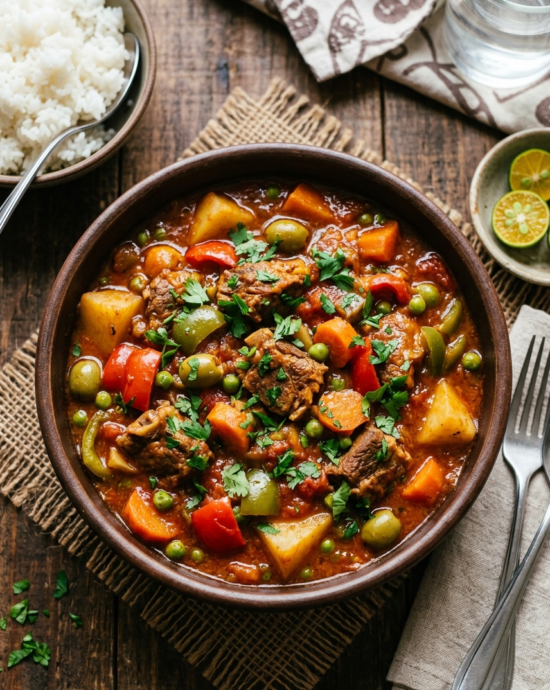
Once the goat meat has become sufficiently tender, it is time to introduce the vegetables and create the kaldereta's signature rich body. Add the quartered potatoes and sliced carrots directly into the pot, stirring them into the sauce. Cover and continue simmering over low to medium heat for about fifteen minutes, or until the potatoes are fork-tender but still hold their shape without falling apart. Next, stir in the liver spread or mashed chicken liver, which is the defining ingredient that gives kaldereta its characteristic deep, savory richness and slightly thick consistency. Mix thoroughly until the liver is fully incorporated into the sauce. Add the sliced red and green bell peppers along with the pitted green olives, then cook uncovered for an additional five minutes to retain their vibrant color and slight crunch.
- Step 5: Adjust Seasonings and Serve
With all the components fully cooked, take a moment to taste the sauce and fine-tune the seasoning to your personal preference. Add salt and freshly cracked black pepper as needed, and if you prefer a hint of heat, sprinkle in the optional chili flakes and stir well. Remove the bay leaves, which have done their aromatic work during the long simmer. Allow the kaldereta to rest off the heat for about five minutes before serving, giving the flavors one final opportunity to meld together harmoniously. Ladle generous portions into deep bowls or over a bed of freshly cooked white rice. Garnish with a few extra olive slices or a scatter of freshly chopped parsley for an elegant presentation that signals this dish is truly something special.
- Calories:410 kcal21%
- Protein:32 g64%
- Carbohydrates:18 g6%
- Sugar:6 g7%
- Fat:23 g29%
- Energy:1715 kJ21%
Table of Contents
What Is Kalderetang Kambing?
Kalderetang Kambing is a rich, slow-braised Filipino goat stew cooked in a tomato-based sauce enriched with liver spread, bell peppers, and green olives, resulting in a deeply savory and hearty dish that is considered a fiesta centerpiece in many Philippine households. Originating from the Spanish word caldereta, meaning cauldron or stew pot, this dish arrived in the Philippines during the Spanish colonial period and was adapted using locally available ingredients, most notably substituting goat for the original lamb. Goat meat, known as kambing in Filipino, was more readily accessible in rural communities and became the preferred protein, lending the dish a distinctive robust flavor that is both earthy and deeply satisfying. Over the centuries, Filipino home cooks transformed kaldereta into a uniquely local recipe by incorporating liver spread, a canned product beloved for its umami depth, as well as vegetables like potatoes, carrots, and bell peppers that were absorbed from trade influences. Today, Kalderetang Kambing is a celebrated dish served during fiestas, weddings, Noche Buena gatherings, and special family occasions across the archipelago. Regional variations abound: some cooks in Pampanga add grated cheese for added creaminess, while Batangas-style versions lean spicier. The dish is prized not only for its bold, complex flavor profile but also for the transformation it achieves in goat meat, coaxing the tough, gamey cuts into meltingly tender morsels through the patient art of slow braising. Pairing the stew with steamed white rice is the definitive way to enjoy it.
Ingredient Notes
- Goat Meat (Kambing) Choose bone-in cuts from the shoulder, leg, or ribs for the best results; bones release collagen that enriches the sauce as it simmers. Look for meat with a pinkish-red color and minimal odor — fresher goat meat has a milder scent. Avoid pre-cut pieces that appear grey or have a strong smell.
- Liver Spread This canned product is the secret to authentic kaldereta’s signature savory depth. Argentina or Reno brand liver spread are the most common choices in Philippine kitchens. If using fresh chicken liver, sauté it separately before mashing and incorporating it into the stew.
- Tomato Paste and Sauce Using both tomato paste and tomato sauce creates a layered tomato flavor: paste contributes concentrated sweetness and body, while the sauce provides liquid volume and a brighter, fresher taste. Choose a tomato sauce without added seasonings for better control over your final flavor.
- Green Olives Pitted green olives add a subtle briny, slightly tart counterpoint that cuts through the richness of the liver-enriched sauce. Spanish queen olives work beautifully here. Rinse them briefly before adding to reduce excess saltiness.
Ingredient Suggestions
- Grated Cheese: Stir in 1/4 cup of grated Edam (queso de bola) or cheddar near the end for a creamier, Kapampangan-style kaldereta.
- Jalapeños or Siling Labuyo: Add fresh chili for a spicy version that is popular in many Visayan households.
- Chickpeas: Toss in a can of drained chickpeas with the vegetables for extra protein and a pleasant meaty texture.
- Red Wine: Deglaze the pan with 1/2 cup of dry red wine after searing the meat for a deeper, more complex sauce base.
- Frozen Green Peas: Add a handful during the last five minutes for a pop of sweetness and color.
Helpful Tips & Pro Tips
- Marinate Overnight for the Mildest Flavor: The longer the goat meat sits in the vinegar-garlic marinade, the more effectively it neutralizes the gamey smell. For the best results, marinate in the refrigerator for 8–12 hours. Never skip this step, as it is the single most important technique for making kambing dishes approachable for first-time goat meat eaters.
- Why Is My Kaldereta Tough? Goat meat contains dense connective tissues that require sustained low heat to break down into gelatin. If your meat is still tough after 90 minutes, simply add more broth and continue simmering on the lowest heat setting. Rushing the process with high heat causes the proteins to seize and tighten, resulting in chewy, dry meat.
- Brown the Meat Properly: Do not skip the searing step and never crowd the pan. Searing builds the Maillard reaction, creating hundreds of new flavor compounds that form the aromatic backbone of the entire stew.
- Add Liver Spread at the Right Time: Stir in the liver spread only after the vegetables are nearly cooked. Adding it too early can cause bitterness and may make the sauce grainy. Incorporate it in the final 15–20 minutes for the smoothest, richest result.
- Rest Before Serving: Letting the finished kaldereta sit off the heat for 5–10 minutes allows the sauce to slightly thicken and the flavors to equalize throughout the dish. This short rest makes a noticeable difference in taste.
How to Serve and Store
Kalderetang Kambing is best served piping hot over generous mounds of freshly steamed white rice, which absorbs the deeply savory tomato-liver sauce beautifully. For a festive presentation, transfer to a large serving bowl and garnish with sliced red bell pepper and a sprig of flat-leaf parsley. The dish pairs wonderfully with cold San Miguel beer or a glass of dry red wine. Leftovers keep well stored in an airtight container in the refrigerator for up to 3 days; the flavor actually deepens overnight as the sauce continues to develop. For longer storage, freeze in portioned containers for up to 2 months. To reheat, warm gently on the stovetop over low heat with a splash of water or broth to loosen the sauce, stirring occasionally until heated through.
Substitutions
- Goat Meat → Beef Chuck or Lamb Shoulder: Both are well-marbled cuts that braise beautifully in the same time frame and produce a similar rich, hearty result.
- Liver Spread → Mashed Chicken Liver (Vegan: Tahini + Miso): Sauté and mash fresh chicken liver as a direct swap. For a vegan version, blend 1 tbsp tahini with 1 tsp white miso for a surprisingly similar umami depth.
- White Vinegar → Apple Cider Vinegar: A gentler, slightly fruity alternative that still effectively tenderizes the meat during marinating.
- Beef Broth (Gluten-Free): Ensure your broth is certified gluten-free; most commercial beef broths are, but always check the label.
- Soy Sauce → Coconut Aminos: A gluten-free, lower-sodium alternative that provides a similar savory-sweet depth without any wheat.
- Canned Olives → Capers: If olives are unavailable, rinsed capers provide a comparable briny, acidic note.
Suggested Recipes
- Kilawin na Kambing: A refreshing raw goat vinegar salad that uses the same protein; ideal as a light appetizer before a heavier kaldereta feast.
- Papaitan Kambing: The most daring of the kambing trilogy, this bitter-savory offal stew is a beloved Ilocano specialty worth exploring for adventurous cooks.
- Beef Kaldereta: For those new to goat meat, this classic beef version offers the same rich tomato-liver sauce with more familiar protein.
- Adobong Kambing: A simpler preparation of goat braised in vinegar, soy sauce, and garlic that highlights the meat’s natural flavor with fewer ingredients.
Frequently Asked Questions

Jeff Smith
"Cooking is the intersection of history, science, and emotion."
For me, the kitchen has always been a laboratory of culture. With a background deeply rooted in digital strategy and precision, I approach the culinary arts with the same rigor I apply to the digital landscape—analyzing flavors, perfecting techniques, and documenting the nuance that makes Filipino cuisine truly world-class.
Findme Recipe was born from a desire to bridge the gap between traditional heritage and the modern home cook. Whether it is mastering the perfect balance of acidity in a classic Adobo or simplifying complex regional dishes for everyday kitchens, my mission is to preserve our culinary identity through accessible, data-backed, and delicious content.
I am not just building a database; I am cultivating a community where every Filipino kitchen feels empowered, every ingredient is celebrated, and every family heirloom recipe finds a place to thrive.
Join me as we translate the soul of our islands into recipes for the next generation.