
- Step 1: Soak the Sticky Rice
Place the Thai glutinous rice in a large bowl and cover completely with cold water. The rice must soak for a minimum of four hours, though overnight soaking of eight to twelve hours produces the most consistently excellent results. The soaking process gradually hydrates each grain of glutinous rice, allowing it to steam evenly and develop the characteristic soft, chewy, slightly translucent texture that distinguishes proper sticky rice from ordinary steamed rice. During soaking, the water will turn milky white as surface starches dissolve — this is perfectly normal and expected. Change the soaking water once or twice during extended soaks. Drain the soaked rice thoroughly in a fine-mesh strainer before steaming — any excess water clinging to the grains will affect the final texture and dilute the coconut milk sweetener that will be added immediately after steaming.
- Step 2: Steam the Sticky Rice
Set up a bamboo steamer basket or a metal steamer over a pot of boiling water. If using pandan leaves, line the base of the steamer basket with several fresh leaves, which will infuse a subtle, sweet, fragrant vanilla-coconut aroma into the rice during steaming. Add the drained soaked glutinous rice, spreading it in an even layer no more than three centimeters deep. The rice should not be compacted — loose grains steam more evenly. Cover the steamer with a tight-fitting lid or folded cloth to trap the steam effectively. Steam over high heat for 20 to 25 minutes, lifting the lid once at the halfway point to check for evenness and flip the rice gently. The rice is perfectly cooked when it is completely translucent, tender, sticky, and glistens slightly. Each grain should stick to its neighbors when squeezed but should not be mushy or waterlogged.
- Step 3: Prepare the Coconut Sauce
While the rice steams, prepare the coconut sweetening sauce that transforms plain sticky rice into the dessert's signature element. Combine 350ml of the full-fat coconut milk with the palm sugar and salt in a small saucepan. Heat over medium-low heat, stirring constantly, until the palm sugar completely dissolves and the mixture is smooth and slightly thickened. Do not allow the mixture to boil, as boiling causes the coconut milk to separate and develop a grainy texture. Taste the warm coconut sauce — it should be pleasantly sweet with a subtle salty undercurrent that balances the sweetness beautifully. The salt is a crucial element: without it, the coconut sauce tastes flat and one-dimensional. Remove from heat and set aside. This main coconut sauce will be absorbed into the hot steamed rice in the next step, flavoring and enriching every grain.
- Step 4: Season the Hot Rice
Transfer the freshly steamed sticky rice immediately into a large mixing bowl while it is still screaming hot — the heat is essential for the rice to properly absorb the coconut sauce in the next step. Pour the warm coconut sweetening sauce over the hot rice all at once. Using a large wooden spoon or rice paddle, gently fold and mix the sauce into the rice with a gentle cutting and turning motion, being careful not to mash the grains. The hot rice will absorb the coconut milk rapidly — this absorption happens through a process similar to osmosis and requires the rice to be at maximum temperature for full absorption. Cover the bowl with plastic wrap or a clean cloth and allow the rice to rest and absorb the coconut sauce for 20 to 30 minutes. Do not rush this resting period; proper absorption is what creates the distinctly coconut-flavored, perfectly seasoned sticky rice that defines this dessert.
- Step 5: Make the Topping Sauce
Combine the remaining three tablespoons of coconut cream with two teaspoons of sugar, a pinch of salt, and the quarter teaspoon of cornstarch in a small saucepan. Whisk to combine and heat over medium-low heat, stirring constantly, for two to three minutes until the sauce thickens slightly and the cornstarch is fully cooked through. The cornstarch prevents the thin coconut cream from running off the plated rice too quickly, helping it pool attractively on the surface. The finished topping sauce should be glossy, pourable, and slightly thicker than the original coconut cream. Remove from heat and allow to cool slightly before drizzling — it should be warm or room temperature, not hot, when applied to the plated dessert. This topping sauce is the final, visually distinct coconut cream element that poured over the mango and rice gives the dessert its characteristic two-tone appearance.
- Step 6: Slice the Mango
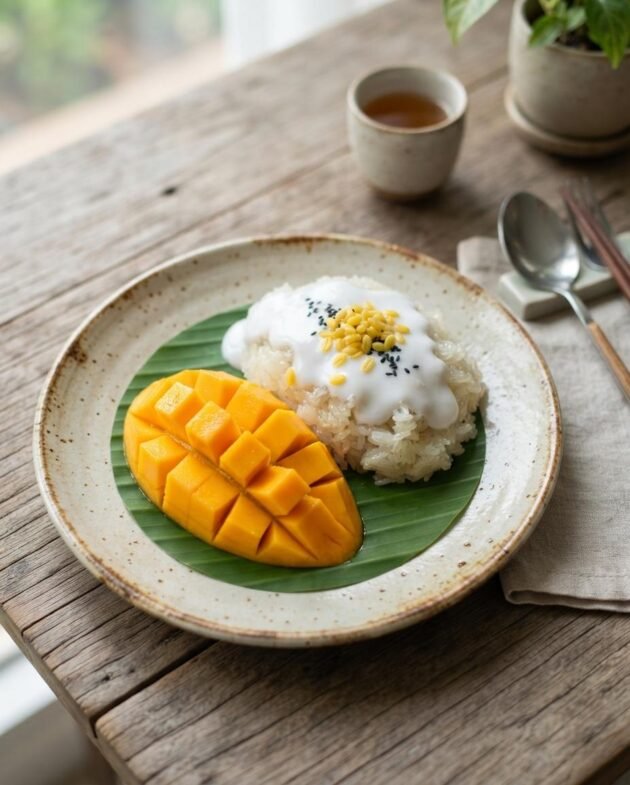
Select perfectly ripe Thai honey mangoes at their absolute peak of ripeness — they should feel soft when gently pressed and smell intensely sweet and floral. Under-ripe mango lacks the essential sweetness and fiber-free tenderness that makes this dessert extraordinary. Cut each mango along both sides of the flat central pit, creating two cheek pieces. For elegant presentation, score the flesh of each mango cheek in a crosshatch pattern without cutting through the skin, then invert the cheek to create a beautiful fanned-out or hedgehog presentation. Alternatively, peel the entire mango and slice the flesh into uniform, elegant long slices approximately one centimeter thick. Either presentation is visually appealing and delicious. The bright yellow mango against the white coconut sticky rice and drizzled cream creates one of the most photographed dessert presentations in all of Thai cuisine.
- Step 7: Plate and Garnish
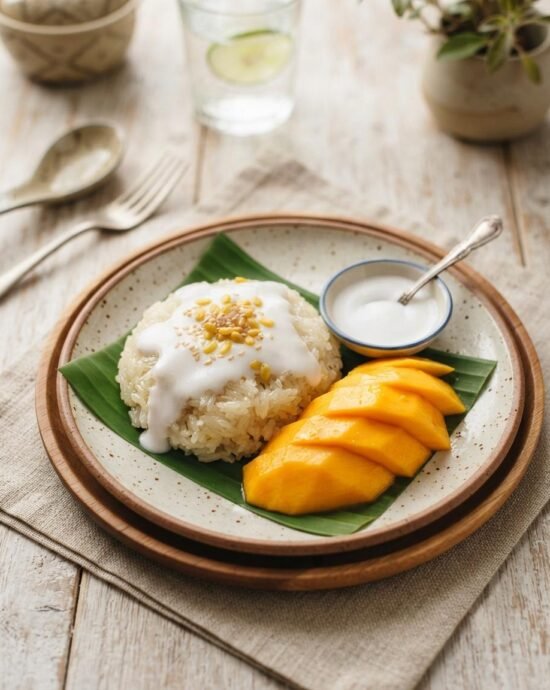
Mound a generous portion of the coconut-seasoned sticky rice in the center of each dessert plate or wide shallow bowl using a small bowl or ring mold as a shaping guide for a neat, elegant presentation. Arrange the sliced or fan-cut mango attractively alongside or partially overlapping the rice mound. Drizzle the warm coconut cream topping sauce generously over both the rice and mango, allowing it to pool attractively around the base of the rice mound. Scatter the toasted mung beans or sesame seeds over the rice — these tiny, subtly crunchy garnishes are traditional and provide an essential textural counterpoint to the yielding softness of the rice and mango. The mung beans should be lightly golden and smell nutty. Serve immediately at room temperature — Mango Sticky Rice is best enjoyed neither fridge-cold nor hot, but at the ambient temperature of a warm Thai evening.
- Calories:485 kcal24%
- Protein:6 g12%
- Carbohydrates:82 g30%
- Sugar:38 g42%
- Fat:16 g21%
- Salt:0.3 g5%
- Energy:2030 kJ24%
Table of Contents
What Is Mango Sticky Rice?
Mango Sticky Rice — known in Thai as Khao Niao Mamuang — is Thailand’s most celebrated and internationally recognized dessert: a supremely simple yet breathtakingly delicious combination of fragrant coconut-sweetened glutinous sticky rice paired with slices of perfectly ripe, intensely sweet Thai honey mango, finished with a drizzle of warm salted coconut cream and scattered toasted mung beans. The genius of this dessert lies in its effortless balance of contrasting elements — the warm, tender, coconut-rich sticky rice against the cool, fibrous sweetness of the mango; the slight saltiness of the coconut cream against the pure tropical sweetness of the fruit; and the soft, yielding textures punctuated by the tiny crunch of the toasted mung beans. Mango Sticky Rice is deeply seasonal in Thailand, traditionally associated with the Thai mango season of March through June when Mamuang Ok Rong — the prized, sweet, fiber-free Thai honey mango — reaches perfection. During this season, the dessert appears at virtually every street market, restaurant, and home celebration across the country. Outside of mango season, alternative fruits including durian, jackfruit, or lychee are used with the same coconut sticky rice base, though none match the iconic appeal of the mango version. The dessert has ancient roots in the rice-growing cultures of mainland Southeast Asia, where glutinous rice has been cultivated and eaten in sweet preparations for thousands of years. The specific Thai version with coconut milk sweetening and fresh mango became the globally recognizable dessert it is today through Thai cuisine’s remarkable expansion into international food consciousness during the late twentieth century, becoming the sweet ending that closes virtually every authentic Thai dining experience around the world.
Ingredient Notes
- Thai Glutinous Rice: Use only Thai glutinous sticky rice — sometimes labeled “sweet rice” or “waxy rice” — for this dessert. Regular long-grain rice will not stick together properly. The best sticky rice for Mango Sticky Rice should be short, opaque, and completely white before soaking.
- Thai Honey Mango: The ideal mango for Mango Sticky Rice is the Thai honey mango (Mamuang Ok Rong) — completely fiber-free, intensely sweet, and brilliantly golden yellow when ripe. How to choose mango: select fruit that yields slightly to gentle pressure and smells sweet at the stem end.
- Full-Fat Coconut Milk: Full-fat coconut milk is essential for the rich, creamy coconut sauce that defines this dessert. Light coconut milk produces a thin, watery sauce that will not properly absorb into the rice or coat the mango attractively.
- Palm Sugar: Palm sugar contributes a distinctive caramel-molasses sweetness that white sugar cannot replicate. Soft dark palm sugar is ideal — use the freshest available for the most fragrant, complex sweetness in the coconut sauce.
Ingredient Suggestions
- Pandan Extract: Adding a few drops of natural pandan extract to the coconut sauce creates a beautiful pale green color and adds a subtle vanilla-like fragrance that complements the mango beautifully.
- Durian (Seasonal): Replacing the mango with fresh durian creates Khao Niao Thurian — a regional Thai delicacy with a rich, custard-like, intensely fragrant alternative that is beloved by those who enjoy the fruit.
- Crispy Shallots: Some Bangkok street vendors scatter a few crispy fried shallots over the dessert for a savory-sweet contrast that is surprising and delicious against the sweet coconut rice.
Helpful Tips & Pro Tips
- Season the hot rice immediately after steaming. The rice must be at maximum temperature when the coconut sauce is added — hot rice absorbs the coconut milk rapidly and completely, while cooled rice will not absorb properly and the sauce pools at the bottom.
- Let the rice rest after adding the coconut sauce. The 20 to 30 minute rest period is non-negotiable — this is when the rice fully absorbs the coconut milk and develops its characteristic flavor and texture. Serving before full absorption results in wet, under-flavored rice.
- Why is my sticky rice not sticky? Under-soaking or insufficient steaming time are the most common causes. Glutinous rice must soak for at least four hours and steam for a full 20 to 25 minutes. Test readiness by squeezing a few grains — they should stick together firmly.
- Choose perfectly ripe mango. The mango quality determines the quality of the entire dessert — soft, fragrant, vibrantly sweet mango makes this dessert extraordinary while under-ripe mango makes it disappointing regardless of how well the rice is made.
How to Serve and Store
Coconut-seasoned sticky rice should be consumed within 4 hours of preparation at room temperature. Refrigerating the rice causes the glutinous starch to retrograde and become hard and unpleasant in texture. Mango should be sliced fresh just before serving and not stored once cut. If making in advance, keep the rice and coconut sauce separate — store the sauce refrigerated for up to two days and reheat gently before pouring over freshly steamed rice.
Substitutions
- Thai Honey Mango → Alphonso Mango or Ataulfo Mango — the closest available alternatives with comparable sweetness and fiber-free flesh.
- Palm Sugar → Light Brown Sugar or Coconut Sugar — adequate substitutes with similar caramel sweetness for the coconut sauce.
- Thai Glutinous Rice → Sushi Rice (Short-grain) — stickier than long-grain but not identical; increase soaking time to six hours.
- Full-Fat Coconut Milk → Coconut Cream diluted with water — maintains the richness while stretching available coconut cream further.
- Toasted Mung Beans → Toasted Sesame Seeds or Crushed Peanuts — equally crunchy and nutty garnishes that maintain the textural element.
Suggested Recipes
- Pad Thai: Mango Sticky Rice is the classic sweet ending after a savory Pad Thai — the dessert’s cool coconut sweetness perfectly balances the noodles’ savory tamarind profile.
- Som Tum: The refreshing sweetness of Mango Sticky Rice provides an ideal sweet counterpoint after the bold, spicy sourness of Som Tum papaya salad.
- Massaman Curry: The cool, sweet, tropical dessert provides perfect relief from the warm, rich, spiced richness of Massaman Curry in a complete Thai menu.
Frequently Asked Questions

Jeff Smith
"Cooking is the intersection of history, science, and emotion."
For me, the kitchen has always been a laboratory of culture. With a background deeply rooted in digital strategy and precision, I approach the culinary arts with the same rigor I apply to the digital landscape—analyzing flavors, perfecting techniques, and documenting the nuance that makes Filipino cuisine truly world-class.
Findme Recipe was born from a desire to bridge the gap between traditional heritage and the modern home cook. Whether it is mastering the perfect balance of acidity in a classic Adobo or simplifying complex regional dishes for everyday kitchens, my mission is to preserve our culinary identity through accessible, data-backed, and delicious content.
I am not just building a database; I am cultivating a community where every Filipino kitchen feels empowered, every ingredient is celebrated, and every family heirloom recipe finds a place to thrive.
Join me as we translate the soul of our islands into recipes for the next generation.