
- Step 1: Bloom the Curry Paste
Place a wok or large, deep saucepan over medium-high heat and add the vegetable oil. Once the oil shimmers, add all three tablespoons of Thai green curry paste and stir-fry it constantly for two full minutes. This step — called blooming — is critically important and must not be skipped. The direct heat contact cooks out the raw edge of the aromatics in the paste, including the raw garlic, galangal, and lemongrass, transforming them from harsh and pungent into deeply fragrant and rounded. You will notice the paste darken slightly and become noticeably more aromatic as the essential oils release. The kitchen should fill with the beautiful, herbaceous, citrusy scent of green chilies and Thai aromatics. If using homemade curry paste, this step is even more crucial as the ingredients have not been pre-cooked.
- Step 2: Add Coconut Cream
Pour only the coconut cream into the bloomed curry paste and stir vigorously to combine. Increase the heat to medium-high and cook this mixture, stirring frequently, for four to five minutes. Watch for the oil to visibly separate and rise to the surface of the cream — this process, called cracking the coconut milk, indicates that the fat has rendered out of the cream and the mixture has reduced sufficiently. This cracking step is what allows the curry to have a rich, glossy sauce rather than a thin, watery one. The coconut fat coating the curry paste molecules helps carry and amplify the fat-soluble flavor compounds in the herbs and chilies. Do not rush this step by adding more coconut cream before the cracking is complete, as the curry will not develop its characteristic silky, emulsified body.
- Step 3: Brown the Chicken
Add the chicken thigh pieces to the cracked coconut cream and curry paste mixture. Stir well to coat every piece of chicken in the aromatic paste. Allow the chicken to cook undisturbed for two minutes, then stir and cook for another two minutes until the exterior of the chicken pieces is sealed and lightly golden in spots. Chicken thighs are preferred over chicken breast for Thai green curry because the higher fat content keeps the meat moist and tender even during the extended simmering time ahead, while chicken breast tends to dry out and become stringy. Ensure the chicken is cut into uniform, bite-sized pieces of approximately two centimeters so each piece cooks evenly. At this stage the chicken should be about 70 percent cooked — it will finish cooking when the coconut milk is added and the curry simmers.
- Step 4: Add Coconut Milk and Aromatics
Pour the remaining coconut milk into the wok and stir well to combine with the paste and chicken mixture. Add the bruised lemongrass stalks, torn kaffir lime leaves, fish sauce, and palm sugar. Bring the entire mixture to a gentle simmer over medium heat, stirring occasionally. Do not allow the curry to boil vigorously, as aggressive boiling causes the coconut milk to break and become grainy rather than maintaining its silky, emulsified texture. Taste the broth at this point and adjust the seasoning — the fish sauce provides saltiness, the palm sugar balances with gentle sweetness, and the lime leaves and lemongrass contribute aromatic complexity. A properly balanced Thai green curry broth at this stage should taste rich, slightly sweet, fragrantly herbal, and mildly salty before the vegetables are added.
- Step 5: Cook the Eggplant
Add the quartered Thai eggplant and the small pea eggplants to the simmering curry. Thai eggplants have a firm, slightly bitter quality that stands up beautifully to the rich coconut curry sauce and provides a pleasing textural contrast to the tender chicken. Pea eggplants are tiny green spheres that burst with a pleasantly bitter juice when bitten — they are a signature element of authentic Thai green curry that distinguishes it from other Southeast Asian coconut milk curries. Simmer the curry for eight to ten minutes until the Thai eggplant is tender when pierced with a knife but still holds its shape without collapsing into mush. Stir the curry gently every few minutes during this step to prevent the eggplant from sticking to the bottom of the pan and scorching in the thickening sauce.
- Step 6: Final Seasoning and Basil
Once the eggplant is perfectly cooked, taste the curry one final time and make any necessary adjustments to the seasoning. Add extra fish sauce for saltiness, more palm sugar for sweetness, or a small squeeze of fresh lime juice for a bright, uplifting acidity. Remove the lemongrass stalks from the curry before serving, as they are too fibrous to eat pleasantly. Turn off the heat and add the entire handful of fresh Thai basil leaves, stirring them gently into the hot curry. The residual heat of the sauce wilts the basil leaves immediately and releases their distinctive anise-like, clove-forward fragrance that is the defining aromatic signature of Thai green curry. Never add Thai basil while the curry is still actively cooking over heat, as excessive heat destroys the basil's volatile oils and replaces the fresh fragrance with a muted, cooked herb taste.
- Step 7: Garnish and Plate
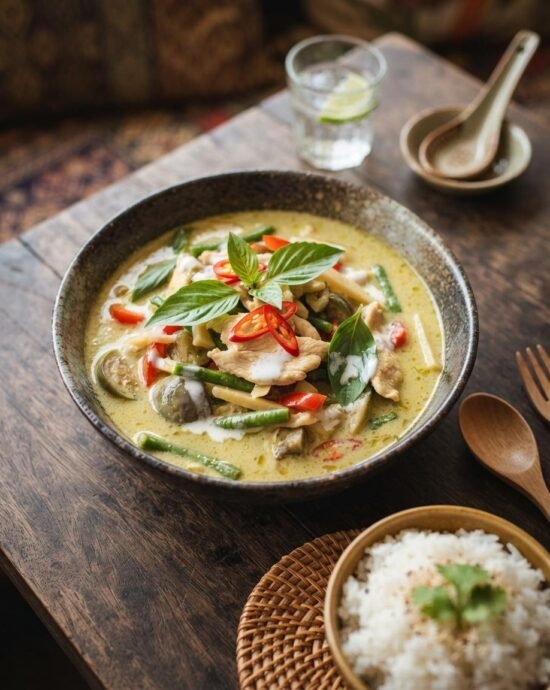
Ladle the Thai green curry into individual wide, shallow bowls or a large sharing bowl if serving family style. Spoon steamed jasmine rice into a separate bowl or directly alongside the curry — many Thai households serve the rice and curry side by side on the same large plate, allowing diners to take spoonfuls of curry to eat with their rice as they prefer. Garnish the surface of the curry with fresh red chili slices arranged in an attractive pattern for color contrast against the green sauce. Add additional fresh Thai basil leaves and torn kaffir lime leaves around the bowl for a restaurant-quality presentation that signals freshness and authenticity. Serve immediately while the coconut milk is still hot, glossy, and perfectly emulsified. Provide additional fish sauce and sliced red chilies at the table for those who prefer a saltier or spicier experience.
- Calories:485 kcal24%
- Protein:32 g64%
- Carbohydrates:12 g4%
- Sugar:6 g7%
- Fat:36 g46%
- Salt:1.6 g27%
- Energy:2030 kJ24%
Table of Contents
What Is Thai Green Curry?
Thai Green Curry is one of the most celebrated and globally beloved dishes in the Thai culinary repertoire — a luscious, vividly green coconut milk-based curry characterized by its herbaceous fragrance, mild to moderate heat, and complex layering of fresh Thai aromatics. Known in Thai as gaeng keow wan, which translates literally as “sweet green curry,” the dish derives its name from the beautiful bright green color imparted by fresh green chilies, Thai basil, and a generous array of fresh herbs pounded into the paste. Contrary to a common misconception, gaeng keow wan is typically milder than its red curry counterpart — the green chilies used are less mature and carry less capsaicin than dried red chilies, and the generous coconut milk base softens and rounds the heat considerably. Thai Green Curry is believed to have originated in the central plains of Thailand during the early twentieth century, with the first written references appearing around the 1900s, making it a relatively modern creation in Thai culinary history. The dish showcases the remarkable Thai technique of building curry paste from scratch by pounding fresh aromatics in a granite mortar and pestle — a labor-intensive process that produces a paste of incomparable fragrance and freshness compared to any commercial alternative. The paste typically combines green chilies, lemongrass, galangal, shrimp paste, kaffir lime zest, coriander root, and white pepper. Thai green curry is traditionally served with steamed jasmine rice and sliced red chilies for garnish, making it a visually stunning, aromatically intoxicating, and deeply satisfying centerpiece for any Thai meal.
Ingredient Notes
- Thai Green Curry Paste: For the best Thai green curry, use either homemade paste or a reputable brand such as Maesri or Aroy-D. How to choose Thai green curry paste: look for one with bright green color and roasted shrimp paste listed as an ingredient.
- Coconut Milk: Full-fat coconut milk is non-negotiable for an authentic, silky Thai green curry. Light coconut milk will not crack properly and produces a watery, flat sauce. Select coconut milk with 60 percent or higher coconut extract for best results.
- Thai Eggplant: Thai eggplants are golf ball-sized green or purple-striped spheres with a firm texture and pleasantly bitter flavor. The best Thai eggplant for green curry should feel heavy and firm without soft spots, indicating freshness.
- Thai Basil: Thai basil differs from Italian basil with its anise-clove note and firm, glossy leaves. Fresh Thai basil for green curry should be bright green with no wilting or blackening — the fragrance should be bold and immediate when a leaf is torn.
Ingredient Suggestions
- Bamboo Shoots: Canned bamboo shoots add a pleasantly crunchy, slightly earthy element that contrasts beautifully with the soft eggplant and tender chicken in the curry.
- Zucchini: Sliced zucchini is an excellent addition that soaks up the fragrant coconut curry sauce and provides a gentle sweetness that complements the overall dish without overpowering it.
- Shrimp: Replacing chicken with large shrimp creates a lighter, faster version of the curry — shrimp only needs two to three minutes in the simmering sauce and makes an elegant, restaurant-quality variation.
Helpful Tips & Pro Tips
- Crack the coconut milk before adding other ingredients. This means cooking the coconut cream over medium-high heat until the fat visibly separates and pools on the surface. This step is what gives Thai curries their characteristic glossy, rich sauce.
- Use chicken thighs, not breasts. Chicken thighs remain moist and tender through the entire simmering process while chicken breast dries out quickly. The additional fat in thigh meat also enriches the sauce.
- Why is my Thai green curry bitter? Bitterness usually comes from overcooked Thai eggplant or from burning the curry paste during the blooming step. Ensure the paste is stirred continuously over medium rather than high heat during blooming.
- Add Thai basil off the heat. Cooking Thai basil destroys its delicate essential oils and fragrant anise character within seconds. Stir in the leaves after removing the pot from the heat for the most vibrant, fresh flavor.
How to Serve and Store
Thai Green Curry stores exceptionally well and many cooks find the flavor improves after overnight refrigeration as the spices continue developing. Store in an airtight container in the refrigerator for up to three days. Reheat gently over low heat, adding a small splash of coconut milk to restore the saucy consistency. Thai green curry freezes well for up to one month — freeze the curry without the Thai basil and add fresh basil upon reheating for the best flavor.
Substitutions
- Chicken → Tofu or Chickpeas — excellent vegetarian protein options that absorb the curry sauce beautifully.
- Fish Sauce → Soy Sauce — provides comparable saltiness for a vegan-friendly green curry.
- Palm Sugar → Brown Sugar or Coconut Sugar — suitable alternatives with a similar deep, caramel sweetness.
- Thai Eggplant → Zucchini or Bell Pepper — adequate texture substitutes when Thai eggplant is unavailable.
- Kaffir Lime Leaves → Lime Zest — not identical, but adds a citrusy fragrance that approximates the kaffir lime quality.
Suggested Recipes
- Massaman Curry: A richer, sweeter Thai curry for those who love coconut milk-based curries but prefer a milder, more complex spice profile.
- Jasmine Rice: The classic accompaniment that perfectly absorbs the green curry sauce and rounds out the meal with its fragrant, slightly floral flavor.
- Tom Yum Goong: Serve Thai Green Curry alongside Tom Yum as a contrasting starter to create an authentic, multi-dish Thai dining experience.
Frequently Asked Questions

Jeff Smith
"Cooking is the intersection of history, science, and emotion."
For me, the kitchen has always been a laboratory of culture. With a background deeply rooted in digital strategy and precision, I approach the culinary arts with the same rigor I apply to the digital landscape—analyzing flavors, perfecting techniques, and documenting the nuance that makes Filipino cuisine truly world-class.
Findme Recipe was born from a desire to bridge the gap between traditional heritage and the modern home cook. Whether it is mastering the perfect balance of acidity in a classic Adobo or simplifying complex regional dishes for everyday kitchens, my mission is to preserve our culinary identity through accessible, data-backed, and delicious content.
I am not just building a database; I am cultivating a community where every Filipino kitchen feels empowered, every ingredient is celebrated, and every family heirloom recipe finds a place to thrive.
Join me as we translate the soul of our islands into recipes for the next generation.