
- Step 1: Prepare the Aromatic Base
Begin by preparing all the aromatic ingredients that form the foundational flavor backbone of Tom Yum Goong. Trim the woody ends from the lemongrass stalks and use the back of your knife to firmly bruise the entire length of each stalk — this critical step ruptures the cell walls and releases the essential oils that give the soup its signature citrusy, floral perfume. Cut the bruised lemongrass into two-inch pieces. Using your hands, tear the kaffir lime leaves along the central rib to release their aromatic compounds. Slice the galangal into thin coins. Bruise the Thai red chilies by pressing them firmly with the flat of your knife blade. Having every aromatic prepped and ready before you start cooking ensures the broth-making process goes smoothly and efficiently.
- Step 2: Shell and Devein the Prawns
Peel the tiger prawns, but reserve every single shell and head if present — these will be used to make the prawn stock that forms the deeply flavorful base of an exceptional Tom Yum Goong. Using a small paring knife, make a shallow cut along the curved back of each peeled prawn and remove the dark intestinal vein. Rinse briefly under cold water. Set the cleaned prawn meat aside in a bowl and refrigerate. In a separate medium saucepan, combine the reserved prawn shells and heads with 500ml of water. Bring to a boil over medium-high heat, then reduce and simmer for ten minutes. Strain the prawn stock through a fine-mesh sieve and add to the measured chicken or seafood stock. This double-stock technique dramatically intensifies the seafood depth of the finished soup.
- Step 3: Build the Aromatic Broth
Pour the combined stocks into a large saucepan and bring to a vigorous boil over high heat. Add the lemongrass pieces, galangal coins, torn kaffir lime leaves, and bruised Thai red chilies all at once. Stir to submerge the aromatics. Allow the broth to boil for eight to ten minutes, during which the essential oils, volatile aromatic compounds, and flavor molecules from each ingredient infuse into the liquid. The kitchen will fill with an intoxicating fragrance of lemongrass, galangal, and lime leaf. Reduce the heat to medium and taste the broth — it should be deeply aromatic and perfumed with lemongrass and galangal, with a mild heat from the chilies. The aromatics are not eaten in the final dish; they serve solely to flavor the broth and are left in the bowl as a visual indicator of authenticity.
- Step 4: Add Mushrooms and Chili Paste
Add the mushrooms to the simmering aromatic broth and cook for three to four minutes until they are just tender and have absorbed some of the surrounding flavors. If using oyster mushrooms, tear larger ones in half for a more pleasing presentation and to expose more surface area to the broth. Stir in the Thai roasted chili paste (nam prik pao) and mix well — this single ingredient adds an incredible layer of smoky, slightly sweet, deeply savory roasted chili complexity that defines the classic Tom Yum flavor profile. Nam prik pao is made from slowly dry-roasted shrimp paste, dried shrimp, and chilies, and it cannot be substituted without losing significant authentic character. Allow the broth to simmer for two more minutes so the paste fully dissolves and integrates into the soup base.
- Step 5: Cook the Prawns
Increase the heat back to medium-high to bring the soup to a rolling simmer, then carefully add the cleaned and deveined tiger prawns in a single layer if possible. Prawns cook incredibly quickly and must be monitored attentively during this step. Cook for exactly two to three minutes, stirring gently once or twice. The prawns are perfectly cooked when they have curled into a neat C-shape and the flesh has turned fully opaque throughout — pink on the outside and white on the inside. Remove the pot from heat immediately when the last prawn is just cooked through. Overcooked prawns become tough, rubbery, and dry within seconds, so err on the side of slightly underdone as they will continue cooking in the residual heat of the hot broth even after the flame is off.
- Step 6: Season and Balance
With the pot removed from heat, add the fish sauce, fresh lime juice, and sugar. These three seasonings must be added off the heat to preserve the bright, volatile fragrance of the lime juice, which diminishes significantly when boiled. Stir gently to combine and then immediately taste the soup. Tom Yum Goong should hit all four Thai flavor pillars simultaneously: salty from the fish sauce, sour from the lime, hot from the chilies, and a subtle sweetness from the sugar and nam prik pao. Adjust each element carefully — a few drops more lime juice brightens the sourness, a dash more fish sauce deepens the saltiness. If making the creamy version (Tom Yum Nam Khon), stir in the coconut milk now, which softens and rounds all the bold flavors into a luxuriously rich, creamy broth without diminishing the heat.
- Step 7: Garnish and Serve Immediately
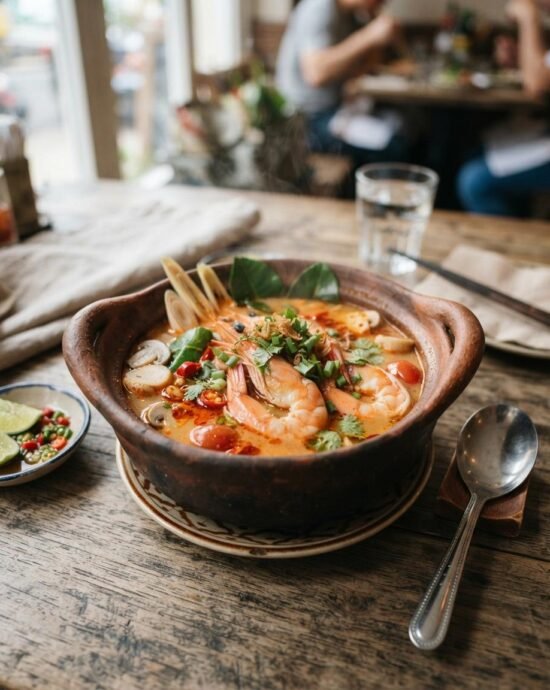
Ladle the steaming Tom Yum Goong immediately into warm individual serving bowls, dividing the prawns and mushrooms evenly among each bowl. Ensure each portion contains multiple pieces of lemongrass, galangal, and kaffir lime leaves for visual authenticity and aroma — though diners should be informed these garnish aromatics are not eaten. Scatter a generous amount of fresh whole cilantro leaves over the surface of each bowl. Add the chopped green onions. Serve immediately with steamed jasmine rice on the side, as Tom Yum Goong is traditionally eaten alongside rice rather than as a standalone soup. Provide additional lime wedges and a small dish of Thai roasted chili paste at the table so diners can adjust the intensity and sourness of their individual serving according to personal preference.
- Calories:195 kcal10%
- Protein:22 g44%
- Carbohydrates:8 g3%
- Sugar:4 g4%
- Fat:8 g10%
- Salt:2.1 g35%
- Energy:816 kJ10%
Table of Contents
What Is Tom Yum Goong?
Tom Yum Goong is Thailand’s most iconic and beloved soup — a fiercely aromatic, intensely sour, and boldly spiced hot and sour broth laden with plump tiger prawns, fragrant mushrooms, and an array of Thai aromatics including lemongrass, galangal, and kaffir lime leaves. The name translates directly and descriptively: “tom” means to boil, “yum” refers to the mixing of ingredients and flavors, and “goong” is the Thai word for shrimp or prawns. Recognized globally as a hallmark of Thai culinary identity, Tom Yum was included in a list of the world’s fifty most delicious foods in a CNN Travel survey, and it has been studied for potential health benefits related to its active aromatic compounds. The soup exists in two primary forms: Tom Yum Nam Sai, the clear broth version that allows the intense aromatics to shine in pure, unmuddied brilliance, and Tom Yum Nam Khon, the creamy version enriched with coconut milk or evaporated milk that softens and rounds the sharp edges of the sour and spicy profile. The soup originates in the central Thai plains where river prawns were historically abundant, and it reflects the Thai culinary philosophy of achieving balance across contrasting flavors in every single spoonful. The key aromatics — lemongrass, galangal, and kaffir lime — are not merely garnishes but are the structural pillars of the soup’s character. Each ingredient contributes uniquely: lemongrass delivers citrusy brightness, galangal provides a piney, peppery warmth distinct from regular ginger, and kaffir lime leaves add a complex floral citrus note that no substitute can replicate faithfully. Tom Yum Goong is simultaneously a restorative, a celebration, and a bold statement of Thailand’s unique culinary genius.
Ingredient Notes
- Lemongrass: Fresh lemongrass stalks should feel firm and heavy, not dried or hollow. The best lemongrass for Tom Yum releases a strong citrusy fragrance when scratched — if it smells faint, the flavor will disappoint in the broth.
- Galangal: Fresh galangal has a distinctly piney, almost medicinal pungency quite different from ginger — do not substitute regular ginger, as the flavor profile diverges dramatically. How to choose galangal: select firm, heavy roots with smooth, taut skin.
- Kaffir Lime Leaves: Fresh kaffir lime leaves deliver a floral, intensely fragrant citrus note essential to Tom Yum. Dried or frozen leaves work as a backup, though fresh leaves for Tom Yum are dramatically more aromatic and impactful.
- Nam Prik Pao (Roasted Chili Paste): Nam prik pao is the secret ingredient that separates average Tom Yum from outstanding Tom Yum. Look for brands that list roasted shrimp paste and dried shrimp as primary ingredients for the most complex smoky depth.
Ingredient Suggestions
- Straw Mushrooms: Traditional Thai Tom Yum uses straw mushrooms for their delicate texture and ability to absorb the surrounding broth without overpowering the aromatics.
- Evaporated Milk: Adding two tablespoons of evaporated milk instead of coconut milk creates a lighter, slightly creamy version that is popular in Thai restaurants across the country.
- Cherry Tomatoes: Halved cherry tomatoes added with the mushrooms contribute a burst of sweet acidity that complements the lime beautifully and adds color to the finished bowl.
Helpful Tips & Pro Tips
- Never boil the soup after adding the lime juice. Heat destroys the bright volatile acids that make lime juice taste fresh and lively, converting them into a flat, muted sourness. Always season with lime juice off the heat.
- Use shell-on, head-on prawns whenever possible. The shells and heads create a secondary prawn stock when briefly simmered, adding an irreplaceable depth of seafood sweetness to the broth that peeled prawns simply cannot match.
- Why is my Tom Yum not spicy enough? Bruise rather than slice the chilies to release more capsaicin oils into the broth. Add more chilies gradually and taste frequently — the heat builds over time as the chili oils infuse.
- The aromatics left in the finished bowl are traditional visual and olfactory elements, but always warn guests not to eat the lemongrass, galangal, or kaffir lime leaves, which are fibrous, woody, and unpleasant to chew.
How to Serve and Store
Tom Yum Goong is best consumed immediately after cooking, as the prawns toughen significantly upon reheating. Leftover soup can be stored in an airtight container in the refrigerator for up to two days. When reheating, warm gently over low heat without boiling to prevent the prawns from overcooking further. Add fresh lime juice after reheating. Do not freeze, as the prawns become extremely rubbery and the aromatic complexity of the broth diminishes upon thawing.
Substitutions
- Tiger Prawns → Chicken Breast or Tofu — both work well in the broth for non-seafood versions of Tom Yum.
- Fish Sauce → Soy Sauce — suitable for a vegan Tom Yum, though the umami profile will differ from the classic version.
- Kaffir Lime Leaves → Lime Zest — not a perfect substitute, but lime zest provides a fraction of the floral citrus quality in a pinch.
- Nam Prik Pao → Sambal Oelek plus a pinch of shrimp paste — approximates the smoky heat if roasted chili paste is unavailable.
- Galangal → Ginger — a common substitution, though the flavor will be sharper and less piney than authentic galangal.
Suggested Recipes
- Pad Thai: The perfect pairing — serve Tom Yum Goong alongside Pad Thai for a complete Thai restaurant-style meal at home.
- Thai Green Curry: Another aromatic Thai classic that showcases different herbs and spices for variety in a Thai dinner spread.
- Khao Pad (Thai Fried Rice): Steamed or fried rice is the traditional companion to Tom Yum — fried rice makes the combination a complete, satisfying one-pot meal.
Frequently Asked Questions

Jeff Smith
"Cooking is the intersection of history, science, and emotion."
For me, the kitchen has always been a laboratory of culture. With a background deeply rooted in digital strategy and precision, I approach the culinary arts with the same rigor I apply to the digital landscape—analyzing flavors, perfecting techniques, and documenting the nuance that makes Filipino cuisine truly world-class.
Findme Recipe was born from a desire to bridge the gap between traditional heritage and the modern home cook. Whether it is mastering the perfect balance of acidity in a classic Adobo or simplifying complex regional dishes for everyday kitchens, my mission is to preserve our culinary identity through accessible, data-backed, and delicious content.
I am not just building a database; I am cultivating a community where every Filipino kitchen feels empowered, every ingredient is celebrated, and every family heirloom recipe finds a place to thrive.
Join me as we translate the soul of our islands into recipes for the next generation.