
- Step 1. Soak the glass noodles
Place the glass noodles in a large bowl and cover them with warm water. Let them soak for 8 to 10 minutes, until softened and pliable but not mushy. Drain thoroughly and use kitchen scissors to cut the noodles into more manageable lengths, about 6 to 8 inches, which makes them easier to stir-fry and eat. Set the drained noodles aside while you prepare the remaining ingredients.
- Step 2. Prepare the sauce
In a small bowl, whisk together the light soy sauce, oyster sauce, fish sauce, and sugar until the sugar fully dissolves. Having this sauce mixture ready before you start cooking ensures a smooth, efficient stir-frying process, since the dish comes together quickly once it hits the hot wok and there won't be time to measure individual seasonings on the fly.
- Step 3. Cook the protein and egg
Heat the vegetable oil in a wok or large skillet over medium-high heat until shimmering. Add the minced garlic and stir-fry for about 30 seconds until fragrant. Add the ground pork or sliced chicken, breaking it apart and cooking for 3 to 4 minutes until no longer pink. Push the protein to one side of the wok, pour in the beaten eggs, and scramble briefly until just set, then mix everything together.
- Step 4. Add the vegetables
Add the napa cabbage, julienned carrot, and sliced wood ear mushrooms to the wok, stirring frequently over high heat for 2 to 3 minutes until the vegetables begin to soften but still retain some crunch. The high heat throughout this stage is essential for achieving the characteristic light char and quick-cooked texture that defines a proper Thai stir-fry rather than a steamed or boiled result.
- Step 5. Add the noodles and sauce
Add the drained, cut glass noodles to the wok along with the prepared sauce mixture. Using tongs or two spatulas, toss everything together continuously for 3 to 4 minutes, ensuring the noodles absorb the sauce evenly and become slightly translucent and glossy. Glass noodles can clump together, so keep tossing actively to separate the strands and distribute the sauce throughout the entire dish.
- Step 6. Finish and serve
Stir in the chopped green onion during the final minute of cooking, tossing briefly to combine. Taste and adjust the seasoning with a touch more soy sauce or fish sauce if needed, since glass noodles can absorb quite a bit of sauce and may need a final adjustment. Transfer the finished Pad Woon Sen to a serving plate immediately and serve hot, while the noodles are still glossy and the vegetables remain crisp.
- Calories:330 kcal17%
- Protein:19 g38%
- Carbohydrates:38 g14%
- Sugar:3 g3%
- Energy:1381 kJ16%
- Salt:2.0 g33%
- Fat:12 g17%
Table of Contents
What Is Pad Woon Sen?
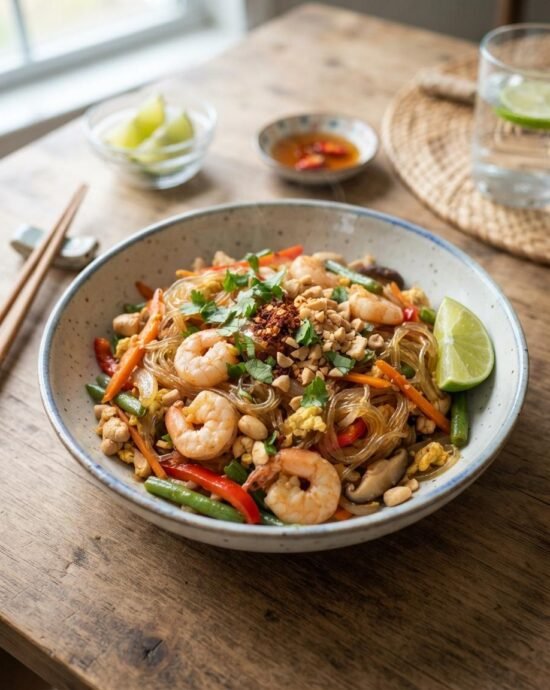
Pad Woon Sen is a light, savory Thai stir-fry featuring glass noodles, also known as mung bean or cellophane noodles, tossed with protein, eggs, and a medley of vegetables in a simple yet flavorful sauce. The dish’s name directly references its star ingredient, with ‘woon sen’ referring to the translucent, thread-like noodles made from mung bean starch, prized for their delicate texture and ability to absorb surrounding flavors without becoming heavy or starchy. Unlike rice noodle stir-fries such as pad thai, glass noodles have a uniquely springy, slightly chewy bite and remain nearly transparent even after cooking, giving the finished dish a light, glossy appearance. Pad Woon Sen is a versatile, everyday dish found throughout Thailand, often prepared with whatever protein and vegetables happen to be on hand, making it a practical, adaptable recipe for home cooks and street vendors alike. Ground pork is among the most traditional protein choices, though chicken, shrimp, or even a combination of seafood appear frequently in regional and family variations. Wood ear mushrooms contribute a distinctive crunchy, slightly gelatinous texture that’s prized in Thai and broader Southeast Asian cooking, adding textural complexity alongside the more familiar crunch of carrots and napa cabbage. The sauce itself remains relatively simple compared to other Thai dishes, relying on a balanced trio of soy sauce, oyster sauce, and fish sauce rather than complex curry pastes or numerous fresh herbs, allowing the noodles and vegetables to shine without being overwhelmed. Pad Woon Sen’s appeal lies in its lightness and adaptability, offering a satisfying yet not overly heavy meal that pairs beautifully alongside richer, spicier Thai dishes as part of a balanced, shared dining experience.
Ingredient Notes
- Glass noodles: Made from mung bean starch, these noodles turn translucent and slightly chewy when cooked. Soak just until pliable, since over-soaking can make them mushy and prone to breaking during stir-frying.
- Wood ear mushrooms: These dried mushrooms rehydrate into a distinctively crunchy, slightly gelatinous texture. Soak them in warm water until fully softened before slicing and adding to the stir-fry.
- Oyster sauce: This thick, savory sauce adds depth and a subtle sweetness; choose a quality brand with a rich, glossy consistency rather than a thin, watery one for the best flavor.
- Ground pork: Choose pork with moderate fat content for the juiciest results, though the protein can easily be swapped depending on personal preference or what’s available.
- Napa cabbage: Fresh, crisp napa cabbage cooks quickly and retains a pleasant crunch, providing textural contrast against the soft, chewy noodles in the finished dish.
Ingredient Suggestions
- Shrimp: Adding peeled shrimp alongside or instead of pork introduces a sweet, briny flavor that pairs beautifully with the light sauce.
- Bean sprouts: A handful tossed in during the final minute of cooking adds extra crunch and freshness to the dish.
- White pepper: A light dusting at the end enhances the savory depth without overpowering the dish’s delicate balance.
- Crispy fried garlic: Sprinkling this on top before serving adds a satisfying crunch and deeper aromatic complexity.
- Extra chili flakes: For those who enjoy heat, a sprinkle of dried chili flakes adds a spicy kick to the otherwise mild dish.
Helpful Tips & Pro Tips
- Soak glass noodles just until pliable rather than fully soft, since they will continue cooking in the wok and can turn mushy if over-soaked beforehand.
- Keep the wok or pan on high heat throughout cooking, since proper heat is essential for achieving the slightly charred, quick-cooked texture characteristic of Thai stir-fries.
- Why are my glass noodles clumping together? Toss them more frequently and vigorously while cooking, and make sure there’s enough sauce to coat and separate the strands evenly.
- Cut the soaked noodles into shorter lengths before cooking, since long, uncut noodles are difficult to toss evenly and can result in unevenly seasoned bites.
- Prepare all your sauce and vegetables before starting to cook, since stir-frying happens quickly and there won’t be time to measure ingredients once the wok is hot.
How to Serve and Store
Serve Pad Woon Sen hot, immediately after cooking, while the noodles remain glossy and the vegetables stay crisp for the best textural contrast. It pairs well alongside richer dishes like curry or grilled meats as part of a balanced Thai meal, or it can be enjoyed on its own as a light lunch. Store leftovers in an airtight container in the refrigerator for up to 3 days. Reheat in a skillet over medium heat with a splash of water to loosen the noodles, since they can stick together and dry out slightly after refrigeration.
Substitutions
- Ground pork → Crumbled extra-firm tofu or mixed mushrooms — creates a fully plant-based version that still absorbs the savory sauce well. (Vegan)
- Oyster sauce → Vegetarian stir-fry sauce or mushroom sauce — replicates the savory depth without shellfish-derived ingredients. (Vegan)
- Light soy sauce → Tamari — keeps the dish gluten-free while preserving the salty, umami flavor of the sauce. (Gluten-Free)
- Ground pork → Ground chicken — offers a more budget-friendly protein option that still works beautifully with the dish’s light sauce. (Budget-Friendly)
- Wood ear mushrooms → Sliced shiitake mushrooms — provides a comparable umami depth when wood ear mushrooms aren’t available.
- Glass noodles → Thin rice vermicelli — offers a similar light texture, though slightly less chewy, as an alternative noodle choice.
Suggested Recipes
- Larb Moo: A bold, spicy minced pork salad that adds excitement alongside the milder flavors of Pad Woon Sen.
- Hoy Tod: A crispy oyster omelet that offers a satisfying textural contrast as part of a shared Thai meal.
- Gaeng Jued: A light, clear soup that pairs naturally with Pad Woon Sen for a gentle, comforting meal.
- Khao Man Gai: A comforting chicken and rice dish that complements Pad Woon Sen’s light, savory character.