
- Step 1. Prepare the Aromatics
Fill a large, heavy pot with the water and add the halved onion, garlic cloves, sliced ginger, green onions, doenjang, soju, black peppercorns, and bay leaves. Bring the mixture to a boil over high heat, stirring to help the doenjang dissolve into the liquid. This aromatic poaching liquid is what infuses the pork belly with flavor as it cooks and also helps neutralize any strong pork odor, resulting in a cleaner, more fragrant finished dish.
- Step 2. Add the Pork Belly
Once the poaching liquid reaches a rolling boil, carefully lower the whole slab of pork belly into the pot, making sure it is mostly submerged; add a bit more water if needed. Return the liquid to a boil, then reduce the heat to a gentle simmer and cover the pot partially with a lid, leaving a small gap for steam to escape. Simmering rather than boiling vigorously helps keep the pork belly tender rather than tough.
- Step 3. Simmer Until Tender
Continue simmering the pork belly for 1 hour, turning it once halfway through to ensure even cooking and flavor absorption. Check for doneness by inserting a chopstick or skewer into the thickest part of the meat; it should slide in with little resistance when the pork is fully tender. If the meat still feels firm, continue simmering in 10-minute increments, checking periodically, until it reaches the desired tenderness.
- Step 4. Rest and Slice
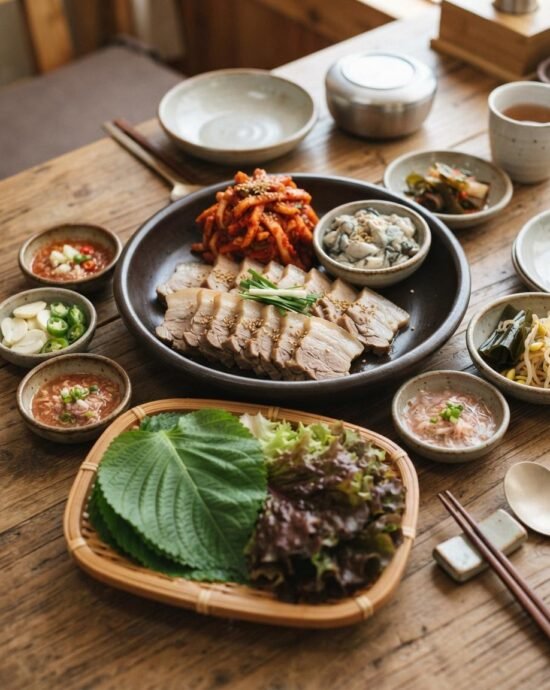
Carefully remove the cooked pork belly from the poaching liquid and let it rest on a cutting board for 10 minutes, which allows the juices to redistribute and makes slicing considerably easier. Using a sharp knife, slice the pork belly into thin, even pieces, roughly a quarter-inch thick, cutting against the grain for the most tender bite. Arrange the slices on a serving platter, slightly overlapping for an attractive presentation.
- Step 5. Prepare the Wraps
While the pork rests, wash and separate the napa cabbage leaves, trimming any tough stem ends so they fold easily around a piece of pork. Arrange the leaves on a platter alongside small bowls of ssamjang and salted shrimp, both traditional bossam condiments that add salty, savory depth to each bite. Set out a side of fresh kimchi as well, which is the customary pairing for bossam in Korean households.
- Step 6. Serve
To eat, place a cabbage leaf in your palm, add a slice of warm pork belly, a small dab of ssamjang or salted shrimp, and a piece of kimchi, then wrap it into a compact bundle and eat in one bite. Serve bossam immediately while the pork is still warm, as the contrast between the hot, tender meat and cool, crisp cabbage is central to the dish's appeal.
- Calories:480 kcal24%
- Protein:26 g52%
- Carbohydrates:6 g2%
- Sugar:2 g2%
- Energy:2008 kJ24%
- Salt:2.4 g40%
- Fat:38 g54%
What is Bossam?
Bossam is a traditional Korean dish of pork belly simmered whole in an aromatic broth until tender, then thinly sliced and wrapped in cabbage or lettuce leaves with salty condiments and fresh kimchi. The name comes from the Korean word meaning to wrap, directly referencing the dish’s defining eating method, in which each bite is bundled together by hand rather than eaten with rice as a base. Bossam has deep roots in Korean culinary history, historically associated with the kimjang season, the annual tradition of making large batches of kimchi for the winter, during which freshly made kimchi was traditionally served alongside warm, tender pork belly as a reward for the labor-intensive process. Unlike samgyeopsal, which is grilled, bossam relies entirely on gentle poaching in a seasoned liquid infused with doenjang, garlic, ginger, and soju, a method that renders the pork belly exceptionally tender while keeping it lean-tasting despite its rich fat content. The poaching liquid also neutralizes much of the pork’s natural odor, resulting in a cleaner, more delicate flavor than grilled preparations. Bossam is traditionally served as a celebratory or communal dish, often centering festive gatherings, family meals, or drinking occasions, where the interactive wrapping process encourages a relaxed, social style of eating. Its combination of tender, warm pork, crisp cool cabbage, and the salty punch of ssamjang or salted shrimp has made bossam one of Korea’s most cherished dishes for entertaining guests.
Ingredient Notes
- Pork Belly: Choose a whole, evenly shaped slab with good marbling between the meat and fat layers, since an even shape ensures more consistent slicing after cooking.
- Doenjang: This fermented soybean paste stirred into the poaching liquid adds savory depth and helps neutralize any strong pork smell during simmering.
- Salted Shrimp (Saeujeot): A traditional bossam condiment made from tiny fermented shrimp; its intense saltiness is meant to be used sparingly as a seasoning rather than a main topping.
- Napa Cabbage: Choose tender, pliable inner leaves rather than the tougher outer leaves, since they wrap more easily around the pork without tearing.
- Soju Or Rice Wine: Adding a splash to the poaching liquid helps tenderize the pork and neutralize odor, a common technique in Korean braised and boiled meat dishes.
Ingredient Suggestions
- Fresh oysters: A traditional pairing in many bossam restaurants, served alongside the pork for extra briny richness.
- Perilla leaves: An aromatic addition to the wrap station that adds a distinctive herbal note alongside cabbage.
- Radish salad (musaengchae): A tangy, crunchy side dish that is a classic bossam accompaniment, cutting through the richness of the pork.
- Garlic slices: Raw or lightly blanched garlic added to the wrap gives an extra punch of sharp flavor.
- Extra ssamjang: For those who love bold, savory dips, a generous side of ssamjang enhances every bite.
Helpful Tips & Pro Tips
- If your pork belly turns out tough rather than tender, it likely needs more simmering time; test doneness with a skewer rather than relying strictly on the clock.
- Do not boil the pork belly too vigorously, as an aggressive boil can toughen the meat rather than tenderize it; aim for a gentle, steady simmer.
- Let the cooked pork rest before slicing, since cutting into it too soon allows the juices to escape and can leave the meat drier than intended.
- Slice the pork against the grain for the most tender bite, especially important given how thick a whole slab of belly can be.
- Serve bossam warm, since the contrast between hot pork and cool, crisp cabbage is central to the dish’s appeal and it loses some of its charm once fully cooled.
How to Serve and Store
Serve bossam warm, freshly sliced, with cabbage or lettuce leaves, ssamjang, salted shrimp, and fresh kimchi arranged for guests to build their own wraps at the table. Leftover cooked pork belly keeps well in an airtight container in the refrigerator for up to 4 days and can be gently reheated by steaming or briefly simmering in a little water to restore moisture. Bossam pork also freezes well for up to 3 months if wrapped tightly; thaw overnight in the refrigerator and reheat gently before serving. Avoid microwaving leftover bossam for too long, as this can dry out the pork and diminish its tender texture.
Substitutions
- Pork Belly → Thick king oyster mushrooms, simmered — A hearty plant-based alternative that still absorbs the aromatic poaching liquid. (Vegan)
- Doenjang → Check for a certified gluten-free brand — Some doenjang contains wheat, so verify the label to keep the dish gluten-free. (Gluten-Free)
- Pork Belly → Pork shoulder — A more affordable cut that still becomes tender with a long simmer, though slightly leaner. (Budget-Friendly)
- Salted Shrimp → Extra ssamjang — A suitable substitute when saeujeot is not available at your local grocery store.
- Napa Cabbage → Butter lettuce or red leaf lettuce — A widely available wrap alternative when napa cabbage is out of season.
Suggested Recipes
- Samgyeopsal: Another pork belly centerpiece dish, offering a grilled alternative to bossam’s gentle poaching method.
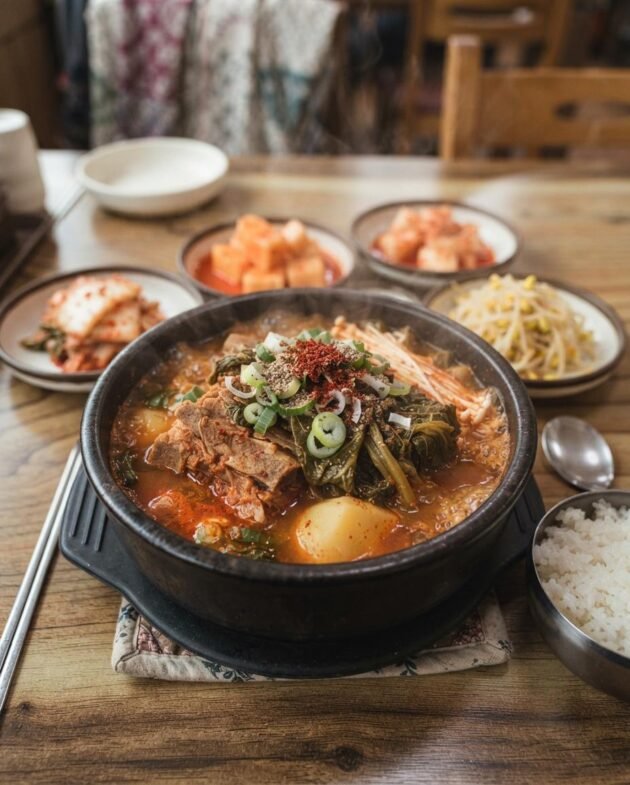
- Kimchi Jjigae: A natural pairing, since bossam is traditionally served alongside freshly made kimchi during kimjang season.
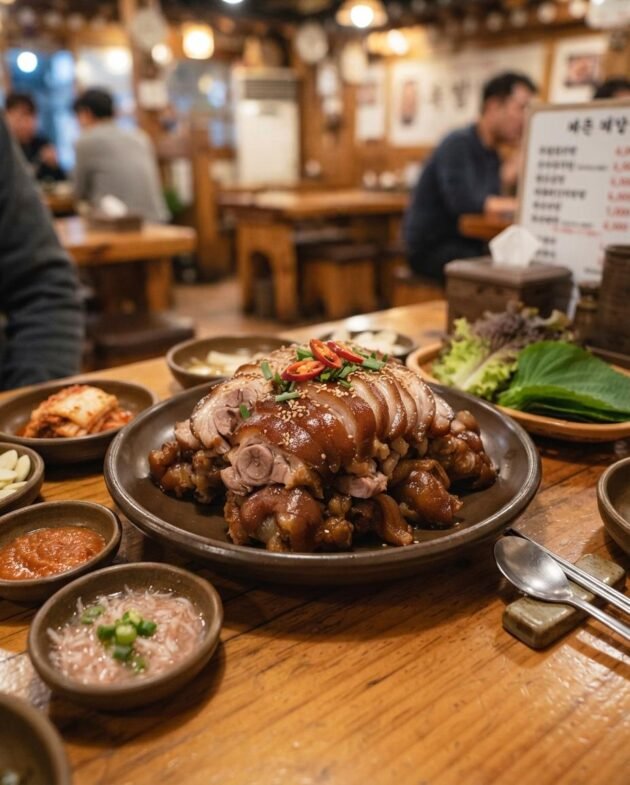
- Jokbal: Another boiled pork dish, using pig’s trotters instead of belly, ideal for fans of bossam’s tender, wrap-style eating.
- Doenjang Jjigae: A comforting soybean stew that shares bossam’s use of fermented paste for deep savory flavor.

Jeff Smith
"Cooking is the intersection of history, science, and emotion."
For me, the kitchen has always been a laboratory of culture. With a background deeply rooted in digital strategy and precision, I approach the culinary arts with the same rigor I apply to the digital landscape—analyzing flavors, perfecting techniques, and documenting the nuance that makes Filipino cuisine truly world-class.
Findme Recipe was born from a desire to bridge the gap between traditional heritage and the modern home cook. Whether it is mastering the perfect balance of acidity in a classic Adobo or simplifying complex regional dishes for everyday kitchens, my mission is to preserve our culinary identity through accessible, data-backed, and delicious content.
I am not just building a database; I am cultivating a community where every Filipino kitchen feels empowered, every ingredient is celebrated, and every family heirloom recipe finds a place to thrive.
Join me as we translate the soul of our islands into recipes for the next generation.