
- Step 1. Blanch the Trotters
Place the cleaned pig's trotters in a large pot and cover with cold water. Bring to a boil over high heat and let boil for 5 minutes, which draws out impurities and excess surface fat from the skin. Drain the trotters in a colander and rinse thoroughly under warm running water. This blanching step is essential for jokbal, as it removes much of the strong odor associated with pig's feet and results in a cleaner, more appetizing final dish.
- Step 2. Build the Braising Liquid
In a large, heavy pot, combine the fresh water with the soy sauce, brown sugar, halved onion, garlic cloves, sliced ginger, green onions, doenjang, cinnamon stick, dried chili peppers, black peppercorns, and instant coffee granules. Stir well to help the doenjang and sugar dissolve, then bring the mixture to a boil over high heat. The coffee granules are a traditional Korean technique that deepens the color and flavor of the braise without imparting a noticeable coffee taste.
- Step 3. Braise the Trotters
Add the blanched trotters to the boiling braising liquid, making sure they are mostly submerged, adding more water if necessary. Reduce the heat to a low simmer, cover partially, and cook for 1 hour 30 minutes to 2 hours, turning the trotters occasionally so they cook and absorb flavor evenly. The trotters are ready when the meat is completely tender and easily pulls away from the bone, and the skin has turned a deep mahogany color from the long simmer in soy sauce.
- Step 4. Reduce the Sauce
Once the trotters are fully tender, remove the lid and continue simmering uncovered for another 15 to 20 minutes, allowing the braising liquid to reduce into a thicker, more concentrated glaze that clings to the meat. Baste the trotters occasionally with the reducing sauce using a spoon, which deepens the color and flavor on the exterior. Watch closely during this stage, as the sugar in the sauce can scorch if the heat is too high or the liquid reduces too far.
- Step 5. Rest and Slice
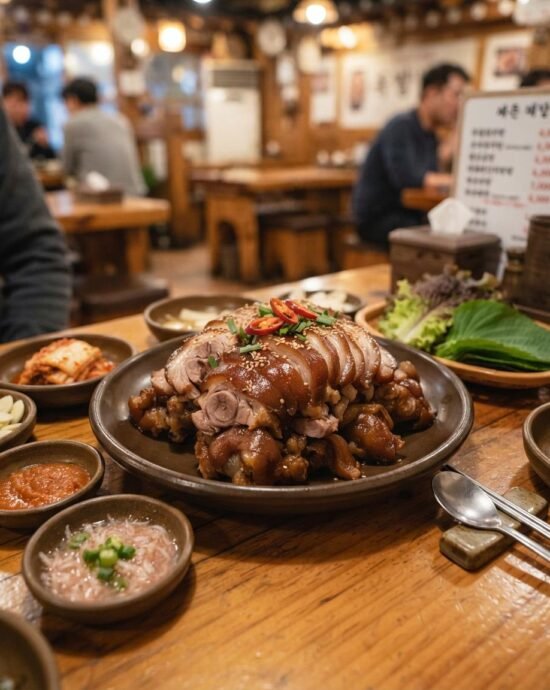
Carefully remove the braised trotters from the pot and let them rest for 5 to 10 minutes before slicing, which makes them easier to handle. Using a sharp knife, slice the meat and skin into bite-sized pieces, keeping some pieces on the bone for a traditional presentation. Arrange the sliced jokbal on a large platter, drizzling a little of the reduced braising sauce over the top for extra shine and flavor.
- Step 6. Serve
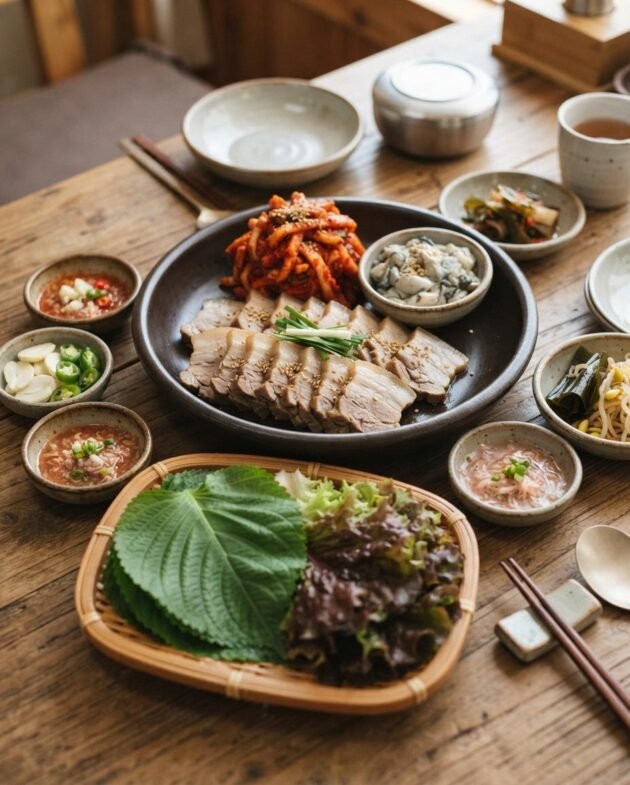
Serve the sliced jokbal warm alongside lettuce or perilla leaves, ssamjang, and salted shrimp, allowing guests to wrap pieces of meat with the accompaniments just as they would with bossam or samgyeopsal. A side of fresh kimchi or pickled radish is traditional and helps cut through the richness of the dish. Jokbal is best enjoyed immediately while the meat is still warm and the skin retains its signature sticky, gelatinous texture.
- Calories:460 kcal23%
- Protein:32 g64%
- Carbohydrates:14 g5%
- Sugar:9 g10%
- Energy:1925 kJ23%
- Salt:2.6 g43%
- Fat:30 g43%
What is Jokbal?
Jokbal is a traditional Korean dish of pig’s trotters slow-braised in a deeply savory soy sauce broth infused with garlic, ginger, and spices until the meat becomes fall-off-the-bone tender and the skin turns rich, sticky, and gelatinous. The name literally translates to pig’s feet, and while the dish may sound unfamiliar to newcomers, it holds a cherished place in Korean food culture, particularly as a beloved late-night dish enjoyed alongside soju or beer at dedicated jokbal restaurants that stay open well into the early morning hours. The dish’s defining texture comes from the high collagen content naturally found in pig’s trotters, which slowly breaks down over hours of gentle simmering, transforming tough connective tissue into a silky, almost jelly-like consistency that coats the meat and skin. A distinctive touch found in many traditional recipes is the addition of a small amount of instant coffee to the braising liquid, a technique that deepens the color of the dish into a rich mahogany and rounds out the flavor without leaving any detectable coffee taste. Jokbal is traditionally served sliced and arranged on a platter, accompanied by lettuce or perilla leaves, salty condiments like ssamjang and salted shrimp, and fresh kimchi, allowing diners to wrap bite-sized portions much as they would with bossam. Prized for its rich, savory flavor and uniquely satisfying texture, jokbal remains one of the most beloved dishes in Korean anju culture, the tradition of pairing food with drinks, and continues to be a defining late-night comfort food across the country.
Ingredient Notes
- Pig’s Trotters: Look for trotters that have been pre-cleaned and split by your butcher, since this saves significant prep time; a mix of front and back trotters offers the best balance of meat and skin.
- Doenjang: This fermented soybean paste added to the braising liquid helps neutralize any strong pork odor while adding a savory, umami-rich depth.
- Instant Coffee Granules: A traditional Korean technique for deepening the color and complexity of the braise; the coffee flavor itself becomes undetectable after the long simmer.
- Cinnamon Stick: Adds a warm, subtly sweet aromatic note that balances the richness of the pork and rounds out the braising liquid.
- Ginger: Fresh ginger sliced into the braising liquid helps cut through the fattiness of the trotters and neutralizes any gamey flavor.
Ingredient Suggestions
- Star anise: A single pod added to the braising liquid deepens the aromatic complexity, similar to Chinese five-spice braises.
- Extra dried chilies: For those who enjoy a bit of heat, additional dried chilies intensify the braise’s spiciness.
- Radish kimchi (kkakdugi): A crunchy, tangy side dish that traditionally accompanies jokbal and helps balance its richness.
- Naengmyeon noodles: Many Korean restaurants serve a small side of cold noodles alongside jokbal as a refreshing contrast.
- Extra garlic slices: Raw garlic added to the wrap alongside the meat provides a sharp, pungent contrast to the rich pork.
Helpful Tips & Pro Tips
- If your jokbal skin turns out rubbery rather than tender, it likely needs more braising time; the skin should feel gelatinous and easily yield to a fork when done.
- Do not skip the initial blanching step, as it is essential for removing impurities and reducing the strong odor naturally associated with pig’s trotters.
- Baste the trotters with the reducing sauce during the final simmering stage to build a deeper color and more concentrated flavor on the exterior.
- Turn the trotters periodically throughout the braise so all sides absorb the seasoned liquid evenly rather than leaving one side under-flavored.
- Serve jokbal warm for the best texture, since the skin’s signature sticky, gelatinous quality is most pleasant while the dish is still hot.
How to Serve and Store
Serve jokbal warm, sliced and arranged on a platter with lettuce or perilla leaves, ssamjang, salted shrimp, and kimchi so guests can build their own wraps. Leftovers keep well in an airtight container in the refrigerator for up to 4 days; the braising liquid will gel when chilled due to the natural collagen, which is normal and simply needs to be reheated gently to return to a liquid, saucy state. Reheat jokbal by steaming or gently simmering in a little water or the reserved braising liquid until warmed through. Jokbal also freezes well for up to 3 months, making it a convenient dish to prepare ahead for gatherings; thaw overnight in the refrigerator before reheating.
Substitutions
- Pig’s Trotters → Braised mushrooms and jackfruit — A plant-based approximation that mimics some of the braise’s rich, savory character. (Vegan)
- Soy Sauce → Tamari — Preserves the braise’s salty depth while keeping the dish gluten-free. (Gluten-Free)
- Pig’s Trotters → Pork shoulder or pork hock — A more widely available and slightly more affordable cut for those unable to find trotters. (Budget-Friendly)
- Instant Coffee → Omit entirely — The dish will taste slightly lighter in color and complexity but remains delicious without it.
- Doenjang → Miso paste — A reasonable substitute that still provides fermented, savory depth to the braising liquid.
Suggested Recipes
- Bossam: Another boiled pork dish served with the same wrap-style accompaniments as jokbal.
- Samgyeopsal: A grilled pork belly dish that offers a different texture experience for fans of Korean pork dishes.
- Naengmyeon: Cold buckwheat noodles that make a refreshing traditional side to balance jokbal’s richness.
- Galbijjim: Another braised dish that shares jokbal’s technique of slow-simmering meat in a savory soy-based sauce.

Jeff Smith
"Cooking is the intersection of history, science, and emotion."
For me, the kitchen has always been a laboratory of culture. With a background deeply rooted in digital strategy and precision, I approach the culinary arts with the same rigor I apply to the digital landscape—analyzing flavors, perfecting techniques, and documenting the nuance that makes Filipino cuisine truly world-class.
Findme Recipe was born from a desire to bridge the gap between traditional heritage and the modern home cook. Whether it is mastering the perfect balance of acidity in a classic Adobo or simplifying complex regional dishes for everyday kitchens, my mission is to preserve our culinary identity through accessible, data-backed, and delicious content.
I am not just building a database; I am cultivating a community where every Filipino kitchen feels empowered, every ingredient is celebrated, and every family heirloom recipe finds a place to thrive.
Join me as we translate the soul of our islands into recipes for the next generation.