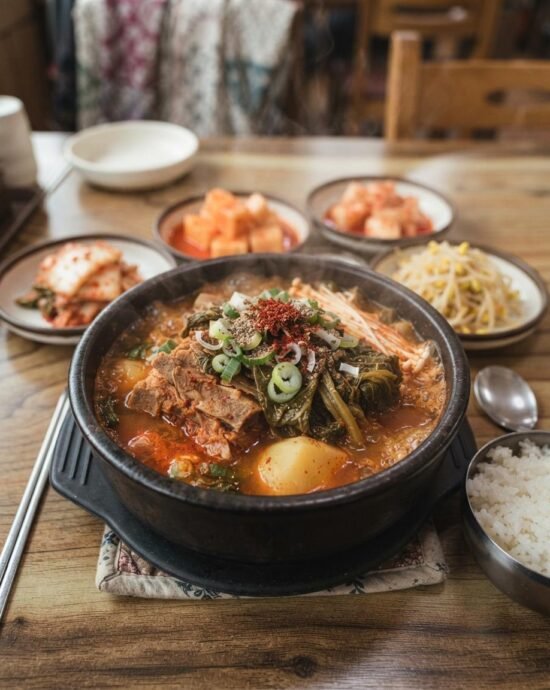

- Step 1. Soak the Pork Bones
Place the pork neck bones in a large bowl or pot of cold water and soak for at least 1 hour, changing the water once or twice, to draw out excess blood and impurities. This step is critical for gamjatang, as it results in a much cleaner, less gamey-tasting broth once the bones are simmered. If time allows, soaking for up to 2 hours produces an even cleaner result, especially for bones that have been previously frozen.
- Step 2. Blanch the Bones
Bring a large pot of water to a boil and add the soaked pork bones, boiling for 5 to 7 minutes to remove any remaining impurities from the surface. Drain the bones in a colander and rinse thoroughly under warm running water, scrubbing off any remaining bits of coagulated blood or residue. This blanching step, though it adds a few extra minutes, is what separates a clean, flavorful gamjatang broth from a muddy, off-tasting one.
- Step 3. Simmer the Broth
Transfer the blanched bones to a large, clean pot and cover with the fresh water. Add the quartered onion and sliced ginger, then bring to a boil over high heat before reducing to a low simmer. Cover and cook for 1 hour, skimming any foam that rises to the surface periodically, until the broth turns rich and slightly cloudy and the meat on the bones becomes tender enough to pull away easily.
- Step 4. Season the Broth
Remove and discard the onion and ginger from the pot. Stir in the minced garlic, gochugaru, gochujang, doenjang, and half of the perilla seed powder, mixing well until fully dissolved into the broth. Bring the soup back to a simmer and cook for 10 minutes to allow the seasonings to meld into the broth, tasting and adjusting the heat and saltiness to your preference before moving on to the vegetables.
- Step 5. Add the Vegetables
Add the quartered potatoes to the pot and simmer for 15 minutes, until they begin to soften. Add the chopped napa cabbage and continue simmering for another 10 minutes, until the potatoes are fully tender and the cabbage has wilted into the broth. Stir in the soy sauce and salt, tasting and adjusting the final seasoning as needed for a well-balanced, savory-spicy broth.
- Step 6. Finish and Serve
Stir in the remaining perilla seed powder along with most of the chopped green onions and sliced perilla leaves, reserving a small amount of each for garnish. Ladle the gamjatang into large bowls, making sure each serving gets a generous portion of pork, potato, and broth. Garnish with the remaining green onions and perilla leaves, and serve piping hot alongside a bowl of steamed rice.
- Calories:410 kcal21%
- Protein:30 g60%
- Carbohydrates:24 g9%
- Sugar:4 g4%
- Energy:1715 kJ21%
- Salt:2.3 g38%
- Fat:20 g29%
What is Gamjatang?
Gamjatang is a hearty, deeply flavorful Korean soup made from pork neck bones simmered for hours in a spicy, perilla-seed-infused broth alongside potatoes, napa cabbage, and perilla leaves. Despite its name containing the word gamja, meaning potato, the dish’s name is widely believed to derive not from the vegetable but from an older term referring to the pork spine bones themselves, a detail that continues to spark friendly debate among Korean food historians. What is certain is that the potatoes, along with the neck bones, are central to the dish’s identity, absorbing the rich, spicy broth as they simmer alongside meat that slowly becomes tender enough to pull away from the bone with ease. Gamjatang has long been associated with laborers and working-class communities in Korea, prized historically as an affordable way to make use of pork bones that might otherwise go to waste, while still delivering a filling, protein-rich meal. The broth’s distinctive earthy, nutty undertone comes from ground perilla seeds, an ingredient less common outside Korean cooking but essential to gamjatang’s signature depth, working alongside gochugaru and gochujang to build a broth that is spicy, savory, and subtly aromatic all at once. Traditionally simmered for hours over low heat, often at dedicated gamjatang restaurants using large communal pots, the dish is beloved as a hearty, warming meal particularly popular during colder months or as a restorative dish after a night of drinking. Its rich broth and tender, fall-off-the-bone pork have made gamjatang a enduring favorite across Korea.
Ingredient Notes
- Pork Neck Bones: Look specifically for neck bones, sometimes labeled spine bones, at a Korean or Asian butcher, since they contain the ideal ratio of meat, marrow, and cartilage for a rich broth.
- Perilla Seed Powder: This ground seed powder gives gamjatang its distinctive nutty, earthy undertone; find it in the Korean grocery aisle, often labeled deulkkae garu.
- Gochugaru: Korean chili flakes provide the broth’s signature red color and fruity heat; a coarser grind is traditional for hearty soups like gamjatang.
- Potatoes: Choose a starchy variety like russet, which holds its shape reasonably well during the long simmer while still becoming tender and absorbing the spicy broth.
- Perilla Leaves: These aromatic leaves add a distinctive herbal note that is traditional in gamjatang; substitute fresh basil if perilla leaves are unavailable.
Ingredient Suggestions
- Udon or instant noodles: Adding noodles to the leftover broth at the end of a meal is a popular way to use every last bit of the flavorful soup.
- Extra gochugaru: For those who prefer more heat, an additional spoonful intensifies the broth’s spiciness.
- Enoki mushrooms: A handful added near the end of cooking adds extra texture and absorbs the broth beautifully.
- Rice added to the broth: Stirring a scoop of rice into the remaining broth at the end of the meal, a practice called bokkeumbap, transforms leftovers into a comforting finish.
- Fresh chili slices: A few slices of fresh Korean green chili add a sharp, bright heat that complements the earthy perilla.
Helpful Tips & Pro Tips
- If your broth tastes muddy or overly gamey, the bones likely were not soaked and blanched thoroughly enough; both steps are essential for a clean-tasting gamjatang.
- Skim the broth periodically while it simmers to remove excess fat and impurities, which results in a clearer, more refined final soup.
- Do not skip the perilla seed powder, as it is what gives gamjatang its distinctive earthy depth that separates it from other spicy Korean soups.
- Simmer the bones long enough that the meat becomes tender and easily pulls away, which typically requires at least an hour of gentle cooking.
- Taste and adjust the seasoning gradually, since gochujang and doenjang vary in saltiness and intensity between brands.
How to Serve and Store
Serve gamjatang piping hot in individual bowls alongside steamed rice, letting diners pick the tender meat off the bones by hand or with chopsticks as part of the traditional eating experience. Leftovers keep well in an airtight container in the refrigerator for up to 4 days, and the flavor often deepens further after a day of resting as the broth continues to infuse the meat and potatoes. Reheat gently on the stovetop over medium heat until warmed through, adding a splash of water if the broth has thickened too much in storage. Gamjatang freezes well for up to 3 months, making it a great make-ahead option for a large batch; thaw overnight in the refrigerator before reheating.
Substitutions
- Pork Neck Bones → Mushrooms and extra potatoes in vegetable broth — A plant-based approximation that still delivers a hearty, warming soup. (Vegan)
- Soy Sauce → Tamari — Keeps the broth’s seasoning gluten-free without sacrificing depth. (Gluten-Free)
- Pork Neck Bones → Pork ribs — A more widely available and often more affordable cut that still yields a flavorful broth. (Budget-Friendly)
- Perilla Seed Powder → Toasted sesame seeds, ground — A reasonable substitute when perilla seed powder is unavailable, though the flavor will be milder.
- Potatoes → Sweet potatoes — A slightly sweeter alternative that still holds up well to the long simmering time.
Suggested Recipes
- Kimchi Jjigae: Another hearty, spicy Korean stew that shares gamjatang’s bold gochugaru-based broth.
- Yukgaejang: A spicy beef soup that offers a different protein but a similarly warming, richly spiced broth.
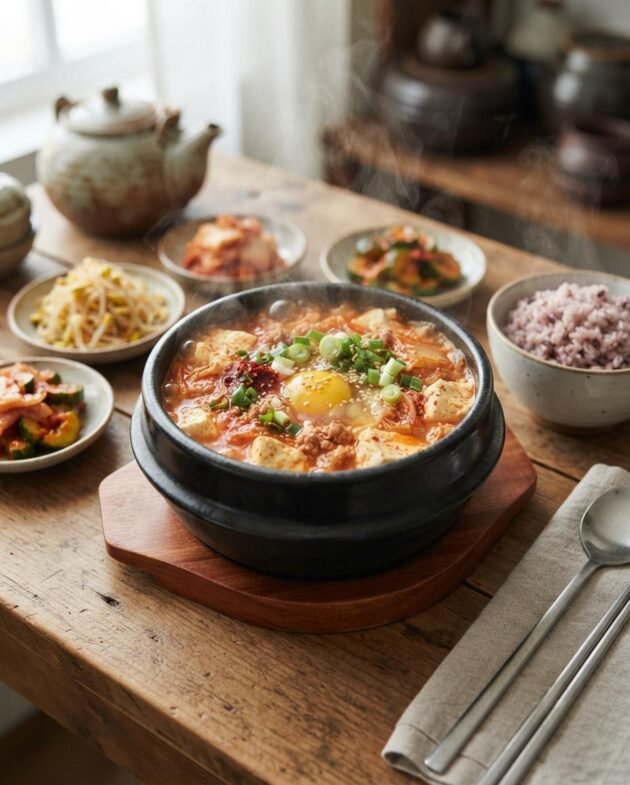
- Sundubu Jjigae: A spicy tofu stew that makes a lighter counterpart to gamjatang’s heartier pork-based broth.
- Doenjang Jjigae: A milder soybean paste stew for those who want a gentler introduction to Korean soup flavors.

Jeff Smith
"Cooking is the intersection of history, science, and emotion."
For me, the kitchen has always been a laboratory of culture. With a background deeply rooted in digital strategy and precision, I approach the culinary arts with the same rigor I apply to the digital landscape—analyzing flavors, perfecting techniques, and documenting the nuance that makes Filipino cuisine truly world-class.
Findme Recipe was born from a desire to bridge the gap between traditional heritage and the modern home cook. Whether it is mastering the perfect balance of acidity in a classic Adobo or simplifying complex regional dishes for everyday kitchens, my mission is to preserve our culinary identity through accessible, data-backed, and delicious content.
I am not just building a database; I am cultivating a community where every Filipino kitchen feels empowered, every ingredient is celebrated, and every family heirloom recipe finds a place to thrive.
Join me as we translate the soul of our islands into recipes for the next generation.