
- Step 1. Marinate the chicken
In a bowl, combine the coconut milk, yellow curry powder, turmeric powder, fish sauce, and palm sugar, whisking until smooth and evenly blended. Add the sliced chicken strips, tossing thoroughly so every piece is coated in the golden marinade. Cover and refrigerate for at least 30 minutes, though 2 hours produces noticeably more flavorful results. The turmeric not only deepens the flavor but also gives the skewers their signature warm, golden hue once grilled.
- Step 2. Thread the skewers
Remove the marinated chicken from the refrigerator and thread each strip onto a pre-soaked bamboo skewer, weaving the meat slightly so it stays secure during grilling. Soaking the skewers beforehand prevents them from burning over direct heat. Leave a small handle of bare skewer at one end for easy turning and handling. Arrange the skewers on a tray, ready for grilling, and let any excess marinade drip off slightly before cooking.
- Step 3. Make the peanut sauce
In a small saucepan over medium heat, combine the red curry paste with a splash of coconut milk, stirring until fragrant, about 2 minutes. Add the remaining coconut milk, ground peanuts, and tamarind paste, stirring continuously until the sauce thickens to a creamy, pourable consistency, roughly 5 to 6 minutes. Taste and adjust with a touch more palm sugar or fish sauce if needed, then set aside, keeping it warm until ready to serve.
- Step 4. Grill the skewers
Preheat a grill or grill pan over medium-high heat and lightly oil the grates to prevent sticking. Place the skewers on the grill and cook for 3 to 4 minutes per side, turning once, until the chicken develops light charring and is fully cooked through with no pink remaining. The high heat caramelizes the marinade's natural sugars, creating a slightly smoky, charred exterior that contrasts beautifully with the tender meat inside.
- Step 5. Prepare the cucumber relish
While the skewers grill, combine the sliced cucumber and shallots in a small bowl. In a separate small saucepan, gently warm a touch of vinegar, sugar, and a pinch of salt until the sugar dissolves, then pour this mixture over the cucumber and shallots, tossing to coat. Let the relish sit for a few minutes to lightly pickle, balancing the richness of the peanut sauce with its cool, tangy crunch.
- Step 6. Plate and serve
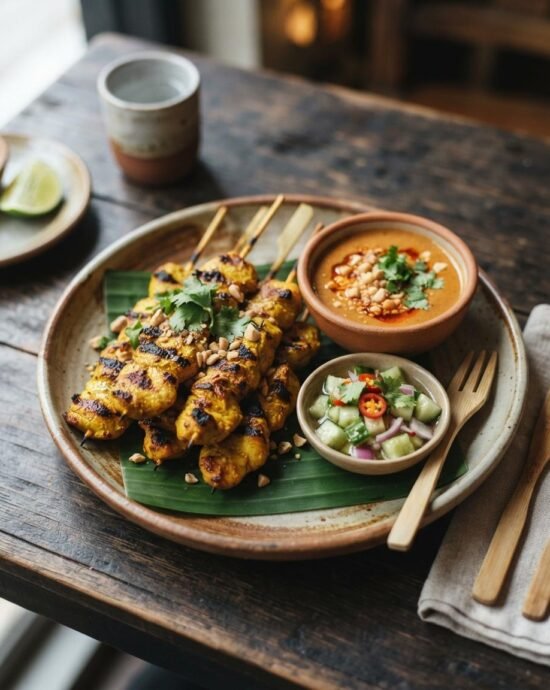
Arrange the grilled skewers on a serving platter alongside a small bowl of warm peanut sauce and the cucumber relish on the side. Serve immediately while the chicken is still hot and slightly charred for the best texture and flavor contrast. Diners can dip each skewer into the peanut sauce and pair bites with the cooling cucumber relish, creating a balanced, satisfying combination of smoky, nutty, and tangy flavors.
- Calories:355 kcal18%
- Protein:27 g54%
- Carbohydrates:13 g5%
- Sugar:7 g8%
- Energy:1485 kJ18%
- Salt:1.7 g28%
- Fat:22 g31%
Table of Contents
What Is Satay?
Satay is a beloved Southeast Asian dish of marinated, skewered, and grilled meat served with a rich peanut dipping sauce, with Thailand’s version distinguished by its golden turmeric-spiced marinade and tangy tamarind-infused sauce. While satay’s origins are debated among Indonesia, Malaysia, and Thailand, each country has developed its own distinct take, with Thai satay leaning toward a slightly sweeter, coconut milk-based marinade that produces tender, aromatic meat with a beautifully charred exterior. The dish likely arrived in Thailand through trade routes connecting the Malay Peninsula, eventually becoming a staple street food found at markets and roadside grills throughout the country. Chicken is the most common protein for Thai satay, though pork and beef versions are equally popular, each marinated in a blend of coconut milk, curry powder, turmeric, and palm sugar before being threaded onto skewers and grilled over open flame. The defining feature of satay isn’t just the meat itself but the accompanying peanut sauce, a thick, creamy blend of ground peanuts, coconut milk, red curry paste, and tamarind that delivers a perfect balance of nutty richness, sweetness, and tang. A cooling cucumber relish typically accompanies the dish, cutting through the richness of both the grilled meat and peanut sauce with its bright, lightly pickled crunch. Satay’s appeal lies in its interactive, communal nature, perfect for sharing at gatherings or enjoying as a flavorful appetizer before a larger meal. Its combination of smoky char, warm spice, and creamy peanut sauce has made it one of the most universally loved dishes across Southeast Asia and increasingly popular on menus worldwide.
Ingredient Notes
- Chicken thigh: Thigh meat stays juicier and more tender than chicken breast when grilled over high heat, making it the preferred cut for authentic satay; choose boneless, skinless thighs for easy slicing.
- Turmeric powder: Fresh, vibrant turmeric powder gives satay its signature golden color and earthy flavor. Choose a brand with a bright orange-yellow hue rather than a dull, faded color, indicating freshness.
- Tamarind paste: This sour, fruity paste balances the peanut sauce’s richness with essential acidity. Look for concentrated tamarind paste rather than tamarind candy, which contains added sugar that throws off the sauce’s balance.
- Red curry paste: Used here as a flavor booster for the peanut sauce, choose a quality paste with vibrant color and a short ingredient list for the most authentic, well-rounded sauce.
- Roasted peanuts: Freshly roasted, unsalted peanuts ground at home deliver a fresher, more textured sauce than store-bought peanut butter, which often contains added sugar and stabilizers.
Ingredient Suggestions
- Toasted coconut flakes: Sprinkling these over the finished skewers adds extra crunch and a subtle, complementary sweetness.
- Lime wedges: A squeeze of fresh lime over the grilled chicken brightens the dish and balances the richness of the peanut sauce.
- Sriracha: Stirring a small amount into the peanut sauce adds extra heat for those who prefer a spicier dipping sauce.
- Roti or flatbread: Serving warm roti alongside the skewers turns the dish into a more substantial, shareable meal.
- Extra tamarind paste: A touch more tamarind in the sauce deepens the tangy complexity for those who love a bolder, sourer profile.
Helpful Tips & Pro Tips
- Soak bamboo skewers in water for at least 30 minutes before threading the meat, since dry skewers can burn or even catch fire on a hot grill.
- Marinate the chicken for at least 2 hours if time allows, since longer marinating produces noticeably more tender, flavorful meat compared to a quick 30-minute soak.
- Why is my peanut sauce too thick? Add coconut milk gradually, a tablespoon at a time, while warming the sauce gently until it reaches a smooth, pourable consistency.
- Don’t overcrowd the grill, since skewers need direct contact with heat to develop proper char; cook in batches if necessary for the best texture and flavor.
- Taste the peanut sauce before serving and adjust with extra tamarind for tang or palm sugar for sweetness, since balance is key to an authentic, well-rounded sauce.
- Slice chicken into uniform strips before marinating to ensure even cooking, since pieces of varying thickness can result in some skewers overcooking while others remain underdone.
How to Serve and Store
Serve Satay hot off the grill with warm peanut sauce and cucumber relish on the side, ideal as a shared appetizer or part of a larger Thai spread. It pairs wonderfully with steamed jasmine rice or sticky rice for a more complete meal. Store leftover grilled chicken in an airtight container in the refrigerator for up to 3 days, and keep the peanut sauce separately for up to 5 days. Reheat the chicken gently in a skillet or oven to avoid drying it out, and warm the peanut sauce over low heat, thinning with a splash of coconut milk if needed.
Substitutions
- Chicken thigh → Extra-firm tofu, cubed and marinated — creates a satisfying plant-based skewer that still absorbs the turmeric marinade beautifully. (Vegan)
- Fish sauce → Soy sauce or coconut aminos — preserves the savory depth in both the marinade and sauce without animal products. (Vegan)
- Yellow curry powder → A certified gluten-free curry powder blend — ensures the marinade stays free of trace gluten sometimes found in spice blends. (Gluten-Free)
- Chicken thigh → Chicken drumstick meat, deboned — offers a more budget-friendly cut that still delivers tender, flavorful skewers. (Budget-Friendly)
- Tamarind paste → Lime juice mixed with a touch of brown sugar — approximates tamarind’s sour-sweet profile when it isn’t available.
- Roasted peanuts → Roasted cashews, ground — provides a comparable creamy texture for those avoiding peanuts specifically.
Suggested Recipes
- Panaeng Curry: Shares the same rich, peanut-forward flavor profile as satay’s dipping sauce, translated into a thick curry format.
- Hoy Tod: A crispy, savory street food dish that pairs well alongside satay as part of a shared Thai appetizer spread.
- Yam Nua: A zesty grilled beef salad that complements satay’s smoky char with bright, tangy contrast.
- Khao Man Gai: A comforting chicken and rice dish that rounds out a meal featuring satay as a starter or side.
Frequently Asked Questions

Jeff Smith
"Cooking is the intersection of history, science, and emotion."
For me, the kitchen has always been a laboratory of culture. With a background deeply rooted in digital strategy and precision, I approach the culinary arts with the same rigor I apply to the digital landscape—analyzing flavors, perfecting techniques, and documenting the nuance that makes Filipino cuisine truly world-class.
Findme Recipe was born from a desire to bridge the gap between traditional heritage and the modern home cook. Whether it is mastering the perfect balance of acidity in a classic Adobo or simplifying complex regional dishes for everyday kitchens, my mission is to preserve our culinary identity through accessible, data-backed, and delicious content.
I am not just building a database; I am cultivating a community where every Filipino kitchen feels empowered, every ingredient is celebrated, and every family heirloom recipe finds a place to thrive.
Join me as we translate the soul of our islands into recipes for the next generation.