
- Make the pork bone broth
Rinse the pork bones under cold water, then place them in a large pot and cover with water. Bring to a boil, skim off the foam and impurities that rise to the surface, then reduce the heat and simmer gently for at least an hour and a half to extract maximum flavor and body from the bones.
- Season the broth
Stir the fish sauce, dark soy sauce, palm sugar, and five-spice powder into the simmering broth, adjusting the quantities to taste. The broth should taste deeply savory with a faint sweetness and warmth from the spice, since this dark, rich seasoning is what defines authentic boat noodle broth.
- Cook the pork toppings
In a separate pan, cook the ground pork over medium heat, breaking it into small crumbles, until fully cooked through. Simmer the pork meatballs directly in the broth for about five minutes until they float and are cooked through, then set both aside for assembly.
- Blanch the noodles and vegetables
Bring a separate pot of water to a boil and blanch the flat rice noodles for about ten seconds, just until softened. In the same water, quickly blanch the bean sprouts and morning glory for a few seconds until barely wilted, keeping them crisp rather than fully cooked.
- Assemble the bowls
Divide the blanched noodles among four small bowls, the traditional serving size for boat noodles, and top with the bean sprouts, morning glory, ground pork, and meatballs. If using pork blood cubes, add a few pieces to each bowl now for the traditional dark, rich flavor.
- Ladle the broth
Ladle the hot seasoned broth over each bowl, filling it just enough to cover the noodles and toppings without diluting the concentrated flavor. Boat noodles are traditionally served in small portions, so many diners order several bowls throughout a meal rather than one large one.
- Garnish and serve
Top each bowl with a pinch of dried chili flakes and serve immediately while hot. Offer extra fish sauce, sugar, chili flakes, and vinegar on the side, since boat noodles are typically seasoned further to each individual diner's taste at the table.
- Calories:420 kcal21%
- Protein:24 g48%
- Carbohydrates:52 g17%
- Sugar:5 g10%
- Energy:1760 kJ21%
- Salt:2.4 g104%
- Fat:12 g15%
What Is Boat Noodles?
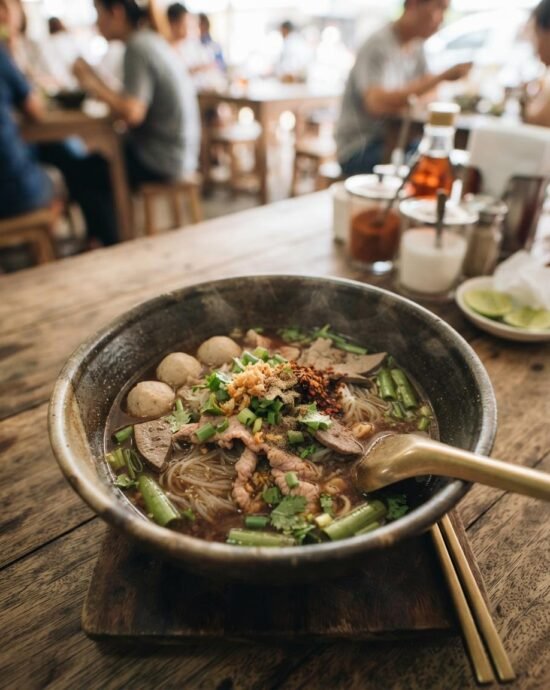
Boat Noodles, known in Thai as Kuay Teow Reua, are small, intensely flavored bowls of noodle soup built on a dark, rich pork broth seasoned with five-spice, dark soy sauce, and a touch of sweetness. The dish gets its name from the floating vendors who once sold it from small boats along the canals of central Thailand, ladling out compact portions to customers gathered along the water’s edge, a tradition that shaped both the dish’s size and its concentrated flavor.
Because vendors originally worked from cramped boats with limited space and ingredients, portions were kept deliberately small, allowing customers to order several bowls and mix different toppings throughout a single meal. That small-bowl tradition survives today even in land-based restaurants, where boat noodles are still served in miniature portions and diners commonly rack up an impressive stack of empty bowls by the end of a sitting.
The broth is the defining feature, built from long-simmered pork bones and deepened with dark soy sauce and warm spices until it reaches a color and richness far more intense than a typical noodle soup broth. Some traditional versions incorporate pork blood, which adds an earthy depth and thickens the broth slightly, though it can be omitted for a milder, more accessible version.
Toppings vary by vendor but commonly include ground pork, meatballs, crisp bean sprouts, and morning glory, all ladled over flat rice noodles. Diners typically season their own bowl further with chili flakes, vinegar, sugar, and fish sauce from condiment trays at the table, making boat noodles as much a customizable experience as a fixed recipe.
Ingredient Notes
- Pork bones: Long-simmered pork bones build the rich, deeply savory base that defines authentic boat noodle broth. Choose meaty bones with some marrow for the most flavorful, full-bodied result.
- Pork blood cubes: This traditional ingredient adds an earthy depth and slightly thickens the broth. It’s entirely optional and can be omitted for a milder, more widely accessible version of the soup.
- Flat rice noodles (sen lek): These thin, delicate noodles are the traditional choice, soaking up the concentrated broth without becoming overly heavy. Fresh noodles cook faster than dried and offer a slightly more tender bite.
- Five-spice powder: A small amount of five-spice adds warmth and complexity to the broth. Use a fresh jar, since this spice blend loses its aromatic punch relatively quickly once opened.
Ingredient Suggestions
1. Pickled mustard greens: A small handful adds a tangy, salty crunch that cuts through the richness of the broth.
2. Crispy pork rinds: Scattered on top just before serving, they add an extra layer of crunch and savory flavor.
3. Fried wonton strips: These add a light, crispy texture that contrasts nicely with the soft noodles.
4. A squeeze of lime: A bit of fresh acidity brightens the deep, dark flavors of the broth.
5. Extra dried chili flakes: For those who like more heat, an additional sprinkle at the table lets each diner control the spice level.
Helpful Tips & Pro Tips
- Skim the broth thoroughly while it simmers. Impurities that rise to the surface can make the finished broth taste muddy or bitter if left in.
- Blanch the noodles very briefly, just ten seconds or so; they’ll continue softening slightly once the hot broth is ladled over them, so overcooking at this stage leads to mushy noodles.
- Keep the portions small, in the traditional boat noodle style. Serving one giant bowl instead of several small ones changes the eating experience and makes it harder to balance the rich broth.
- Taste and adjust the broth’s seasoning before serving, since boat noodle broth should taste assertively savory and slightly sweet, not watered down or mild.
- Set out condiments like chili flakes, vinegar, sugar, and extra fish sauce at the table, since part of the tradition is letting each diner fine-tune their own bowl.
How to Serve and Store
Boat Noodles are traditionally served in small, individual bowls immediately after assembly, while the broth is piping hot and the noodles haven’t had time to soften further. The broth itself keeps well on its own, refrigerated in an airtight container for up to three days or frozen for up to three months; reheat it gently on the stove before ladling over freshly blanched noodles. Avoid storing the noodles already combined with broth, since they continue absorbing liquid and turn soft and bloated within a few hours.
Substitutions
- Pork bones and ground pork → Mushroom and vegetable stock with mushroom-based meatballs — This swap keeps the deep umami character of the broth while making the dish fully plant-based. (Vegan)
- Pork blood cubes → Extra pork meatballs or simply omit — Leaving out the blood cubes entirely still yields a flavorful, satisfying bowl of noodle soup.
- Fish sauce → Soy sauce or tamari — Either option maintains the broth’s salty depth without using fish-based seasoning. (Gluten-Free)
- Flat rice noodles → Any rice noodle you have on hand — Wider rice noodles work in a pinch, though the eating experience will feel closer to a standard noodle soup. (Budget-Friendly)
- Dark soy sauce → Regular soy sauce with a touch of molasses — This combination approximates the color and slight sweetness of dark soy sauce.
Suggested Recipes
1. Kuay Teow Reua: For a deeper, more aromatic take on boat noodles, try the Ayutthaya-style beef version built on warm spices.
2. Moo Ping: Pair a bowl of noodle soup with grilled pork skewers for a heartier, more complete Thai street food meal.
3. Gai Pad Med Mamuang: If you want a drier dish alongside the soup, this cashew chicken stir-fry makes a satisfying complement.
4. Khanom Buang: End the meal with these crispy Thai pancakes for a textural contrast to the soft noodles and rich broth.

Jeff Smith
"Cooking is the intersection of history, science, and emotion."
For me, the kitchen has always been a laboratory of culture. With a background deeply rooted in digital strategy and precision, I approach the culinary arts with the same rigor I apply to the digital landscape—analyzing flavors, perfecting techniques, and documenting the nuance that makes Filipino cuisine truly world-class.
Findme Recipe was born from a desire to bridge the gap between traditional heritage and the modern home cook. Whether it is mastering the perfect balance of acidity in a classic Adobo or simplifying complex regional dishes for everyday kitchens, my mission is to preserve our culinary identity through accessible, data-backed, and delicious content.
I am not just building a database; I am cultivating a community where every Filipino kitchen feels empowered, every ingredient is celebrated, and every family heirloom recipe finds a place to thrive.
Join me as we translate the soul of our islands into recipes for the next generation.