
- Bring pork to room temperature
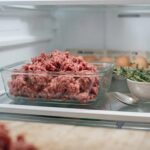
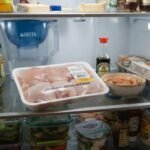
Remove the pork belly from the refrigerator about 20 minutes before cooking so it comes closer to room temperature; this helps it cook evenly on the grill instead of staying cold in the center while the exterior chars. Pat each slice dry with paper towels, since excess moisture on the surface prevents proper browning and can cause the pork to steam rather than sear. If your pork belly is not pre-sliced, cut it into pieces about a third of an inch thick, which is the standard thickness for authentic samgyeopsal and allows the fat to render fully during grilling.
- Season simply
Season both sides of the pork belly lightly with salt and black pepper; unlike bulgogi, samgyeopsal is traditionally left unmarinated so the natural flavor and texture of the pork belly itself takes center stage. A light seasoning is all that is needed since the meat will be dipped in flavorful sauces after grilling. Some cooks skip pre-seasoning entirely and simply salt each piece at the table after grilling, which is equally traditional and allows diners to control their own seasoning level.
- Heat the grill or pan
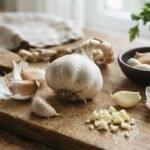
Heat a grill, griddle, or heavy skillet over medium-high heat until very hot; a cast iron pan works particularly well for replicating the tabletop grills used in Korean restaurants. No oil is needed at this stage since pork belly renders plenty of its own fat once it hits the heat. Add the sliced garlic to the empty side of the pan so it can toast gently in the rendered fat as the pork cooks, becoming sweet and slightly crisp.
- Grill the pork belly
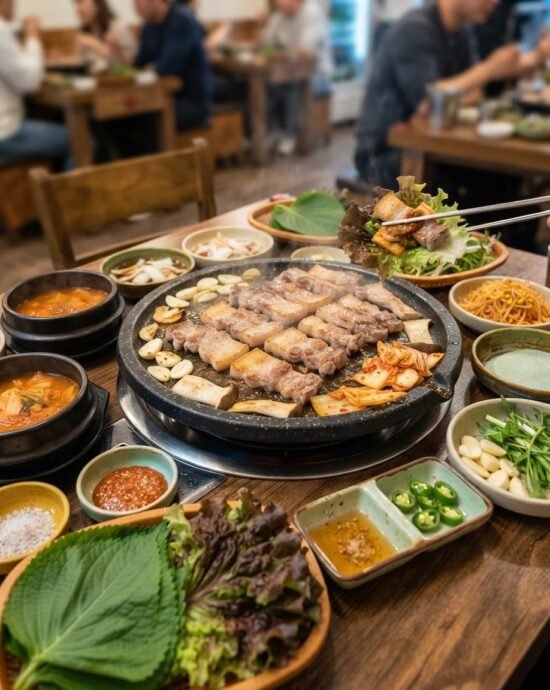
Lay the pork belly slices in a single layer on the hot surface and cook undisturbed for 3 to 4 minutes per side, until deeply golden and crisp at the edges. Use kitchen scissors, a common tool at Korean barbecue tables, to snip the pork into bite-sized pieces directly on the grill once it is mostly cooked, which speeds up the final cooking and makes serving easier. Continue cooking the cut pieces for another minute or two until fully cooked through and crisp on all sides.
- Assemble the wraps
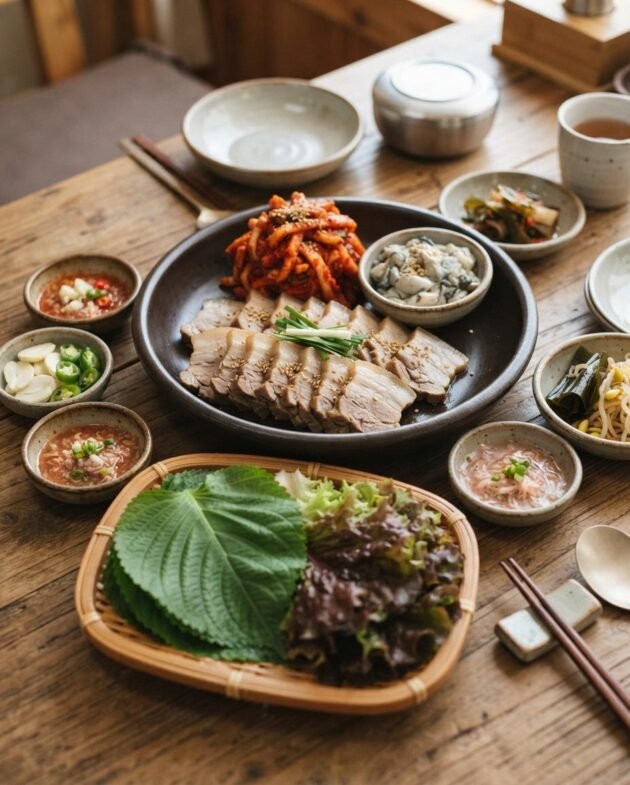
Drizzle the finished pork with a touch of sesame oil and transfer it to a serving plate alongside the toasted garlic. Set out lettuce or perilla leaves, sliced onion, green onions, ssamjang, and kimchi so each person can build their own wrap. To eat, place a piece of pork belly, a slice of garlic, and a small dollop of ssamjang onto a lettuce leaf, then fold and eat in one bite, Korean barbecue style.
- Calories:590 kcal30%
- Protein:24 g48%
- Carbohydrates:6 g2%
- Sugar:2 g2%
- Energy:2469 kJ30%
- Salt:1.6 g27%
- Fat:54 g77%
What is Samgyeopsal?
Samgyeopsal is a Korean dish of thick-cut, unmarinated pork belly grilled directly at the table and eaten wrapped in fresh lettuce leaves with garlic, sauces, and side dishes. The name translates to three-layered flesh, referring to the distinct alternating layers of meat and fat visible in a properly cut slice of pork belly, which is prized for the way those layers crisp and render during grilling. Unlike bulgogi, samgyeopsal is traditionally served unseasoned or only lightly salted, allowing the natural flavor of well-sourced pork to shine through rather than being masked by a marinade. The dish became especially popular in Korea during the twentieth century as pork became more widely available and affordable, and it has since become a staple of casual social dining, often enjoyed with coworkers or friends around a shared tabletop grill. Central to the samgyeopsal experience is the ssam, or wrap, in which a piece of grilled pork is placed on a lettuce or perilla leaf along with garlic, ssamjang paste, and sometimes kimchi, then folded and eaten in a single bite. This interactive, communal style of eating, combined with the satisfying contrast between crispy pork fat and cool, fresh vegetables, has made samgyeopsal one of the most iconic and beloved dishes in Korean dining culture, equally suited to a lively restaurant outing or a simple home-cooked dinner.
Ingredient Notes
- Pork belly: Choose pork belly with clearly defined, even layers of fat and meat; thicker cuts around a third of an inch are traditional and hold up better to direct grilling than thin slices.
- Ssamjang: This thick, savory dipping paste made from fermented soybean and chili pastes is the traditional companion to grilled pork; look for it in the refrigerated section of a Korean grocery store.
- Perilla leaves: These slightly minty, aromatic leaves are a traditional wrap alongside lettuce and add a distinctive herbal note that pairs especially well with rich pork belly.
- Garlic: Sliced garlic toasted alongside the pork in its rendered fat becomes sweet and nutty, an essential component of the classic ssam wrap.
- Lettuce: Use a tender, pliable variety like red or green leaf lettuce, which wraps easily around the pork without tearing.
Ingredient Suggestions
- Kimchi jjigae: Serving a small pot of kimchi stew alongside the grilled pork rounds out the meal with warmth and tang.
- Doenjang sauce: A savory soybean paste dip offers an earthier alternative or addition to ssamjang.
- Sliced jalapeno or Korean green chili: Adds a fresh, sharp heat to the wrap for those who enjoy extra spice.
- Steamed rice: A simple bowl of rice rounds out the meal and helps balance the richness of the pork fat.
- Soju or makgeolli: Traditional Korean alcoholic beverages that are commonly enjoyed alongside a samgyeopsal meal.
Helpful Tips & Pro Tips
- If your pork belly is chewy rather than crisp, it likely was not cooked long enough to render the fat; be patient and let it sear undisturbed for the full recommended time per side.
- Use kitchen scissors to cut the pork directly on the grill, a standard practice in Korean barbecue that makes portioning fast and easy without needing to transfer meat to a cutting board.
- Avoid moving the pork around too much while it cooks; letting it sit still against the hot surface is what creates a deeply caramelized, crispy exterior.
- Toast the garlic slices in the rendered pork fat rather than raw oil for a sweeter, more mellow flavor that complements the meat.
- Serve everything family-style with plenty of lettuce and banchan so guests can build their own wraps exactly to their taste.
How to Serve and Store
Serve samgyeopsal hot off the grill with plenty of fresh lettuce and perilla leaves, ssamjang, sliced garlic, and kimchi so everyone can assemble their own wraps at the table. Leftover cooked pork belly keeps in an airtight container in the refrigerator for up to 3 days and reheats best in a hot skillet, which helps restore some of the original crispness lost in the refrigerator. Raw, unseasoned pork belly can also be frozen for up to 3 months if you want to prep ahead; slice it while still slightly frozen for the cleanest cuts. Reheated pork belly is best used in fried rice or added to a stew rather than re-grilled plain, since it will not crisp up quite the same way twice.
Substitutions
- Pork belly → Thick-cut king oyster mushrooms or tempeh — Grills with a similarly satisfying chew and absorbs smoky flavor well. (Vegan)
- Ssamjang → A gluten-free tamari and miso blend — Replicates the salty, fermented depth of ssamjang without wheat-based ingredients. (Gluten-Free)
- Pork belly → Pork shoulder, sliced thick — A more affordable cut that still grills well, though with slightly less fat. (Budget-Friendly)
- Perilla leaves → Extra lettuce or fresh basil — A reasonable substitute when perilla leaves are not available locally.
- Ssamjang → Doenjang mixed with a little gochujang — An easy homemade approximation when store-bought ssamjang is unavailable.
Suggested Recipes
- Bulgogi: Another grilled Korean meat dish, offering a marinated, sweeter counterpart to samgyeopsal’s simplicity.
- Kimchi Jjigae: A warming stew that traditionally accompanies a samgyeopsal barbecue spread.
- Doenjang Jjigae: A savory soybean stew that pairs well as a side dish alongside grilled pork.
- Galbi: Grilled short ribs that make a natural addition to a larger Korean barbecue table.

Jeff Smith
"Cooking is the intersection of history, science, and emotion."
For me, the kitchen has always been a laboratory of culture. With a background deeply rooted in digital strategy and precision, I approach the culinary arts with the same rigor I apply to the digital landscape—analyzing flavors, perfecting techniques, and documenting the nuance that makes Filipino cuisine truly world-class.
Findme Recipe was born from a desire to bridge the gap between traditional heritage and the modern home cook. Whether it is mastering the perfect balance of acidity in a classic Adobo or simplifying complex regional dishes for everyday kitchens, my mission is to preserve our culinary identity through accessible, data-backed, and delicious content.
I am not just building a database; I am cultivating a community where every Filipino kitchen feels empowered, every ingredient is celebrated, and every family heirloom recipe finds a place to thrive.
Join me as we translate the soul of our islands into recipes for the next generation.