
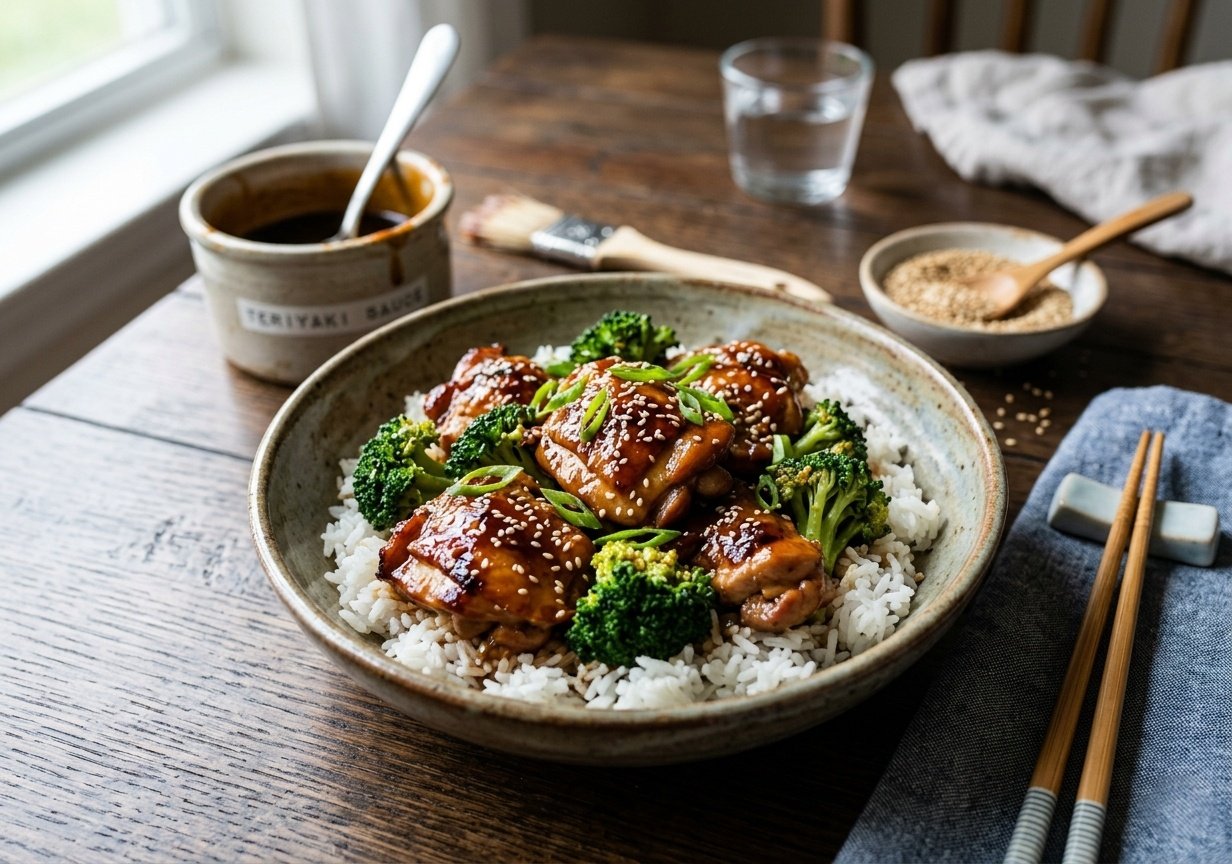
What Is Teriyaki Sauce, Exactly?
“Teriyaki” is a Japanese cooking method, not just a sauce. The word combines teri (gloss or luster) and yaki (grill or broil). In Japan, teriyaki refers to a technique where protein is grilled or broiled while being basted with a simple soy-mirin glaze — the caramelization creates that signature sticky-glossy finish.
The Western version of teriyaki sauce is thicker, sweeter, and often used as a marinade or condiment rather than a basting technique. Both are delicious. This article covers the sauce you can make at home and use a dozen different ways.
The 5 Ingredients You Need
You don’t need anything fancy. These five ingredients are the foundation — and chances are you have most of them already.
1. Soy Sauce
This is the backbone of your teriyaki sauce: salty, savory, deeply umami. Use regular soy sauce (Japanese-style like Kikkoman works great) unless you specifically need low-sodium. Tamari is a solid gluten-free swap and has a slightly richer flavor.
Avoid dark soy sauce here — it’s too intense and will make the sauce taste more like a stir-fry sauce than teriyaki.
2. Mirin
Mirin is a sweet Japanese rice wine and it’s what gives teriyaki its characteristic glossiness. It adds a mild sweetness without making the sauce feel heavy or cloying. Look for hon mirin (real mirin) at Asian grocery stores — it’s worth it. The “aji-mirin” or “mirin-style seasoning” you find at regular supermarkets works fine too, though it’s slightly sweeter and less complex.
If you can’t find mirin at all, substitute with a mix of dry sherry and a small amount of sugar.
3. Sake
Sake lightens the sauce slightly, adds depth, and helps tenderize meat when used as a marinade. Any cooking sake or inexpensive drinking sake works well here. Don’t overthink it. If you can’t find sake, dry sherry or even a splash of rice wine vinegar can fill the gap, though the flavor will shift slightly.
4. Sugar
Brown sugar is the move. It melts smoothly into the sauce and adds a gentle molasses note that white sugar can’t match. Honey is a popular swap and works beautifully — it also thickens the sauce a little faster. White sugar is fine if that’s what you have.
The amount is adjustable. Start with less than you think you need; you can always add more at the end.
5. Garlic and Ginger (Technically Two, But They Always Travel Together)
Strictly speaking, the classic Japanese teriyaki base doesn’t include garlic or ginger. But in most home kitchens — and every Western teriyaki recipe worth making — they’re non-negotiable. Fresh ginger adds warmth and a slightly citrusy edge. Garlic adds savory depth. Together, they turn a simple glaze into something that smells incredible the moment it hits a hot pan.
Use fresh when you can. Jarred minced garlic and ginger paste both work in a pinch.
How to Make Teriyaki Sauce: Step-by-Step
Makes: about ¾ cup (enough for 4 servings of chicken, salmon, or tofu)
Time: 10–12 minutes
Ingredients
- ½ cup soy sauce
- ¼ cup mirin
- 2 tablespoons sake (or dry sherry)
- 2 tablespoons brown sugar (or honey)
- 1 teaspoon fresh ginger, grated (or ½ tsp ginger paste)
- 2 cloves garlic, minced (or ½ tsp garlic powder)
| Optional thickener: 1 teaspoon cornstarch + 1 tablespoon cold water |
Step 1: Combine Everything in a Small Saucepan
Add the soy sauce, mirin, sake, and brown sugar to a small saucepan. Give it a stir to start dissolving the sugar, then add the garlic and ginger.
No need to pre-cook the garlic separately — it’ll mellow beautifully as the sauce simmers.
| Tip: Use a small saucepan with high sides. Teriyaki sauce bubbles up enthusiastically as it reduces, and you don’t want to spend ten minutes cleaning the stovetop. |
Step 2: Bring to a Simmer Over Medium Heat
Set the heat to medium and watch the pan. As it heats up, the mixture will start to smell like something very good is happening. Stir occasionally to make sure the sugar is dissolving evenly.
This is the step most people rush, and it shows — if you crank the heat trying to speed things up, the sugars scorch before the alcohol cooks off. Medium heat, a little patience.
Step 3: Simmer Until Slightly Reduced (5–7 Minutes)
Once it hits a gentle simmer, let it cook uncovered for 5–7 minutes, stirring every minute or two. You’re looking for two things:
- The sauce should reduce by about 20–25%
- It should coat the back of a spoon lightly
At this stage, the alcohol from the sake and mirin will have cooked off, the flavors will have melded, and the garlic and ginger will have softened into the liquid.
Step 4: Thicken If Needed (Optional)
The sauce at this point is thinner — great for marinades and light glazing. If you want a thicker, more syrupy sauce (perfect for drizzling or dipping), here’s how:
Mix 1 teaspoon of cornstarch with 1 tablespoon of cold water until smooth. Pour the mixture into your simmering sauce while stirring constantly. Within 30–60 seconds, the sauce will noticeably thicken. Remove from heat immediately.
| Don’t skip the cold water: Cornstarch clumps if added directly or mixed with warm water. Cold water first, always. |
Step 5: Taste and Adjust
This is the most important step and the one most recipes skip. Taste it. Ask yourself:
- Too salty? Add a tiny pinch of sugar or a splash of water.
- Not sweet enough? Add a teaspoon of honey.
- Feels flat? A few drops of rice wine vinegar brightens it up.
- Want more depth? A few drops of toasted sesame oil stirred in off heat does wonders.
Recipes are starting points. Your palate is the finish line.
Step 6: Cool and Store
Pour the sauce into a glass jar or airtight container. It keeps in the refrigerator for up to 2 weeks. The sauce will thicken further as it cools — that’s normal. Reheat gently in the microwave or over low heat and it’ll loosen right up.
How to Use Homemade Teriyaki Sauce
This is where it gets fun. One batch of teriyaki sauce can power a week’s worth of meals.
As a Marinade
Combine your protein (chicken thighs, salmon fillets, tofu, beef strips) with the sauce in a zip-lock bag or shallow dish. Marinate for at least 30 minutes, up to 8 hours. The longer, the better — though don’t go past 24 hours for fish; the acidity will start to break down the texture.
As a Glaze
Brush onto grilling meats or fish during the last 3–5 minutes of cooking. The sugars will caramelize and turn glossy — this is the teri in teriyaki. Don’t add it too early or it’ll burn.
As a Stir-Fry Sauce
Pour it straight into a hot wok at the end of cooking. Toss quickly and serve immediately. Works beautifully with beef and broccoli, chicken and snap peas, or tofu and mixed vegetables.
As a Dipping Sauce
Serve it chilled or at room temperature alongside gyoza, chicken skewers, spring rolls, or rice bowls. The thicker version (with cornstarch) works best here.
On Rice Bowls and Grain Bowls
Drizzle over a bowl of steamed rice, roasted vegetables, and a soft-boiled egg. Add sesame seeds and scallions. Done. This is what meal prep was made for.
Variations Worth Trying
Spicy Teriyaki Sauce
Add 1–2 teaspoons of sriracha or a pinch of red pepper flakes to the base recipe. Stir in during simmering.
Ginger-Forward Teriyaki
Double the ginger and add a thin strip of lemon zest while simmering. Remove the zest before storing. This version is particularly good with salmon.
Sesame Teriyaki
Stir in 1 teaspoon of toasted sesame oil and 1 tablespoon of toasted sesame seeds after removing from heat. The sesame flavor is fragrant and nutty — don’t cook it in, or the toasty notes disappear.
Low-Sodium Teriyaki
Use low-sodium soy sauce and reduce or eliminate the added salt in whatever you’re cooking. The flavor won’t be quite as deep, but it’s close.
Vegan Teriyaki
The base recipe is already vegan if you skip honey and use brown sugar. All five core ingredients are plant-based.
Common Mistakes (and How to Avoid Them)
Using too much heat. High heat burns the sugars before the sauce can reduce properly. Stick to medium, always.
Not tasting as you go. Every brand of soy sauce is different in saltiness. Every batch of mirin is slightly different in sweetness. Tasting and adjusting is the whole game.
Adding cornstarch to hot liquid. This creates lumps. Always mix cornstarch with cold water first. Always.
Marinating fish for too long. Fish doesn’t need more than 30 minutes in teriyaki marinade. Beyond that, the texture gets soft and mealy.
Skipping the sake. It’s tempting to leave it out if you don’t have any open, but the sake genuinely makes the sauce taste less flat. Dry sherry is a fine substitute; even a splash of rice wine vinegar (just a teaspoon) gives you some of that brightness back.
Frequently Asked Questions

Jeff Smith
"Cooking is the intersection of history, science, and emotion."
For me, the kitchen has always been a laboratory of culture. With a background deeply rooted in digital strategy and precision, I approach the culinary arts with the same rigor I apply to the digital landscape—analyzing flavors, perfecting techniques, and documenting the nuance that makes Filipino cuisine truly world-class.
Findme Recipe was born from a desire to bridge the gap between traditional heritage and the modern home cook. Whether it is mastering the perfect balance of acidity in a classic Adobo or simplifying complex regional dishes for everyday kitchens, my mission is to preserve our culinary identity through accessible, data-backed, and delicious content.
I am not just building a database; I am cultivating a community where every Filipino kitchen feels empowered, every ingredient is celebrated, and every family heirloom recipe finds a place to thrive.
Join me as we translate the soul of our islands into recipes for the next generation.