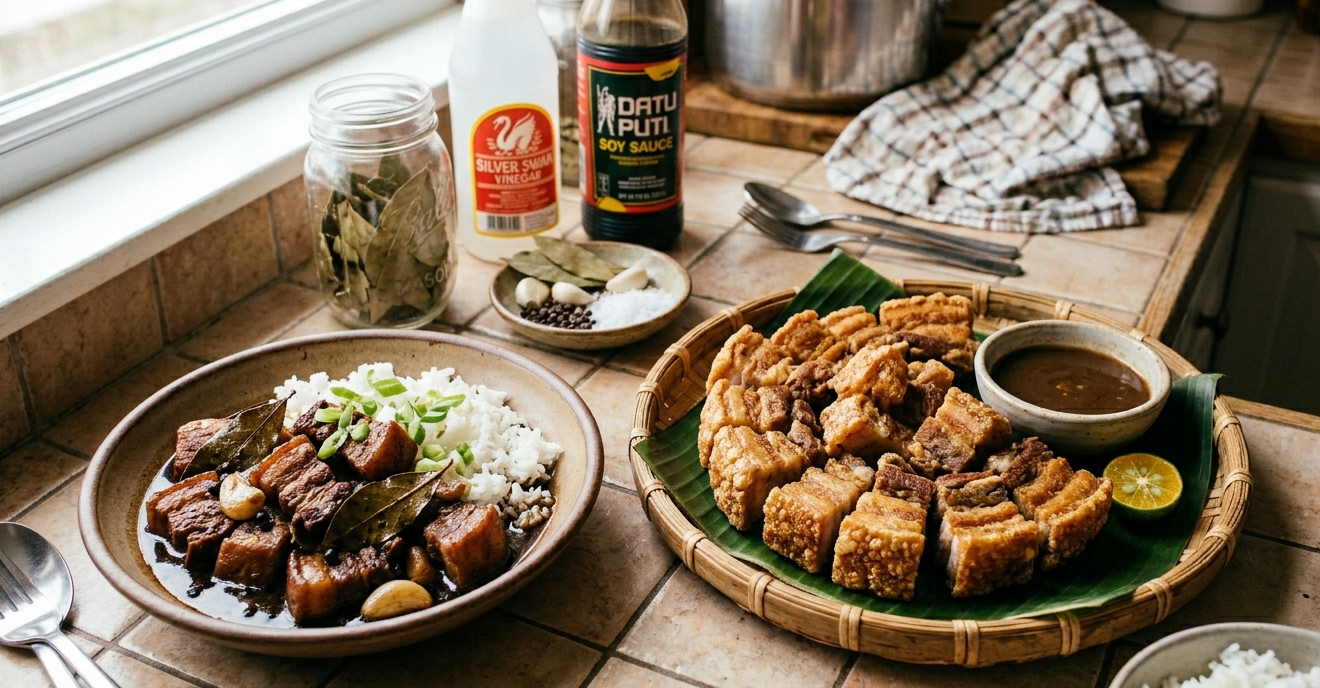
Pork belly is one of the most rewarding cuts to cook — but it can also be one of the most unforgiving if you rush it. Chewy, rubbery pork belly is a tragedy, especially when it ends up in two of the Philippines’ most beloved dishes: adobo and lechon kawali. The good news? Getting it perfectly tender every single time is completely achievable once you understand why pork belly needs a little coaxing — and which technique to use for each dish.
When it comes to how to tenderize pork belly, the approach differs depending on your end goal. Adobo calls for a slow, braised tenderness — meat that pulls apart but holds its shape in the sauce. Lechon kawali needs pork that’s soft and yielding on the inside while shattering into crispy, golden crackling on the outside. These are two different textures, and they each have their own method.
In this guide, you’ll learn the exact step-by-step techniques for both, the most common mistakes to avoid, and the pro tips that separate good pork belly from truly unforgettable pork belly.
What You’ll Need
Equipment
- Heavy-bottomed pot or Dutch oven (for braising)
- Large wok or deep fryer (for lechon kawali)
- Tongs and a wire rack
- Sharp knife
- Meat thermometer (optional but helpful)
For Adobo
- 1–1.5 kg pork belly, cut into 2-inch chunks
- White cane vinegar or coconut vinegar
- Soy sauce, garlic, bay leaves, black peppercorns
- Water or broth
For Lechon Kawali
- 1–1.5 kg pork belly slab (skin-on, uncut)
- Salt, bay leaves, black peppercorns, garlic
- Water for boiling
- Neutral oil for deep-frying
Prep Notes
- For both dishes, start with cold pork belly straight from the fridge — not frozen. Partially frozen meat won’t cook evenly.
- Pat the skin dry before cooking either dish.
- For lechon kawali specifically, do not score the skin before boiling — scoring comes after if you want faster drying.
Step-by-Step: Tenderizing Pork Belly for Adobo
Step 1 — Brown the Pork First (Don’t Skip This)
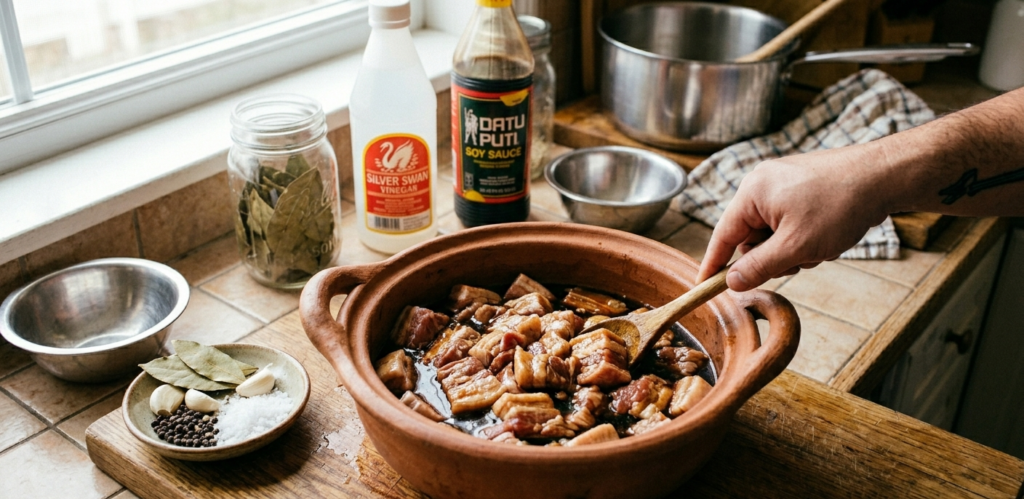
Heat a heavy-bottomed pot over medium-high heat with a thin layer of oil. Working in batches, sear the pork belly pieces until golden brown on at least two sides — about 3–4 minutes per side. You’re not cooking the pork through here; you’re building a deep, caramelized crust that adds flavor to the entire braise.
It should look like: deep amber-brown on the seared faces, with visible color on the fat cap.
Step 2 — Build the Braising Liquid
Remove the seared pork and pour off excess fat, leaving about 1 tablespoon. Sauté garlic until golden, then return the pork to the pot. Add your soy sauce, vinegar, bay leaves, and whole peppercorns. The liquid should come about halfway up the pork — not fully submerge it. Add a splash of water or broth if needed.
Critical: Do not stir after adding the vinegar. Let it come to a boil uncovered for 3–5 minutes to cook off the raw acid before covering.
Step 3 — Low and Slow is the Only Way
Reduce heat to the lowest simmer your stove allows. Cover partially (leave a small gap for steam to escape) and braise for 45–60 minutes, turning the pork every 20 minutes. The fat will slowly render and the collagen in the pork belly will break down into gelatin — that’s what creates that silky, clinging adobo sauce.
It should feel like: the pork offers almost no resistance when pressed with tongs, but it still holds its cube shape without falling apart.
Step 4 — Reduce the Sauce to Finish
Once the pork is tender, remove the lid and increase heat to medium. Let the braising liquid reduce by half, basting the pork frequently. The sauce will thicken, darken, and coat the back of a spoon. For extra caramelization, you can pan-fry the braised pork pieces in a separate skillet with a little oil to crisp up the edges.
The finished pork should be: yielding, deeply savory, with a sauce that clings rather than drips.
Step-by-Step: Tenderizing Pork Belly for Lechon Kawali
Step 1 — Boil Low and Slow in Seasoned Water
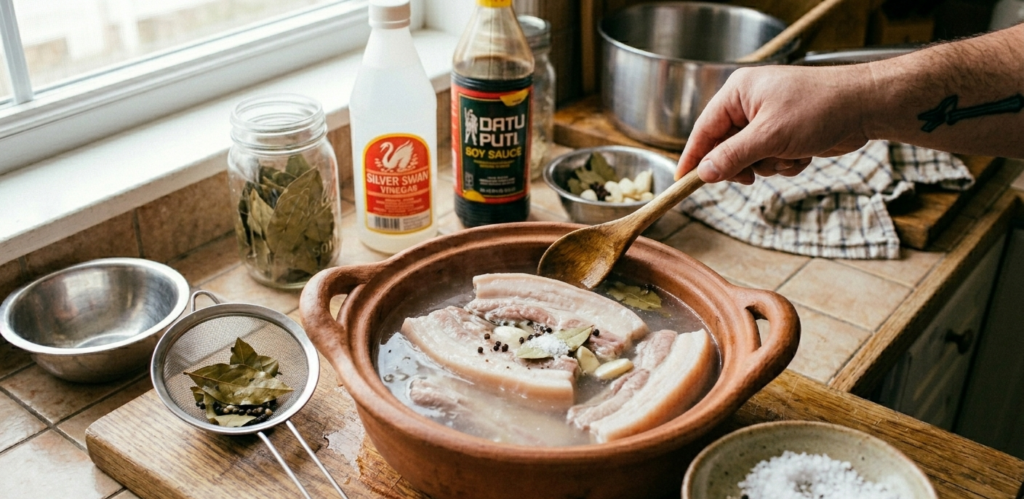
Place the whole pork belly slab (skin-side up) in a pot and cover completely with cold water. Add a generous amount of salt (about 2 tablespoons), bay leaves, garlic, and peppercorns. Bring to a boil, then immediately reduce to a gentle simmer. Cook for 45–60 minutes until the meat is fully tender when pierced with a fork — but not falling apart.
Visual cue: The skin will look slightly translucent and the fat will have rendered visibly. A skewer should pass through the thickest part with minimal resistance.
Step 2 — Salt the Skin Aggressively
Remove the pork from the water and place it skin-side up on a wire rack. While still warm, rub the skin generously with fine salt — this draws out surface moisture and begins the drying process that makes crackling possible. Some cooks also prick the skin all over with a fork or skewer at this stage.
Step 3 — Dry in the Fridge Overnight (Non-Negotiable)
This is the single most important step for crispy lechon kawali skin. Place the salted pork belly uncovered on a wire rack in the refrigerator for at least 4 hours, ideally overnight. The cold, dry air of the fridge wicks away surface moisture from the skin, creating the ideal conditions for crackling in the fryer.
The skin should feel: dry and papery to the touch before frying. Any moisture left = soft skin, not crackling.
Step 4 — Fry at the Right Temperature, in Two Stages
Heat oil in a deep wok or fryer to 160°C (320°F). Lower the pork belly in skin-side down and fry for 8–10 minutes — this gentle first fry heats the pork through without burning the skin. Remove and let rest for 5 minutes.
Increase the oil to 190°C (375°F). Return the pork and fry for another 5–8 minutes until the skin blisters, bubbles, and turns golden-amber. Remove immediately and drain on a rack — never on paper towels, which trap steam and soften the skin.
It should sound like: the skin crackles and pops audibly when you cut through it.
Pro Tips & Common Mistakes to Avoid
- Don’t use thick cuts for adobo without increasing cook time. Pork belly cut thicker than 2.5 inches needs at least 75–90 minutes of braising to fully tenderize. Rushing produces chewy, fatty bites that haven’t broken down properly.
- Never boil lechon kawali on high heat. A rolling boil makes the meat seize up and become tough. Gentle simmering is the key — the pork should barely quiver in the water, not thrash around.
- Skip the fridge step and you’ll regret it. For lechon kawali, skipping the drying step is the #1 reason skin comes out soft and oily instead of crackling. The overnight rest is what separates great lechon kawali from disappointing lechon kawali.
- For adobo, acid timing matters. Adding vinegar to a cold pot prevents proper flavor development. Always add it to a hot pot and let it boil before covering — this removes harshness and mellows the acid beautifully.
- Use bone-in pork belly when possible. The bone adds collagen to the braising liquid in adobo, creating a richer, more gelatinous sauce. For lechon kawali, boneless is easier to slice — choose based on your dish.
- Rest your lechon kawali before cutting. Give it 5 minutes on the rack after frying. Cutting immediately releases steam trapped under the skin and can deflate your crackling.
Variations & Customizations
- Pressure cooker adobo: Reduce braising time to 20–25 minutes on high pressure. Release naturally for 10 minutes before opening. The texture is slightly different — softer and more pull-apart — which many people prefer.
- Air fryer lechon kawali: After the boil-and-dry method, air fry at 200°C (400°F) for 20–25 minutes skin-side up. You won’t get quite the same all-over crackling, but it’s a fantastic lower-oil alternative.
- Salt-bake method for lechon kawali: Pack the skin side in a thick layer of coarse salt before refrigerating. Brush off before frying. Creates an intensely seasoned, ultra-dry skin that fries up exceptionally well.
- Coconut vinegar adobo: Swap white cane vinegar for coconut vinegar for a slightly sweeter, more complex sourness that pairs beautifully with the richness of pork belly.
How to Store & Make Ahead
Adobo: Stores exceptionally well. Refrigerate in its braising liquid for up to 5 days — the flavor deepens daily. Freeze in airtight containers for up to 3 months. Reheat gently on the stovetop with a splash of water.
Lechon kawali (pre-fried): The boiled and dried pork belly can be refrigerated for up to 2 days before frying. Fry only when ready to serve — crackling does not survive storage.
Lechon kawali (already fried): Best eaten immediately. Leftover lechon kawali can be re-crisped in an air fryer at 200°C for 5–8 minutes or flash-fried in hot oil for 2–3 minutes. Do not microwave — this steams and softens the skin irreversibly.
[Classic chicken adobo recipe] [Lechon kawali recipe] [How to make pork adobo]
Frequently Asked Questions

Jeff Smith
"Cooking is the intersection of history, science, and emotion."
For me, the kitchen has always been a laboratory of culture. With a background deeply rooted in digital strategy and precision, I approach the culinary arts with the same rigor I apply to the digital landscape—analyzing flavors, perfecting techniques, and documenting the nuance that makes Filipino cuisine truly world-class.
Findme Recipe was born from a desire to bridge the gap between traditional heritage and the modern home cook. Whether it is mastering the perfect balance of acidity in a classic Adobo or simplifying complex regional dishes for everyday kitchens, my mission is to preserve our culinary identity through accessible, data-backed, and delicious content.
I am not just building a database; I am cultivating a community where every Filipino kitchen feels empowered, every ingredient is celebrated, and every family heirloom recipe finds a place to thrive.
Join me as we translate the soul of our islands into recipes for the next generation.