
- Step 1: Prepare the Beef and Tendon
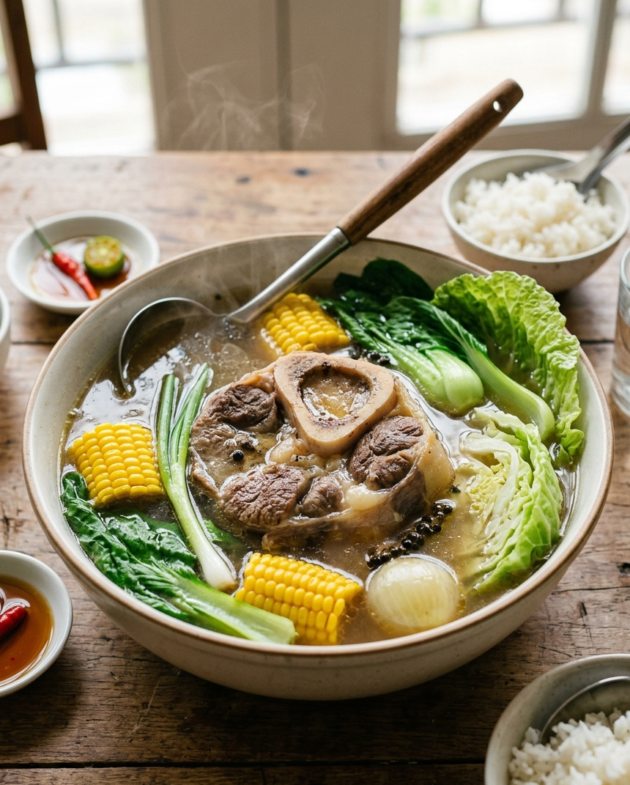
Begin by thoroughly washing the beef shank and tendon under cold running water. Cut the beef shank into large bone-in pieces, approximately 3–4 inches thick, to allow even braising. Trim any excess fat from the outer layer but leave the skin and collagen-rich portions intact, as these are fundamental to balbacua's signature sticky, gelatinous texture. Blanch the beef and tendon pieces in a large pot of boiling water for about 10 minutes to remove impurities. Drain, rinse with cold water, and set aside. This blanching step ensures a cleaner, clearer broth and removes any gamey odor from the beef. Pat the pieces dry before searing. This foundational step determines the quality and clarity of the final stew. Do not skip the blanching phase.
- Step 2: Sear and Build the Aromatics
Heat cooking oil in a large heavy-bottomed pot or Dutch oven over medium-high heat. Sear the blanched beef shank pieces in batches until golden-brown on all sides, approximately 3–4 minutes per side. Remove and set aside. In the same pot, sauté crushed garlic until fragrant and lightly golden, then add the quartered onions and cook until softened, about 3 minutes. Add the bruised lemongrass stalks and bay leaves, stirring them into the aromatics to release their essential oils. Meanwhile, prepare your annatto water by soaking annatto seeds in half a cup of warm water for 5 minutes, then straining. Add the annatto water to the pot, stirring to coat the aromatics. The annatto imparts a beautiful deep orange-red color that is the visual hallmark of authentic balbacua.
- Step 3: Slow-Simmer with Peanuts and Broth
Return the seared beef and tendon to the pot. Pour in the beef broth or water, ensuring all pieces are submerged. Add the raw peanuts, which will soften and meld into the stew as it cooks, adding body and a subtle nuttiness. Bring the mixture to a rolling boil over high heat, then immediately reduce the heat to the lowest setting. Cover the pot tightly and let the stew simmer gently for at least 2.5 to 3 hours, stirring occasionally to prevent sticking. The extended simmering time is non-negotiable for balbacua — it is what transforms tough collagen-rich cuts into fork-tender, gelatinous morsels. Check the liquid level every 30 minutes, adding water as needed to keep the meat submerged throughout the braising process.
- Step 4: Add Coconut Milk and Season
Once the beef and tendon are tender enough to pierce easily with a fork, pour in the coconut milk and stir gently to incorporate. The coconut milk enriches the broth, adding creaminess and depth that balances the savory, spiced flavors. Add fish sauce for umami depth and sugar to balance the acidity and salt. Taste the broth and adjust seasoning with additional fish sauce, salt, and freshly ground black pepper as needed. Continue simmering uncovered for another 20–30 minutes to allow the coconut milk to reduce slightly and the flavors to meld fully. The stew should be thick, rich, and deeply flavored at this point, with the broth taking on an almost velvety consistency from the released collagen and peanuts.
- Step 5: Final Reduction and Plating
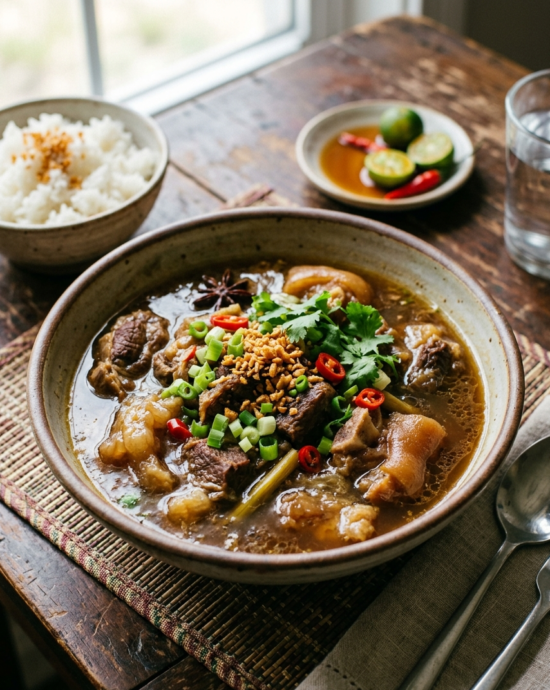
Remove the lemongrass stalks and bay leaves from the stew before serving. For an even richer, more concentrated flavor, continue simmering uncovered for an additional 15–20 minutes until the broth reduces to your desired consistency. The ideal balbacua broth coats the back of a spoon and has a sticky, glossy quality from the dissolved collagen. Skim any excess oil from the surface using a ladle or paper towel. Taste one final time and adjust seasoning. Transfer the balbacua to a deep serving bowl and garnish with sliced green onions. Serve hot alongside steamed white rice and spiced vinegar for dipping. The combination of the gelatinous, fall-off-the-bone beef with the aromatic, peanut-laced broth is deeply satisfying and unmistakably Visayan in soul.
- Calories:485 kcal24%
- Protein:38 g76%
- Carbohydrates:12 g4%
- Sugar:3 g6%
- Salt:1,150 mg50%
- Fat:32 g41%
- Energy:2,428 kj29%
Table of Contents
What Is Beef Balbacua?
Beef Balbacua is a slow-cooked Filipino beef stew originating from the Visayas and Mindanao regions, particularly popular in Cebu and Davao. It is celebrated for its deeply gelatinous broth, fork-tender meat, and complex aromatic profile that sets it apart from other Filipino beef stews. The dish takes its name from the Spanish-influenced culinary tradition of braising tough, collagen-rich cuts of beef over extended periods, a technique that transforms otherwise challenging cuts into extraordinary, melt-in-the-mouth delicacies.
Traditionally prepared using the beef’s feet, shank, tail, and skin — the most collagen-dense parts of the animal — balbacua owes its characteristic sticky, gelatinous texture to the slow breakdown of connective tissue over hours of gentle simmering. The addition of annatto seeds gives the stew its distinctive deep amber to reddish-orange color, while lemongrass and other aromatics provide the fragrant backbone. Raw peanuts are another defining ingredient, adding body, mild nuttiness, and thickening power to the broth as they slowly dissolve during cooking.
Coconut milk is incorporated in the final stages to add richness and a subtle sweetness that tempers the savory, spiced broth. Unlike many Filipino beef dishes that rely on vinegar or tomato, balbacua stands out for its coconut-and-collagen base, making it resemble both a stew and a braise simultaneously.
Balbacua is quintessential comfort food — the kind of dish that takes patience, time, and care to prepare, but rewards the cook with an unforgettable eating experience. It is commonly served at family gatherings, town fiestas, and celebrations throughout the Visayas. Whether enjoyed for Sunday lunch or prepared as a centerpiece for special occasions, balbacua remains one of the most beloved and distinctive dishes in the Southern Filipino culinary canon.
Ingredient Notes
- Beef Shank with Skin: The skin and collagen of the beef shank are what give balbacua its signature gelatinous texture. Choose thick-cut pieces with the skin intact for the most authentic result.
- Annatto Seeds (Achuete): Annatto seeds provide the dish’s vibrant orange-red color without affecting flavor significantly. Look for deep-red, plump seeds at Asian grocery stores for the most vivid color.
- Lemongrass: Bruised lemongrass is essential for balbacua’s aromatic character. Choose thick, fragrant stalks and bruise them well to release their citrusy essential oils into the broth.
- Raw Peanuts: Unroasted peanuts dissolve partially during the long cook, thickening the broth naturally. Avoid salted or roasted peanuts, which alter both texture and flavor balance.
- Coconut Milk: Full-fat canned coconut milk provides the richest result. Add it only in the final stage to prevent curdling and to preserve its creamy character in the finished dish.
Ingredient Suggestions
- Star Anise (1–2 pieces): Adds a subtle licorice warmth that complements the annatto and coconut base.
- Dried Shrimp Paste (Bagoong Alamang): A small spoonful stirred in at the end deepens the umami profile significantly.
- Bird’s Eye Chilies: Whole or sliced, these add a gentle heat that cuts through the richness of the coconut milk.
- Banana Blossom: Added in the last 20 minutes, it absorbs the broth beautifully and adds textural contrast.
Helpful Tips & Pro Tips
- Why Is My Balbacua Not Gelatinous? The most common reason is insufficient cooking time or using lean cuts without skin or tendon. Always include skin-on shank, tendon, or foot pieces. Simmer for at least 3 full hours at a very low heat to allow collagen to fully dissolve into the broth.
- Keep the Heat Low and Steady: Balbacua should never boil aggressively after the initial blanching. A gentle simmer prevents the meat from toughening and keeps the broth clear and rich. Use the lowest burner setting and cover tightly.
- Make It a Day Ahead: Balbacua tastes significantly better the next day as the flavors meld overnight. Reheat gently over low heat and skim any solidified fat from the surface before serving.
- Skim Regularly for a Clear Broth: During the first hour of simmering, impurities will rise to the surface. Skim them off with a spoon every 20–30 minutes for a cleaner, more attractive broth.
How to Serve and Store
Store leftover balbacua in an airtight container in the refrigerator for up to 4 days. The broth will solidify into a gel when chilled due to the collagen content — this is completely normal and a sign of quality. Reheat over low heat on the stovetop, adding a splash of water if needed. For longer storage, freeze in portioned containers for up to 2 months. Thaw overnight in the refrigerator before reheating. Do not microwave at high power as it may cause the coconut milk to separate.
Substitutions
- Beef Shank → Oxtail — provides similar collagen richness and gelatinous texture; adjust cooking time accordingly.
- Coconut Milk → Evaporated milk (vegan swap: full-fat oat milk) — loses some richness but maintains creaminess.
- Fish Sauce → Soy sauce — a gluten-conscious option that provides similar umami depth.
- Raw Peanuts → Blanched almonds — budget-friendly and provides similar thickening; flavor is milder.
- Annatto Seeds → Paprika or turmeric — provides color without annatto; flavor profile shifts slightly warmer.
Suggested Recipes
- Beef Bulalo: Another collagen-rich Filipino beef bone broth stew, similarly prized for its clear, deeply flavored marrow-laden soup.
- Beef Kare-Kare: Shares the peanut-based richness and slow-cooking approach, with an oxtail and tripe centerpiece.
- Beef Pochero: A Spanish-influenced Filipino beef stew with a tomato-based broth and sweet plantain accompaniment.