
- Make the stock
In a pot, bring the water or pre-made anchovy stock to a simmer over medium heat. If starting from scratch, simmer a handful of dried anchovies and a piece of dried kelp for 10 minutes, then strain and discard the solids before proceeding. A well-made stock is important in doenjang jjigae since the paste itself, while flavorful, benefits from a savory liquid base rather than plain water to achieve the stew's full depth of flavor.
- Dissolve the doenjang
Place the doenjang in a small mesh strainer and lower it into the simmering stock, using the back of a spoon to press and dissolve the paste directly into the liquid. This method prevents any undissolved lumps of paste from ending up in the final stew. Stir in the gochugaru at this stage as well, whisking until the broth turns a warm, earthy brown with just a hint of red from the chili flakes.
- Add the vegetables
Add the diced potato to the pot first, since it takes the longest to cook, and simmer for 5 minutes. Then add the onion, mushrooms, and green chili pepper, continuing to simmer for another 5 minutes until the potato is nearly tender. Doenjang jjigae vegetables should be cooked until soft but not falling apart, so keep the heat at a gentle simmer rather than a rolling boil throughout this stage.
- Add zucchini and tofu
Stir in the diced zucchini and cubed tofu, along with the minced garlic, and continue simmering for 5 more minutes until the zucchini is tender and the tofu is warmed through. Stir gently to avoid breaking the tofu cubes apart. Taste the broth at this point and adjust with a touch more doenjang if you prefer a stronger, more savory flavor, keeping in mind that the paste is quite salty on its own.
- Finish and serve
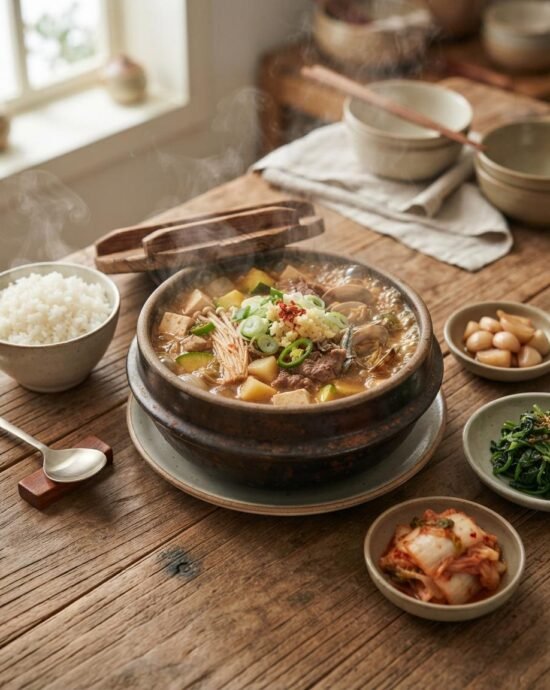
Scatter the chopped green onions over the top and give the stew one final gentle stir. Ladle the doenjang jjigae into bowls or serve directly from the pot at the table, still bubbling. This stew is traditionally served alongside a bowl of steamed rice and an assortment of banchan, making it a simple yet deeply satisfying centerpiece for a Korean home-cooked meal.
- Calories:210 kcal11%
- Protein:14 g28%
- Carbohydrates:20 g7%
- Sugar:4 g4%
- Energy:879 kJ11%
- Salt:2.3 g38%
- Fat:8 g11%
What is Doenjang Jjigae?
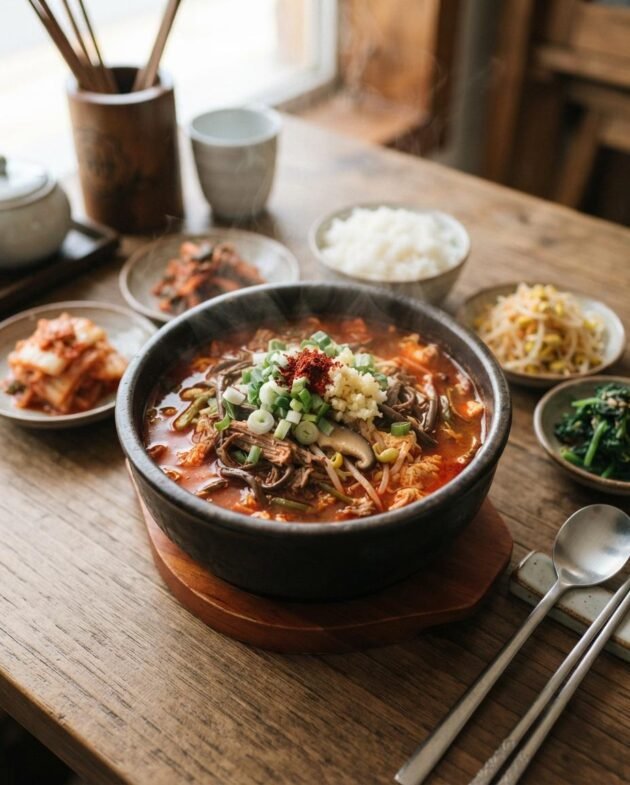
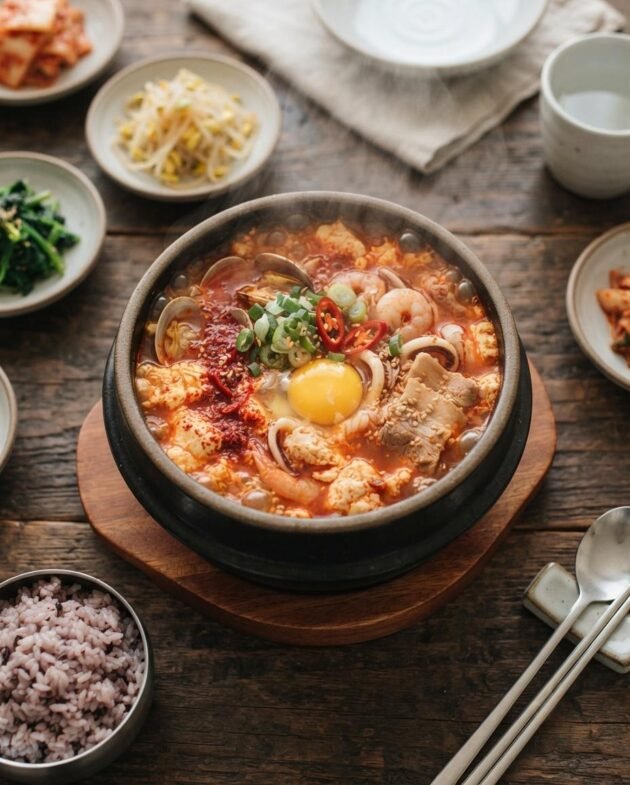
Doenjang jjigae is a comforting, deeply savory Korean stew built around doenjang, a fermented soybean paste, simmered together with tofu, potato, zucchini, and mushrooms into a rustic, earthy broth. Doenjang itself has been a staple of Korean cuisine for centuries, traditionally made by fermenting boiled soybeans into blocks called meju, which are then aged in crocks with brine for months to develop their complex, funky, umami-rich flavor. This lengthy fermentation process, once a household ritual passed down through generations, gives doenjang jjigae a depth of flavor that cannot be replicated by quicker seasonings, making it one of the most fundamentally traditional stews in Korean home cooking. Unlike the fiery heat of kimchi jjigae or sundubu jjigae, doenjang jjigae is generally milder and earthier, relying on the natural savoriness of fermented soybeans rather than chili paste for its primary flavor, though a small amount of gochugaru is often added for warmth and color. The stew is prized for its simplicity and adaptability, easily incorporating whatever vegetables are on hand, from zucchini and potato to radish or cabbage, making it a practical, everyday dish rather than one reserved for special occasions. Often described as the Korean equivalent of a humble, soul-warming home stew, doenjang jjigae is typically served in nearly every Korean household on a regular basis, standing as one of the clearest expressions of the fermentation-based flavor building that defines so much of Korean culinary tradition.
Ingredient Notes
- Doenjang: This fermented soybean paste is the heart of the dish; look for traditionally fermented varieties in the refrigerated section of a Korean grocery store for the most authentic depth of flavor.
- Anchovy stock: A simple stock made from dried anchovies and kelp provides a savory backbone that complements the fermented funk of the doenjang; avoid using only water if possible.
- Firm tofu: Unlike the soft tofu used in sundubu jjigae, firm tofu holds its shape well in this stew and provides a satisfying, substantial bite.
- Zucchini: Korean zucchini, or aehobak, has a slightly sweeter, more tender flesh than standard zucchini and is traditional in this stew, though regular zucchini works well as a substitute.
- Green chili pepper: A single sliced chili adds a fresh, sharp bite that balances the earthy richness of the fermented paste.
Ingredient Suggestions
- Ground beef or pork: A small amount of browned meat added at the beginning adds richness and heartiness to the stew.
- Korean radish: Diced radish adds a subtle sweetness and absorbs the savory broth particularly well.
- Perilla seeds or powder: A traditional addition in some regional versions that lends a nutty, slightly floral depth.
- Clams: A handful of small clams adds a briny sweetness that pairs beautifully with the fermented paste.
- Extra doenjang: For a bolder, more traditional flavor, an extra spoonful deepens the stew’s signature umami character.
Helpful Tips & Pro Tips
- If your doenjang jjigae tastes overly salty, dilute it slightly with extra stock or water rather than adding more vegetables, since doenjang itself is quite concentrated.
- Dissolve the doenjang paste through a strainer directly into the broth to avoid lumps that can result in uneven seasoning throughout the stew.
- Add heartier vegetables like potato first, since they take longer to cook, and more delicate vegetables like zucchini later to prevent overcooking.
- Taste and adjust the seasoning gradually, since doenjang brands vary significantly in saltiness and fermentation intensity.
- Serve doenjang jjigae bubbling hot for the best flavor, as the aroma of the fermented paste is most pronounced immediately after cooking.
How to Serve and Store
Serve doenjang jjigae hot, ideally straight from the pot, alongside a bowl of steamed rice and simple banchan like seasoned greens or pickled radish for a well-rounded, comforting meal. Leftovers store well in an airtight container in the refrigerator for up to 4 days, and many find the flavor deepens and improves after a day of resting as the ingredients continue to meld. Reheat gently on the stovetop over medium-low heat, adding a small splash of water or stock if the broth has thickened too much in storage. Doenjang jjigae freezes reasonably well for up to 2 months, though it is best to freeze it without the tofu and add fresh tofu when reheating for the best texture.
Substitutions
- Anchovy stock → Vegetable or kelp-only stock — Keeps the stew fully vegetarian while maintaining a savory broth base. (Vegan)
- Doenjang → Check labels for a gluten-free certified brand — Some doenjang contains wheat, so a certified gluten-free variety ensures the stew remains safe for those avoiding gluten. (Gluten-Free)
- Fresh mushrooms → Dried mushrooms, rehydrated — A more budget-friendly option that still adds a concentrated umami flavor. (Budget-Friendly)
- Zucchini → Yellow squash — A close textural and flavor substitute when Korean or standard zucchini is unavailable.
- Firm tofu → Chickpeas or white beans — An alternative protein for those who want variety from the usual tofu base.
Suggested Recipes
- Kimchi Jjigae: Another traditional Korean stew, offering a spicier, tangier contrast to doenjang jjigae’s earthy mildness.
- Sundubu Jjigae: A soft tofu stew that shares doenjang jjigae’s comforting, home-style character.
- Bibimbap: A rice bowl that pairs naturally as a side dish alongside a bowl of savory doenjang jjigae.
- Samgyeopsal: Grilled pork belly that is traditionally served with a side of doenjang-based dipping sauce or stew.

Jeff Smith
"Cooking is the intersection of history, science, and emotion."
For me, the kitchen has always been a laboratory of culture. With a background deeply rooted in digital strategy and precision, I approach the culinary arts with the same rigor I apply to the digital landscape—analyzing flavors, perfecting techniques, and documenting the nuance that makes Filipino cuisine truly world-class.
Findme Recipe was born from a desire to bridge the gap between traditional heritage and the modern home cook. Whether it is mastering the perfect balance of acidity in a classic Adobo or simplifying complex regional dishes for everyday kitchens, my mission is to preserve our culinary identity through accessible, data-backed, and delicious content.
I am not just building a database; I am cultivating a community where every Filipino kitchen feels empowered, every ingredient is celebrated, and every family heirloom recipe finds a place to thrive.
Join me as we translate the soul of our islands into recipes for the next generation.