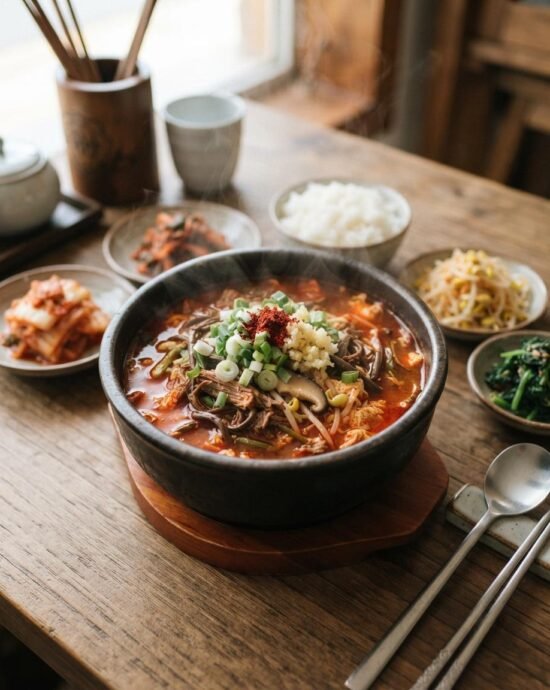

- Step 1. Simmer the Beef
Place the beef brisket in a large pot and cover with the water. Add the halved onion and bring to a boil over high heat, skimming off any foam that rises to the surface for a cleaner broth. Reduce the heat to low and simmer, covered, for 1 hour, until the beef is fully tender and easily shreds apart with a fork. Remove the beef from the broth and set it aside to cool slightly, then strain and reserve the broth, discarding the onion.
- Step 2. Shred the Beef
Once the cooked beef is cool enough to handle, use two forks or clean hands to shred it into thin, bite-sized strips along the grain. Set the shredded beef aside in a bowl. This shredding technique is traditional to yukgaejang, giving the soup its characteristic texture, distinct from the sliced or cubed beef found in many other Korean soups. Cut the whole green onions into 2-inch lengths, then slice them lengthwise into thin strips.
- Step 3. Make the Chili Oil Base
In a large pot, heat the vegetable oil over medium heat and add the gochugaru and minced garlic, stirring constantly for 1 minute until fragrant and the oil turns a deep red. Watch closely, since chili flakes can burn quickly and turn bitter. This bloomed chili oil is the foundation of yukgaejang's signature fiery red broth and deep, layered heat, distinguishing it from soups that rely on chili paste alone.
- Step 4. Combine and Simmer
Add the shredded beef, sliced green onions, and soy sauce to the pot with the chili oil, stirring to coat everything evenly. Pour in the reserved beef broth and bring to a boil over high heat. Add the soaked, drained fernbrake and mung bean sprouts, then reduce the heat to a steady simmer and cook uncovered for 20 minutes, allowing the flavors to meld and the vegetables to become tender while still retaining some bite.
- Step 5. Add the Egg
While the soup is at a rolling boil, slowly drizzle the beaten eggs into the pot in a thin stream, stirring gently in one direction to create delicate egg ribbons throughout the broth. Avoid stirring too vigorously, which can break the egg into fine, cloudy bits rather than the silky ribbons traditional to yukgaejang. Let the soup simmer for another 2 minutes to fully set the egg.
- Step 6. Finish and Serve
Stir in the sesame oil, salt, and black pepper, tasting the broth and adjusting the seasoning as needed for a well-balanced, spicy, savory flavor. Ladle the yukgaejang into deep bowls, making sure each serving includes a generous portion of shredded beef, fernbrake, and bean sprouts. Serve piping hot alongside a bowl of steamed rice, either on the side or spooned directly into the soup.
- Calories:350 kcal18%
- Protein:32 g64%
- Carbohydrates:10 g4%
- Sugar:3 g3%
- Energy:1464 kJ18%
- Salt:2 g33%
- Fat:18 g26%
What is Yukgaejang?
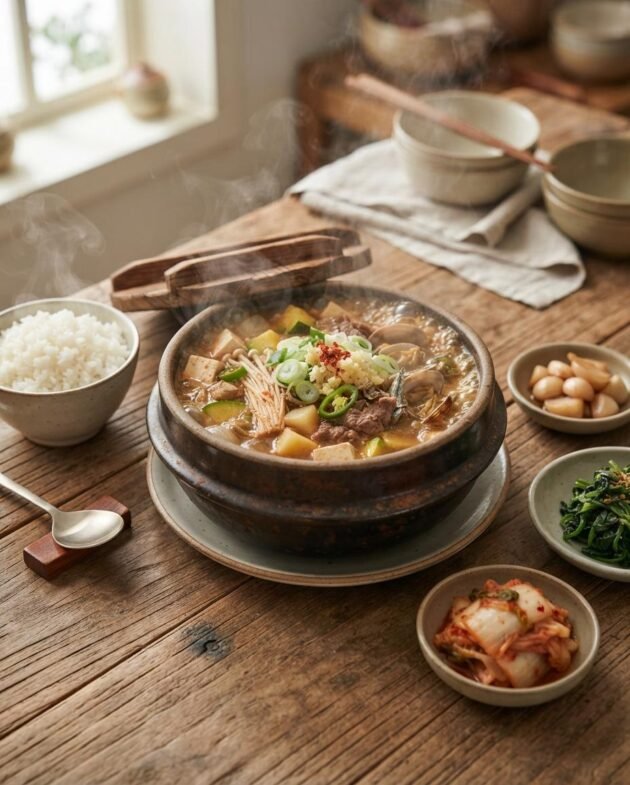
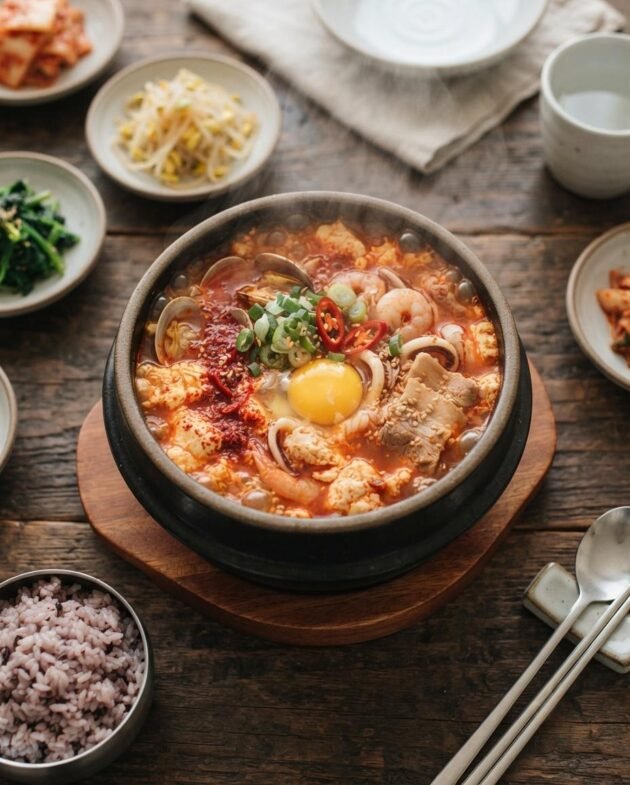
Yukgaejang is a fiery, deeply savory Korean soup made from shredded beef, fernbrake, and bean sprouts simmered together in a spicy, chili-oil-based broth until rich and warming. The name combines yuk, meaning meat, with gaejang, a term historically associated with a spicy soup style, and the dish is considered one of the three great soups of traditional Korean royal court cuisine, prized for the labor-intensive process of shredding tender beef by hand rather than slicing it. Yukgaejang’s defining characteristic is its fiery red broth, built by blooming gochugaru in hot oil before combining it with a rich, clarified beef stock, a technique that produces layers of both heat and umami depth that distinguish it from milder Korean soups. Dried fernbrake, known as gosari, adds a distinctive earthy, slightly chewy texture that has become inseparable from the dish’s identity, alongside crisp mung bean sprouts that provide textural contrast against the tender shredded beef. Delicate ribbons of egg, stirred gently into the boiling broth near the end of cooking, add a final layer of silky richness. Historically served to Korean royalty and later adopted widely across the country as a hearty, restorative dish, yukgaejang remains especially popular during the summer months in Korea, where it is traditionally eaten as a way to replenish strength and combat heat fatigue through a paradoxically hot, spicy meal, a practice known as iyeolchiyeol, or fighting heat with heat.
Ingredient Notes
- Beef Brisket Or Flank: Choose a cut with enough connective tissue to become tender after a long simmer and to shred easily by hand once cooked.
- Dried Fernbrake (Gosari): This dried fern shoot must be soaked and rehydrated before use; look for it pre-packaged in the dried vegetable aisle of a Korean grocery store.
- Gochugaru: Korean chili flakes bloomed in hot oil form the backbone of yukgaejang’s signature fiery red color and layered heat.
- Mung Bean Sprouts: Look for firm, crisp sprouts with white stems; they add a satisfying crunch that balances the tender shredded beef.
- Eggs: Drizzled slowly into the boiling broth, beaten eggs form delicate ribbons that add richness; pour gently for the best silky texture.
Ingredient Suggestions
- Glass noodles: A handful of soaked dangmyeon noodles added near the end turns the soup into a heartier, more substantial meal.
- Extra gochugaru: For those who love bold heat, an additional spoonful intensifies the broth’s spiciness further.
- Taro stems (toran-dae): A traditional addition in some regional versions that adds another layer of earthy texture.
- Shredded radish: Adds a subtle sweetness and extra body to the broth, common in some household variations.
- A dollop of doenjang: A small spoonful stirred in deepens the broth’s savory complexity for those who enjoy a more fermented flavor.
Helpful Tips & Pro Tips
- If your broth tastes flat, the chili flakes likely were not bloomed long enough in the oil; that step is essential for building yukgaejang’s signature depth.
- Shred the beef by hand rather than cutting it with a knife, since hand-shredded strips have a more tender, absorbent texture that holds the broth’s flavor better.
- Pour the beaten egg in slowly and stir gently in one direction to achieve delicate ribbons rather than cloudy, broken bits throughout the soup.
- Soak dried fernbrake according to package instructions well in advance, since it needs time to rehydrate fully before it becomes tender enough to eat.
- Taste and adjust the seasoning near the end of cooking, since the broth’s spiciness and saltiness can vary significantly depending on your gochugaru brand.
How to Serve and Store
Serve yukgaejang piping hot in deep bowls alongside a bowl of steamed rice, either served on the side or spooned directly into the spicy broth. Leftovers keep well in an airtight container in the refrigerator for up to 4 days, and the flavor often improves after a day of resting as the broth continues to develop. Reheat gently on the stovetop over medium heat until warmed through, adding a splash of water or broth if it has thickened too much in storage. Yukgaejang also freezes well for up to 3 months, making it a convenient dish to prepare in a large batch ahead of time; thaw overnight in the refrigerator before reheating.
Substitutions
- Beef Brisket → Shredded king oyster mushrooms — A plant-based option that mimics the chewy texture of shredded beef while absorbing the spicy broth. (Vegan)
- Soy Sauce → Tamari — Preserves the broth’s savory depth while keeping the dish gluten-free. (Gluten-Free)
- Beef Brisket → Beef chuck or stew meat — A more economical cut that still becomes tender and shreds well after simmering. (Budget-Friendly)
- Dried Fernbrake → Extra mung bean sprouts or spinach — A more accessible substitute when dried gosari cannot be found locally.
- Mung Bean Sprouts → Soybean sprouts — A close substitute with a similar crisp texture and mild flavor.
Suggested Recipes
- Gamjatang: Another hearty, spicy Korean soup that shares yukgaejang’s warming, richly seasoned broth.
- Kkori Gomtang: A milder oxtail soup that offers a comforting, less spicy contrast to yukgaejang’s fiery broth.
- Bibimbap: A rice bowl that pairs naturally as a side dish alongside a bowl of spicy yukgaejang.
- Kimchi Jjigae: Another gochugaru-forward Korean stew that shares yukgaejang’s bold, spicy character.

Jeff Smith
"Cooking is the intersection of history, science, and emotion."
For me, the kitchen has always been a laboratory of culture. With a background deeply rooted in digital strategy and precision, I approach the culinary arts with the same rigor I apply to the digital landscape—analyzing flavors, perfecting techniques, and documenting the nuance that makes Filipino cuisine truly world-class.
Findme Recipe was born from a desire to bridge the gap between traditional heritage and the modern home cook. Whether it is mastering the perfect balance of acidity in a classic Adobo or simplifying complex regional dishes for everyday kitchens, my mission is to preserve our culinary identity through accessible, data-backed, and delicious content.
I am not just building a database; I am cultivating a community where every Filipino kitchen feels empowered, every ingredient is celebrated, and every family heirloom recipe finds a place to thrive.
Join me as we translate the soul of our islands into recipes for the next generation.